The New Wilderness by Diane Cook review – a dazzling debut
A community of strangers attempt to live in a natural world made inhospitable by the climate crisis in this tale of survival and strife
Téa Obreht Fri 4 Sep 2020 07.30 BST
I
nThe New Wilderness, Diane Cook’s Booker prize-longlisted debut novel, the end isn’t so much “nigh” as “come and gone”. The cataclysm of civilisation has overwhelmed all but a single natural preserve called the Wilderness State, home to the last remnants of North American wildlife, and a small band of nomads called the Community. We venture into this inhospitable world in the varyingly close and distant third-person company of Bea, a young mother who has made the impossible and inadvisable decision to join an experiment in the Wilderness State in order to save her little daughter, Agnes, from the wasted City, whose poisoned air has been killing her since the day she was born. One of 20 initial volunteers, Bea is part of an experiment allegedly intended to determine whether humans can exist in nature without destroying it. The Community, of which she is a reluctant and pragmatically sceptical member, is tethered to meaning by a set of precious implements – the Cast Iron, the Book Bag, and most importantly the Manual that spells out the rules of their existence, over which the Rangers, to whose whims the experiment and its participants are subject, hold sway.
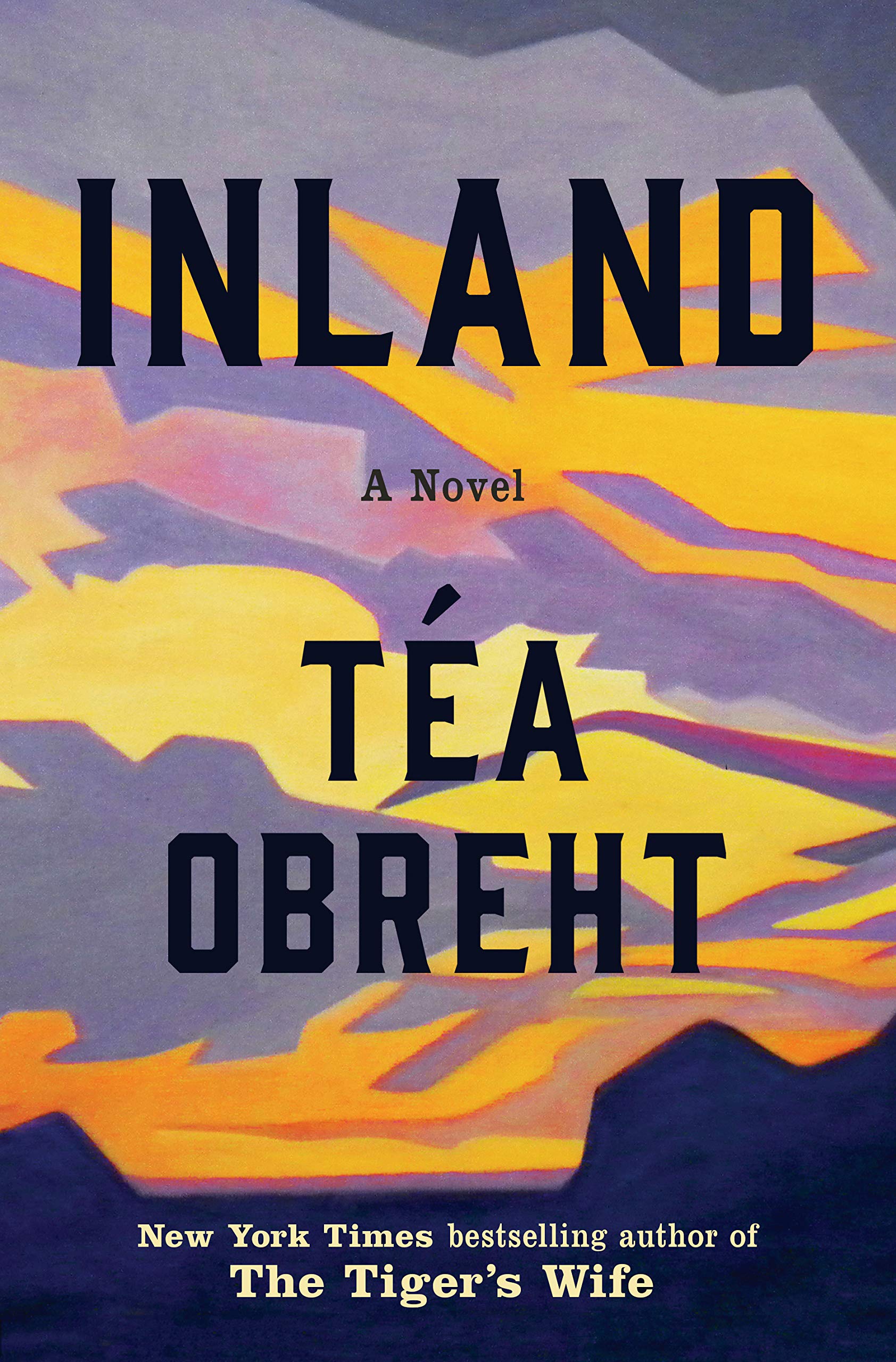
Inland by Téa Obreht review – the wild west just got wilder
This exquisite frontier tale from the author of The Tiger’s Wife is a timely exploration of the darkness beneath the American dream
Alex Preston
Monday 13 August 2019
T
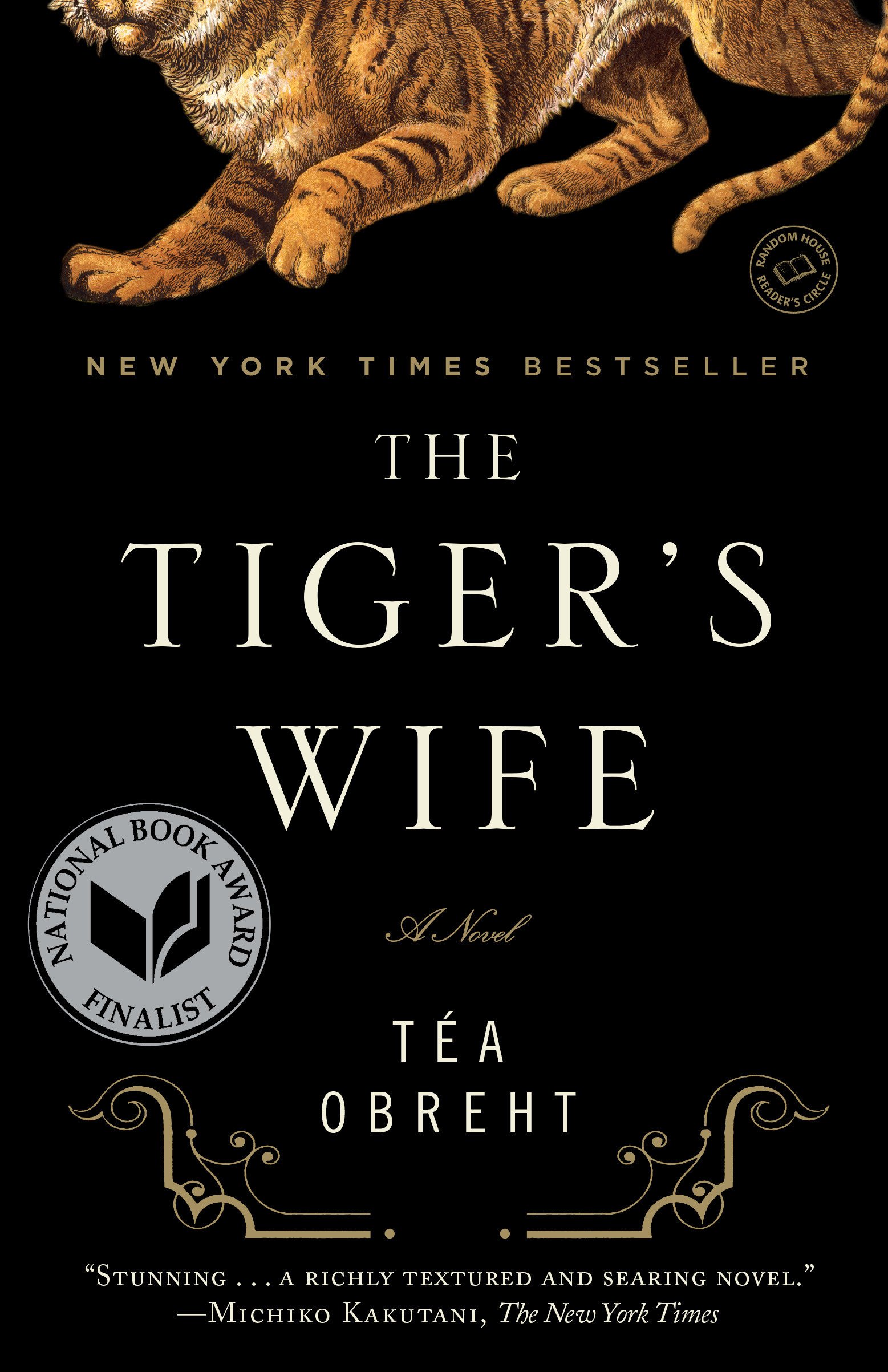
éa Obreht’s wildly successful first novel, The Tiger’s Wife, was a tale of exuberant surrealist allegory. Its framing device was the dialogue between Natalia, a young doctor, and her storytelling grandfather, as they chewed over the history of an unnamed Balkan state. Obreht left Serbia as a child when the Yugoslav wars broke out and moved to the US as a young woman, but her debut still came firmly out of the tradition of European magic-realism, incorporating folk tales and ghost stories into a narrative that was both fantastical and moving, an intergenerational excavation of the ground where the personal and political meet.
Six years later, her second novel appears at first a wholly different proposition. Lurie Mattie is an orphan forced to fend for himself in dangerous times – the wild west. He falls in with a rough crowd and becomes a thief, then a murderer. He’s sought by a dogged lawman and flees across the (not yet) United States of the mid-19th century. His story is intercut with that of Nora Lark, an Arizona farm wife in the early 1890s whose husband has disappeared in search of water. The historical detail is immaculate, the landscape exquisitely drawn; the prose is hard, muscular, more convincingly Cormac McCarthy than McCarthy himself. If the western is the tale that America tells about itself, then this is an attempt to write a new chapter in that story.
This isn’t just a western, though. Lurie, Obreht’s hero, was born the son of an immigrant: Hadziosman Djuric of Mostar. Lurie is orphaned young and apprenticed to a graverobber. The spark of the best historical fiction comes when the imagined world collides with the real; here, Obreht trawls up the fascinating history of the US camel corps, a short-lived attempt by the military to employ camels in the arid reaches of the south-west. Hi Jolly (AKA Hadji Ali), a Turk of Syrian descent who was one of the first camel drivers employed by the army, is among an array of figures who lived in the factual past but are reanimated by their interaction with the fictional Lurie.
That a good chunk of the novel is dictated by Lurie to his camel, Burke, isn’t the most outlandish thing about it. As people die around Lurie, he begins to experience “this strange feeling at the edges of myself – this want”. We understand that he is somehow possessed by the ghosts of those he kills, who “bind me up in the sorrows of all the things [they] hadn’t lived to do”. Nora, increasingly convinced that her husband will not return, retreats from her living sons and speaks instead to her long-dead daughter, Evelyn, “sundrowned” as a baby. At the same time, her husband’s cousin, Josie, who lives with them, is the local medium, hosting seances to communicate with the dead, whom she calls “the other livin’”.
This paranormal element reminds us strongly of George Saunders’s Lincoln in the Bardo. Not only the porousness of the veil separating the living from the dead, but also the carnivalesque way in which the dead perform their vices through the living, the humour and pathos that come together in this presentation of the afterlife. Inland also feels of a piece with another recent novel, Sarah Perry’s Melmoth, a brilliantly eerie gothic tale in which the horrors of history are condensed into a single ghostly figure. Obreht’s novel similarly explores the brutality and darkness that lurk beneath the veneer of the American dream.
There’s a different kind of haunting going on here, too. Jacques Derrida coined the term hauntology to mark the ghostly presence of historical texts in contemporary literature. You can’t write anything without either consciously or unconsciously referring to precedents, and Obreht has some fun with this. There are obvious links. The lawman on the trail of Lurie is called John Berger, and Berger’s spirit-haunted 2005 novel, Here Is Where We Meet, is a clear influence. Lurie Mattie is a nod to Mattie Ross, the heroine of True Grit. Burke the camel is named after Edmund, the author of a text – Speech on the Conciliation of the Colonies – that still feels true and urgent today, despite having been written about the war of independence. But I kept coming back to Lurie, a name made famous in JM Coetzee’s masterpiece of another kind of frontier life, Disgrace. Disgrace was a brilliant response to a time of extraordinary upheaval, a defence of the novel as an agent of political change. Inland’s message is equally timely, a rebuke to isolationist US policies written with a panache and heart that you could imagine even that bibliophobe Donald Trump enjoying.
Téa Obreht: ‘In America, we make progress, then revert in horrific ways'
At 25, she won the Orange prize with her first novel, The Tiger’s Wife. In her long awaited follow-up, she tackles the history of the American west
Joanna Scutts
Saturdady 24 August 2019
How do you disrupt the mythology of the American west, with its campfires and cowboys, and its spirit of masculine self-reliance? If you’re Téa Obreht, you add creatures – and people – who belong to the history but not to the myth. You add, say, camels.Inland, the long-awaited follow-up to her 2011 Orange prize-winning debut The Tiger’s Wife, takes place in the late 19th century across Arizona and its neighbouring territories. It braids together the stories of Nora, an anxious homesteader struggling to hold her family together, and Lurie, a drifter who ends up attaching himself to a real-life convoy of camels imported from the Middle East to test their suitability for military service. Obreht stumbled across the surreal story of the camels by chance, listening to the podcast Stuff You Missed in History Class. She describes the episode with palpable delight: “It’s about two women who are beset on their homestead by a creature that they can’t identify and which they claim has supernatural powers. They call it a demon horse.” The apparition turns out to be an escaped camel, with a macabre twist that is best saved for the novel. She found the story “wild, and so grotesque and wonderful!” – and her obsession was fired. The Tiger’s Wife, a novel about the relationship between a young doctor and her grandfather, and about the stories on which both family lore and national identity are built, brought Obreht the kind of success that can be paralysing for a young writer: a New York Times bestseller, finalist for the National Book award, a place on the New Yorker’s 20 best writers under 40 list. But it all happened when she was in her mid-20s – too young and green, she says now, to feel daunted. Since then, she’s been teaching fiction at Hunter College in New York, publishing short stories, and not publishing drafts of two full novels. “All kinds of things interested me, but none of them drew me in enough,” she says. “I was writing more as a way to flex those muscles, but I could feel that my focus on the page and the way I was approaching writing was starting to change. And it frightened me.”
It wasn’t until the camels showed up that she found a way to push forward. “Animals have this unnerving tendency to creep into my work, even when I’m trying to hold them at bay,” she says. Animals come up in conversation too, when she describes her efforts to find a new project as placing “little book turtles down on the racetrack”. If not a writer, she would have become a zoologist or biologist. “On a psychological level, I’m deeply interested in three things,” she says, checking them off on her fingers. “Who people are when they’re alone and no one’s watching; who people are when they’re telling themselves the most palatable stories of their lives; and then who people are with animals.”
All three of those interests are richly present in Inland, which draws on Obreht’s longstanding curiosity about the American west. She has spent time travelling through Arizona and Texas, and owns a holiday home in Wyoming, a vast distance physically and culturally from her Manhattan home and the Upper West Side cafe where we’re discussing the book. Like many visitors, she was “floored” by the desert landscape, but felt a pull stronger than simple tourist curiosity. Despite having no roots or connections there, “it felt like a homecoming.”
Obreht wins the Orange prize for fiction 2011. Photograph: Sang Tan/AP
Born Téa Bajraktarević in Belgrade in 1985, Obreht moved to Cyprus and then Cairo as a young child, with her mother and her grandparents (her father was never part of the picture). When she was 12, her grandparents returned to Belgrade and she and her mother emigrated to the US. Her close relationship with her grandfather underpins The Tiger’s Wife, and when he died in 2006, she adopted and began writing under his last name.
It was through her grandparents’ love of classic Hollywood westerns that Obreht first imbibed the cowboy vision of the American west. As she researched the history, however, she discovered it was “a lot more diverse than anything that is handed down by history or by lore”. As an immigrant, she was particularly keen to uncover the mixing of cultures that went into shaping that quintessentially American landscape, and to put her own spin on the genre’s tropes. The relationship between Lurie and Burke, the camel he adopts, draws on the essential bond between a man and his horse. “It’s for transportation, it’s for shelter, it’s your currency if you need it,” she explains. But the camel also gives Lurie a sense of purpose and identity, enabling him to embrace his Ottoman roots. “His home is the camel.”
Obreht’s sprawling cast of characters are all carefully named, allowing her to tell stories in miniature about identity and origins. Spanish names, historical and fictional, are a reminder that many Mexicans in the southwest were not immigrants, but were made foreign as the border migrated around them. (Modern-day Arizona was part of Mexico for the first half of the 19th century, and did not become a US state until 1912.) Lurie, whose name comes from a garbling of Djurić, later befriends a man based on a mysterious real figure named Hadji Ali, a convert to Islam of Greek and Syrian origin, who travelled with the camel corps and became known as Hi Jolly. His story allowed Obreht to explore the ironies of the era’s shifting global power dynamics, in which a man who had “lived under the heel of the Ottoman empire” finds himself, quite by accident, serving “as part of the fist that holds the hammer of a new empire”.
Although their presence is constant in the book, Native Americans stand somewhat outside its central perspective. Obreht is thoughtful as she considers why she made this choice. “I’m glad to be writing at a time when more and more voices are able to tell their own stories, and I did not feel that it was my place to encroach on that,” she explains. “My interest was to examine the immigrant perspective, but to try to be as honest as possible about what that meant, with respect to incursion and the overrunning of Native American lands.” It’s also a practical question of surviving sources, of what stories were written down and preserved, and by whom.
To research the history of the camels’ presence in the west, Obreht relied heavily on the diary of Edward Fitzgerald Beale, who headed up the camel expedition. Because his was a military record and gave the coordinates of every camp, she was able to revisit all the spots that are accessible by car, which today include “an ultramodernist church” and the Albuquerque Greyhound station. Beale’s assistant, with no interest in proving the value of these curious beasts, barely takes notice of the camels. “He mentions them once, like: ‘All today, the camels were a pain in the ass as usual.’ That’s it.”
Obreht also immersed herself in the newspapers of the time, as a resource for shaping the novel’s language. She stayed away from contemporary fiction about the west by writers such as Cormac McCarthy in case she was influenced by them, especially by descriptions of the landscape. The beauty of the desert, after all, is rooted in its inhospitableness and for Nora, tormented by thirst as she moves across it, stunning vistas are hardly at the forefront of her mind. “Maybe the binary in the novel is: is this beautiful, or is this a pain in the ass?” Obreht says with a laugh.
It’s a disruptive choice to make a woman a central character in a western story, neither a silent wife nor one of the “balcony women” whose business relies on the constant flow of lonely strangers through town. “One of the tropes of the western that really grabbed me was the woman in the corner, just scowling and literally stirring the pot,” Obreht says. In contrast to the men for whom home is wherever there’s a stream of water or a campfire, Nora is fiercely focused on protecting her domestic realm, “this one little patch of life that she is capable of defending”.
In the diaries and letters of homesteading women, Obreht was struck by the “ripples of terror or rage” rising up out of these otherwise fatalistic, even contented accounts of lives haunted by uncertainty and death. Nora’s rage is partly directed at Josie, a young relative of her husband’s from the east, who brings with her a brand of feminine helplessness that seduces Nora’s sons and that Nora herself has worked hard to slough off. Yet there is something universal in her rage, too. Obreht describes how her grandmother, at the end of her life, likewise began to express “things that she, I guess, had been enraged about her whole life but hadn’t given voice to”. Despite feeling that she had lived a good life, “here they were, finally coming to the surface”.
Nora’s story plays out in 1893, a period of profound transition in the west – in many ways, the end of the old west as a remote and mythologised place. “It was after the laying of the Transcontinental Railroad and the massacre at Wounded Knee, which represented, in this nationalistic sense, the end of the Native American resistance,” Obreht says. The railroad is fundamental to the geography of the novel: its title, Inland, she explains, is how people referred to land away from the train tracks – it has nothing to do with the coastline, but marks the distance between places that develop and those that wither in isolation.
The newspaper, too, is an essential source of connection and power. “Back then, your newspaper was everything.” The paper run by Nora’s husband supplies information and gossip, but also has the power to shape politics and history, to privilege certain stories over others. Cattle barons, she explains, bought up newspapers in the effort to assert a moral right to the power they’d grabbed. They spread the myth that their rise was linked to their inherent virtue and strength. “It’s bootstrap narrative at its absolute core, its beginnings.”
Hi Jolly’s tomb in Quartzsite cemetery, Arizona. Photograph: Maurice Savage
The telephone has the power to collapse even bigger distances. In one striking scene, Nora and her fellow townsfolk gather to witness the first exchange of words by phone, an almost magical event that makes her wonder if the gulf between the living and the dead might eventually be bridged by some as-yet-uninvented technology. Nora talks to her daughter, who died as a baby, while Lurie finds himself taken over by the “wanting” of people he’s lost. Yet there’s nothing fantastical about the way these relationships are portrayed. They are simply part of the reality of living in a place where people can disappear for weeks on end, where you don’t know whether they’re living or dead. And it’s a consequence, for Obreht, of the fundamental violence of the west. “It feels haunted to be there, and so much of that is owed to this horrific history on which the shaping of this country really sits.”
A novelist can’t predict the world into which her novel is launched, but it’s impossible to discuss questions of borders and history without bringing up the current climate of anti-immigrant rhetoric and violence. Obreht can’t help but be struck by the similarities between the world of her book and today. “I thought I was writing a book set in the west in the 1890s and I didn’t realise how much of it was going to align with this particular cycle that we’ve fallen into now,” she says. “What it showed me was that cultural discourse in this country, as in many others, operates in cyclical ways. We go forward a little bit and then we fall back. We make some progress but also revert in these horrific ways to things we’ve been fighting against for hundreds of years.”
Obreht sees it as part of a repeating cycle of anxiety about who belongs, who is truly American – and as evidence of the power of story. When Nora, unable to communicate with her Apache neighbours, convinces herself that they wish her harm, the result is disaster.
“If what you’re being told by every possible source your entire life is: ‘These people are here to hurt you,’ I don’t think it matters what century you’re in. If you’re 80% of people, you’re gonna flinch.” That’s true regardless of who is threatening you, and is part of what excites her about historical fiction: its ability to illuminate what returns and what endures. “Human cruelty, human frailty, vanity, paranoia - their modalities change and maybe their tone changes a little bit from century to century, but, actually, they stay the same,” she says. “They’re reptilian.”
• Inland by Téa Obreht is published by Weidenfeld & Nicolson (£14.99).
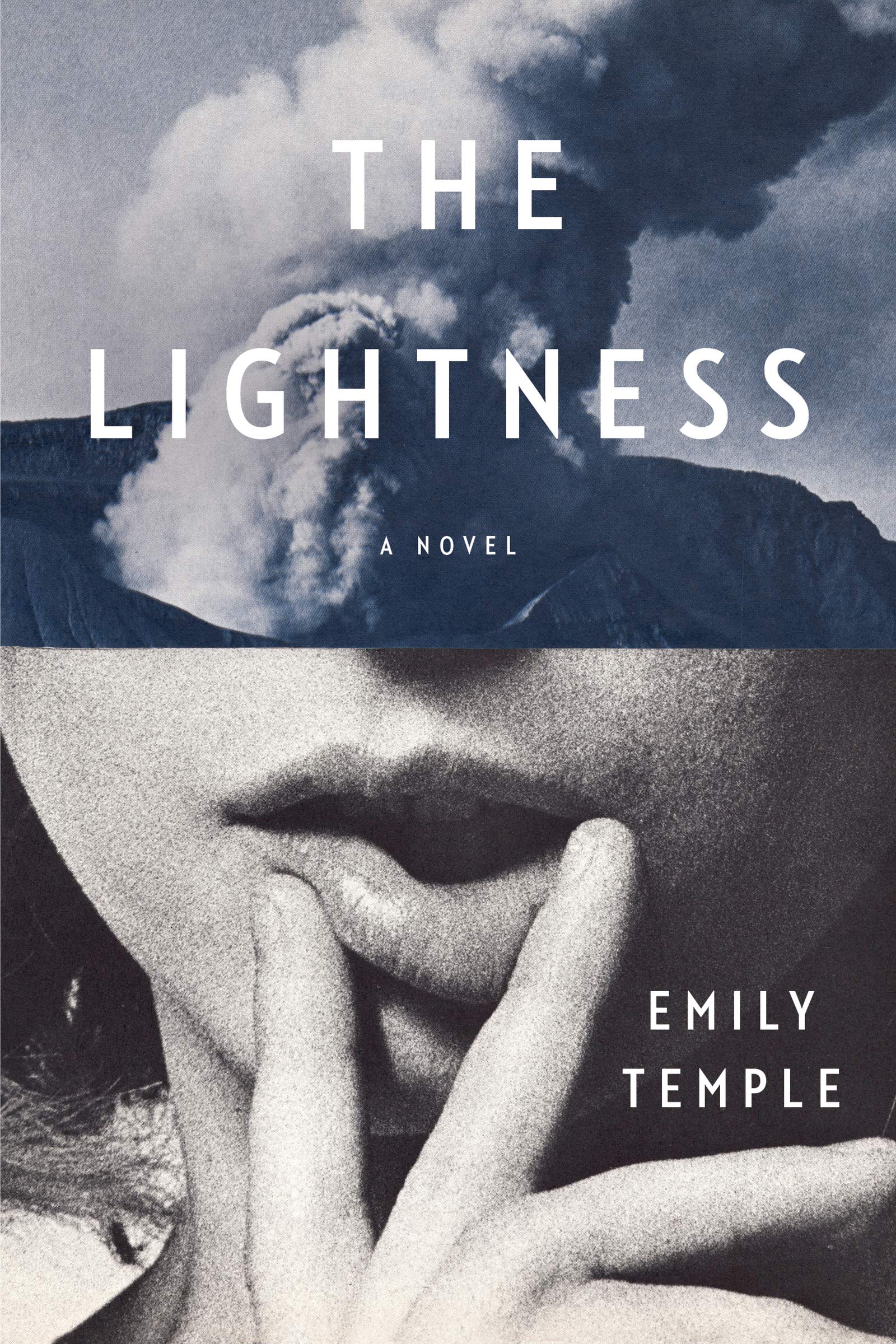
"The Lightness could be the love child of Donna Tartt and Tana French, but its savage, glittering magic is all Emily Temple's own."--Chloe Benjamin, New York Times bestselling author of The Immortalists
A Most Anticipated Novel by Marie Claire - Elle- WSJ. Magazine- Glamour - Vulture - Bustle - Buzzfeed- The Millions - The Philadelphia Inquirer - The Daily Beast - Refinery 29 - Publishers Weekly - Literary Hub - Electric Literature - and more!
A stylish, stunningly precise, and suspenseful meditation on adolescent desire, female friendship, and the female body that shimmers with rage, wit, and fierce longing--an audacious, darkly observant, and mordantly funny literary debut for fans of Emma Cline, Ottessa Moshfegh, and Jenny Offill.
One year ago, the person Olivia adores most in the world, her father, left home for a meditation retreat in the mountains and never returned. Yearning to make sense of his shocking departure and to escape her overbearing mother--a woman as grounded as her father is mercurial--Olivia runs away from home and retraces his path to a place known as the Levitation Center.
Once there, she enrolls in their summer program for troubled teens, which Olivia refers to as "Buddhist Boot Camp for Bad Girls". Soon, she finds herself drawn into the company of a close-knit trio of girls determined to transcend their circumstances, by any means necessary. Led by the elusive and beautiful Serena, and her aloof, secretive acolytes, Janet and Laurel, the girls decide this is the summer they will finally achieve enlightenment--and learn to levitate, to defy the weight of their bodies, to experience ultimate lightness.
But as desire and danger intertwine, and Olivia comes ever closer to discovering what a body--and a girl--is capable of, it becomes increasingly clear that this is an advanced and perilous practice, and there's a chance not all of them will survive. Set over the course of one fateful summer that unfolds like a fever dream, The Lightness juxtaposes fairy tales with quantum physics, cognitive science with religious fervor, and the passions and obsessions of youth with all of these, to explore concepts as complex as faith and as simple as loving people--even though you don't, and can't, know them at all.
The forty days of the soul begin on the morning after death. That first night, before its forty days begin, the soul lies still against sweated-on pillows and watches the living fold the hands and close the eyes, choke the room with smoke and silence to keep the new soul from the doors and the windows and the cracks in the floor so that it does not run out of the house like a river. The living know that, at daybreak, the soul will leave them and make its way to the places of its past — the schools and dormitories of its youth, army barracks and tenements, houses razed to the ground and rebuilt, places that recall love and guilt, difficulties and unbridled happiness, optimism and ecstasy, memories of grace meaningless to anyone else — and sometimes this journey will carry it so far for so long that it will forget to come back. For this reason, the living bring their own rituals to a standstill: to welcome the newly loosed spirit, the living will not clean, will not wash or tidy, will not remove the soul’s belongings for forty days, hoping that sentiment and longing will bring it home again, encourage it to return with a message, with a sign, or with forgiveness.
‘Working in the familiar mode of the big historical novel’ ... Yaa Gyasi Photograph: Cody Pickens/
The age of anxiety: what does Granta’s best young authors list say about America?
The US is in crisis - what about its literature? Michelle Dean reports on the list of American writers to watch this decade, which is as diverse as the country itself Michelle Dean Wednesday 26 April 2017 16.50 BST
I
t is a strange time to be making declarations about the nature of American writing. The country’s not exactly feeling well. And even before the events of last autumn, it used to be easier to know what people meant when they spoke of Great American Novels. They meant, chiefly, fat realist ones, usually authored by men. Philip Roth was the avatar of success in that model. He’d put America in the title, construct his characters around some kind of American archetype, and he was off and running.
Think back to the wars of the 1990s in the former Yugoslavia, with their profusion of names that are difficult to pronounce and acts that are painful to recall: the massacres at Brcko and Srebrenica, the bombing of bread lines in Sarajevo, the destruction of Mostar’s 400-year-old bridge.
None of these appear in Téa Obreht’s first novel, “The Tiger’s Wife,” yet in its pages she brings their historic and human context to luminous life. With fables and allegories, as well as events borrowed from the headlines, she illustrates the complexities of Balkan history, unearthing patterns of suspicion, superstition and everyday violence that pervade the region even in times of peace. Reaching back to World War II, and then to wars that came before, she reveals the continuity beneath the clangor.
A metaphor for the author’s achievement can be found in her tale of Luka, a dreamy, brooding butcher’s son from a mountain village called Galina. A decade after World War I, Luka leaves Galina and walks 300 miles to the river port of Sarobor, where he hopes to master the gusla, a single-stringed Balkan folk instrument. Arriving there, he finds that gusla music is nearly forgotten, overtaken by rollicking modern tunes played by lusty, boisterous bands. Still, he seeks out old men who know the traditional songs, falls under the spell of the “throbbing wail of their voices winding through tales remembered or invented” and acquires their art. Although his gift is for lyrics rather than music, “there are those who say that any man who heard Luka play the gusla, even in wordless melody, was immediately moved to tears.” When a woman asks why he doesn’t prefer an instrument with a greater number of strings, he responds, “Fifty strings sing one song, but this single string knows a thousand stories.”
Téa Obreht’s stunning debut novel, “The Tiger’s Wife,” is a hugely ambitious, audaciously written work that provides an indelible picture of life in an unnamed Balkan country still reeling from the fallout of civil war. At the same time it explores the very essence of storytelling and the role it plays in people’s lives, especially when they are “confounded by the extremes” of war and social upheaval and need to somehow “stitch together unconnected events in order to understand” what is happening around them.
Ms. Obreht, who was born in the former Yugoslavia and is, astonishingly, only 25, writes with remarkable authority and eloquence, and she demonstrates an uncommon ability to move seamlessly between the gritty realm of the real and the more primary-colored world of the fable. It’s not so much magical realism in the tradition of Gabriel García Márquez or Günter Grass as it is an extraordinarily limber exploration of allegory and myth making and the ways in which narratives (be they superstitions, cultural beliefs or supernatural legends) reveal — and reflect back — the identities of individuals and communities: their dreams, fears, sympathies and hatreds.
In the frame story a young doctor named Natalia Stefanovic has journeyed, with a friend, to a small town across the border to deliver medicine to an orphanage. She is preoccupied by memories of her beloved grandfather, a well-known physician, who has just died while on a mysterious trip to another village about an hour’s drive away. Natalia’s decision to become a doctor was shaped partly by her love for her grandfather and partly by her complex feelings about the war — by her desire to help casualties, her guilt at having passed the war relatively unscathed in “the City” and a determination shared with friends to “defeat emerging newspaper projections that declared the City’s postwar generation destined for failure.”