 |
| James Baldwin |
Baldwin by Nicholas Boggs review – the relationships that drove a genius
A new biography puts Baldwin’s sexuality – and the men he loved – front and centre

|
| James Baldwin |
Baldwin by Nicholas Boggs review – the relationships that drove a genius
A new biography puts Baldwin’s sexuality – and the men he loved – front and centre

The great American author and civil rights activist’s works offered prophetic warnings, generosity of spirit and clarity like no other when it came to race relations
Tom Jenks
Friday 2 August 2024
2 August 2024 marks the centenary of James Baldwin’s birth, a good time for a renewed appreciation and celebration of this great American author and civil rights activist. From his early teenage years as a Pentecostal preacher, he possessed precocious oratorical skills that powerfully moved an audience in call and response, and when as a young man he left the pulpit, he carried his gifts with him, believing that religion would not suffice to create the needed change in race relations, but that his writing could.


To remember it so clearly, so painfully tonight tells me that I have never for an instant truly forgotten it. I feel in myself now a faint, a dreadful stirring of what so overwhelmingly stirred in me then, great thirsty heat, and trembling, and tenderness so painful I thought my heart would burst. But out of this astounding, intolerable pain came joy; we gave each other joy that night. It seemed, then, that a lifetime would not be long enough for me to act with Joey the act of love.


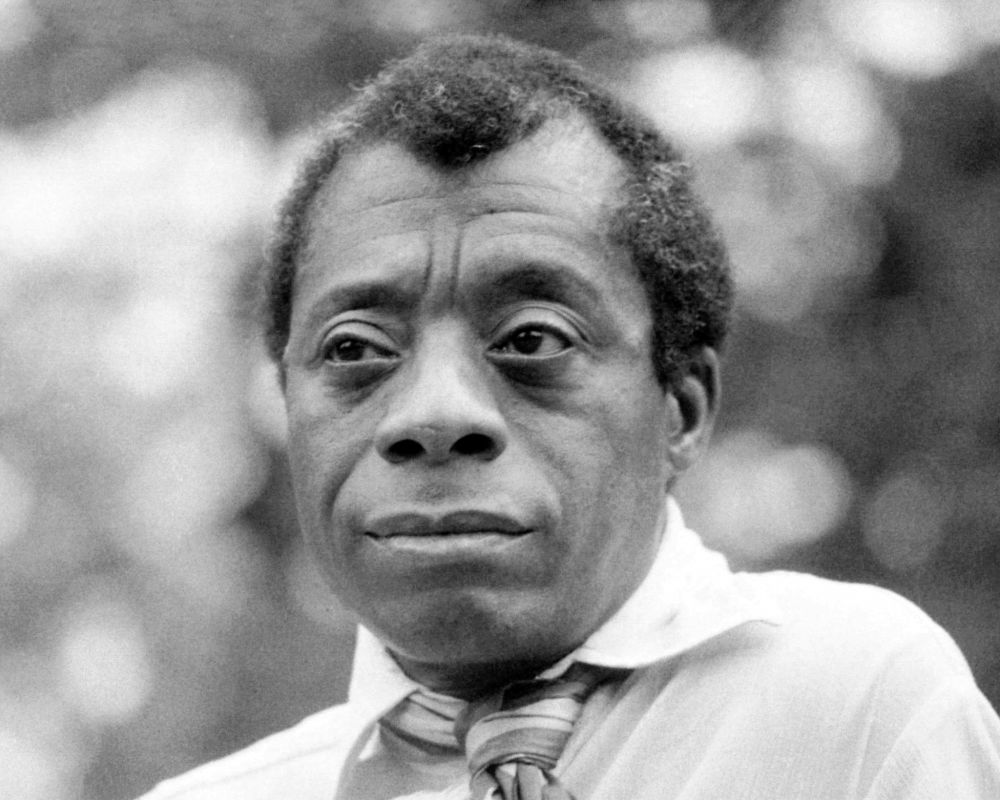
JAMES BALDWIN IN HYDE PARK, LONDON. PHOTOGRAPH BY ALLAN WARREN.
In his review of James Baldwin’s third novel, Another Country, Lionel Trilling asked: “How, in the extravagant publicness in which Mr. Baldwin lives, is he to find the inwardness which we take to be the condition of truth in the writer?”
 |
| James Baldwin |

 |
| James Baldwin |
 |
| James Baldwin |

One bright afternoon in Paris, on the terrace of the cafe Deux Magots, in St.-Germain-des-Prés, I found myself engaged in an increasingly animated conversation about the writer James Baldwin and the notorious feud that broke out between him and his fellow African-American expatriate Richard Wright.
 Oil on Canvas, 24/01/2019 – Black Activist Nina Simone
 |
| James Baldwin |


 |
| A mind in turmoil … James Baldwin in New York in 1963. Photograph: Dave Pickoff/AP |


“Nikki, the name we finally gave my younger daughter, is not an abbreviation; it was a compromise I reached with her father. For paradoxically it was he who wanted to give her a Japanese name and I – perhaps out of some selfish desire not to be reminded of the past – insisted on an English one.”
“Everyone had always said that John would be a preacher when he grew up, just like his father. It had been said so often that John, without ever thinking about it, had come to believe it himself. Not until the morning of his 14th birthday did he really begin to think about it, and by then it was already too late.”
“Her first name was India – she was never able to get used to it. It seemed to her that her parents must have been thinking of someone else when they named her. Or were they hoping for another sort of daughter? As a child she was often on the point of inquiring, but time passed, and she never did.”
“The disease has been in remission for seven years. Now I can try to remember what happened. Not understand. Just remember.“For seven years I tried not to remember too much because there was too much to remember, and I didn’t want to fall any further behind with the events of my life. I still don’t have a vegetable garden. I still haven’t been to France. I have gone to bed with enough people that they seem like actual people now, but while I was going to bed with them I thought I was catching up. I am sorry. I had lost what seemed like a lot of time.”
“One way of looking at it is that it was just an unfortunate by-product of Hurricane Edna.”
“‘Quite like old times,’ the room says. ‘Yes? No?’“There are two beds, a big one for madame and a smaller one on the opposite side for monsieur. The wash-basin is shut off by a curtain. It is a large room, the smell of cheap hotels faint, almost imperceptible. The street outside is narrow, cobble-stoned, going sharply uphill and ending in a flight of steps. What they call an impasse.”
“Thirty years ago, Marseilles lay burning in the sun, one day.“A blazing sun upon a fierce August day was no greater rarity in southern France then, than at any other time, before or since. Every thing in Marseilles, and about Marseilles, had stared at the fervid sky, and been stared at in return, until a staring habit had become universal there. Strangers were stared out of countenance by staring white houses, staring white walls, staring white streets, staring tracts of arid road, staring hills from which verdure was burnt away. The only things to be seen not fixedly staring and glaring were the vines drooping under their loads of grapes. These did occasionally wink a little, as the hot air barely moved their faint leaves.”
“Nobody died that year. Nobody prospered. There were no births or marriages. Seventeen reverent satires were written – disrupting a cliche and, presumably, creating a genre. There was a dream, of course, but many of the most important things, I find, are the ones learned in your sleep. Speech, tennis, music, skiing, manners, love – you try them waking and perhaps balk at the jump, and then you’re over.”
“We are on our way to Budapest. Bastard and Chipo and Godknows and Sbho and Stina and me. We are going even though we are not allowed to cross Mizilikazi Road, even though Bastard is supposed to be watching his sister Fraction, even though Mother would kill me dead if she found out; we are just going.”

“You don’t know about me, without you have read a book by the name of The Adventures of Tom Sawyer, but that ain’t no matter. That book was made by Mr Mark Twain, and he told the truth, mainly. There was things he stretched, but mainly he told the truth. That is nothing.”


