Winter Counts opens on Virgil Wounded Horse in a parked car outside a bar biding his time before he beats the hell out of local predatory rapist. Virgil is Rosebud Reservation’s local enforcer, the only one willing to put his body on the line to make sure his community is protected and sees justice, but if your sense is you know this type — the bruised and brooding vigilante — David Heska Wanbli Weiden’s novel will prove you wrong. Weiden’s protagonist is complicated by patient plotting and character development; that is to say, Virgil is not a convenient symbol of moral good. When Virgil’s nephew accidentally gets mixed up with an out-of-town drug cartel, his mission becomes not a simple matter of vengeance, but rather a tortuous journey that exposes the cruel and intentional failures of the federal criminal justice system.
David Heska Wanbli Weiden’s gritty first-in-a-series thriller, “Winter Counts,” is mostly set 200 miles southeast of Mount Rushmore on South Dakota’s Rosebud Indian Reservation. Just one scene takes place at the monument, but it captures the novel’s tone and the complicated identity of Weiden’s flawed hero, Virgil Wounded Horse.
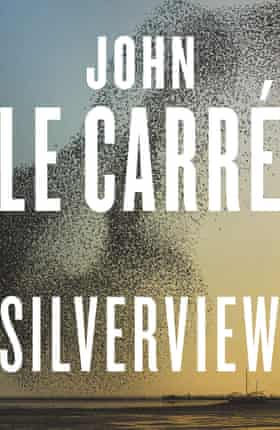
Le Carré’s final complete novel was published in October, in the week of what would have been his 90th birthday. Having made his fortune, Julian Lawndsley has left the City to run a bookshop in East Anglia, where a meeting with an eccentric Polish émigré and former spy draws him into a web of intrigue. The cast of characters, including several husband-and-wife spy pairings, are compromised by secrets, loyalties and allegiances both professional and familial, and no one, least of all the Service itself, is innocent. Valedictory, with a final turn of events that ends surprisingly but pleasingly in a cock-up, this is a satisfying coda to the career of the finest thriller writer of the 20th century.
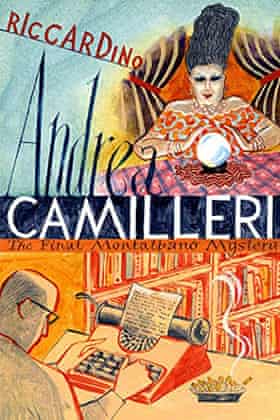
Andrea Camilleri, translated by Stephen Sartarelli(Mantle)
Written in 2005, Camilleri’s final Inspector Montalbano novel was kept in a safe for publication after the author’s death, which occurred in 2019. Like its much loved predecessors, Riccardino is set in the fictional Sicilian town of Vigata, but this time the increasingly tired and tetchy detective is joined by the author himself, who makes ever more far-fetched suggestions as to how the investigation into the death of the titular character should proceed. The absurdity mounts as the Catholic church persists in sticking its Jesuitical oar in and the revelations about the dead man’s private life grow ever more colourful. This novel is a fittingly exuberant last outing.
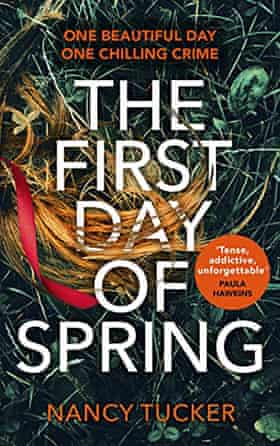
“I killed a little boy today …” From the first line of this assured debut, we know that eight-year-old Chrissie is a murderer. Neglected by her parents to the point of starvation, she is desperate for both physical and emotional nourishment, and her every action – bullying her classmates, making trouble at school, and finally strangling two-year-old Steven – is a heartbreaking attempt to make somebody notice her existence. The narrative is split between the child Chrissie and the adult she becomes, released from a secure unit and renamed Julia, now with a child of her own. Tucker explores the difficult subjects of cruelty, guilt and redemption with compassion and extraordinary finesse, in a way that will resonate long after the final page.
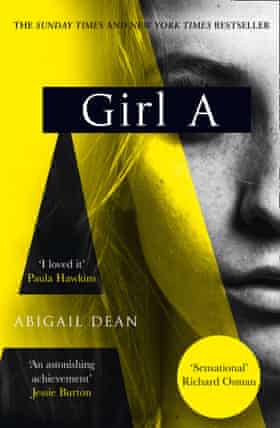
Another superb first novel that is all the more powerful for being unsensational, Girl A is the story of Lex, the eldest daughter of a religious fanatic who, enabled by his wife, abused his children so appallingly that the family home became known as the “house of horrors”. Many years later, Lex, now a lawyer in New York, is compelled to relive the past; she returns to England to oversee the house’s conversion to a community centre and is forced into contact with her siblings, all of whom have reacted to their childhood experiences in markedly different ways. One of the best depictions I have read of the difficulties of “moving on” and the impossibility of explanations to outsiders, this book is haunting and powerful, with a hard-won hope.
Vigilante-for-hire Virgil Wounded Horse acts on behalf of those on the Rosebud Native American Reservation in South Dakota who have been failed by both the toothless tribal police and a foot-dragging US criminal justice system. After his teenage nephew almost dies from a heroin overdose, Virgil is determined to take on the men responsible for bringing the drug into the community. However, with limited authority and some powerful adversaries, his life is becoming both complicated and very dangerous. In his debut novel, Weiden, a member of the Sicangu Lakota Nation, gives a fascinating insight into an often overlooked world, and draws the reader into a satisfying mystery.