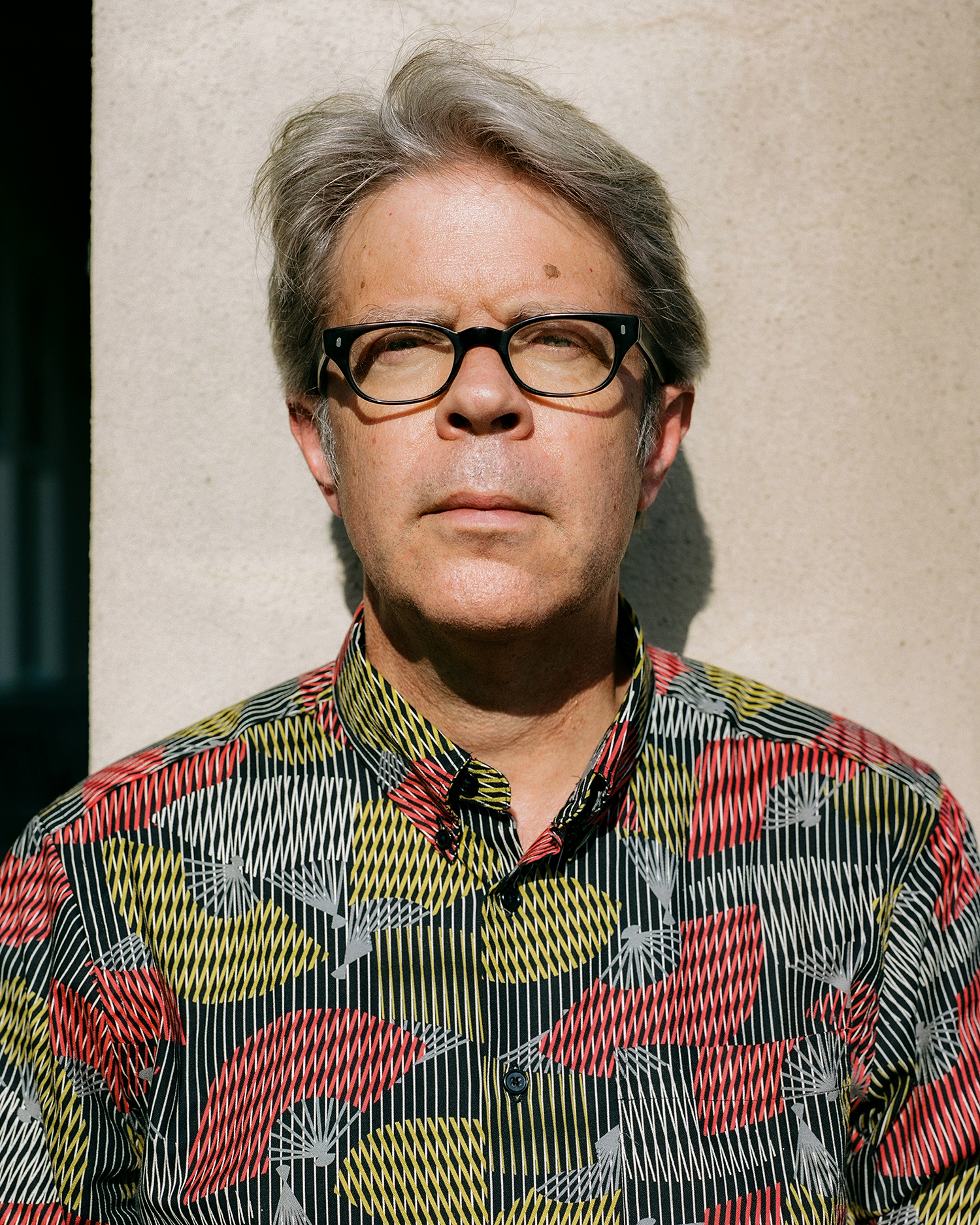
Showing posts with label Jonathan Franzen. Show all posts

Saturday, September 30, 2023

Jonathan Franzen / The Corrections / Now he's first among equals


Now he's first among equals

Jonathan Franzen shut out the world to write the Great American Novel and produced The Corrections

The Corrections
Jonathan Franzen
Fourth Estate £17.99, pp568


Tim Adams
Sunday 25 November 2001

The greatest burst of wealth creation the planet has ever seen, which began 15 or more years ago on the campus-factories of Silicon Valley and in the dealing-rooms of Wall Street, and which perhaps began to end on 11 September, has trailed with it a golden age of American fiction.

The most sustained deconstruction of the implications of the long boom, the corporatisation of the American soul, has come from a clutch of remarkable novelists, most notably in the mature work of Don DeLillo and Philip Roth, but also in the smaller scale brilliance of Richard Ford, or the narcotic sweep of Tom Wolfe. In his first two novels, the overly tricksy The Twenty-Seventh City and the vaguely impenetrable Strong Motion, Jonathan Franzen was at such pains to join that heady company that he overreached himself and, in his desire to be the author of the Great American Novel, forgot to write books that people might want to read.

This time around, he has made no such mistake. The Corrections announced itself five years ago, with a curious personal manifesto. In a long, compellingly arrogant essay in Harper's magazine, Franzen wrote of the necessity of uniting the polarities in the ambitions of novelists he wanted as his peers,

In particular, he noted the need to combine the mesmerising dramatisation of the connectedness of America in DeLillo's Underworld with the authentic humanism of, say, Jane Smiley's A Thousand Acres or Annie Proulx's The Shipping News. He envisaged a novel charged with contemporary critical anxieties but which pulsed with the heart of the heart of the country, and proposed himself as the man who could write it. Five years on, he has, in mostly thrilling fashion, made good that boast.

The corrections of the title are, in part, the readjustments in stock values made in response to the first signs of economic downturn, the backwash of the wave of consumer prosperity that engulfed American values in the final years of the last century. The Lamberts, a family from the Midwestern outpost of St Jude (patron saint of hopeless causes), have been swamped by that wave and are floundering in its shallows, desperately trying to gain a footing for themselves and not lose sight of each other.

Money, its undertow and its absence, has loosened their hold on things, not least the ties that might bind a family. In an earlier, simpler time, Alfred Lambert, a retired railway engineer of celebrated accomplishment among his colleagues, and a strict personal moralist, might not have seemed to himself a failure. His wife, Enid, might not have sensed that 'they were the only intelligent people of her generation who had not managed to become rich'. He might, as a consequence, have been able to love her, and she would not have had to watch their apple-pie attitudes crust over into prejudice and bitterness, when this love was withheld. Moreover, their three children, Denise and Chip and Gary, might not have been so keen to flee the fallout of this inherited despond by looking for love and money in the cities of the East Coast.

But this is where they are at, and Franzen inhabits their five fractured lives with heartfelt intensity. He furnishes each of them with hopes to cling to, he lavishes all the resourceful invention of his language on their despair and, above all, with comedy and tenderness he makes his reader care how they will turn out. In an age when millions of 'new minted Americans were engaged in the identical pursuit of feeling extraordinary - of skiing the virgin slope, of knowing the chef personally, of locating the beach that had no footprints' - the author sets his mind to delineating the tragic fate of ordinariness.

His story begins with alarm bells ringing in the old Victorian family house. The early-warning system has begun in the head of Alfred, whose psychological certainties are dying along with the circuits in his brain, victims of the onset of Parkinson's disease. His wife can hear the crisis coming, too. But for the time being they are prepared to put their hopes into the manageable future: he, into the familiar objects he has surrounded himself with in his basement den, his vast leather armchair, which cradles him like a baseball mitt; she into Christmas, when she hopes the children will come home, and they can all pretend to be happy.

Their children, meanwhile, have a great deal else on their minds. Chip has lost his chance of tenure at a private university for stalking an undergraduate, and is investing what he can muster of his energy into a screenplay putting his side of the story. Corrections are needed, however, since the script dwells rather too obsessively on the breasts of the female lead.

Denise, who was to be her father's last great hope in life, is making her desperate way as a chef, torn between an affair with her millionaire boss and her lust for her millionaire boss's wife.

Gary, the eldest brother, who was the kind of child who built correctional facilities out of Popsicle sticks, is locked into a marriage that is beginning to resemble the stubborn stand-off of his parents'. His modest success in the financial markets does little to alleviate his growing sense of paranoia at home, an anxiety not aided by the fact that his son has rigged up a CCTV camera in the kitchen and trains it on his father as he raids the icebox for enough vodka to get him through the barbecue hour.

They may all be living in the land of possibility, but their lives inform them that there are no easy fixes. Chemical solutions sometimes look like an answer - Franzen interrogates the idea that the biotech industry might be the cavalry that will rescue the American soul - but different elixirs, including a new drug, Correcktall, that promises to rewire ageing and disturbed thought patterns, never quite materialise.

In the absence of laboratory help the Lamberts are left to work on their imbalances with the resources they are born with. The soul of the book lies in the morbidity and love with which Franzen describes the breaking down of what makes Alfred Alfred. As he, and those he wants to love, battle to adjust themselves to their changing circumstances, Parkinson's disease begins to act as a metaphor for the wider breakdown of connections in lives and families and society.

In an Observer interview about his book (see below), Franzen spoke of how he wrote parts of it blindfold, wearing earplugs, shutting out the here and now so that his writing could recreate it all the more tellingly. The notion seems a little absurd, until you read what his years of wilful sensory deprivation have produced: a novel as tactile in the world of objects and as alive to the pressures of the present moment as any I can think of; a book in which memorable setpieces and under-your-skin characters tumble over one another to compete for attention. Like the greatest fiction, for all its edgy satire and laugh-out-loud comedy, this novel is, above all, an exercise in generosity. Its subject is human frailty and the compensations we might make to hold lives together.

Franzen famously refused to allow his book to be endorsed by Oprah Winfrey (it was, he claimed, tongue almost in cheek, 'high art') but you know why she would have loved it: somewhere near its heart is a self-help formula to live (and write) by: Only Correct.

THE GUARDIAN

Saturday, June 18, 2022

6 Fall Books We Can’t Wait to Read / Lauren Groff, Colson Whitehead, and More


Lauren Groff

6 Fall Books We Can’t Wait to Read: Lauren Groff, Colson Whitehead, and More

If you need us this season, we’ll be cozying up with a good book
Jordan Riefe
August 31, 2021

Put down those beach reads, and get ready for a fresh crop of highly anticipated literature from some America’s favorite authors, from Lauren Groff to Susan Orlean. It’s the perfect season to cozy up with one of these books.

Friday, June 17, 2022

Jonathan Franzen / Great American Novelist


Jonathan Franzen


Jonathan Franzen: Great American Novelist

At a time when the trend in fiction has been toward specialization, Jonathan Franzen, author of The Corrections and the new Freedom , is a devotee of the all-embracing, way-we-live-now novel

By Lev Grossman 
Thursday, Aug. 12, 2010

A raft of sea otters are at play in a narrow estuary at Moss Landing, near Santa Cruz, Calif. There are 41 of them, says a guy in a baseball cap. He counted. They dive and surface and float around on their backs with their little paws poking up out of the water, munching sea urchins or thinking about munching sea urchins.

Thursday, December 30, 2021

All Advice Is Bad


Margaret Atwood


All Advice Is Bad

The arbitrary brain feed of writerly legends who could easily be the faceless guy at the bar crying into his shoulder bag.
Blake Butler
June 19, 2012

Last year or so the Guardian rounded up a bunch of writers over the age of 60 or something and asked them to give advice to writers who use the internet, AKA college students. Some of them offered up some pretty dumb ideas, and even the ones that seemed reasonable to me were mostly just as arbitrary as the ones that clearly were the brain feed of someone who’s been too long in a game where even the legends could be the faceless guy beside you at the bar crying into his shoulder bag.

1. Elmore Leonard: “Never open a book with weather. If it's only to create atmosphere, and not a character's reaction to the weather, you don't want to go on too long. The reader is apt to leaf ahead looking for people.”

If you’re a pussy, this rule is true. Giving up some banal crap I can look out my window to find out isn’t that necessary, but there are plenty of ways to talk about what’s in the air without sounding like you’re setting up an Elmore Leonard novel. One of the most famous opening lines ever, Pynchon’s “A screaming comes across the sky,” isn’t regarding weather per se, but it’s just provocatively situated enough to make you think it could be. And our crime drama writer Leonard is OK with the weather as long as you’ve got a human telling about it? Isn’t that every sentence in every book? I’m sorry to break it to you, Elmore, but humans are the most transient pieces of weather on the earth.

2. Margaret Atwood: “You most likely need a thesaurus, a rudimentary grammar book, and a grip on reality.”

A grip on reality is the last thing I recommend if you are hoping to devote your life to sitting at a machine all day while other people work for actual money and then go home and spend time with their families while not still in the back of their mind doting on the fantasies they ejaculated that week at the desk. More likely you should have a willingness to completely dash any hope of being a normal person with a normal face, though it does indeed help not to be a total headcase motherfucker in the meantime, so perhaps find/replace “reality” with “death.” I don’t think you’ll find that replacement in your thesaurus, which is why they are mostly a waste of time.


3. Roddy Doyle: “Do be kind to yourself. Fill pages as quickly as possible; double space, or write on every second line. Regard every new page as a small triumph.”

I like writing in a frenzy as much as anyone, but to pat yourself on the back every time you’ve blathered the roughly 450 words it takes to fill one double-spaced page, which is essentially the length of a slightly-too-long email, is not only unnecessary, it’s pathetic. Look, no one cares what you do at your desk or how long it took you to get there, or how many words you snuck in today before going to the gym to burn off the beer you drank to feel better about having sat in one place all day again, or how long the manuscript you’re currently working on that should probably have half of itself deleted if you really want to be kind not to yourself or to the reader but the thing you’re making, which is the point in the first place, right? If you’re the kind of person that needs a new small triumph a few times an hour, take up playing billiards against toddlers. If you want to write, put down the mirror.

4. Richard Ford: “Don't read your reviews.”

If you’d read your reviews, Richard, you might have found enough self-guilt to do something new.

5. Jonathan Franzen:“You have to love before you can be relentless.”

Giancarlo DiTrapano and I already extensively covered our feelings on J-Franz, but I’m still cringing about this little nugget. Is that, like, make sure you squash your itch to watch old episodes of Friends before you sit down at the computer, otherwise you’ll just never quite be able to focus?

6. Esther Freud: “Editing is everything. Cut until you can cut no more. What is left often springs into life.”

I mean, yeah, you need to edit, but this sounds like you just put the printout in a magic hat and shake it around and out it comes all wise and ready for the National Book Awards. “Cut until you can cut no more” taken to its logical conclusion pretty much ends up with a blank page, which is maybe some advice that could be taken more regularly, for sure, though this thing about springing into life reminds me for some reason of the Smurfs. Why do so many grown ass-people sound like wise-beyond-their-years nine-year-olds?

7. Neil Gaiman: “Remember: when people tell you something's wrong or doesn't work for them, they are almost always right.”

No. Bad Neil. You are wrong.

8. David Hare: “Write only when you have something to say.”

Following this rule, every Facebook status update could be expanded into a novel. Your baby is six weeks along now? Well by all means, tell the world! Why stop at 50 words? I AM SO READY TO HEAR EVERYTHING THAT’S ON YOUR MIND. How about instead only write when you have absolutely nothing to say and aren’t even in your body so now it’s not you with all your shitty human want and wishing, and is instead something bigger than a person ostensibly writing out a Christmas list of narrative action on paper?

9. Hilary Mantel: “Are you serious about this? Then get an accountant.”

Barf on my dick, Hilary.

10. Michael Moorcock: “Introduce your main characters and themes in the first third of your novel…. Develop your themes and characters in your second third, the development. Resolve your themes, mysteries, and so on in the final third, the resolution.”

Hi, Reader, I’d like you to meet my character, Michael Moorcock, and my theme, Anti-Transcendent Definition of Impossible-to-Define Terminology in the Name of Pretending There Is Perfect Science to My Mythology When in Fact the Only Thing That’s True About Anything Is What It Actually By Its Own Admission Is, Which Doesn’t Mean Anything Because Storytelling Is Just a Bunch of Stories and Making Art Is Making Art and The Reason People Are Sick of Reading Mostly Is That So Many People Think They Have to Follow Anybody’s Shitty Rules Instead of Thinking of Their Own Rules With Their Blood Instead of Their Brains and Just Fucking Creating Something Else.

11. Annie Proulx: “Write slowly and by hand only about subjects that interest you.”

AKA never learn anything, never invent anything, never change speeds, never feel deleted, never scare yourself, never scare anyone. Sure. Sounds good. See you in the gardens.

12. Will Self: “Stop reading fiction–it's all lies anyway, and it doesn't have anything to tell you that you don't know already (assuming, that is, you've read a great deal of fiction in the past; if you haven't, you have no business whatsoever being a writer of fiction).”

I suggest you start with the work of Will Self.

13. Colm Tóibín: “Finish everything you start.”

Now, if you’ll excuse me, when I was six I wrote the first verse of a rap called “The Supersonic Dudes from 3003” and never got around to finishing and now I realize why I never sleep….

VICE


Wednesday, December 29, 2021

Jonathan Franzen Is Battle / Ready for the End of the World


Jonathan Franzen Is Battle-
Ready for the End of the World

“I grew up in the middle of the country in the middle of the golden age of the American middle class,” Jonathan Franzen wrote in a 2006 autobiographical essay. While so much cultural pioneering of this new century has been centered on expanding the borders and peripheries of what constitutes the national character, the 62-year-old writer who was born in Illinois and grew up in the suburbs of St. Louis—a writer who excels in capturing that vivid, queasy American middle from which he hails—arguably remains the most vital fiction writer of our times. Franzen’s third novel, 2001’s The Corrections, has become the cornerstone of literary wit and style. Since that book catapulted him to fame, Franzen has continued to chart the wry, delirious struggle of American fulfillment in a series of brilliant, broad-canvas novels, while regularly delivering essayistic dispatches on various obsessions (birdwatching, German modernist novelists, ecological Armageddon).

Franzen’s Latest Does Everything a Great Novel Should Do


Franzen’s Latest Does Everything a Great Novel Should Do

Forget all of the controversies and just read it.

Best fiction of 2021


BY LAURA MILLER
Septiembre 27, 2021


Jonathan Franzen novels don’t come along often, but they always arrive encrusted in a lot of paraliterary baggage fomented on social media. With all due respect to the proponents of peeved Franzen discourse (which in my opinion is not a lot of respect), I’m just going to skip the long tedious prologue many reviewers seem to find obligatory, addressing Franzen’s persona, his publisher’s publicity campaigns, how he doesn’t “get the internet,” and etc. Do you really need to read any more of that? I didn’t think so.

Crossroads by Jonathan Franzen review / A fine start to a family trilogy


Crossroads by Jonathan Franzen review – a fine start to a family trilogy

This simmering 70s-set domestic drama is warm, expansive and funny – a pure pleasure to read


Xan Brooks
Wed 29 Sep 2021 07.30 BST

The times are a-changing in solid, respectable New Prospect, Illinois, where Christmas 1971 arrives in a whirl of sex, drugs and folk music, while the Vietnam war grinds on off stage. Inside the First Reformed church, the worshippers are attempting to ride out the storm, casting about for something rock solid and true. This might be God or family or a fresh myth to believe in, a 20th-century pursuit-of-happiness tale, self-authored if need be.


New Prospect is in a state of flux but Jonathan Franzen remains reliably, defiantly Franzen-esque, tending to his faltering flock in fair weather or foul, and whatever the ructions in the country at large. Crossroads, his splendid sixth novel, comes billed as the first part of a proposed trilogy, A Key to All Mythologies, named after Edward Casaubon’s absurd, unfinished tract in Middlemarch. But, in the best possible way, it feels less like a beginning than like the latest yield of a familiar crop, or a newly discovered branch of a big midwestern family.

Wednesday, October 18, 2017

Jonathan Franzen / Rereading The Hundred Brothers by Donald Antrim


Donald Antrim


Jonathan Franzen: rereading The Hundred Brothers by Donald Antrim


Without supreme authorial control, The Hundred Brothers would collapse under the weight of its preposterous premise


Jonathan Franzen
Friday 1 February 2013


T
he Hundred Brothers is possibly the strangest novel ever published by an American. Its author, Donald Antrim, is arguably more unlike any other living writer than any other living writer. And yet, paradoxically – in much the same way that the novel's narrator, Doug, is at once the most singular of his father's 100 sons and the one who most profoundly expresses the sorrows, desires and neuroses of the other 99 – The Hundred Brothers is also the most representative of novels. It speaks like none of us for all of us.

Friday, September 22, 2017

Books that made me / Franzen / 'I defy anyone to finish it without wetting the pages with tears'


 ‘Christina Stead’s The Man Who Loved Children remains the most fabulous book that hardly anyone I know has read’ …Jonathan Franzen. Photograph: Morgan Rachel Levy for the Guardian


Books

that 

made me


Jonathan Franzen: 'I defy anyone to finish it without wetting the pages with tears'

The American novelist on the books that changed his life, made him cry and the ones he wishes he’d written

JONATHAN FRANZEN
22 SEP 2017

The book that changed my life
To read is to have experiences; every book changes my life at least a little bit. The first time I can remember this happening was when I was 10, with a biography of Thomas Edison.
The book I wish I’d written
I aborted a third novel, and it’s interesting (for about five seconds) to imagine what I would have produced had I soldiered on through to the end of it. I might have liked to do groundbreaking work such as Haruki Murakami’s Wind-Up Bird Chronicle or Elena Ferrante’s Neapolitan novels, but why would I want Murakami and Ferrante not to have written those books themselves?

The last book that made me cry
I defy anyone to finish Halldór Laxness’s Independent Peoplewithout wetting the pages with tears.
The book that had the greatest influence on my writing
Maybe CS Lewis’s Narnia books, because I wanted to read them again and again and because writing begins with that kind of reading.
The book I think is most underrated
The Man Who Loved Children, Christina Stead’s masterpiece, remains the most fabulous book that hardly anyone I know has read.
The book I couldn’t finish
Ulysses. I needed a graduate thesis adviser to crack a whip over my head, and didn’t have one.
The book I’m most ashamed not to have read
I can speak very knowledgeably of Proust, as if I’ve read all seven volumes of In Search of Lost Time. But I’m a terribly slow reader, especially of Proust.
The book I am currently reading
I just finished reading the manuscript of Rachel Kushner’s forthcoming novel, The Mars Room. It’s her best book yet, another big step forward. A California novel set in the world of prisons and strip clubs.
The book I most often give as a gift
Lately it has been Michael Frank’s brilliant and recently published memoir, The Mighty Franks. I’m responsible for more than 50% of its sales at our local bookstore.
The book I’d most like to be remembered for
I’d rather be alive than remembered.


THE BOOKS THAT MADE ME
2017
13 October 2017
Eimear McBride / ‘I can never finish Dickens – it’s sacrilege’
20 October 2017
Shami Chakrabarti / ‘Harry Potter offers a great metaphor for the war on terror’


Saturday, April 9, 2016

Jonathan Franzen's Top Ten List

Jonathan Franzen
Illustration by ANTONELLO SILVERINI


Jonathan Franzen's Top Ten List

Hide

Jonathan Franzen (born 1959) is an American novelist and essayist. He has published four novels – The Twenty-Seventh City (1988), Strong Motion(1992), The Corrections (2002; winner of the national Book Award), Freedom(2010) and Purity (2015). He has published a memoir, The Discomfort Zone (2006) and two books of essays, How to Be Alone (2002) and Farther Away (2012). His most recent book, The Kraus Project (2013), was a translation and extensive commentary upon the work of Karl Kraus.
1. The Brothers Karamazov by Fyodor Dostoevsky (1880). In perhaps the consummate Russian novel, Dostoevsky dramatizes the spiritual conundrums of nineteenth-century Russia through the story of three brothers and their father’s murder. Hedonistic Dmitri, tortured intellectual Ivan, and saintly Alyosha embody distinct philosophical positions, while remaining full-fledged human beings. Issues such as free will, secularism, and Russia’s unique destiny are argued not through authorial polemic, but through the confessions, diatribes, and nightmares of the characters themselves. An unsparing portrayal of human vice and weakness, the novel ultimately imparts a vision of redemption. Dostoevsky’s passion, doubt, and imaginative power compel even the secular West he scorned.

2. War and Peace by Leo Tolstoy (1869). Mark Twain supposedly said of this masterpiece, “Tolstoy carelessly neglects to include a boat race.” Everything else is included in this epic novel that revolves around Napoleon’s invasion of Russia in 1812. Tolstoy is as adept at drawing panoramic battle scenes as he is at describing individual feeling in hundreds of characters from all strata of society, but it is his depiction of Prince Andrey, Natasha, and Pierre —who struggle with love and with finding the right way to live —that makes this book beloved.

3. The Trial by Franz Kafka (1925). The Trial is not just a book, but a cultural icon; Kafka is not just a writer but a mindset—“Kafkaesque.” Here, Everyman Josef K is persecuted by a mysterious and sadistic Law, which has condemned him in advance for a crime of which he knows nothing. Modern anxieties are given near-archetypal form in this parable that seems both to foretell the totalitarian societies to come and to mourn our alienation from a terrible Old Testament God.

4. In Search of Lost Time by Marcel Proust (1913–27). It’s about time. No, really. This seven-volume, three-thousand-page work is only superficially a mordant critique of French (mostly high) society in the belle époque. Both as author and as “Marcel,” the first-person narrator whose childhood memories are evoked by a crumbling madeleine cookie, Proust asks some of the same questions Einstein did about our notions of time and memory. As we follow the affairs, the badinage, and the betrayals of dozens of characters over the years, time is the highway and memory the driver.

5. The Great Gatsby by F. Scott Fitzgerald (1925). Perhaps the most searching fable of the American Dream ever written, this glittering novel of the Jazz Age paints an unforgettable portrait of its day — the flappers, the bootleg gin, the careless, giddy wealth. Self-made millionaire Jay Gatsby, determined to win back the heart of the girl he loved and lost, emerges as an emblem for romantic yearning, and the novel’s narrator, Nick Carroway, brilliantly illuminates the post–World War I end to American innocence.

6. Absalom, Abalom! by William Faulkner (1936). Weaving mythic tales of biblical urgency with the experimental techniques of high modernism, Faulkner bridged the past and future. This is the story of Thomas Sutpen, a rough-hewn striver who came to Mississippi in 1833 with a gang of wild slaves from Haiti to build a dynasty. Almost in reach, his dream is undone by plagues of biblical (and Faulknerian) proportions: racism, incest, war, fratricide, pride, and jealousy. Through the use of multiple narrators, Faulkner turns this gripping Yoknapatawpha saga into a profound and dazzling meditation on truth, memory, history, and literature itself.

7. The Charterhouse of Parma by Stendhal (1839). (See below.)


8. Lolita by Vladimir Nabokov (1955). “Lolita, light of my life, fire of my loins. My sin, my soul.” So begins the Russian master’s infamous novel about Humbert Humbert, a middle-aged man who falls madly, obsessively in love with a twelve-year-old “nymphet,” Dolores Haze. So he marries the girl’s mother. When she dies he becomes Lolita’s father. As Humbert describes their car trip —a twisted mockery of the American road novel —Nabokov depicts love, power, and obsession in audacious, shockingly funny language.
9. The Man Who Loved Children by Christina Stead (1940). Stead said that writing this novel “was like escaping jail,” and one feels that great cathartic sweep as the dark side of family life unreels through astonishing scenes pitting Sam Pollit, the egotistical father “who loves children,” against his wife Henny, a household hetaera subject to rages, or his fourteen-year-old daughter Louisa, a precocious, hulking girl whose break for freedom crowns the book. Though this novel is semiautobiographical, Stead transforms personal revenge against her own outsized father into revelation.

10. Independent People by Halldór Laxness (1934). The Icelandic Nobel laureate’s best novel is a chronicle of endurance and survival, whose stubborn protagonist Bjartür “of Summerhouses” is a sheepherder at odds with inclement weather, poverty, society in particular and authority in general, and his own estranged family. Laxness unflinchingly dramatizes Bjartür’s unloving, combative relationships with his step-daughter Asta and frail son Nonni (a possible authorial surrogate)—yet finds the perverse heroism in this bad shepherd’s compulsive pursuit of freedom (from even the Irish sorcerer who had cursed his land). This is an antihero for whom readers will find themselves cheering.

Stendhal

Appreciation of Stendhal’s The Charterhouse of Parma by Francine Prose


Opening The Charterhouse of Parma is like stepping into the path of a benevolent cyclone that will pick you up and set you down, gently but firmly, somewhere else. You can still feel the tailwind of inspiration, the high speed at which Stendhal wrote it, and you can’t help admiring its assurance and audacity.
Stendhal marks the boundaries of the more traditional nineteenth-century novel, and then proceeds to explode them. Just as Fabrizio keeps discovering that his life is taking a different direction from what he’d imagined, so the reader keeps thinking that Stendhal has written one kind of book, then finding that it is something else entirely. Stendhal writes as if he can’t see why everything —politics, history, intrigue, the battle of Waterloo, a love story, several love stories —can’t be compressed into a single novel. The result is a huge canvas on which every detail is painted with astonishing realism and psychological verisimilitude.
First you are totally swept up in Fabrizio’s peculiar experience of the Napoleonic wars, then moved by the Krazy Kat love triangle involving Fabrizio, Mosca, and Gina, and throughout, astonished by the accuracy of Stendhal’s observations on love, jealousy, ambition, and of how the perception of biological age influences our behavior.
I love the way Stendhal uses “Italian” to mean passionate, and how he falls in love with his characters, for all the right reasons. One can only imagine how Tolstoy would have punished Gina, who is not only among the most memorable women in literature, but who is also scheming, casually adulterous, and madly in love with her own nephew. Each time I finish the book, I feel as if the world has been washed clean and polished while I was reading, and as if everything around me is shining a little more brightly.