Showing posts with label Spain. Show all posts

Friday, May 8, 2026

Regards sur l’art espagnol, 1945–2025


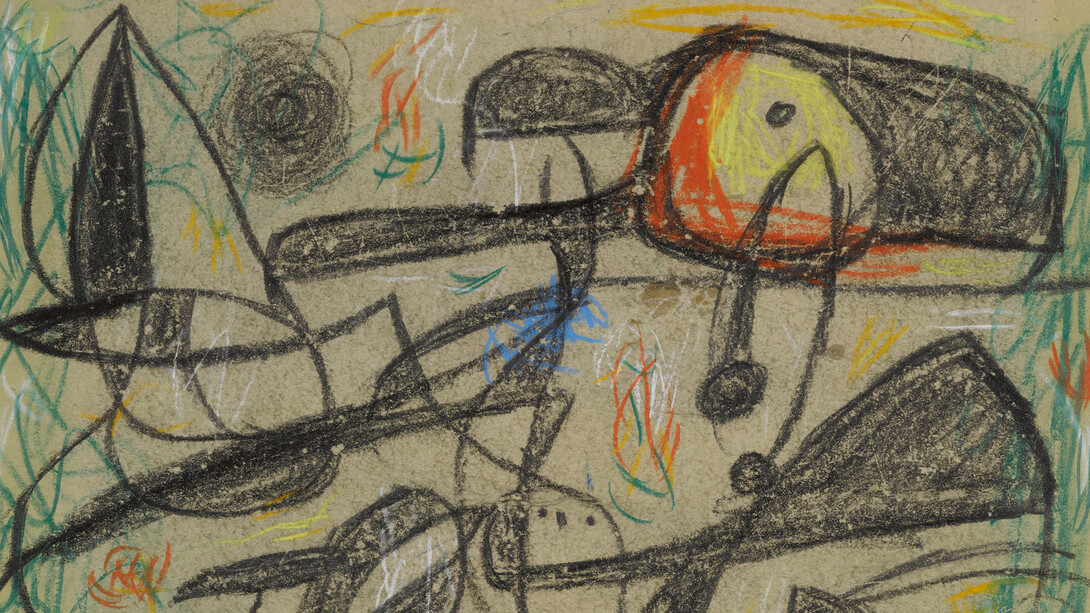
Joan Miró, Femme, oiseaux (detail), 1977. Courtesy of Opera Gallery


Regards sur l’art espagnol, 1945–2025

22 May — 17 Jun 2026 at the Opera Gallery in Paris, France

30 APRIL 2026

Opera Gallery is pleased to present Regards sur l’art espagnol, 1945–2025, a curated selection of works tracing the evolution of Spanish art from the postwar period to today. Spanning 80 years—from paintings and drawings by Pablo Picasso to Pedro Almodóvar’s photography—the exhibition offers a nuanced reflection on the continuities and ruptures shaping modern and contemporary Spanish art.

Sunday, April 19, 2026

Lost Federico García Lorca verse discovered 93 years after it was written


Federico García Lorca

Lost Federico García Lorca verse discovered 93 years after it was written

Eight-line poem found on the back of a manuscript sheds light on Spanish poet’s preoccupation with time


Sam Jones in Madrid
Sat 18 Apr 2026 05.00 BST

A previously unknown verse attributed to Federico García Lorca has been discovered 93 years after the celebrated Spanish poet and playwright is believed to have jotted it on the back of one of his manuscripts.

‘Difficult love’ / Spanish publisher reprints groundbreaking book of Lorca’s homoerotic sonnets


‘Difficult love’: Spanish publisher reprints groundbreaking book of Lorca’s homoerotic sonnets

This article is more than 9 months old

Federico García Lorca’s poems were printed anonymously in 1983 after being hidden away by family for 50 years


Sam Jones in Madrid
Friday 13 June 2025


In the autumn of 1983, dozens of carefully chosen readers received an envelope containing a slim, red booklet of sonnets that had been locked away since they were written almost 50 years earlier by the most famous Spanish poet of the 20th century.

Name of Federico García Lorca's lover emerges after 70 years


Federico García Lorca


Name of Federico García Lorca's lover emerges after 70 years

This article is more than 13 years old
Box of mementoes reveals that young art critic Juan Ramírez de Lucas had brief affair with Spanish poet

Giles Tremlette in Madrid
10 May 2012

The identity of the lover to whom Federico García Lorca wrote passionate verse in his final year has been a mystery ever since the poet's assassination during the Spanish civil war. But now, more than 70 years later, his name has finally emerged.

Sunday, October 19, 2025

Tarragona / Solitary exploration of ancient ruins


Plaça dels Sedassos, Tarragona, Spain


Tarragona: solitary exploration of ancient ruins

A city from which history overflows

16 MAY 2025, 

Writing about this place and the experience it gave me feels almost wrong. Though, again, I feel the paradoxical urge, as many writers do, to share my experience.

Monday, November 11, 2024

‘I feared for my life’: stories of sexual harassment on the Camino de Santiago


‘I feared for my life’: stories of sexual harassment on the Camino de Santiago

Female pilgrims tell of terrifying aggression, the lingering effects and their belief that their cases are far from isolated


Ashifa Kassam and Mabel Banfield-Nwachi
Mon 11 Nov 2024 05.00


It was on the outskirts of the northern Spanish town of Mieres, as she raced past colourful houses built of stone and wood-framed windows, that Sara Dhooma wrestled with the possibility that she might die.

Women walking Camino de Santiago speak of ‘terrifying’ sexual harassment


Women walking Camino de Santiago speak of ‘terrifying’ sexual harassment

Sexual aggression said to be ‘endemic’ on route through Spain, Portugal and France with solo female pilgrims at risk

 and 

Mon 11 Nov 2024 05.00 GMT


Lone female pilgrims walking the Camino de Santiago have spoken of being subjected to “terrifying” sexual harassment in near-deserted areas of rural Spain, Portugal and France.

Thursday, May 25, 2023

A Japanese company is selling Spain’s botched art restorations as keychains


The restoration of the ‘Ecce Homo’ from a church in Borja, in Aragón, is one of the works that has been turned into a keyring.


A Japanese company is selling Spain’s botched art restorations as keychains

The notorious ‘Ecce Homo’ painting from Borja and the cartoonish work on a 16th-century sculpture are two of four works that are being dispensed in Gashapon vending machines


Spain’s botched art restorations have found a niche in Japan thanks to a series of keychains dubbed “Failed restorations” or Shufuku Shuppai in Japanese. These items are distributed in plastic capsules called Gashapon that can be found in vending machines in train stations, airports and recreational centers.

Saturday, January 22, 2022

Research confirms that intermarrying caused the ‘Habsburg jaw’ in Spanish royals


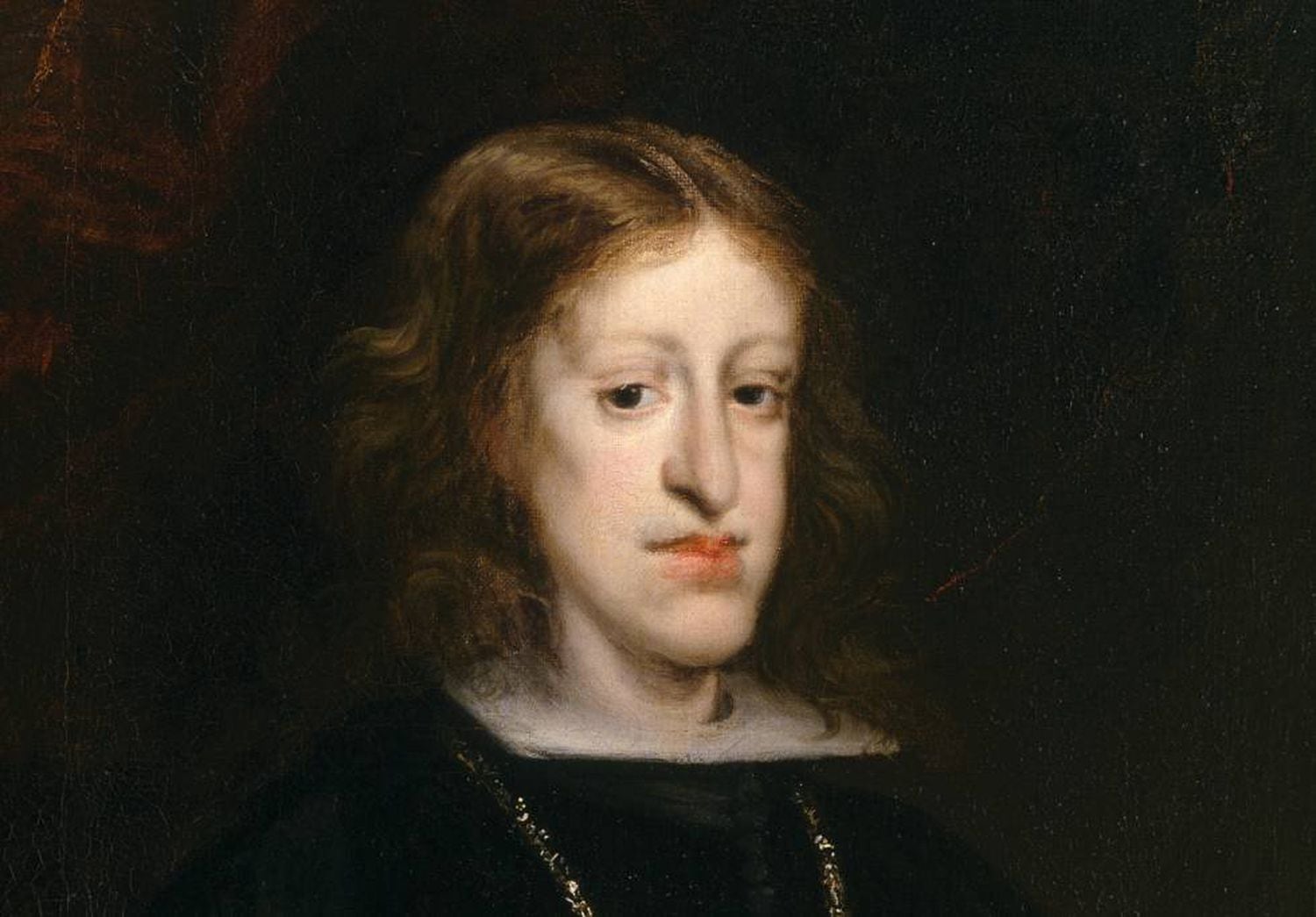
Portrait of Carlos II of Spain, painted around 1680 by Juan Carreño de Miranda.
Portrait of Carlos II of Spain, painted around 1680 by Juan Carreño de Miranda.MUSEO DEL PRADO

Research confirms that intermarrying caused the ‘Habsburg jaw’ in Spanish royals

After analyzing portraits, a team of geneticists and surgeons has confirmed the link between the diplomatic strategy adopted by the dynasty and their prevalent overbite


Manuel Ansede
4 December 2019

According to historian Jaime Contreras, the birth of Charles II of Spain on November 6, 1661, was used as an excuse to organize a huge party in Madrid, complete with extravagant costumes in the shape of animals and demons. “Hundreds of astrologers made predictions,” he wrote in his book Charles II, The Bewitched. “The best known predicted that the prince would become king. Most of the astrological charts supported it: Saturn was the planet that sent the strongest message, a star was found on the horizon of the Spanish court without a malicious aspect.” All too soon, however, the predictions would be proven wrong.

The Spanish role in the French Resistance


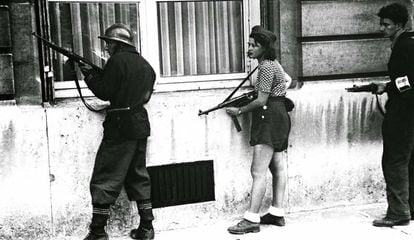
Resistance fighter Simone Ségouin in Paris in 1944.

The Spanish role in the French Resistance

British historian Robert Gildea deconstructs the official version of events in his new book


Guillermo Altares
Madrid, 12 October 2016

The story that France constructed for itself after World War II goes like this: the country was liberated by the Resistance with some help from the Allies, and save for “a handful of wretches,” to use the words of General Charles de Gaulle, the rest of France’s citizens behaved like true patriots.

The Spanish train station that became a hub for Nazis, gold and spies


View of Canfranc station.
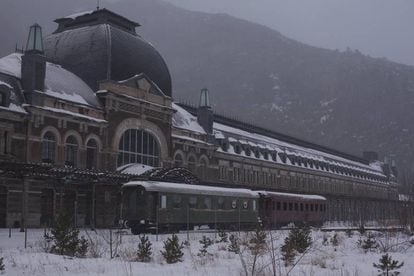
View of Canfranc station.CARMEN SECANELLA

The Spanish train station that became a hub for Nazis, gold and spies

Mired in myth, this vast international railway terminal in Huesca was a hotbed of espionage, and a trade route for Spanish tungsten and German loot during the Second World War. Now almost half a century since it closed, there are positive signals of its revival


Virginia López Enano

9 February 2018


Canfranc is white, cold and smells of garlic soup and wood smoke. Nestled in the narrow valley in La Jacetania, Huesca, it has 500 residents and one main street, which is split in two by a mammoth railway station that was inaugurated by Alfonso XIII in 1928 and saw its last train pull out for France in 1970. Its history is brief but earned the town international notoriety.

Monday, November 29, 2021

The flight attendants who accompanied Picasso’s ‘Guernica’ back from exile


Isabel Almazán and Beatriz Ganuza, pictured on Thursday in front of Picasso's 'Guernica' in Madrid's Reina Sofía museum.VÍCTOR SAINZ

The flight attendants who accompanied Picasso’s ‘Guernica’ back from exile

Forty years ago today, Iberia cabin crew Isabel Almazán and Beatriz Ganuza were working on the plane that returned the painting from New York to Madrid. They recount their memories of the experience to EL PAÍS


Antonio Jiménez Barca
Madrid, 10 de septiembre de 2021

Flight attendant Isabel Almazán was 38 years old on that day, and she insists that she noticed that there was some kind of fuss when she boarded the plane in New York. But perhaps it’s an invented memory, created once all the events of that day became known. The plane, a Boeing 747 belonging to the then-Spanish flag carrier Iberia, took off from New York’s JFK airport with a slight delay, at 8.20pm. In many respects, it was a normal flight – just another for the IB-952 route. But at around 8am Madrid time, when the plane was already on the tarmac and headed to its gate, Captain Juan López Durán broke the news.

Monday, September 7, 2020

The search for Hannibal’s elephants on the Tagus River


View of the Tagus River from the Caraca archeological site in Driebes, Guadalajara.


The search for 

The search for Hannibal’s elephants on the Tagus River

Research shows that the town of Driebes in Guadalajara province could be where the battle between the Carthaginians and the Carparthians was fought in 220 B.C.


English version by Heather Galloway.

VICENTE G. OLAYA

Madrid - 20 ABR 2020 - 01:46 COT

The year was 220 B.C. and the young Carthaginian general Hannibal Barca had to return to his winter quarters in Qart Hadasht – now Cartagena in southeast Spain – after taking Helmática – now Salamanca in the northwest of the country – from the Vettones tribe. It was spring or summer, and the 27-year-old and his troops had to overcome two obstacles to get to their destination: firstly, the wide rivers and high mountains that were difficult for their 40 elephants to cross; the secondly, the hostile local Carpetani, Vettone and Olcade tribes, who sought revenge for the destruction of their crops and cities.

Tuesday, August 4, 2020

Spain’s emeritus king Juan Carlos I to leave country amid tax haven scandal

Emeritus king, Juan Carlos I, in January.
Emeritus king, Juan Carlos I
 January 2020
Photo by JOSÉ OLIVA 

Spain’s emeritus king Juan Carlos I to leave country amid tax haven scandal

The former monarch has told Felipe VI of his "well-considered decision" to move away from Spain after Swiss and Spanish prosecutors opened an investigation into allegations of financial irregularities


English version by Melissa Kitson.

Miguel González
Madrid, August 3 2020


Spain’s emeritus king Juan Carlos I has informed his son, King Felipe VI, of his “well-considered decision to leave Spain,” and his residence at Zarzuela Palace, where he has lived for the last 58 years. The decision comes after Swiss and Spanish prosecutors opened an investigation into bank accounts allegedly held by Juan Carlos in tax havens.


In a letter to his son released by the Royal Household, Juan Carlos writes that due to the “public impact” of the investigation, he has decided to leave Spain in order to enable Felipe VI to act as head of state from a place of “peace and tranquility.”