Showing posts with label Annie Proulx. Show all posts

Thursday, December 30, 2021

All Advice Is Bad


Margaret Atwood


All Advice Is Bad

The arbitrary brain feed of writerly legends who could easily be the faceless guy at the bar crying into his shoulder bag.
Blake Butler
June 19, 2012

Last year or so the Guardian rounded up a bunch of writers over the age of 60 or something and asked them to give advice to writers who use the internet, AKA college students. Some of them offered up some pretty dumb ideas, and even the ones that seemed reasonable to me were mostly just as arbitrary as the ones that clearly were the brain feed of someone who’s been too long in a game where even the legends could be the faceless guy beside you at the bar crying into his shoulder bag.

1. Elmore Leonard: “Never open a book with weather. If it's only to create atmosphere, and not a character's reaction to the weather, you don't want to go on too long. The reader is apt to leaf ahead looking for people.”

If you’re a pussy, this rule is true. Giving up some banal crap I can look out my window to find out isn’t that necessary, but there are plenty of ways to talk about what’s in the air without sounding like you’re setting up an Elmore Leonard novel. One of the most famous opening lines ever, Pynchon’s “A screaming comes across the sky,” isn’t regarding weather per se, but it’s just provocatively situated enough to make you think it could be. And our crime drama writer Leonard is OK with the weather as long as you’ve got a human telling about it? Isn’t that every sentence in every book? I’m sorry to break it to you, Elmore, but humans are the most transient pieces of weather on the earth.

2. Margaret Atwood: “You most likely need a thesaurus, a rudimentary grammar book, and a grip on reality.”

A grip on reality is the last thing I recommend if you are hoping to devote your life to sitting at a machine all day while other people work for actual money and then go home and spend time with their families while not still in the back of their mind doting on the fantasies they ejaculated that week at the desk. More likely you should have a willingness to completely dash any hope of being a normal person with a normal face, though it does indeed help not to be a total headcase motherfucker in the meantime, so perhaps find/replace “reality” with “death.” I don’t think you’ll find that replacement in your thesaurus, which is why they are mostly a waste of time.


3. Roddy Doyle: “Do be kind to yourself. Fill pages as quickly as possible; double space, or write on every second line. Regard every new page as a small triumph.”

I like writing in a frenzy as much as anyone, but to pat yourself on the back every time you’ve blathered the roughly 450 words it takes to fill one double-spaced page, which is essentially the length of a slightly-too-long email, is not only unnecessary, it’s pathetic. Look, no one cares what you do at your desk or how long it took you to get there, or how many words you snuck in today before going to the gym to burn off the beer you drank to feel better about having sat in one place all day again, or how long the manuscript you’re currently working on that should probably have half of itself deleted if you really want to be kind not to yourself or to the reader but the thing you’re making, which is the point in the first place, right? If you’re the kind of person that needs a new small triumph a few times an hour, take up playing billiards against toddlers. If you want to write, put down the mirror.

4. Richard Ford: “Don't read your reviews.”

If you’d read your reviews, Richard, you might have found enough self-guilt to do something new.

5. Jonathan Franzen:“You have to love before you can be relentless.”

Giancarlo DiTrapano and I already extensively covered our feelings on J-Franz, but I’m still cringing about this little nugget. Is that, like, make sure you squash your itch to watch old episodes of Friends before you sit down at the computer, otherwise you’ll just never quite be able to focus?

6. Esther Freud: “Editing is everything. Cut until you can cut no more. What is left often springs into life.”

I mean, yeah, you need to edit, but this sounds like you just put the printout in a magic hat and shake it around and out it comes all wise and ready for the National Book Awards. “Cut until you can cut no more” taken to its logical conclusion pretty much ends up with a blank page, which is maybe some advice that could be taken more regularly, for sure, though this thing about springing into life reminds me for some reason of the Smurfs. Why do so many grown ass-people sound like wise-beyond-their-years nine-year-olds?

7. Neil Gaiman: “Remember: when people tell you something's wrong or doesn't work for them, they are almost always right.”

No. Bad Neil. You are wrong.

8. David Hare: “Write only when you have something to say.”

Following this rule, every Facebook status update could be expanded into a novel. Your baby is six weeks along now? Well by all means, tell the world! Why stop at 50 words? I AM SO READY TO HEAR EVERYTHING THAT’S ON YOUR MIND. How about instead only write when you have absolutely nothing to say and aren’t even in your body so now it’s not you with all your shitty human want and wishing, and is instead something bigger than a person ostensibly writing out a Christmas list of narrative action on paper?

9. Hilary Mantel: “Are you serious about this? Then get an accountant.”

Barf on my dick, Hilary.

10. Michael Moorcock: “Introduce your main characters and themes in the first third of your novel…. Develop your themes and characters in your second third, the development. Resolve your themes, mysteries, and so on in the final third, the resolution.”

Hi, Reader, I’d like you to meet my character, Michael Moorcock, and my theme, Anti-Transcendent Definition of Impossible-to-Define Terminology in the Name of Pretending There Is Perfect Science to My Mythology When in Fact the Only Thing That’s True About Anything Is What It Actually By Its Own Admission Is, Which Doesn’t Mean Anything Because Storytelling Is Just a Bunch of Stories and Making Art Is Making Art and The Reason People Are Sick of Reading Mostly Is That So Many People Think They Have to Follow Anybody’s Shitty Rules Instead of Thinking of Their Own Rules With Their Blood Instead of Their Brains and Just Fucking Creating Something Else.

11. Annie Proulx: “Write slowly and by hand only about subjects that interest you.”

AKA never learn anything, never invent anything, never change speeds, never feel deleted, never scare yourself, never scare anyone. Sure. Sounds good. See you in the gardens.

12. Will Self: “Stop reading fiction–it's all lies anyway, and it doesn't have anything to tell you that you don't know already (assuming, that is, you've read a great deal of fiction in the past; if you haven't, you have no business whatsoever being a writer of fiction).”

I suggest you start with the work of Will Self.

13. Colm Tóibín: “Finish everything you start.”

Now, if you’ll excuse me, when I was six I wrote the first verse of a rap called “The Supersonic Dudes from 3003” and never got around to finishing and now I realize why I never sleep….

VICE


Wednesday, March 3, 2021

Annie Proulx’s 5 Rules For Good Writing


Annie Proulx


Annie Proulx's 

5 Rules For Good Writing


In this post, we’ve shared American writer, Annie Proulx’s 5 Rules For Good Writing.

Annie Proulx is an American journalist and author. She has also writes under the pseudonyms, E. Annie Proulx and E.A. Proulx. She was born 22 August 1935.She won the PEN/Faulkner Award for Fiction for her first novel, Postcards. Her second novel, The Shipping News won the Pulitzer Prize for Fiction and the U.S. National Book Award for Fiction. It was adapted as a film of the same name. Her short story, Brokeback Mountain was adapted as an Academy Award, BAFTA and Golden Globe Award-winning major motion picture.

Proulx is best known for her fiction about rural America. Her writing has a lyricism and wit that appeals to a wide selection of readers. She has received honorary doctorates from the Universities of Maine, Toronto, Vermont, and Montreal.

The National Book Foundation awarded Annie Proulx with its 2017 Medal for Distinguished Contribution to American Letters. Lisa Lucas, Executive Director of the National Book Foundation, says: “Annie Proulx’s ability to explore the nuances of the human spirit and render deeply moving reflections on rural life have solidified her place in American Letters.”

Annie Proulx’s 5 Rules For Good Writing

  1. Proceed slowly and take care.
  2. To ensure that you proceed slowly, write by hand.
  3. Write slowly and by hand only about subjects that interest you.
  4. Develop craftsmanship through years of wide reading.
  5. Rewrite and edit until you achieve the most felicitous phrase / sentence / paragraph / page / story / chapter.
WRITERS WRITE

Friday, February 22, 2019

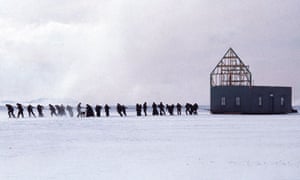
The Shipping News / Proulx's Newfoundland


 A still from the film of The Shipping News

READING GROUP

The Shipping News: Proulx's Newfoundland

The extremity of the location is one of the most memorable aspects of the novel. But how recognisable is it? 
SAM JORDISON
THU 22 DECEMBER 2011
No one who has read The Shipping News will be surprised to learn that Annie Proulx found Newfoundland inspiring.
"Within 10 minutes of landing on the rock I knew that this was a tremendously important place for me," she once told an interviewer. "The more I saw the more I loved. I knew I wanted to write something about this place. And it's hard to explain – because it's not a loveable place. It's very harsh, the weather is cruel, you can hardly drive for a mile without having a moose get in your way… "
Equally importantly, she also explained that her story could only have happened in a place "where people are kind". Quoyle was trampled on everywhere apart from Newfoundland. When he got there, he was able to have a shot at happiness.

Kevin Spacey as Quoyle and Judi Dench as Agnis in the film version of The Shipping News
Judging from the comments under the first few Reading Group articles about the book, however, not all Newfoundland residents feel quite so fondly of Proulx as she does about them.

"I live in Newfoundland and have spent some time up on the coast whose environment and people she 'describes' and I can tell you that book is a bunch of malarky from page one," frankthefist wrote. "But one detail in particular made me angry. She has people put a Bible in an outhouse to use for toilet paper. Those people are particularly religious and tidy. The idea that they would use a Bible to wipe their arses with is too insulting to pass. The whole book is full of bullshit 'observations' that make a Newfoundlander's skin crawl. Typical Yank making it up to seem more real."
Ouch!
"I'm also from Newfoundland" Millieb added, "and I agree with frankthefist. There might be much to admire about the book, but the culture it describes isn't one that I recognise at all (and I grew up spending a fair amount of time visiting relatives and family friends who lived not that far from the part of the coast she's describing). Proulx is an evocative stylist, but the book is more of an imaginative fantasia on Newfoundland than any sort of accurate representation of it – not, of course, that that's necessarily a bad thing. And while I have eaten flipper pie (wouldn't recommend it), the only place I've ever come across mention of a squid burger is in this novel."
I'm disappointed about the non-existence of squid burgers, but I don't have many objections to Proulx's depiction of the place itself. Surely it's Proulx's right to write fiction? As plenty of other people below the line pointed out, the fact that The Shipping News isn't entirely accurate shouldn't be seen to detract from Proulx's achievement.
"As others have said, she draws you in so powerfully that you become part of these places and lives – however 'other' they are from your own experiences – so that they resonate in your imagination afterwards," wrote Soixante10.
I would agree with that. It's now more than a fortnight since I put the book down – and I've read a lot since – but my quiet moments are still often filled with thoughts of fog rolling in, windswept coastlines and how strange it would be to have a moose get in the way of my car. Even if Proulx's depiction isn't strictly accurate, it is inspiring - as the Guardian's own Alison Flood can testify. "I love The Shipping News so much that we went on our honeymoon to Newfoundland," she wrote, "and it is every bit as gorgeous as Proulx makes it sound".
Sadly, constraints of time and budget have prevented me from being able to visit the place myself. Besides, I've learned there are few flights from the UK to Newfoundland outside May to October. Newfoundland, it's safe to say, is out on a limb. It contains the easternmost city in the American continent (St John's) and is so far removed from most of the rest of the world that it has its own timezone (Newfoundland Standard Timezone, a fiercely inconvenient three and a half hours behind GMT). It is also regularly visited by icebergs from May to July – and even if you can't see them for yourself, you can follow them on Twitter.
While I haven't yet visited, I have at least spoken to a few people on the island and while none of them are prepared to admit to the existence of squid burgers, they have all confirmed that other aspects of the book are true. Most notably, that there's an awful lot of rough weather and fog. Erin Skinner from Newfoundland and Labrador Tourism (the main source of the splendid photos in the gallery that accompanies this articlefdafdfasdfsdad) told me that she's seen days where warm sunshine has given way to snow, hail and rain in quick succession. She also attests that there are parts of Newfoundland where "everybody knows your name" and that there are a great many "thriving" community newspapers. L'Anse Aux Meadows, the isolated northerly part of Newfoundland that roughly corresponds to the area described in the novel, is served by The Northern Pen. I'd advise any fan of The Shipping News to give it a read. When I clicked on it, joyfully, the lead article contained a picture of a grounded boat and notes about a storm. (Sample line: "He's confused not only to how his home of 17 years survived last Thursday night's violent wind storm but also what to do with the bridge considering it is no longer attached to his house instead it lays upside down about 15 metres away.") Other pleasures included a piece about snowmobiles, and one about iceberg surveillance.
Quoyle would be in his element. So too, I'm beginning to think, would I. I haven't even mentioned the fact that Newfoundland is also reputed to offer some of the world's best whale-watching opportunities and it's stunningly beautiful. There's even a thriving literary scene, with a literary festival in a national park in August – and if that sounds a little too hectic, there are a number of writing residencies available on a retreat on the isolated Fogo island. I fondly await having an excuse to see it for myself…


Saturday, August 7, 2010

My hero / Annie Proulx by Alan Warner


Annie Proulx

My hero: 

Annie Proulx 

by Alan Warner

Alan Warner on the private, unassuming Annie Proulx: 'Sometimes, in their art and in person, a hero doesn't disappoint'

Alan Warner
Saturday 7 August 2010

Annie Proulx is my hero. A private, unassuming and generous woman, she swept in at the age of 56, a fully-formed and great American writer.

She has a fascination with the nuts and bolts of things; her early books were practical manuals on home-brewing and advanced fence-making. This attention to detail expands into the dovetail joints and structural failures of life itself, and better allows her spectacularly to disassemble her unfortunate characters, loosing them among the traps and tripwires of American life: the poverty, the husks of what was love, the harshness and beauty of nature. Yet always the nobility of human stoicism shows through, tinctured with wise, deep humour.

Who can forget homeless Quoyle and his brood, plonked in a grim motel in The Shipping News? Or that fierce old survivor in "The Half-Skinned Steer", stuck in a car during a blizzard, knowing the last game is almost up? She is one of the truly great story writers of our time. There are no fancy-pancy suburban crises; first paragraphs are as big as whole novels. The prizes came as America recognised itself behind the tattered curtain. Close Range was a masterpiece – a writer in clear-sighted love with her subject. Further Wyoming stories have become richer and stranger: "Man Crawls Out of Trees", "Tits-Up in a Ditch".

She is a kind encourager of other writers. As a house guest in Wyoming, there are great anecdotes to be enjoyed, along with masterful margaritas and buffalo steaks; through the low windows sweep limitless sightlines, the ground cratered with bopping prairie dogs. Then there is the run of a library full of wonders: obscure medical texts, maps, local lore and gruesome oddities.

A poor correspondent myself, I file her jewelled emails separately since they reward rereading: rheumy sketches of human foibles, and unforgettable images – those vast Wyo skies, swept free of contrails after 9/11. Sometimes, in their art and in person, a hero doesn't disappoint.

THE GUARDIAN


2009
001 My hero / Oscar Wilde by Michael Holroyd
002 My hero / Harley Granville-Barker by Richard Eyre
003 My hero / Edward Goldsmith by Zac Goldsmith
004 My hero / Fridtjof Nansen by Sara Wheeler 
005 My hero / Mother Mercedes Lawler IBVM by Antonia Fraser

007 My hero / Ernest Shepard by Richard Holmes
008 My hero / JG Ballard by Will Self
009 My hero / Alan Ross by William Boyd
010 My hero / Ben the labrador by John Banville

011 My hero / Vicent van Gogh by Margaret Drabble
012 My hero / Franz Marek by Eric Hobsbawm

2010

017 My hero / Jack Yeats by Colm Tóibín
018 My hero / Francisco Goya by Diana Athill
019 My hero / Max Stafford-Clark by Sebastian Barry
020 My hero / Arthur Holmes by Richard Fortey

036 My hero / Robert Lowell by Jonathan Raban
037 My hero / Beryl Bainbridge by Michael Holroyd
038 My hero / Charles Schulz by Jenny Colgan
039 My hero / Oliver Knussen by Adam Foulds
040 My hero / Annie Proulx by Alan Warner

041 My hero / David Lynch by Paul Murray
042 My hero / Edwin Morgan by Robert Crawford
043 My hero / Anne Lister by Emma Donoghue
044 My hero / Jane Helen Harrinson by Mary Beard
045 My hero / Edmund Burke by David Marquand
046 My hero / Shelagh Deleaney by Jeanette Winterson
047 My hero / Christopher Marlowe by Val McDermid
048 My hero / Gwen John by Anne Enright
049 My hero / Michael Mayne by Susan Hill
050 My hero / Stanley Spencer by Howard Jacobson

051 My hero / William Beveridge by Will Hutton
052 My hero / Jean McConville by Amanda Foreman
053 My hero / Alexander Pushkin by Elaine Feinstein
058 My hero / Cy Twombly by Edmund de Waal

2011
079 My hero / Gene Wolfe by Neil Gaiman
087 My hero / Alberto Moravia by John Burnside
096 My hero / Isaac Babel by AD Miller
097 Lucian Freud by Esi Edugyan
100 Thomas Tranströmer by Robin Robertson
102 My hero / David Hockney by Susan Hill

2012

190 My hero / Iris Murdoch by Charlotte Mendelson
194 My hero / René Descartes by James Kelman
199 My hero / Albert Camus by Geoff Dyer

2015
2016