Showing posts with label Evelio Rosero. Show all posts

Monday, May 10, 2021

Michael Jacobs's top 10 Colombian stories


Michael Jacobs's top 10 Colombian stories

The author recommends books to better understand a country whose traumatic history is balanced by life-affirming exuberance
Michael Jacobs
Wed 5 Dec 2012 13.01 GMT

Alife-long passion for the Hispanic world first led me to Colombia, together with a fascination with the early explorers of the New World, from the conquistadors to the German scientist Alexander von Humboldt. The latter conveyed for me a sense of wonder and awe I would later find in the writings of Gabriel García Márquez, whose novels encouraged my belief in travel literature as a poetic transformation of reality.

Saturday, March 23, 2013

Evelio Rosero / Fear


by Ingrid Baars


FEAR
by Evelio Rosero
Translated by Anne McLean

One time he called home and he himself answered the phone. He couldn’t believe it, and hung up. He tried again and again heard his own voice answer. Then he gathered the courage to ask for himself and his own voice told him not to keep insisting because he was never coming back. “Whom am I speaking with?” he asked, finally, and heard, dumbfounded, what he should never have heard. What did he hear? Nobody knows, but it must have been something terrible because he could not control the laughter rising in his throat, suffocating him. The next day the news wasn’t in the papers, a shame if you bear in mind that all true journalism consists in going beyond appearances, to total truth, and even more if it perhaps had to do with a metaphysical problem in the telephone company. You could inquire into the reality of this event, exposing yourself—it’s true, at your own risk—to the possibility that all the telephones might conspire against you one afternoon and silence you, definitively.


Bomb 110
Winter 2010


Friday, March 22, 2013

Good Offices by Evelio Rosero / Book Review

Good Offices by Evelio Rosero

Good Offices
by Evelio Rosero
Book Review
by Milo
On September 25, 2011
Tancredo, a young hunchback, observes and participates in the rites at the Catholic church where he lives under the care of Father Almida. Also in residence are the sexton Celeste Machado, his goddaughter Sabina Cruz, and three widows known collectively as the Lilias, who do the cooking and cleaning and provide charity meals for the local poor and needy. One Thursday, Father Almida and the sexton must rush off to meet the parish’s principal benefactor, Don Justiniano. It will be the first time in forty years Father Almida has not said mass. Eventually they find a replacement: Father Matamoros, a drunkard with a beautiful voice whose sung mass is spellbinding to all. The Lilias prepare a sumptuous meal for Father Matamoros, who persuades them to drink with him. Over the course of the long night the women and Tancredo lose their inhibitions and confess their sins and stories to this strange priest, and in the process re- veal lives crippled by hypocrisy.
One thing became clear to me early on – while reading Good Offices by Evelio Rosero – was its fluidity. Reading such a beautiful and energetic translation – by Anne McLean and Anna Milsom – I lost myself in its simplicity and free flowing narrative. I felt as if Rosero was conducting a small orchestra, a solo violin performance, or perhaps I was sitting at the theatre where one solitary voice spoke to me, just like an actor on stage reciting a monologue. Whatever the performance, be it classical or acting, I was spellbound and couldn’t put the book down finishing it in one sitting.
To me I imagined Rosero sitting down in his favourite writing chair, a glass of his favourite tipple in close proximity and writing the first thing that came to his head with a prose that simply flowed and flowed until the finality of its conclusion.
Good Offices oozes quality from the magnificent print, sumptuous prose and a high quality paper. Such a tactile book, even though it may be a little short on stature weighing in at just 142 pages, this is an elegant book – something you come to expect from MacLehose Press.
The story is a curious one and takes place over a relatively short time period of one day and one night. Good Offices is vibrant and imaginative and despite its limited scope I found it quirky and surprisingly moreish. Characterisation is obviously limited but Tancredo, Father Matamoros and the Lilias stole the show for me especially when alcohol was consumed and its effects obvious for all to see!
I’m not going to comment on the religious side of the book as I’m certainly not knowledgeable enough in the intricacies of the Catholic Church and its inner sanctum. Suffice to say some of the vocabulary – particularly during the mass – went way over my head but it didn’t detract from my enjoyment of the book. With the arrival of Father Matamoros, who stands in the lead the mass with minutes to spare, the fun begins and thanks to a rather healthy dose of 25% proof Hazelnut liqueur Matamoros conducts himself with aplomb considering his inebriated state. An instant hit with one and all, the congregation is moved in a way that has been severely lacking for some time. Matamoros is a breath of fresh air and they simply can’t get enough of him.
Mass had finished , but the old ladies of the Neighbourhood Civic Association remained rigid in their seats, pillars of the Church, absorbed in mute song, the silence of centuries.
It was as if no-one wanted to leave.
The story itself then descends into a black comedy where anything can and does happen. Suffice to say there are a few shocks in store but Rosero manages to keep it all fairly believable – to a point! The book made me smile and I came away grateful for having read it, not much more you can ask from a book. Set in Bogotá this is the first time I’ve read a book set in Colombia and I can categorically say it won’t be the last!
Published by MacLehose Press Good Offices is available in Hardback & Kindle.
http://www.milorambles.com/2011/09/25/good-offices-by-evelio-rosero-book-review/


Book Review

Good Offices by Evelio Rosero

The Catholic Church has had a bad press of late with a series of damaging child-abuse scandals and shameful cover-ups. Its opposition to contraception and abortion, its subjugation of women and its homophobia have also come under fire. EvelioRosero, prize-winning author of The Armies, offers a unique take on the Catholic Church’s institutional failings in this surreal portrait of one of its Colombian outposts.

the church coffers are overflowing with money and the priest and his sacristan grow fat on the extravagant meals prepared for them by the three aging widows known as the Lilias.
Trancredo the hunchback is responsible for serving charity meals to the destitute of Bogotá. Each day a different group receive the parish church’s meagre leftovers: “meals put together at minimum cost…potato soup and rice with potatoes were the sole insipid ingredients, army mush reserved for the blind, the street children the prostitutes.” Meanwhile, the church coffers are overflowing with money and the priest and his sacristan grow fat on the extravagant meals prepared for them by the three aging widows known as the Lilias.


Tancredo’s biggest fear is of “being an animal”. Full of remorse at having embarked on a passionate affair with Sabina, the sacristan’s lascivious god daughter, Trancredo tries to fend off her advances, afraid of being discovered and thrown out of the church that took him in as a young boy.

When the depraved Father Almida and his sidekick the sacristan are called for an urgent meeting with their mobster benefactor, Don Justiniano, a replacement priest is called in to take the Mass. Father Matamoros is a drunk who spikes the communion wine with aguardiente, but he bewitches the congregation by daring to sing the Mass in Latin.

Even Tancredo is affected and, after the sermon, finds himself confessing his fears to the priest. The Lilias prepare a lavish banquet to express their gratitude, before joining Matamoros in a night of debauchery and bloodlust that ends in them exacting a terrible revenge on their oppressors.

Rosero’s colourful cast of characters will remain in your memory long after the final page is turned, particularly those whose outward appearance belies their inner turmoil. Sabina is described as a “tempestuous spirit locked inside [a] fragile blonde body”. While the Lilies are introduced as suitably devout, indistinguishable from one another, “dressed in black, their Sunday best, the three of them with trimmed hats, veils and Missals, patent leather shoes, their hands redolent of onions, their breath smelling of various dishes, in their eyes the flames still lingered, the fatigue from mincing meat and garlic, from squeezing lemons…” Later, under the sway of Matamoros, their repressed fury is unleashed.

Just as The Armies depicted the chaos that erupts in a rural town besieged by violence, Good Offices focuses on a small, insular community, in order to highlight a wider malaise.  Rosero’s evocative prose is lucidly translated by Anne Mclean and Anna Milsom, and his darkly comic satire hits its mark with an unsettling ferocity.

http://latineos.com/en/articles/literature/item/119-book-review-good-offices-by-evelio-rosero.html

Thursday, March 21, 2013

The Armies by Evelio Rosero

La calavera
El Naranjo, Colombia, 2006
Photo by Triunfo Arciniegas
Scott Esposito on The Armies
Enmeshed in War: Evelio Rosero's The Armies
a review by Scott Esposito

Colombia is almost certainly among the most difficult places on Earth for an outsider to understand. For forty years, the country has been embroiled in a civil war that pits various arrays of paramilitary groups and well-armed drug cartels against one another, with the government caught somewhere in between. In some parts of the country, warfare has been constant for decades — so long that it is simply sewn into the flesh of everyday life. That such a state of affairs deforms life from what most of us would consider normal is obvious and tragic; what is less remarked upon is the difficulty of empathizing with those affected by the war, the great challenge to someone who has not experienced this life in comprehending what the everyday is like for the those enmeshed in it.
Great art has always played a facilitating role in exactly this way. Even in this era of photographic and cinematic plenty, true art is has a near monopoly on conveying authentic subjective realities that can rarely be related otherwise. This is the tall order that the Colombian novelist Evelio Rosero has set for himself in his 2007 novel, The Armies. Winner of The Independent’s Foreign Fiction award in 2009 and widely lauded in the British press, the book arrives on U.S. shores highly recommended. Reading it, one hopes for a document that will articulate the fabric of everyday life in this extreme environment; indeed, if the interviews Rosero gave after receiving the Foreign Fiction award are at all accurate, this was the author’s foremost aim in writing The Armies
Unfortunately, The Armies is only a partially successful novel — or rather, a successful enough experiment to make the overall failure more acutely felt. Occasionally, the book strongly evokes certain aspects of the struggles that continue to take place in the Colombian mountains and jungles. More often than not, though, its failures only highlight the difficulties inherent in writing about this war as well as those qualities that separate good fiction from average. 
The book starts promisingly with a vision far removed from war: the septuagenarian Ismael is standing in a ladder and peering above his wall, eying the exposed nipples of his young Brazilian neighbor as she sits ravishing and naked with her guitar-strumming husband. Barely have we begun to assimilate this strange scene than we find ourselves within the Brazilians’ kitchen, where the 12-year-old maid Gracielita stands washing dishes as Eusebito, their son, peeps at her and is “fascinated and tormented by [her] tender white panties, slipping up through generous check.” This scene of mutual ogling could be taken in any number of directions—significantly, though, Rosero ends the scene with the information that Gracielita only became a maid after being orphaned “when our town was last attacked by whichever army it was.” 
In the following pages, Rosero is deft in elaborating the nuances of the lecherous relationship between Ismael and his married neighbor, Geraldina. One feels that the beautiful Geraldina is both awed by her beauty and greatly proud of it—she doesn’t know what to do with Ismael’s improper attentions, although she definitely knows that she likes the way they make her feel.  
Rosero then turns our attention to the relationship between Ismael and his wife, which, befitting a couple with decades of stagnant marriage behind them, isn’t nearly as rich. Though Otilia chides her husband for his lechery, her resignation is clear, especially when she disinterestedly suggests that he take his problem to Father Albornoz. Ismael sets out on his journey, yet this domestic drama is soon to be interrupted by the arrival of the armies as they battle over the village. 
In these early pages Rosero is economical and subtle in presenting an interesting web of relationships. The novel is narrated in a detached first-person by Ismael, and his interest in the Brazilian Geraldina is vaguely reminiscent of Humbert Humbert. Ismael’s desires mix provocatively with Eusebito’s fetishistic interest in the maid Gracielita; his leer is boyishly innocent, yet its implications for the social relationships that the long Colombian war has insinuated into these communities is sinister.


At any time of the day the children would forget the world and play in the garden burning with light. I saw them. I heard them. . . .
   Sooner or later the shout would come from the terrace: it was Geraldina, more naked than ever, sinuous under the sun, her voice also a flame, sharp yet melodious.
   She called: “Gracielita, time to sweep the hallway.”
   They left their game, and a slight sad annoyance returned them to the world. She went running at once back to the broom, across the garden, the white apron fluttering against her belly like a flag, hugging her young body, sculpting the pubis, but he followed her and soon enough took up again, involuntarily, not understanding, the other essential game, the paroxysm that made him identical to me, despite his youth, the panic game . . .  
From this promising start, however, the novel falters into a far more mundane depiction of the village; ironically, this mundanity comes right when the soldiers arrive. The village is soon invaded by armed men who wage a firefight, killing a number of residents and taking as hostages Ismael’s wife and Geraldina’s husband and children. As life goes on, Rosero follows Ismael’s fraught attempts to make sense of the loss. Before long the armies once again come, bringing further disaster and a resolution to Ismael’s problems.  
One wishes that the sense of perversion that pollutes these early pages would have stained more of the novel, for it is in these early pages that Rosero captures the strange yet not wholly inaccessible moral space that is emblematic of a part of the world where well-armed, privately financed armies regularly fight to the death for tiny, impoverished towns and villages. Yet as The Armies plays out this Colombian warzone begins to feel too much like just another battle, Ismael’s thoughts and concerns like those that might arise from any number of scenarios of loss. Undoubtedly there is something universal about Ismael’s story, and Rosero cannot be faulted for trying to show his common humanity, but more often than not the commonness of Ismael’s thoughts and actions feel less like an appeal to the universal in strife than a failure of the imagination. We are no longer so much in the deft and the nuanced town from the novel’s opening pages as in a dull and ill-defined space that feels too much like anywhere. 

In Rosero’s favor, when the armies descend upon the village he skillfully conveys the sense of confusion that is part and parcel with an unending war. There is no loudspeaker to announce the beginning of hostilities, there is no radio news report to let citizens know that the was has begun again for them. There are only rumors and worries. It starts with a “white shadow” that “runs across the street.” Soon there is the sound of machine guns in the distance. At one point Ismael is mysteriously detained with a group of men, but then released on account of his age. Soldiers continue to waft in and out of his day, and no one seems to know what is going on, although they all are impressed by the same feeling of menace, the same dull feeling of this all having happened before. Life carries on more or less as usual, but with the looming threat of disaster. 
This is truly a perverse state of affairs, far more perverse than the mere lechery described at the beginning of The Armies, yet none of Rosero’s characters seem to know how to properly represent it. At times a flavor of that earlier perversion is present, as, for instance, when Ismael utterly ignores the new school headmaster who confides his shock that no children attend the school.
More often, this sense of perversion is lost. Referring to the great care that the town priest must exercise in all conversations in order to preserve his life and the integrity of his church (which was already once bombed and rebuilt), Ismael laments:

The uncertainty is the same for everyone; Father Albornoz replies, spreading his arms; what can he know? He speaks to them as in his sermons, and maybe he is right, putting oneself in his place: the fear of being misinterpreted, of ending up accused by this or that army, of annoying a drug trafficker — who can count on a spy among the very parishioners who surround him — has turned him into a concerto of faltering words, where everything converges in faith: pray to heaven that this fratricidal war does not reach San Jose again, may reason prevail . . .
Ismael’s reaction here is typical of the kind of failure The Armies indulges in too often. His thoughts feel too scripted, his response to the priest’s display far too rational and measured, and they fail to convey anything particular to separate the Colombian experience from similar ones in other parts of the world. Moreover, why is it that Ismael has such perspective? As a citizen caught up in this war would he really be in a position to so calmly judge the priest’s display, or would his own sense of logic and morality not be as twisted and confused as the priest’s? It is a hazard that Rosero runs constantly into in this book. He seems to want Ismael to both embody the pain, disillusionment, and madness of this war, while also trying to raise his voice up into a kind oracle that can see what his fellow citizens don’t quite. Rosero has said that he originally wrote The Armies in the third-person and then switched to the first, and indeed, too often this book sounds as though too much information is being made to fit into Ismael’s single consciousness.
The Armies, once so full of potential, continues to pale once the combatants leave. Though Ismael’s wife has been kidnapped during the invasion, his mounting fear for her safety as the months pass is difficult to believe: Is this really the same man who earlier thought “if she loved me today as much as she does her fish and her cats perhaps I would not be peering over the wall?” Of course, it is utterly plausible that Ismael might be jolted into remorse at the kidnapping and sudden loss of his wife, but this man who previously had such little regard for his wife’s companionship never notes this incongruity, and never once wonders where his sudden passion for her has come from. He merely offers us uncharacteristically overheated remarks like “right that very moment I am going mad at the edge of this cliff and feeling that a hand could push me at the most unexpected moment.”
In the concluding fifty pages The Armies does begin to gain momentum. Although the changed relationship between Ismael and the now-husbandless and childless Geraldina never becomes quite convincing, Rosero does write a number of good scenes for the wandering Ismael that begin to exude the madness of this war. Particularly successful is a Beckettian moment in which Ismael speaks through a closed window to an elderly friend who has been left for dead by his children after suffering a heart attack when the armies once again descend:
“Open the window, Celmiro.”
   “Didn’t I tell you I can’t move? Thrombosis, Ismael, do you know what that is? I am older than you. Look at you, after all: out in the street, and dancing.”
   “Open up.”
   “I can only move my right arm, to take a piece of meat, what will I do when I need to relieve myself?”
   “Here they come, shooting in all directions.”
   “Wait.”
   Time goes by. I hear something fall, inside.
   “Damn,” I heard Celmiro say.
   “What happened?”
   “The frying pan with the kidneys fell. If a dog gets in here I won’t be able to frighten it away. It’ll eat everything.”
A word should be said about Anne McLean’s translation, which is generally successful but breaks from character often enough to be obtrusive. After a charged encounter between Ismael, a naked Geraldina, and her husband, it is simply bizarre to hear the lovely Brazilian say in closing to Ismael “Thank you for the orange, kind sir.” Likewise, something sounds off about guerrillas talking like mobsters when they exhort one another to “whack him.” At other times, it seems that too much of the original language has been kept in the translation. In English, no one utters the wish, “I want to sleep unconscious,” and the following is simply a construction that is ungrammatical: “She discovered suddenly, my gaze drawn, like a whirlpool of cloudy water, full of who know what powers . . .” Perhaps that gaze could be drawn as if by a whirlpool of cloudy water, but I don’t see how a gaze is drawn like a whirlpool. This lengthy sentence also sounds off amidst the rest of Rosero’s prose, which is utterly economical and concise, almost calcified in its concision and respect for the rules of syntax. 
In the end, The Armies is a partially successful novel, a book with enough good points and potential to make the dead weight that surrounds them lamentable. It is laudable that Rosero has taken it upon himself to speak for the victims of his nation’s war, but worthy causes alone do not make for good art, no matter how often book critics may patronize mediocre novels that depict harsh realities around the globe. One hopes the strong reception accorded The Armies will spur publishers to make more of Rosero’s novels available in English, and that these novels will in turn be more complete works.

http://criticalflame.org/fiction/1109_esposito.htm


Evelio Rosero

THE ARMIES BY EVELIO ROSERO


Wednesday, March 20, 2013

Evelio Rosero / Interview / Antonio Ungar

Rosero.jpg

Evelio Rosero

by Antonio Ungar


Bomb 110
Winter 2010


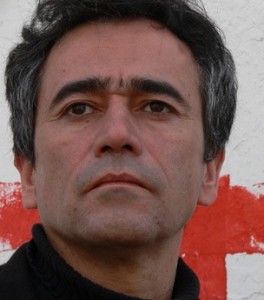
Evelio Rosero is an oddity among Colombian writers of his generation. He doesn’t write for newspapers, doesn’t write for magazines, doesn’t get his photo taken at public events, doesn’t have a weekly column, doesn’t accept bureaucratic or diplomatic posts, doesn’t attend cocktail parties or book launches, doesn’t enjoy the pageantry of book fairs and literary gatherings. His face is not familiar to the average citizen. He is a writer, period, one who has devoted 30 years to writing and nothing else, without stopping to wonder whether the cultural press—the “parrots,” as he calls them—takes any notice of him or not.
Rosero set out to make his living as a writer from a very early age, and by writing tirelessly (and submitting work to all sorts of literary competitions) has gradually managed to do so. He has published novels for young readers, poetry, long novels, short novels, all kinds of stories. His nineteen titles published (and seven prizes won) in 25 years make him one of the most prolific Latin American writers of his generation, comparable only in this sense with someone like the ever-abundant César Aira.
Educated in Catholic schools in the Andean city of Pasto in southern Colombia, and in Bogotá, the city where he has spent most of his life, Rosero recognizes that his years with the priests have left a deep rage, one he has been able to measure out and use to his advantage in the creation of several of his books. Lured by the siren song of Europe, like any number of self-respecting Latin American writers, he lived in Barcelona for a few years as well as in Paris, which only served to confirm how much pleasure he got from life in Colombia. For years now his daily life has been as austere and orderly as his writing: he lives in a middle-class apartment complex overlooking a lake with wild birds, rides his bike around Bogotá, and is in a stable relationship. He seems to have tamed the monsters, to have confined them to those books of his infested with solitary, misunderstood beings, who are often also desperate, ill, insane, or senile. All of them are Colombian heroes undertaking, almost always, fruitless pursuits with no point of return.
Translated into a dozen European languages, published by the finest houses in Spain and Latin America, praised by critics, studied in universities, Rosero’s dark worlds have managed to reach a wide audience. He is an oddity indeed, a writer who in spite of the considerable recognition he has attained has never come out of hiding, who has always defended his absolute independence, who never let himself be impressed by popularity’s glossy trinkets. He affirms unashamedly that literature can and should change social reality, and that this is one of its main functions, something practically none of his colleagues would now dare to say, at risk of seeming too engaged.
Confined to my apartment by a dangerous respiratory illness (feeling almost like I was at the end of an adventure written by Rosero) I conducted this interview via email from another neighborhood of the gigantic city of Bogotá. A few days ago, Rosero wrote in one of his messages that lately he’d lost his enthusiasm for writing. Reading his books (intense, taut, sincere, uncomfortable, uncompromising) and especially given how many he’s written, makes it hard to believe him. English-speaking readers need not worry; Rosero’s recently publishedThe Armies, which received the prestigious Tusquets International Prize and the 2009 Independent Foreign Fiction Prize, is the first of a surely long list of his novels to become available in translation.


Translated by Anne McLean.
Antonio Ungar You spent part of your childhood in the upper Andes, in the south of Colombia. Tell me whether your literature has been affected by the city of Pasto and the geography of the region of Nariño.
Evelio Rosero Yes, of course. Childhood is the most formative stage in a writer’s life, or anyone’s. Especially the villages I’ve depicted in my novels, I’ve noticed—after the writing—correspond to the memory of those villages in the Andes that my family used to visit. So, in my fiction, their description is linked to an ancestral memory: their rural spaces and atmospheres, their indigenous faces, their geographical and human abysses, is unconscious.
AU Many of your books are for a young readership and yet, in some of your novels—in En el lejero (In the distance) and in some scenes of The Armies—groups of children are threatening creatures; they chase the protagonists, throw stones at them, make fun of them. In The Armies, a group of kids plays with a grenade and threatens to physically annihilate one of the main characters. Why? Are these just coincidences that aren’t worth spending too much time on?
ER Children are also threatening in some of my “children’s books.” Cruelty in children is a reality, just like their innocence. I am aware of all these passions, as elemental as they might be, when writing—whether a children’s story, or a full-length novel. When I write for children, or when I used to write, because I seem to have lost the joy in doing this, I don’t think I’m addressing marvelous, winged creatures. As a boy I suffered, as children suffer in this life, as intensely or more so than grown-ups. The coincidence that you point out to me seems, for this reason, very important. It had puzzled me that no one else seemed to have noticed.
AU Is there any relationship between your works for young people and those for adults? Is there any interplay between the two? Are they independent universes?
ER Interplay has to exist, because we’re talking about the works of a single author. That said, I haven’t bothered to unravel the links. I know that several of the children in my novels for adults are also central to other stories for young people. That, I think, gives a greater weight to their countenance, attitudes, and tenacity. In my novel En el lejero, the children who pursue the protagonist through the streets of the town were already familiar to me—they were the same children as the ones in some of my other novels. But I never bothered to tell anyone.
AU Tell me what role Bogotá plays in your life and work. Do you think you’ll live here for the rest of your life? In this city of almost eight million inhabitants you live a long way from the historic center and the places where artistic events are held and where the so-called “cultural news” is made. Is this an accident of real estate or a deliberate act?
ER If Pasto was my childhood, Bogotá was my adolescence. In fact, I was born in Bogotá, and learned to read and write in a religious school, in Bogotá. Pasto, Nariño, nourish my small towns and villages, the rural part of my work. Bogotá is the metropolis. Actually, it’s the only Colombian metropolis; the other cities, Cali, Barranquilla, Medellín, are like big villages. Bogotá, and this is also involuntary, not at all on purpose, is the most representative city of my urban stories, and of one novel Plutón (Pluto), which is almost 400 pages long. But I also lived for some months in Paris, and three years in Barcelona: I know some of my urban stories originate from the milieus of Paris and Barcelona mixed with others from Bogotá; those are the sorts of cocktails literature offers. Bogotá fascinates me, although it also terrifies and disgusts me. It’s a city I love, especially for memories of my time at the university, not high school, which was completely horrible. The city is permanently advising us of our past within it. Any street, a little square, a church, can take us back to a conversation, a kiss, or a toothache. I walk around Bogotá a lot; I cycle all over the city; I often visit the Luis Ángel Arango library, in the historic center, but artistic events, I don’t know why, don’t particularly interest me. Instead of following cultural news, or having its parrots follow me, I’d rather go to the cinema, or stretch out with a book on the gentle hills of Independencia Park, where beautiful women stroll by, or even meditate.
AU Many of your stories tell of odysseys in which a solitary hero faces, like Ulysses, the conspiracy of dark forces, implacable real and imaginary enemies, and his own human weaknesses: it happens for example to Ismael Pasos in The Armies, to Jeremías Andrade inEn el lejero, and to a certain extent to the nameless narrator of Los Escapados (The escaped ones). Are destruction and breakdown good material for the narrative trade?
ER Remember that things are going well for Jeremías Andrade at the end of En el lejero; the town itself returns his granddaughter, who had been kidnapped. This novel is very much linked to the one that follows it, The Armies. It is, in a way, its “preparation,” its prelude. The protagonists of both novels are 70-year-old men. The viewpoint is similar, but not the same. We could say that the literary dissatisfaction I felt over the first one, was the genesis of The Armies. The first is a terrible dream, a nightmare we try to shake off with pain, with sadness, until we wake up. The second is no nightmare, it is reality itself knocking on your door with its knuckles, three hard knocks, knocks with the sound bones make—death. I couldn’t be satisfied with what I had reached in En el lejero. There the nightmare took control of everything, like in Señor que no conoce la luna (The man who didin’t know the moon), another type of allegory. But it didn’t go beyond that: a nightmare. It wasn’t true. I had to force myself to transfer my real fear, my sporadic terror as a citizen, to the pages of a book, as a rebellion. I never ever thought destruction and breakdown would be good material for my trade. It’s that Isuffered this destruction more and more; I suffered it deep down inside, in my way, as I know that directly or indirectly everyone in the country suffers it, except the president and the magistrates, except the generals and the guerrilla commanders and the paramilitary chiefs. I suffered it by just watching the news at lunchtime: a mother telling of her massacred children, then the country’s indifference; a model talking about soap operas, then the list of the missing; the so-called false positives (civilians murdered by the military and subsequently disguised as dead guerrilla fighters), which still go on with no one doing anything to stop them; and then the Colombian national soccer team, which is another disgrace like the country—all that generates a novel. I hope humor and joy might shape another novel, if it comes to pass. It would be just as interesting an experience as the other.
AU Many of your heroes are characters who are beset by death, illness, a world that seems to conspire against them. Does this have something to do with the real experience of the writer Evelio Rosero? Is it just a technical decision that impels the stories you want to tell?
ER The writer is a human consequence of those around him, or those who were around him. I’m sure I haven’t only written about myself. Those things you mention, death and illness, the world conspiring against a person, are universal in any literature, here or in Cuzco, Moscow, or Detroit.
AU In some of your books the main character, clearly distinct from the rest, has communication problems with their surrounding world. In En el lejero the protagonist—and the reader with him—does not easily distinguish between the reality of the senses and thereality of the mind (and when he does distinguish, it’s the third-person narrator who takes charge of blurring the boundaries). In The Armies, madness and desperation gradually seize the protagonist, taking him hopelessly further away from the real world. Tell us a little about any literary considerations that might have led you to use that relationship between individuals and their surroundings.
ER All I know is that this madness, this knife’s edge where reality and unreality take place, are here, they breathe around every street corner, and they are what propels my writing.
AU You lived in Paris and in Barcelona. What was that like? Why did you decide to return to Colombia?
ER Colombia is my country. My parents, my grandparents, my first love and the last, are all from here. Besides, I confess that things were quite difficult for me in Paris. Not so hard in Barcelona, but difficult there too. In Paris I had to busk in the metro, playing the flute. One time the doors opened and I saw two girls, holding hands. The door of the subway car closed, they disappeared, and I was left with a novel of two girls who love each other. I called it Juliana los mira (Juliana watches them). Without finishing the novel I went to Barcelona, in the middle of the summer. I’d arrived in Paris in the winter. That’s probably why I like Barcelona so much. In Barcelona I finished Juliana, and spent three years living off vino pelión, as my friends and I called the cheap wine we used to drink. I wrote El incendiado (The burning child)—the story of the death of a child at the hands of two bakers. One doesn’t write any better by leaving the country—that’s what I think, but I had to go away to understand that. It would be a shame to have to leave this country, with its plantain soup, cumbia, and Andean flutes. I came back to Colombia, and after less than a week in Bogotá I fell in love and went to live in Chía, in the Cerca de Piedra district, among cows and chickens. The little brick house seemed right out of a fairy tale, but also out of nightmares. I stayed there six years, and I wrote Señor que no conoce la luna, because before I lived in Chía I’d never really seen the moon, as simple as that, I didn’t get to know the moon in Paris or in Barcelona. I’ll die here, I was born here.
AU It seems like in Latin America there are two very strong literary traditions, one closer to realism (Mario Vargas Llosa, Reinaldo Arenas, Guillermo Cabrera Infante, almost all of Carlos Fuentes, etc.) and another closer to fantastic literature (Jorge Luis Borges, Alejo Carpentier, Julio Cortázar, Felisberto Hernández, Adolfo Bioy Casares, etc.) How do you locate your work with respect to those antecedents?
ER I admire Vargas Llosa, his distinctive way of assembling his novels, his technique. Fuentes is not a writer I’m particularly fond of. Felisberto Hernández amazed me, years ago, like Borges and Rulfo. I’ve enjoyed Latin American books without stopping to wonder whether they fit into the fantastic or realist genre. It’s about finding good literature and enjoying it, as a reader, and taking it on board, as a writer. One learns from everybody, no? They are universal voices that one inevitably incorporates into one’s own voice. I’ve noticed that I was interested in fantastic literature when I was starting out, 30 years ago—I have a lot of short stories in this vein—but also, and simultaneously, in realism. I often combined the two angles in a single composition, but never deliberately. I believe more in spontaneity in creation, than in experimental intentions.
Though, of course, I consider literary experimentation important. I enjoy exercises that help me to glimpse possibilities that I later try to develop, but just for myself. I don’t think the results deserve to be shared. For me, they’re entertainment. However, there’s another type of experimentation, which I might call hidden, and which is present in every novel. For a story, or a poem, to end up linked to a fleeting episode in a novel, to a brief paragraph, is a risky experimentation. In fact, the first book I wrote was experimental, and I probably made a mistake in allowing it to be published. I was barely 20 years old. I gathered up all the poems I’d written up till then, and, like a definitive farewell to poetry, decided to transform them into prose, and vivisect and disfigure them around a single character: Llo (an invented word that in Spanish sounds like “yo,” which means I). I subtitled it: a novelized poem. With this book I put an end to my pretensions to be a poet. I ended up discovering that I was, I am, a storyteller. I feel in my element with a novel. Poetry was an unconsummated love.
AU In the context of the last question, is García Márquez a writer who interests you?
ER Of course. He’s a living classic, one of the few we’ve got left. A goldsmith of words. He achieves that perfect balance between form and idea, to my way of thinking the goal to achieve. And not just his work: his life and attitude are exemplary. So he’s the best sustenance for any potential writer. I consider Chronicle of a Death Foretold to be as important as One Hundred Years of Solitude. Both of them, along with No One Writes to the Colonel, are his masterpieces. The Autumn of the Patriarch, all in all, strikes me as a failed attempt, but an attempt that many of the most acclaimed writers couldn’t even match. When a writer reads a book he reaches the highest degree of sublimation when he forgets that he’s a writer reading a book, unraveling possible methods or literary directions. That sort of reading delight I only experience with a very few writers: García Márquez is first among them. Doris Lessing, withThe Fifth Child, made me forget I was a writer; I read this book shocked, wounded, revived, like when I read Jules Verne and Daniel Defoe as a boy, or when I finally came to the great 19th-century Russian masters, in adolescence. Those readings went beyond living.
AU The Catholic church (and its apostles in Colombia) has a predominant role throughout your entire oeuvre. What role has the church placed in the life of Evelio Rosero? How has this experience affected your work?
ER I spent all of primary school and most of high school in religious institutions. That explains the presence of priests and religion in some of my works. But there was no encouragement to read in any of those schools. Just the opposite. I knew horrible teachers, grotesques of the intelligence, crude men giving lectures, and very protected as well by their religious leaders. I have no edifying memories of that life. My discipline, my rigor, if I possess them, I got the hard way, perhaps by following the examples of the literary heroes of my youth, but never from those luxurious seedy dens of education where students are trained for everything, except for the spirit, except for human generosity. The Catholic church, along with the politicians, or the first “fathers of the nation,” bear all responsibility for the civil disgrace of our countries, if we’re talking historically. Reactionaries, troglodytes, medieval, as well as perverted, the majority of priests in our educational history did nothing but prepare a mass of fools for perpetual resignation, and their leaders for extreme egotism. Not to mention the active participation of the Catholic church in the distribution of wealth, which has always been unjust.
AU Do you think writers, and artists in general, can have any influence on collective reality?
ER Of course I think so. If not we wouldn’t be here, talking about books. Literature changes reality, modifies readers’ attitudes and conscience. We ourselves have been changed, transformed, by certain books, for good or for ill. The consequences of literature are not immediate, like what a news report, a film, an article might achieve, but it pervades the memory more, it’s more profound, more deeply human and spiritual. The written word touches the soul’s marrow.

BOMB_110_Ungar.jpg
—Antonio Ungar is author of the short-story collections Trece circos comunes (Thirteen Common Circuses) and De ciertos animales tristes (Of Certain Sad Animals), and the novelsZanahorias voladoras (Flying Carrots) and Las orejas del lobo(The Wolf’s Ears), a finalist for the best book published in France in 2008. He writes journalism and lives in Bogotá.