
My top 10
Anne Enright
Author
1
2
3
4
5
6
7 Love in the Time of Cholera
8
9
10 Cloud Atlas


 |
| From left: Nussaibah Younis, Zadie Smith, Bernardine Evaristo and Colm Tóibín. |
Authors including Anne Enright, Michael Rosen, Samantha Harvey and Rutger Bregman reveal their books of the summer
 |
| Stark truths… Mt Halla, Jeju Island, Korea. |
Review
One woman’s quest, told through haunting, harrowing, dreamlike imagery, bears witness to Korea’s traumatic
Anne Enrigh
Thursday 6 February 2025
There are books in a writer’s life that gather all their previous themes and explorations in a great act of creative culmination, which both surpasses what had gone before and makes it more clear. We Do Not Part is one of those books. Published last year in Swedish translation, it helped to secure Korean writer Han Kang the 2024 Nobel prize in literature.
 |
| Illustration by Na Kim |
29 August 2019
When she checked her boarding pass, she was in the middle of the row, and there was a man in a blue suit on the aisle, who gave her a big bleached-white smile as he stood to let her past. The window seat stayed unoccupied for a while, and her hopes rose when a man with a clipboard boarded the plane, his hair gauzy with dew. But there were still people in the aisle, and one of them now stopped beside her row: a huge boy, who was trying to make space for a rucksack in the overhead bin. His belly was right there—she could see it as his green shirt parted company with the belt of his jeans. The rucksack did not fit, so he clasped it to his chest as he turned sideways to squeeze past her and into the window seat. He was wearing a Peruvian hat in brown-and-white wool with a design of llamas and a flap over each ear, and there were tassels dangling from the flaps down to his collar line. A teen-ager. Ninety per cent muscle, thirty per cent puppy fat; he might have another few inches still to go. Once he was seated—she did not know how he did it, but the bag was wedged between his legs and eased under the seat in front, and somehow this huge child made himself small for her. Tucked away. Almost decorous. The guy on the aisle had a newspaper, a big broadsheet, which he opened with a shake, but the child by the window gave her room. He did not smell, not even his hat. His eyes, when she checked, were shy and brown.

August 1, 2024
Everyone said that Jen had run off with Lucy’s boyfriend, though she had not run off with Lucy’s boyfriend: he had run off with her. Also, it happened a good three months after he and Lucy had broken up.
“I can’t believe you did that,” Sharon said. “He was Lucy’s.”
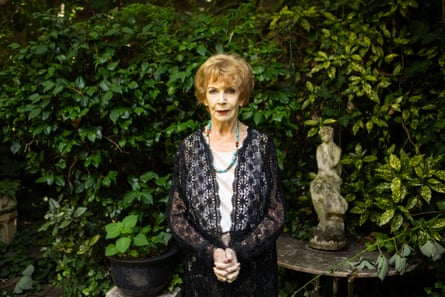 Critics rarely picked up on how funny her writing was’ … O’Brien at her London home in 2019. Photograph: Antonio Olmos
‘A beacon of brazenness and defiance’: Edna O’Brien remembered by Anne Enright, Colm Tóibín and more
O’Brien blew open the possibilities for Irish fiction, not because of the taboos she broke but because she had broken them as a woman. In 1960, her first novel The Country Girls was burned in the market square of her home town of Scarriff, and every Irish woman who has published since is indebted to the hurt she took on there.

