Showing posts with label Books of the year / 2020. Show all posts

Sunday, July 9, 2023

The Lying Life of Adults by Elena Ferrante review / A girl's own story

Into the depths of Naples … Margherita Mazzucco in the TV adaptation of Ferrante’s 2012 novel, My Brilliant Friend.


BOOKS OF THE YEAR

BOOK OF THE WEEK

The Lying Life of Adults by Elena Ferrante review – a girl's own story


The confusions and clarity of female adolescence are explored in an astonishing novel set in Ferrante’s familiar Naples

Lara Feigel
Wed 19 Aug 2020 07.30 BST

Elena Ferrante is so good on the bodily feelings of female adolescence: the sweaty, clotted skin, the sudden bulges as breasts form, the awkwardly exciting transformations. She is good, also, on the way that childhood friendships change, becoming infused with desire and longing. Her characters startle themselves with their readiness to betray their friends for the newly discovered opposite sex, but they startle themselves too when they jettison their heavy, often rather insulting male suitors and return to their nimbler companions.

Saturday, June 3, 2023

Thirty books to help us understand the world in 2020

Illustration by Malte Mueller


Thirty books to help us understand the world in 2020


The climate crisis, gender, populism, big tech, pandemics, race… our experts recommend titles to illuminate the issues of the day

Anne Applebaum, 

Sunday 18 October 2020

Michael E Mann on the environment

A distinguished climatologist and geophysicist, Michael Mann is director of the Earth System Science Center at Pennsylvania State University. He is the author of more than 200 peer-reviewed and edited publications, as well as four books, including 2012’s The Hockey Stick and the Climate Wars and his forthcoming The New Climate War: The Fight to Take Back Our Planetdue out in January 2021 (Public Affairs Books).

Wednesday, July 13, 2022

The Death of Jesus by JM Coetzee review / A boy who challenges the world


BOOKS OF THE YEAR

The Death of Jesus by JM Coetzee review – a boy who challenges the world


The final book of Coetzee’s Jesus trilogy is also its darkest, keeping the mystery at the books’ heart intact to the end


Steven Poole
Sat 4 Jan 2020 07.30 GMT


Martin Amis once complained that JM Coetzee had “got no talent”, showing perhaps that obsessive ranking of talent (here used in a far more debased sense than TS Eliot’s) is a pastime favoured by those who are not, like Coetzee, writers of genius. Even more improbably, Amis claimed that Coetzee was not funny, which bespeaks a cloth ear for the more sophisticated kind of irony. It would certainly surprise readers of the hilarious Slow Man, or indeed the first two novels in this sequence, The Childhood of Jesus and The Schooldays of Jesus, in which a dreamlike mode of nowhere and no-when reminiscent of Kafka (and Coetzee’s own early Waiting for the Barbarians) is illuminated by sparks of sardonic humour or sheer childlike silliness. The final book of the trilogy, however, as one might with trepidation expect from its title, is a far darker affair.

Sunday, November 28, 2021

2020 Retrospective / My four favourite books


Jo Nesbo


2020 Retrospective – my four favourite books

Posted by 


Matthew Haynes

December 14, 2020

This year I read around 40 books – it might have been more if some of them hadn’t been so long! And of course I didn’t get an opportunity to do any reading on holiday, because I had no real holiday this year. Poor me. Anyway, here’s a list of the Top 4 books I’ve read this year with links to longer reviews in some cases (I would’ve done a Top 5 if I’d read fifty – blame Stephen / Owen King and Margaret Atwood):

  1. Gene Wolfe – Peace
  2. Jo Nesbo – Knife
  3. Homer – The Iliad
  4. Antony Beevor – D-Day: The Battle for Normandy

Monday, November 8, 2021

The Shadow King by Maaza Mengiste review / Remembering Ethiopia’s female soldiers


BOOKS OF THE YEAR

BOOK OF THE DAY

The Shadow King by Maaza Mengiste review – remembering Ethiopia’s female soldiers


Set during Italy’s 1935 invasion of Ethiopia, this absorbing novel spotlights the African women who went to war


ALEX CLARK
SATURDAY 18 JANUARY 2020

T

he eponymous king in Maaza Mengiste’s second novel does not feature until a good halfway through the narrative, and then in appropriately shadowy fashion. He is Minim, a “soft-spoken man with the strange name that means Nothing”, one of those who has answered the Ethiopian emperor Haile Selassie’s call to arms provoked by the Italian invasion of the country in 1935. But Minim has an unexpectedly propitious quality; a close resemblance to Selassie, now in exile in Bath, that can be used to reinvigorate popular confidence that the European colonialists can be defeated. Dressed in a makeshift uniform and sitting on horseback with a red umbrella across his saddle, Minim has only to appear in the hills so recently dominated by Italian troops to strengthen his subjects. As he is instructed by the comrade who has helped to hatch the plan: “To be in the presence of our emperor is to stand before the sun. You must respect his power to give you life and burn you alive.”

Monday, February 22, 2021

Piranesi by Susanna Clarke review / An elegant study in solitude


Books of the year

BOOK OF THE DAY 

Piranesi by Susanna Clarke review – an elegant study in solitude


The Jonathan Strange author returns with a mysterious tale that examines the nature of fantasy itself


Paraic O'Donnell
Thu 17 September 2020


“T

he beauty of the House is immeasurable; its Kindness infinite”: this is the reverent pronouncement of Piranesi, who believes he has occupied the house in question “since the world began”. Indeed, the house and the world, for Piranesi, are one and the same. Birds congregate in its cloud-wreathed upper halls and fearsome tides surge through its lower levels, but although Piranesi has journeyed widely – as far as “the Nine-Hundred-and-Sixtieth Hall to the West” – he has glimpsed nothing beyond it. And but for the bones of the dead, and an enigmatic visitor known only as “the Other”, he wanders this world entirely alone.


Susanna Clarke is a writer who has never quite been given her due. She is hardly obscure, of course; her first novel, Jonathan Strange & Mr Norrell, became a worldwide bestseller and was given a plush TV adaptation by the BBC. But its lingering influence – perhaps all the more notable for her long quiescence – has not been fully appreciated. Infusing “great tradition” verisimilitude with the imaginative radicalism of Ursula Le Guin, it gave rise to what might be called magical archaism, a fictional strain that has since become widespread. Like Hilary Mantel, Clarke made the very notion of genre seem quaint.

Wednesday, January 20, 2021

Lara Prescott / Maria Reva

Maria reva

BOOKS OF THE YEAR

MARIA REVA

 BY LARA PRESCOTT


March 4, 2020


In 2015, when the twelve incoming graduate students at the Michener Center for Writers sent around emails introducing ourselves, one person caught my eye: Maria Reva. Maria had written that she lived in Vancouver—having immigrated there from Ukraine when she was seven—and was currently working construction to support her writing. “I work with some nasty chemicals and lead paint,” she wrote, “but get to wear a space suit (kind of).”


This first glimpse into Maria’s weird and wonderful mind was the perfect introduction to her fiction: stories that have made me laugh out loud, tear up, find shards of hope in the least likely of places, and Google facts like if “bone music” really exists.

It does. I first read Maria’s story “Bone Music” in Elizabeth McCracken’s fiction workshop a few months after our email introductions. Reading this equally hilarious and heartbreaking story about an agoraphobic woman named Smena who hasn’t left her apartment in years but runs a successful underground business selling illegal vinyl records copied onto medical X-rays, broke me in two. 

Sunday, January 17, 2021

In Maria Reva’s Kafkaesque satire, puzzled occupants discover their Soviet tower block doesn’t exist


Maria Reva

BOOKS OF THE YEAR

In Maria Reva’s Kafkaesque satire, puzzled occupants discover their Soviet tower block doesn’t exist


Set in one apartment block, the short stories in Good Citizens Need Not Fear draw on the absurd to show the ways that state power governs life in Soviet and post-Soviet society.


Matt Janney
12 May 2020

“We pretend to work and they pretend to pay us,” goes the old Soviet joke. Mutual collusion in the workplace is one thing, but what happens when things become more existential; when the truth is closer to, “we exist, and they pretend we don’t”? This is the farcical situation Daniil faces in the opening of Maria Reva’s accomplished debut short story collection, Good Citizens Need Not Fear. When Daniil enquires about the lack of heat in his apartment block, Ivansk 1933, a municipal clerk replies, “The building does not exist, Citizen.” “What do you mean?” says Daniil. “I live there.”


Daniil’s Kafkaesque encounter — based on Reva’s father’s own experiences — acts as a kind of overture for a series of equally absurd, darkly comical, and tender vignettes of life in Soviet Ukraine. Reva, a writer and opera librettist, was born in Ukraine but grew up in Canada. As a Soviet-born writer working in English, she is in good company, joining Sana Krasikov (The Patriots), Keith Gessen (A Terrible Country), Lara Vapnyar (Divide Me by Zero) — contemporary authors who reflect on the region’s recent past.

Each of Reva’s nine stories — split into those occurring before and after the fall of communism — relate to the inhabitants of Ivansk 1933, the building which does and does not seem to exist. Characters appear, fall from view, and reappear throughout the stories, lending the collection a satisfying and mildly claustrophobic air, as we are invited into the uniform hallways, and are greeted with the aroma of boiled vegetables and alienation. The building’s perceived non-existence is heightened by the dearth of information about the outside world that penetrates its walls, as if the major political movements of the late 1980s and early 1990s are taking place in a different dimension: “an invisible hand was loosening the screws,” writes Reva, “but it was impossible to tell which screws, and for how long the loosening would last.”

The truth is, Ivansk 1933 didn’t fall off the grid. Rather, it never made it on. We later learn the tower block was built with leftover materials from a different construction project. In other words, it stood surplus to requirement, an extra cog in the state’s vast machine of hyper-efficiency. A similar obsolescence seems to shadow the block’s inhabitants. Reva’s characters also find themselves unaccounted for by the state, considered defective, unuseful. In “Little Rabbit”, the orphaned Zaya winds up in a psychoneurological internat (an orphanage for disabled children), where she is told by the director: “To build a rocket you need parts, and sometimes you get a crooked bolt, a leaky valve. These have to be thrown away. If they aren’t, the rocket won’t launch.” Reva writes movingly about the horrific conditions of Zaya’s care, the bluntness of her prose reflecting a clinical indifference: “According to the director’s classification of infants, the Threes have a minor defect. Twos are blind and/or deaf. Skin disorders and ambiguous genitalia fit the criteria, too.” In the story that follows, “Letter of Apology”, we are told “the party was magnanimous and forgiving”. Reva’s satire is never overdone but, rather, hums in the background like the muffled sounds of a neighbour’s television.

In “Bone Music”, we are introduced to Smena, who makes money illegally, copying vinyl records onto X-rays: “She had begun copying bootlegged albums in the postwar years, when she and her husband were desperate for money, and radiographic film was the cheapest, most readily accessible form of plastic,” we are told. Smena embodies the Russia sociologist Yuri Levada’s idea of the “wily man” (or woman), a term coined in 2000, that sought to express the attitude of the post-Soviet citizen towards the state as a kind of doublethink, involving both submission to, and deception of, political authority. In Reva’s stories, the cast of Ivansk 1933 are wily not as a means to pursue economic or social capital, but rather insofar as it creates pockets of space in which they can feel free, protected, alive. “As long as [Smena] stayed in her space, twelve by twelve steps, she would be safe,” writes Reva.

The fall of communism and the influx of tourists also allowed for the “wily man” to engage in a bit of capitalist fun. In “Roach Brooch”, where Smena’s X-ray records reappear, Reva exquisitely captures the dawn of Soviet trauma tourism in one scene that wouldn’t look out of place in an Armando Iannucci script. As tourists trawl through the scans of broken bones and tumours in a market stall, she describes their perverse desire for these prints to be the markings of Chernobyl victims. “The tourists don’t want to say the dirty word themselves,” writes Reva, “but are itching to hear it, pronounced authentically by this kerchiefed babushka.” And later: “At the word ‘Chernobyl’, the tourists have their wallets out.”

Caught up in this chaotic new marketplace, Zaya too, now older and freed from the horrors of the internat, works for a company that provides Gulag-like experiences for paying clients, one of which is a recreation of Solzhenitsyn’s One Day in the Life of Ivan Denisovich. The thoughtful, hard-nosed Zaya finds it “as demeaning for her to play the villain as it is for the clients to play the victim”. Meanwhile, her colleague Almaza takes a different, more capitalist, approach: “Ivan Denisovich had one bad day, and got a whole memoir out of it … Imagine the creative possibilities.” This new post-Soviet freedom all feels rather disappointing. While some express Almaza’s sanguine entrepreneurialism, most of Reva’s characters seem to be bewildered, asking, “is this it?” In ‘Miss USSR’, at the inaugural pageant, “no one seemed to know what they were doing or where they should go”. In ‘The Ermine Coat’, one character grapples with the meaning (and meaninglessness) of choice: “Mother says we’re living in an age of freedom. Aunt Milena says we’re living in an age of fifteen brands of sausage, which is not the same as freedom.” Others want to wind the clock back altogether, such as a group of campers who grew up in the internat, and now choose to re-enter its grounds. If each of Reva’s characters have different visions of a post-communist world, they all seem to be bought from the same black market of hope.

Images of construction and deconstruction jostle for space throughout Reva’s collection, not only in relation to Ivansk 1933. Unmissable from the changing topography is the toppling of the statue of Lenin that stood imperiously in Reva’s opening story, “Novostroika”. When Zaya returns to Kirovka in the book’s closing story “Homecoming”, she “spots a concrete pedestal, from the old Lenin statue. Only his feet remain now, big as bathtubs, rusty rebar curving from them like veins.” Lenin’s thundering absence recalls the demolition of statues of Lenin across Ukraine that began in the early 1990s, a phenomenon that later came to be known as Leninopad (or the Fall of Lenin in English). The story brings Reva’s fiction into conversation with an immediate political present, as Ukraine continues to chart its path beyond communism and, more recently, Maidan.

Political time and human time don’t always align, however. What Reva delicately shows is that even seismic changes such as the Soviet Union’s collapse, can leave much of life’s everyday flotsam unchanged. Residents still complain about cracks in the buildings. The potatoes still need to be boiled. There is a surplus of nostalgia and a constant shortage of money. Will the newly powerful bring more prosperity than their predecessors? Will they see the Zayas of this earth as more than broken parts? Zaya herself leaves us with a characteristically poetic and foreboding remark: “The forest is full of beasts,” she says. “We’ve got to keep them out.”


“Mother says we’re living in an age of freedom. 
Aunt Milena says we’re living in an age of fifteen 
brands of sausage, which is not the same as freedom.”


Good Citizens Need Not Fear by Maria Reva review / An enthralling debut


BOOKS OF THE YEAR

BOOK OF THE DAY

Good Citizens Need Not Fear by Maria Reva review – an enthralling debut


From absurdity to horror, interlinked short stories explore life in a police state for the inhabitants of a block of flats in 1980s Ukraine


Kapka Kassabova
Thu 11 Jun 2020 09.05 BST


B

ooks that are likely to endure can often feel strikingly timely on arrival. Set in the Ukrainian town of Kirovka in the 1980s and starring a set of characters who live in the same block of flats, Maria Reva’s enthralling debut of interlinked short stories achieves the double effect of timelessness and timeliness. The emotional impact of this book is cumulative. This is partly down to her mastery of the form: the stories are connected by a unity of place, time and relationship. More importantly, they are brought to life by Reva’s handling of darkness and light.

The Voice in My Ear / Ten stories of modern life


Frances Leviston

BOOKS OF THE YEAR


The Voice in My Ear — ten stories of modern life

Poet Frances Leviston’s fiction debut is a stunning exercise in perceptivity

Mia Levinton
March 13, 2020

Truth be told, I was wary of a short-story collection by a poet, the two disciplines being as different from one another as photography and film-making. But colour me corrected: Frances Leviston’s debut work of fiction positively knocked my socks off. Each of the 10 stories in The Voice in My Ear is about a different woman called Claire — an apt appellation for characters illuminating aspects of modern life. 

Frances Leviston’s The Voice in My Ear / A sharp, insightful story collection


BOOKS OF THE YEAR

Frances Leviston’s The Voice in My Ear: a sharp, insightful story collection

The ten stories all centre around a different protagonist named Claire, each clouded by a difficult mother – whether they dominate the foreground or linger slightly out of frame.


BY ANNA LESZKIEWICZ
25 March 2020


“Isn’t it a bit hackneyed to be talking about mothers?” Claire says, bewildered. A silhouetted woman wearing a white coat and carrying a clipboard has just asked her a series of leading (if not misguided) questions: “Your mother was a difficult woman, yes? She was very hard on you, yes?”

2020 / Best books of the year / Best fiction of 2020


Best books of 2020

BOOKS OF THE YEAR

Best fiction of 2020


Hilary Mantel, Ali Smith and Tsitsi Dangarembga completed landmark series, Martin Amis turned to autofiction and Elena Ferrante returned to Naples – plus a host of brilliant debuts

Justine Jordan
Sat 28 Nov 2020 09.00 GMT

As the first lockdown descended in March, sales of Defoe’s A Journal of the Plague Year and Camus’s La Peste soared, but there were uncanny echoes of Covid-19 to be found in this year’s novels too.

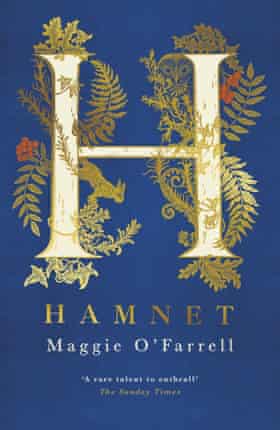
Hamnet by Maggie O’Farrell

Maggie O’Farrell’s tender, heartbreaking Hamnet (Tinder), which went on to win the Women’s prize, illuminates life and love in the shadow of death four centuries ago. Focused on Anne Hathaway rather than her playwright husband , it channels the family’s grief for son Hamnet, lost to the plague, with a timeless power. From public information slogans to individual fears, Emma Donoghue’s The Pull of the Stars (Picador), set in a Dublin maternity hospital during the 1918 flu pandemic, shows how little our responses have changed. Don DeLillo completed The Silence (Picador) just before the coronavirus hit; but this slim, austere vision of what it’s like to be in a room as screens go dark and disaster unfolds outside chimes with current fears.


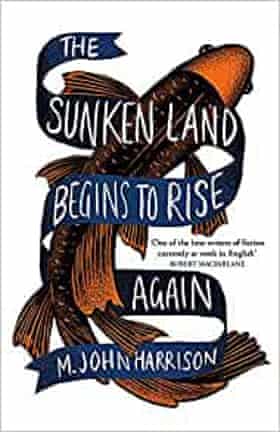
The Sunken Land Begins to Rise Again

Unfolding disaster was the theme of novels that spoke explicitly to the present moment, too: Jenny Offill’s Weather (Granta) assembles shards of anecdote and aphorism into a glittering mosaic that faces up to Trump’s America and climate collapse with wit, heart and moments of sheer terror. Naomi Booth’s Exit Management (Dead Ink) expertly dramatises the crisis in housing, jobs and community. Sarah Moss’s menacing Summerwater (Picador) is set over one rainy day in a Scottish holiday park: catastrophe lurks in the near future as we dip into the minds of various daydreaming, dissatisfied holidaymakers, in a sharp investigation into the meaning of community and otherness. Also deeply attuned to the anxieties of both Brexit and our long, slow post-industrial collapse is M John Harrison’s masterly The Sunken Land Begins to Rise Again (Gollancz). An unsettling and multilayered narrative foregrounding two lost souls in a haunted, unheimlich England who don’t know how lost they are, it took the Goldsmiths prize for innovative fiction.


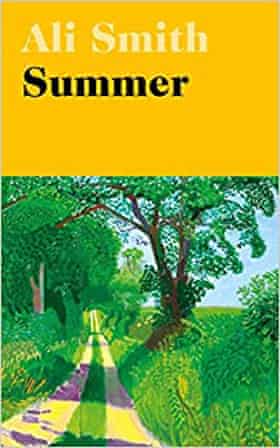
Summer (Hamish Hamilton) Ali Smith

Summer (Hamish Hamilton) completed Ali Smith’s rapid-response Seasonal quartet: four novels written over four years that have encompassed Brexit, climate change, corporate takeover and the refugee crisis along with the bracing consolations of art and nature. Reuniting characters from previous volumes and juxtaposing second world war internment with today’s migrant detention centres, Summer brought a much needed note of hope and resilience to the finale of a landmark series that explores how we live in and out of time.

This year saw the final volume, too, of Hilary Mantel’s Thomas Cromwell trilogy, which has conjured a vanished age to such extraordinarily vivid life and cast profound insights about power, ambition and fate on to the present one. The Mirror & the Light (4th Estate) had to end on the executioner’s scaffold, but the reader is suspended in the unfolding present moment until the axe falls.


Another trilogy was completed in Tsitsi Dangarembga’s This Mournable Body (Faber); written three decades on from her classic Nervous Conditions, it is a brutal, intimate reckoning with the psychological trauma of colonialism. Also shortlisted for the Booker, Maaza Mengiste’s The Shadow King (Canongate) is a beautifully crafted account of the female soldiers resisting Mussolini’s invasion of Ethiopia in 1935 and their own oppression in Ethiopian society. Lyrical, furious and meticulously researched, it is a necessary act of historical reclamation.


Marilynne Robinson turned her Gilead trilogy into a quartet with Jack (Virago), a romance across the race divide in segregated mid-century America which explores the redeeming, transcendent power of love and faith. Brit Bennett also anatomised racism in The Vanishing Half (Dialogue), a stunning family saga about passing for white and the hollowness of the American dream that won her comparisons to Toni Morrison.

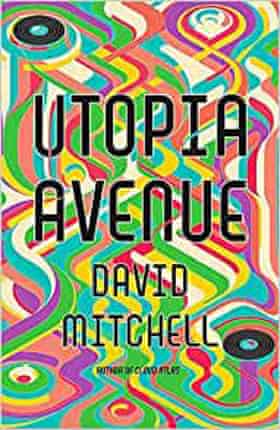
Utopia Avenue by David Mitchell

There were historical escapes from David Mitchell, in 1960s muso epic Utopia Avenue (Sceptre), and Jonathan Coe, with a bittersweet visit to one of Billy Wilder’s last film sets in Mr Wilder and Me (Viking). Curtis Sittenfeld’s Rodham (Doubleday) spun wistful alternative history, imagining what the world might have looked like if Hillary hadn’t married Bill, while Martin Amis drew on his own history for Inside Story (Cape), a baggy but fascinating autofiction combining cameos from Saul Bellow and Christopher Hitchens with tips on prose writing.

Andrew O’Hagan’s poignant Mayflies (Faber) explores the way all our lives recede too quickly into history, with a joyous nostalgiafest of young Scots chasing music and girls on a wild weekend in the 80s segueing into sober mid-life realisations and difficult decisions decades later. A brilliant portrayal of male friendship, it’s also the perfect gift for middle-aged alternative music fans.

The year began with an impressively assured debut from US author Kiley Reid; Such a Fun Age (Bloomsbury) is a razor-sharp take on white fragility and millennial uncertainty, beginning when a black nanny is accused of kidnapping her white charge. Also witty and fresh, Naoise Dolan’s deliciously dry Exciting Times (W&N) sees cynical Irish twentysomething Ava unsettled by genuine emotion while teaching in Hong Kong.

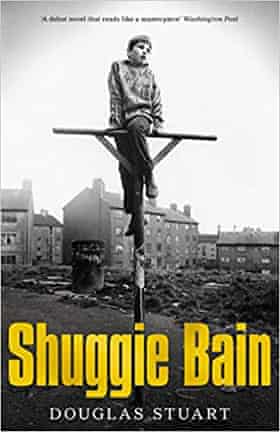
Shuggie Bain by Douglas Stuart

Two semi-autobiographical Scottish debuts from Picador showcased essential new voices: Douglas Stuart took the Booker prize for his moving, devastating Shuggie Bain, the tale of a boy’s desperate love for his alcoholic mother in the deprived, post-industrial 80s; while Graeme Armstrong’s The Young Team, set among teenage gangs in Lanarkshire, updated Trainspotting for a new generation.

Other notable first novels included Rainbow Milk by Paul Mendez (Dialogue), a fearless coming-of-age story about racial and sexual identity and masculinity focused on a young, black gay man who flees his Jehovah’s Witness community to become a sex worker. Burnt Sugar by Avni Doshi (Hamish Hamilton) coolly explores a toxic mother-daughter relationship in middle-class India, while Brandon Taylor’s Real Life (Daunt) weighs contradictory urges towards solitude and intimacy. The Liar’s Dictionary by Eley Williams (William Heinemann), which continues the lexicographical playfulness of her short stories, is a singularly charming jeu d’esprit about two people a century apart doing the difficult, essential work of defining words and defining themselves.


In translated fiction, Elena Ferrante returned to her emotional heartland, the psyche of the teenage girl, in  (Europa, translated by Ann Goldstein). As Giovanna tackles parental hypocrisy, self-disgust and the disconnect between upper- and lower-class Naples, the novel builds into what feels like a portrait of the artist as a young woman. Originally conceived as a true crime story, Hurricane Season by Fernanda Melchor (Fitzcarraldo, translated by Sophie Hughes) is a savage, unstoppable chronicle of misogyny and murder in a small Mexican village. Another rawly compelling novel won the International Booker: young Dutch writer Marieke Lucas Rijneveld’s The Discomfort of Evening (Faber, translated by Michele Hutchison) focuses on a girl in a deeply religious family that is falling apart in the wake of her brother’s death.

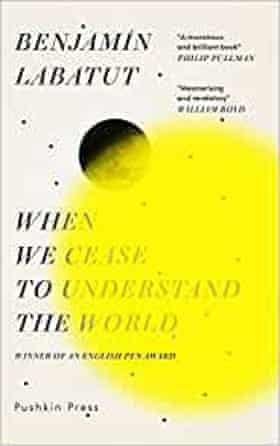
When We Cease to Understand the World by Benjamin Labatut

Daniel Kehlmann’s darkly funny Tyll (Riverrun, translated by Ross Benjamin), a picaresque journey through early 17th-century Europe, follows the progress of a folkloric jester figure from village to court against the bloody backdrop of the thirty years’ war. In Samanta Schweblin’s fiendishly readable Little Eyes (Oneworld, translated by Megan McDowell), the new must-have tech gadget allows users to leapfrog into the lives of strangers – a sharp idea that became even more pertinent with the isolation and atomisation of lockdown. When We Cease to Understand the World by Benjamín Labatut (Pushkin, translated by Adrian Nathan West), a “nonfiction novel” focused on the exceptional minds looking into the dark heart of maths and science in the 20th century, traces revelatory connections between discovery and destruction.

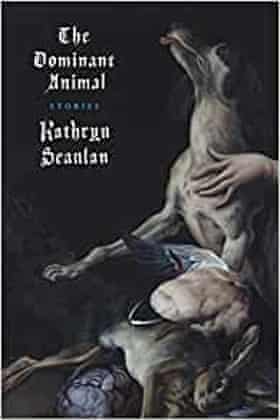
The Dominant Animal by Kathryn Scanlan

Some of the most exciting short stories of the year were to be found in Kathryn Scanlan’s The Dominant Animal (Daunt), with its fiercely sculpted sentences and unnervingly off-kilter scenarios. Cathy Sweeney’s Modern Times (W&N) has a comically surreal energy and verve, while in Reality and Other Stories (Faber) John Lanchester structures a collection of ghost stories around the most dangerous, intrusive, unknowable force in our lives – technology.

Two striking books unfolded in the fertile space between story collection and novel. In poet Frances Leviston’s The Voice in My Ear (Cape), 10 different protagonists, all called Claire, contend with the demands of the world and their difficult mothers; the stories glance off each other to build into a cubist portrait of contemporary womanhood. Maria Reva’s Good Citizens Need Not Fear (Virago), meanwhile, uses interlinked tales centred around a crumbling apartment block in Ukraine to convey the absurdity of post-Soviet life.

Finally, two novels that were a long time coming. From the 18th century to the 21st, Evie Wyld’s The Bass Rock (Cape) explores violence against women in three subtly linked time periods: a blazingly angry, darkly witty tour de force, Wyld’s third novel is bleak but bracing, and as ever, beautifully written.

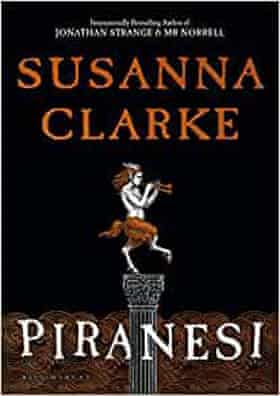
Piranesi by Susanna Clarke

Sixteen years after her bestselling debut Jonathan Strange and Mr Norrell, Susanna Clarke returned with Piranesi (Bloomsbury), the story of a man trapped in a many-halled House with an Ocean surging within it, his only companion a mysterious Other. Written out of long illness, but published into a world in which every reader was struggling with confinement and thrown on their inner resources, Clarke’s fantastical parable of solitude, imagination, ambition and contentment is a spectacular piece of fiction, and the perfect reading accompaniment to a year like no other.