Showing posts with label Olga Ravn. Show all posts

Thursday, June 16, 2022

The Employees by Olga Ravn / Review


‘THE EMPLOYEES’ BY OLGA RAVN (REVIEW – IBP 2021, NUMBER FOUR)


April 15, 2021

While the most recent leg of our International Booker Prize longlist journey involved a quiet drive into the countryside, today sees us embarking on a much more ambitious expedition, possibly the most expansive in the prize’s history.  While it’s cold outside, there is an atmosphere of sorts, and we’re certainly not alone, with about six thousand other intrepid adventurers for company.  But if nobody can hear you scream in space, that’s probably because nobody’s listening, so luckily today’s choice rectifies that oversight.  Do you have something you need to get off your chest?  Come this way…

*****
The Employees by Olga Ravn
– Lolli Editions, translated by Martin Aitken
(digital review copy courtesy of the publisher)
What’s it all about?
In the twenty-second century, far from Earth, a vessel known as the Six-Thousand Ship is on a Star Trek like voyage of enquiry, seeking out new worlds and lifeforms.  The ship eventually finds a planet dubbed New Discovery, and on exploring its surface, the crew find strange objects, unmoving yet undoubtedly showing signs of life.  The objects are taken back to the ship and placed in rooms, ready for analysis.

Monday, January 3, 2022

The Employees / A Workplace Novel of the 22nd Century by Olga Ravn review / ‘Am I human?’


BOOK OF THE DAY
BOOKS OF THE YEAR

The Employees: A Workplace Novel of the 22nd Century by Olga Ravn review – ‘Am I human?’

Shortlisted for the International Booker prize, this science-fiction satire on corporate language is a miracle of concision


Justine Jordan
Wed 12 May 2021

From the mysterious monoliths in 2001: A Space Odyssey to the impossible spaceship in Arrival, one of science fiction’s favourite tropes is the alien artefact that defies human comprehension. Danish author Olga Ravn’s brilliantly unusual novel The Employees, which has been shortlisted for the International Booker prize, is an SF epic in miniature, but it takes a prosaic approach to our dreams of extraterrestrial transcendence. “It’s not hard to clean them,” says a crew member of the strange objects found on the faraway planet New Discovery, now housed in the Six-Thousand Ship orbiting above. “I normally use a little brush.”

The Employees is not only a disconcertingly quotidian space opera; it’s also an audacious satire of corporate language and the late-capitalist workplace, and a winningly abstracted investigation into what it means to be human. The book takes the form of a series of statements – some missing, some with material redacted – made by the crew to a bureaucratic committee investigating the effects of the strange objects: not what they might be or reveal, but how they might “precipitate reduction or enhancement of performance, task-related understanding and the acquisition of new knowledge and skills”.

“I’m not sure, but isn’t it female?” asks that same cleaner about one of the objects. The novel is saturated from the outset in ontological uncertainty; the crew is made up of both humans and humanoids, the born and the grown, but it is not always possible to work out from their statements which is which. Where one humanoid cannot imagine any meaningful activity beyond the work they were created for, another insists on their burgeoning selfhood: “I may have been made, but now I’m making myself.” It might merely be a question of bureaucracy. “Am I human? Does it say in your files what I am?” asks one crew member. The statement that reads in its entirety “My body isn’t like yours” is a reminder that humanity may lie in the eye of the beholder.

In the midst of corporate jargon, the novel is haunted by longings, dreams, lyrical fragments of memory from a long-lost Earth. It is haunted too by its genesis as a companion piece to a 2018 art installation by Lea Guldditte Hestelund exploring “the relationship between different types of presence and body”, both human and not. The alien finds in the novel that draw, repel and provoke the different crew members are recognisably the objects in the exhibition, now archived online. Ravn maps the exhibition room on to the spaceship: the same white walls, sterile spaces, corridors between installations; even the “niches in the walls where you can hang your suit”. Art galleries and spaceships are both playgrounds for the cultural imagination; in another uncanny layer to an eerily rich text, by the end of the novel the ship itself becomes a macabre kind of museum piece.

Despite the sterile setting and often chilly prose, The Employees is a deeply sensory book, suffused with aroma and alert to tactility. The materiality of the objects makes crew members long to put them in their mouth; to discover where the limits of the self end, like babies learning about their new world. The image recurs of a marble or wooden sphere rolling around inside a mouth, person and possession in intimate proximity. The pages crawl, also, with disturbing up-close descriptions of egg clusters, open pores with tiny stones in, flesh specked with dots, pomegranates stuffed with seeds. It is as though Ravn is channeling trypophobia, disgust for clusters of holes or bumps, to evoke fear of the nonhuman. “Repetitive, organic structures are unbearable,” reads one statement. “They cannot be destroyed and will continue to regenerate.” There are affinities here with the unleashed vegetal energies in Jeff VanderMeer’s novels about mutation and nonhuman sentience. As relations break down between human and humanoid, one declares, “I’m a pomegranate ripe with moist seeds, each seed a killing I’m going to carry out.”

It is astonishing how much Ravn achieves in her small canvas of 130-odd pages: she muses on transhumanism, illuminates the dreamlike logic of inner lives, contrasts artistic and religious impulses with the anti-human reductionism of corporate jargon. And she does all this while retaining an elliptical, open-ended mystery and a delicately elegiac tone. Translator Martin Aitken perfectly balances all the different registers and voices (though DIY enthusiasts may be jolted by repeated references to taking the alien objects “back to Homebase”).

Like humans, the humanoids are always chasing their own metaphysical tail. “In the programme, beneath my interface, there’s another interface, which is also me…” This clever, endlessly thought-provoking novel catches something of our recursive search for the nature of consciousness; a question that answers itself, a voice in the darkness, an object moving through space.

 The Employees: A Workplace Novel of the 22nd Century is translated by Martin Aitken and published by Lolli Editions (£12.99).

THE GUARDIAN


Sunday, January 2, 2022

Five of the best science fiction and fantasy books of 2021

The best science fiction and fantasy of 2021. 
Illustration: Maïté Franchi


Five of the best science fiction and fantasy books of 2021

A locked-room mystery, interstellar office politics, a masterful space opera and more

Adam Roberts
Friday 3 December 2021

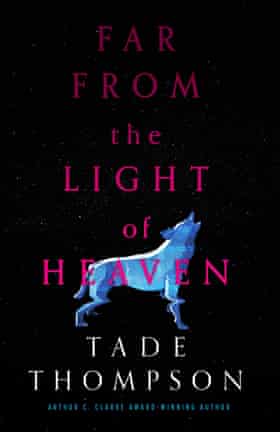
Far from the Light of Heaven by Tade Thompson (Orbit)

Far from the Light of Heaven
by Tade Thompson (Orbit)
Space is vast but spaceships are by nature claustrophobic: Thompson plays cannily on that contrast. Passengers aboard the starship Ragtime are in suspended animation on their way to the distant planet Bloodroot, but 30 people have been murdered in their sleep. Thompson’s tale is cleverly plotted and tensely told as the investigating captain must work against her own crew, bio-contagion, violent robots and a demonic AI to uncover the murderer’s identity. The book does more than the description “locked-room mystery in space” suggests: not only wrong-footing the reader as its mystery unfolds, but creating a series of believable, compelling worlds with some genuinely alien aliens.

The Actual Star
by Monica Byrne (Voyager)
This ambitious, inviting novel ranges from the declining Mayan civilisation in the year 1012, via a storyline set in 2012 in Belize, to the year 3012, when humanity lives in “a global system of nomadic, anarchist self-organisation”. By “inviting” I mean that it offers itself to readers as a way of thinking how to move beyond what the novel calls the “four great evils: capitalism, whiteness, patriarchy, nationalism”. Whether or not you agree that those are the four great evils, you will be swept into Byrne’s meticulously worked world-building by her compelling storytelling and rich prose. This is a book about the profound interrelations of past and present – the Mayan sections are marvels of vividly rendered research – and the hi-tech, mystical, sex-positive, post-climate-collapse diversitopia of its imagined future is simply extraordinary.

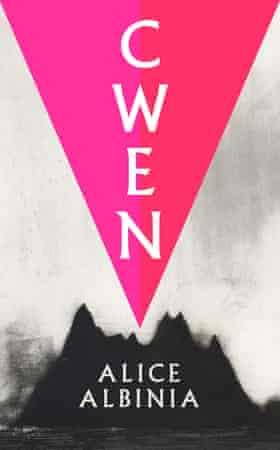
Cwen by Alice Albinia (Serpent’s Tail)

Cwen
by Alice Albinia (Serpent’s Tail)
Although in the last few decades there has been an almost pathological obsession with dystopia, utopian writing is a much older mode. Not that there’s any wishful thinking about Alice Albinia’s feminist community, set on an archipelago “somewhere off the east coast of England”. When the de facto leader leaves for the uninhabited island of Cwen, named for its presiding goddess, what she has achieved on the archipelago is picked apart. Albinia engages throughout with the difficulties of trying to work for something better than what we have: the inertias and frictions of our world, its resistance to emancipation. She combines this with a wonderful vision of Britain’s deep history of myth and matriarchy.

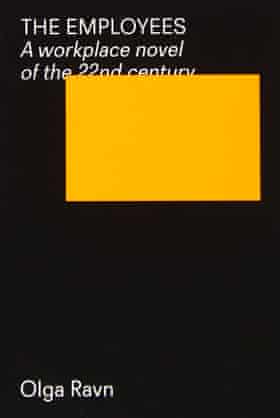
The Employees by Olga Ravn, translated by Martin Aitken (Lolli Editions)

The Employees
by Olga Ravn, translated by Martin Aitken (Lolli Editions)
The Six-Thousand interstellar spaceship is a workspace; this short novel’s characters are workers. “You’d probably say it was a small world,” one of the characters says, “but not if you have to clean it.” The arrival on board of a number of strange alien objects galvanises a jumble of mundane and transcendent memories and provocations: intensities of taste and touch, of smell and consciousness. The book owes something to the Strugatsky brothers’ Roadside Picnic (or to the film Andrei Tarkovsky made of it, Stalker), though its alien artefacts are more compelling, and the ship more recognisably a place of office politics and corporate-speak. Coolly but artfully written, The Employees is a remarkable piece of work.

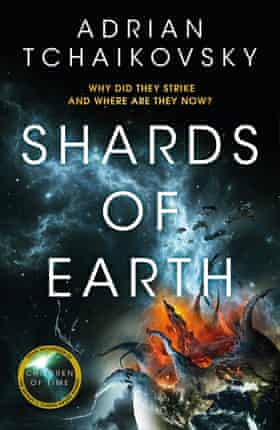
Shards of Earth by Adrian Tchaikovsky (Tor)

Shards of Earth
by Adrian Tchaikovsky (Tor)
Since 2015’s breakthrough Children of Time, in which humans encounter a species of sympathetically rendered, sentient spider, Tchaikovsky has consolidated his position as the finest purveyor of high-quality space opera around. His new series, The Final Architecture, kicks off with this masterly example: space battles, cosmic mystery, alien superstructures, a ragtag crew of humans and aliens piloting a battered but trusty ship. Earth has been transformed into a vast “flower” and destroyed in the process: the war with the mysterious Architects is not as over as people think. The story treads some familiar ground, but does so with an expert touch, and the whole is deft and clever, expansive and readable, all informed by Tchaikovsky’s superbly baroque imaginative fecundity.


THE GUARDIAN