Showing posts with label Per Wahlöö. Show all posts

Wednesday, May 13, 2020

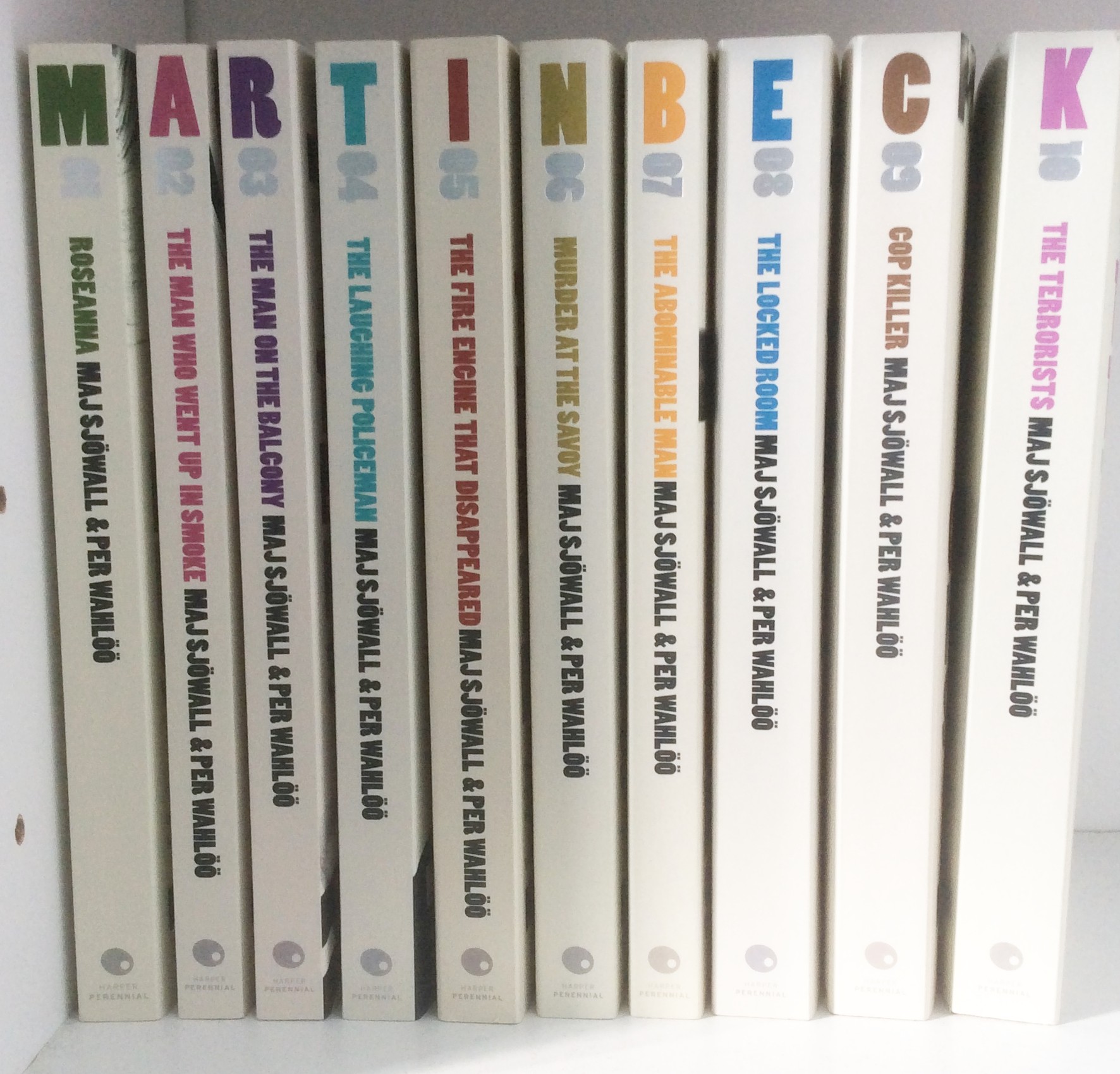
Remembering Sjöwall and Wahlöö’s Martin Beck Novels


Remembering Sjöwall and Wahlöö’s Martin Beck Novels


April 30, 2020

Fans of Scandinavian crime fans were hit with some very sad news yesterday upon learning of the death, at 84, of Maj Sjöwall, coauthor with Per Wahlöö, of the vastly influential Martin Beck series of police procedurals. Set in Stockholm from 1965 through 1975, the series is widely regarded as the progenitor of what we now call Scandinavian noir. Before Henning Mankell, before Stieg Larsson, before Jo Nesbø, there were Sjöwall and Wahlöö. Back in 2007, I wrote a column called “It Began with Beck.” The following draws from what I said then.


The husband-and-wife team of Maj Sjöwall and Per Wahlöö were on the case 30 years before Henning Mankell, and the hero of their groundbreaking 10-novel police procedural series, Detective Inspector Martin Beck, is unquestionably godfather to Mankell’s Kurt Wallander and all the other twenty-first-century Scandinavian sleuths. Both committed to radical politics, Sjöwall and Wahlöö set out “to use the crime novel as a scalpel cutting open the belly of an ideologically pauperized and morally debatable so-called welfare state of the bourgeois type.” The 10-novel sequence began in 1965 with Roseanna and continued through 1975, when the finale, The Terrorists, was published shortly after Wahlöö’s death. Unlike most European crime fiction of the time, the series was immediately translated into English and met with widespread critical acclaim in the U.S.—surprising given the political emphasis (the last word in the series is, symbolically, “Marx”).
I first read the Martin Beck books in the late 1970s and found them unlike any other crime fiction of the time, with the exception of Ed McBain’s 87th Precinct series, to which the Beck novels, also in the “station house” tradition and portraying the lives and careers of a squad of homicide detectives, are clearly indebted. But Sjöwall and Wahlöö are more interested in the inner lives of their characters than McBain, and Beck is a far more vulnerable figure than McBain’s Steve Carella or any of the other hard-boiled heroes of that era. And, of course, the overtly left-wing point of view set the Beck series apart while giving it something in common with the similarly inclined younger readers of the sixties generation.


“The world we live in today is simply Martin Beck’s world writ large.”

Per Wahlöö


But how does Martin Beck hold up today, when vulnerability has become a common character trait among European detectives and when the idea of communism as a solution to society’s ills seems naive at best? I decided to find out and reread three Beck novels, The Laughing Policeman, The Fire Engine That Disappeared, and The Terrorists. Not only do they hold up just fine, they also seem remarkably contemporary. In The Laughing Policeman, about the seemingly motiveless mass murder of the riders on a Stockholm bus, one of Beck’s detectives exclaims, “Are there no limits?” The same scene is replayed throughout Mankell’s Faceless Killers, after the murder of an elderly farm couple in remote Ystad unleashes an ugly wave of racist hate. The contemporary Scandinavian crime novel is defined by this sense that the old rules no longer apply, and while good cops might “solve” an individual crime, they are powerless to stop the slide of society into hate-fueled chaos. These are familiar ideas today, of course, and have worked their way into all aspects of popular culture. But the theme has even greater resonance in Scandinavian fiction because it plays against our image of the region as somehow beyond all that—neutral in war, liberal in sex, tolerant in society. Henning Mankell burst that bubble once and for all in the nineties, but Sjöwall and Wahlöö were posting Danger! signs before many of today’s Mankell fans even knew how to read.
But what of the politics? Shouldn’t a pair of committed socialists railing against capitalist injustice seem, well . . . quaint today? Sjöwall and Wahlöö might seem exactly that if they were sitting in your living room and espousing a Communist agenda. But in their Martin Beck novels, they show rather than tell, and what they show seems like everyday life to today’s reader. We might not draw the conclusions the authors drew about how to fix the problems of society, but we certainly recognize those problems in all their prickly detail. Bureaucracy run amok, for example. It hardly sounds like Communist propaganda to describe a world where most institutions are mired in their own rule-making and incompetence and where government leaders are, well . . . shall we just say not very bright. The world we live in today is simply Martin Beck’s world writ large.
It’s no wonder that when Mankell’s Faceless Killers appeared in 1997, it came with a blurb from Maj Sjöwall.


Per Wahlöö, Author With Wife Of Detective Beck Series, Dies


Per Wahlöö


Per Wahlöö, Author With Wife Of Detective Beck Series, Dies


By Lawrence Van Gelder
June 24, 1975


About the Archive

This is a digitized version of an article from The Times’s print archive, before the start of online publication in 1996. To preserve these articles as they originally appeared, The Times does not alter, edit or update them.
Occasionally the digitization process introduces transcription errors or other problems; we are continuing to work to improve these archived versions.

Per Wahlöö, who achieved worldwide recognition for the detective novels that he and his wife, Maj Sjöwall, created while their children slept, has died. His death, at the age of 48, was announced yesterday in Malmo, Sweden, where he lived.

Although Mr. Wahlöö won favorable comment as the author of Kafkaesque allegories set in police‐procedurai novels, he was perhaps best known—and most popular—for the collaboration with his wife that introduced Detective Martin Beck of the Stockholm police force to mystery fans.

Tuesday, May 12, 2020

Is Martin Beck the original moody sleuth?
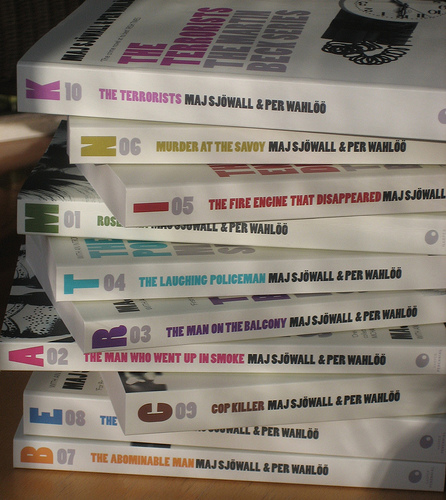
martin beck | Kaggsy's Bookish Ramblings


Maj Sjowall and Per Wahloo’s Martin Beck


By 

RoseannaIs Martin Beck the original moody sleuth?
I ended my last full post (September 4, 2013) saying I’d finally begun reading Maj Sjöwall and Per Wahlöö’s Martin Beck novels, though I don’t rightly know how I managed to cultivate such a passion for ‘moody sleuths’ without coming across Martin Beck much sooner, especially since so many crime fiction writers count this ten book series as being ‘the’ most influential in shaping the modern mystery novel, particularly the police procedural.
I should be red-faced, I know… but in the past month I trust I’ve made amends; I’ve read all ten, and will undoubtedly read them again in the future. They’re that good!
As I said in my earlier post, Swedish journalists, Maj Sjöwall and Per Wahlöö, co-wrote the Martin Beck series, first published between 1965 and 1975. The couple set out to use the police procedural to carry a penetrating critique of Sweden’s social and political conditions at the time.

Martin Beck’s Malaise

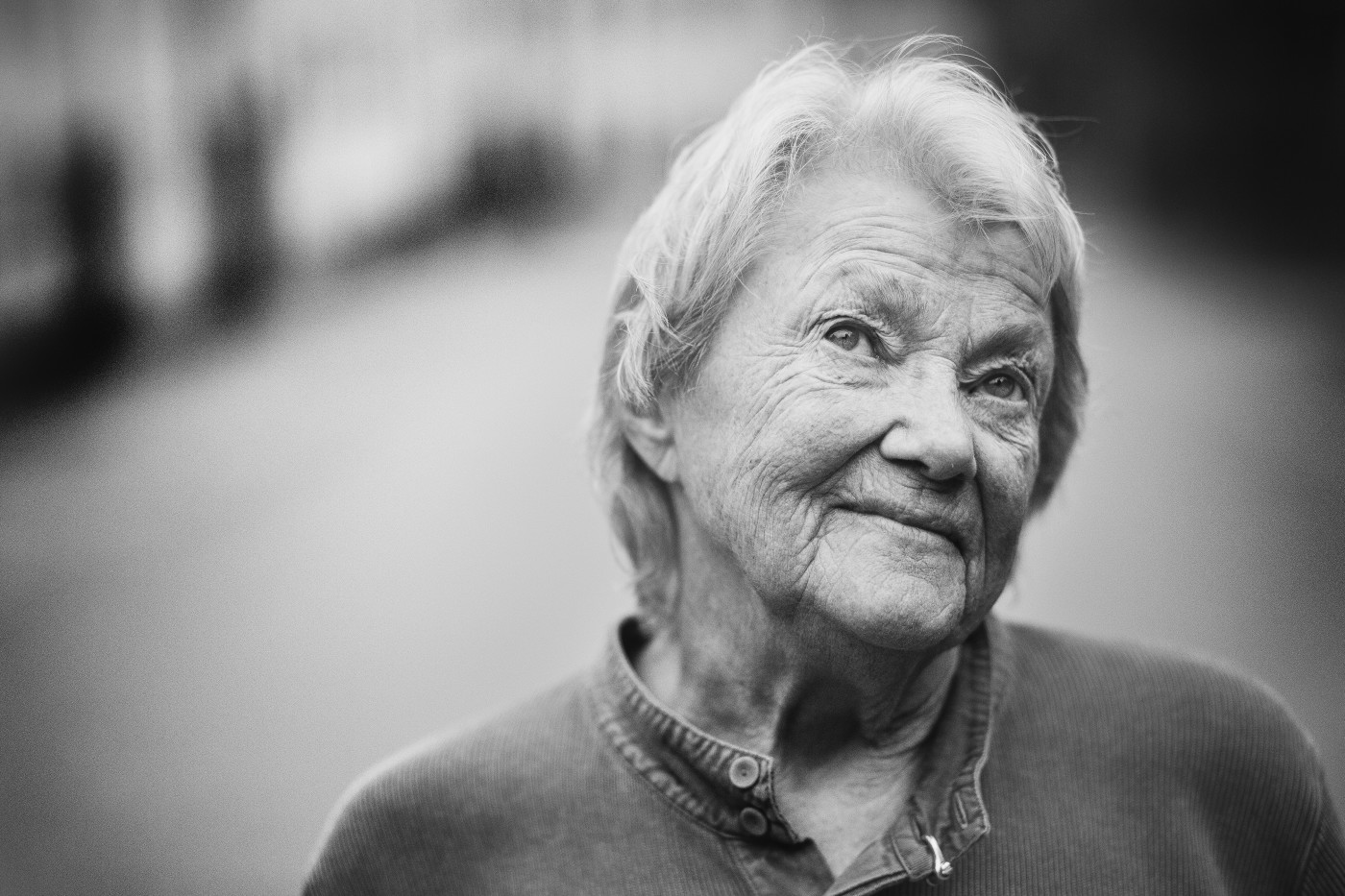
Maj Sjowall | Petrona Remembered

Martin Beck’s Malaise


By Moody Sleuth
November 20, 2013


Sean & Nicci French, in their introduction to the fourth Martin Beck novel, The Laughing Policeman (Harper Perennial edition), remind us once again that Martin Beck was “the prototype of the brilliant tormented detective.”
Many other moody sleuths such as fellow Swede Kurt Wallander, Norwegians Konrad Sejer and Harry Hole, and Icelander Erlendur Sveinsson owe their existence to Martin Beck. Sean and Nicci French extend Sjöwall and Wahlöö’s influence to include the likes of Ian Rankin’s John Rebus and Thomas Harris’s Will Graham.

Monday, May 11, 2020

Maj Sjöwall obituary

Salomonsson Agency
Maj Sjöwall

Maj Sjöwall obituary

Co-author with Per Wahlöö of the Martin Beck crime series that blazed a trail for Scandinavian crime fiction


Mike Ripley

Maj Sjöwall and Per Wahlöö created a new style of detective story, which was unflinching in descriptions of horrific crimes. Photograph: PA

Widely regarded as the godmother of modern Scandinavian crime fiction, Maj Sjöwall, who has died aged 84, was the co-author of 10 detective stories featuring the Swedish policeman Martin Beck – a series remarkable as much for the way it was written as for its impact on crime-writing internationally.

Sunday, May 10, 2020

The Origins of Scandinavian Noir

Maj Sjöwall obituary | Crime fiction | The GuardianThe Origins 

of Scandinavian Noir


Wendy Lesser
May 6, 2020

Sometime in the early eighties, I began reading a series of mysteries that featured a Swedish homicide detective named Martin Beck. I was living in Berkeley at the time, studying for a Ph.D. in English literature as I worked a variety of part-time jobs, and I knew a lot of people both inside and outside the academy. Being a talkative sort, I started telling everyone around me about this incredible Scandinavian cop series. Soon we were all reading it.

El blog del viejo topo: Rincón del libro: Maj Sjöwall, de la ...
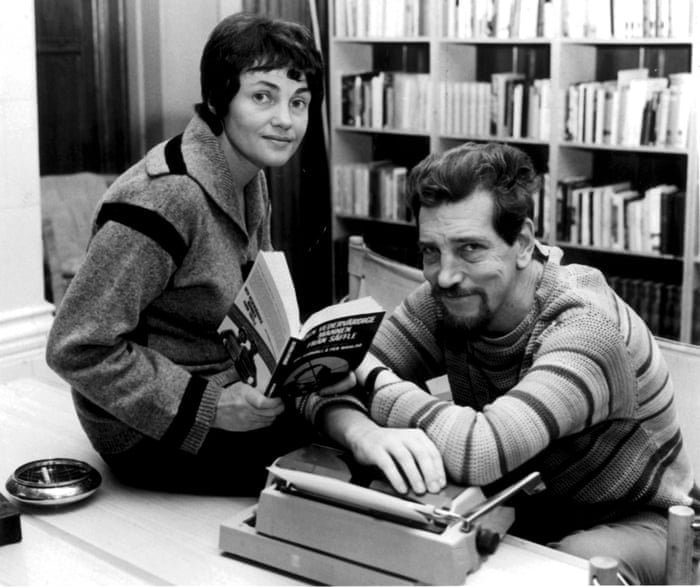
Maj Sjöwall and Per Wahlöö
What I knew at the time was that it was written by a couple, Maj Sjöwall and Per Wahlöö, who had from the very beginning envisioned it as a sequence of ten books that would portray Swedish society from a distinctly Marxist perspective. Published between 1965 and 1975, the Martin Beck series grew noticeably darker as it moved toward its end—though whether this was because Sweden itself (not to speak of the world beyond it) had worsened during that decade, or because Per Wahlöö had learned in the early seventies that he was dying of cancer, was something no one could answer. Wahlöö died, I later learned, on the exact day in June of 1975 when the tenth volume was published in Sweden, having worked like a maniac to finish it on time. (Sjöwall, who was his equal partner in many ways—they would write their alternating chapters at night, so as not to be interrupted by their small children, and would then exchange chapters for editing—has said that at the very end Wahlöö was pretty much writing everything himself.) At any rate, he left behind exactly what he had intended to produce: ten books containing thirty chapters each, which, taken together, constitute a single continuous social narrative comparable in some ways to a Balzac, Zola, or Dickens project, though clothed in the garments of a police procedural.
It would be a melodramatic exaggeration to say that the Martin Beck series changed my life, but like all such exaggerations, this one would be built on a nugget of truth. Both my idea of Scandinavia and my sense of what a mystery could do were shaped by those books. If I later became a veritable addict of the form, gobbling up hundreds if not thousands of dollars a year in Kindle purchases of Swedish, Danish, and Norwegian mysteries, that habit could no doubt be attributed to many things besides the Martin Becks: the invention of digital books, for instance, which allowed for impulse buying and virtually infinite storage; the massive and surprising success of Stieg Larsson’s Millennium series, which encouraged American publishers to bring out any and every available Scandinavian thriller; the introduction of the long-cycle police procedural on American television, including such gems as Hill Street Blues, NYPD Blue, and ultimately The Wire, all of which cemented my fascination with the form; not to mention dozens if not hundreds of similar behavior-shaping factors that remain, for me, at an unconscious level. We never know for sure why we read what we read. I cannot, at the moment, even call to mind who first recommended the Martin Becks to me (though I know it was a person and not, say, a bookstore display or a newspaper review). Whoever it was, in any case, deserves my eternal gratitude.

Maj Sjöwall / The queen of crime


Beck-forfatteren Maj Sjöwall er død - Kultur


The queen of crime


When Maj Sjöwall and her partner Per Wahlöö started writing the Martin Beck detective series in Sweden in the 60s, they little realised that it would change the way we think about policemen for ever

Louise France
Sunday 22 November 2009


I
t might count as one of the most remarkable writing collaborations in the history of publishing. A man and a woman, a couple, sit down every evening to write. Dinner is over, their children are in bed. She’s never written a book before. He’s a published author, but not with anything like this. They write in long hand, through the night if necessary. One chapter each. The following evening they swap chapters and type them up, editing each other as they go along. They don’t argue, at least not about the words. These seem to flow naturally.