Showing posts with label Italy. Show all posts

Friday, May 22, 2026

Sacred bones / The macabre beauty of San Bernardino alle Ossa


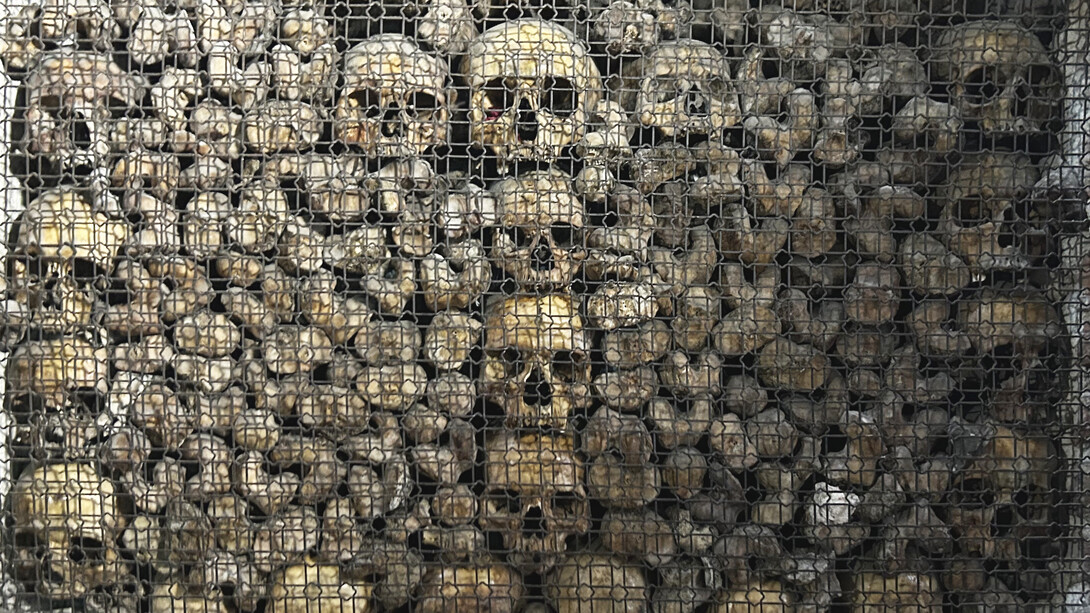
Embedded skull and bones details, Ossuary Chapel, Church of San Bernardino alle Ossa, Milan, Italy


Sacred bones: the macabre beauty of San Bernardino alle Ossa

Milan’s haunting chapel of bones and the deep reflection on mortality

13 MARCH 2025, 


Nestled in the heart of Milan, Italy, the Santuario di San Bernardino alle Ossa is a striking testament to both the macabre and artistic ingenuity. The origins of both the ossuary and the Church of St. Bernardino date back to the 13th century. In 1145, a hospital was built near the basilica of St. Stefano at what is now Via Brolo. A cemetery was created in front of the basilica to bury those who died in the hospital, but after a few years, the available space became insufficient. 

Friday, June 27, 2025

Chapter 102 /Italian Poster Art: Evolution, Innovation, and Cultural Impact


The poster created for the lyric drama “Edgar” by Adolf Hohenstein, 1889.


Chapter  102


Italian Poster Art: Evolution, Innovation, and Cultural Impact


Introduction

The evolution of Italian poster art represents a unique intersection of commercial necessity, artistic innovation, and cultural transformation. From its origins in the mid-19th century to its current digital iterations, Italian poster design has mirrored broader socio-economic shifts while simultaneously shaping visual communication across Europe and beyond. This chapter explores the historical trajectory of Italian poster art through a theoretical lens, examining key movements, pioneering figures, and the aesthetic and commercial principles that have defined this distinctive medium.

Tuesday, February 14, 2023

Ivan Franceschini / The Effable Worker


Vitalino Trevisan

The Effable Worker

Notes on Italy's New Working-Class Literature

Ivan Franceschini
Written On 10 January 2022. 


Being Water / September—December 2021

Locked in a shelter for the homeless on a weekend along with a few dozen vagrants, a young George Orwell was feeling the pangs of boredom. He had nothing to read, nothing to do, and could not even look outside since the windows were too high. He tried to listen to the general conversation, but found it left much to be desired:

There was nothing to talk about except the petty gossip of the road, the good and bad spikes, the charitable and uncharitable counties, the iniquities of the police and the Salvation Army. Tramps hardly ever get away from these subjects; they talk, as it were, nothing but shop. They have nothing worthy to be called conversation, because emptiness of belly leaves no speculation in their souls. The world is too much with them. Their next meal is never quite secure, and so they cannot think of anything except the next meal. (Orwell 2002a: 11)

Sunday, February 12, 2023

Ivan Franceschini / The Work of Culture


Ilustration by Robert Schmit

The Work of Culture

Of Barons, Dark Academia, and the Corruption of Language in the Neoliberal University


Ivan Franceschini
Written On 20 July 2021. 

There was a time when academia was society’s refuge for the eccentric, brilliant, and impractical. No longer. It is now the domain of professional self-marketers. As for the eccentric, brilliant, and impractical: it would seem society now has no place for them at all.

— David Graeber (2015: 134–35)


Much has been written in recent years about the degeneration of neoliberal academia, which makes for odd and discomforting reading when you are part—as both victim and accomplice—of that system, but few writers have been able to describe the perversion of the system in terms as vivid and inventive as the late anthropologist David Graeber. According to Graeber (2015: 141), the commercialisation and bureaucratisation of academia have led to a shift from ‘poetic technologies’ to ‘bureaucratic technologies’, which is one of the reasons why today we do not go around on those flying cars promised in the science fiction of the past century. As universities are bloated with ‘bullshit jobs’ and run by a managerial class that pits researchers against each other through countless rankings and evaluations, the very idea of academia as a place for pursuing groundbreaking ideas dies (Graeber 2015: 135; 2018). As conformity and predictability come to be extolled as cardinal virtues, the purpose of the university increasingly becomes simply to confirm the obvious, develop technologies and knowledge of immediate relevance for the market, and exact astronomically high fees from students under the pretence of providing them with vocational training (hence the general attack on the humanities). But is that all there is to it?

Thursday, December 2, 2021

How rescuing drowning migrants became a crime

The Iuventa on a mission rescue in the Mediterranen
November 2016


How rescuing drowning migrants became a crime


The Iuventa ran hundreds of missions to save migrants from drowning off the coast of Libya. But after Europe cracked down on migration, its crew found themselves facing prosecution


by Daniel Trilling
Tuesday 22 September 2020


As patrol boats with flashing blue lights surrounded the Iuventa, just outside the port of Lampedusa on the evening of 1 August 2017, its crew were more annoyed than alarmed. For three days, the old fishing trawler, crewed by volunteers from the German NGO Jugend Rettet (Youth Rescue), had answered a string of requests from the Italian coastguard that to them made no sense. “This madness hopefully will soon be over,” read a message sent from the ship’s bridge to Jugend Rettet base camp shortly after 10pm.

In the summer of 2017, two years on from the peak of Europe’s refugee crisis, smugglers in Libya were still sending hundreds of people a day to sea in unsafe rubber boats, and the Iuventa’s crew wanted to be where the action was. In a patch of sea just off the coast of north Africa, about a dozen NGO ships were searching for boats in distress – a direct challenge, as many of them saw it, to European governments that had scaled back state-run rescue efforts.

Yet the Iuventa had been following instructions that drew it further away from the rescue zone and closer to Italian territorial waters. According to the ship’s records, the Italian coastguard first told the crew to rendezvous with an Italian navy ship to collect two men found adrift at sea, and deliver them to another. The second ship never turned up. Then they were told to look for a blue and white fishing boat with 50 people on board, apparently foundering in the sea close to Lampedusa. As night fell on 1 August, after a day spent searching the waves in vain, a message came through: call off your search and proceed into port.

It was the third time in a few months that the ship had been ordered into the harbour at Lampedusa. In just over a year, the Iuventa – crewed by a group of young, motivated people “who could not stand to see the situation in the Mediterranean any longer”, as one put it to me – rescued more than 14,000 people. Most of these rescues were coordinated by the Italian coastguard, but the relationship was increasingly strained. The Iuventa’s revolving crew of volunteers were outspoken critics of Europe’s border policies, and the small, agile ship took more risks than some of the larger NGO vessels, sailing as close as possible to Libyan waters in order to be able to rescue people from unsafe boats sooner. As one Italian media outlet put it, the ship was “like a sort of Berliner squat out in the middle of the sea – very well organised, radical and antagonistic”.

The irrational fear of migrants carries a deadly price for Europe


As far-right politicians reach positions of power, their influence is coming to bear.’ 
Illustration: Eleanor Shakespeare


The irrational fear of migrants carries a deadly price for Europe


Daniel Trilling
Thursday 28 June 2018

W
hen people rescued from the Mediterranean reach a European port, once they have been screened for security threats and communicable diseases, their own medical needs are at last attended to. For those who have fled Libya, a typical list of health problems might include: cuts and bruises from being beaten; skin burns from the sun or from engine oil in the smuggler’s boat they were crammed into; respiratory infections and stomach conditions from overcrowded and filthy living conditions; complications arising from pregnancy or sexual assault; leg and foot injuries consistent with being thrown from buildings; or severe psychological trauma. These have the same effects on the body and the mind regardless of whether the person experiencing them made their journey because of war, or because they were duped into it by traffickers, or because they were looking for work.

Thursday, September 17, 2020

What Neapolitans Understand About Death (Better Than Most)

En la región de Nápoles, 1.000 euros de multa por no llevar ...
Napoles

What Neapolitans Understand About Death (Better Than Most)

Lucia Benavides on Confronting That Deepest of Human Fears


Lucia Benavides
January 23, 2020

Like most people, I’m afraid of death. I take calculated steps to talk about death without actually using the word. I sometimes skip songs like Buddy Holly’s That’ll be the Day or avoid driving down a street where I know there was a deadly car accident. I sometimes use friendlier, less anxiety-inducing words like “passed away” or “left this world.” As if the word “death” were—paradoxically—alive and, if I said it out loud or wrote it down, it would see me and chase me down.
As if, by talking about death, I’d be inviting it.
For the most part, in the Western countries where I’ve lived, I haven’t been alone in feeling this way. But among Neapolitans, I am.

Sunday, September 15, 2019

Vittorio de Sica / Umberto D.

  • Umberto D. (1952) The old pensioner, Umberto D (Carlo Battisti), and the pregnant slavey, Maria (Maria Pia Casilio)

    UMBERTO D

    (1952) 

    Review by Bosley Crowther

    by Bosley Crowther
    Old age has never been a topic of particular interest to makers of films for a very obvious reason: It is not one that particularly appeals to the vast majority of moviegoers, not even to those who are old. Age, at best, is a condition that merely symbolizes the ultimate stage of fulfillment of the work ethic and moral respectability. The place of old people in movies is generally that of genial contrasting characters to those who are young, aggressive, and usually sexual. At worst, old age is a plateau with no horizon except death. It is not a human condition that invites wishful fantasies and dreams.
    That is why it was uncommon for Vittorio de Sica to choose to make a film that was totally concerned with the impoverishment of an old Roman pensioner while he was still in the first flush of triumph and success with The Bicycle Thief. No one obsessed with box office could possibly have approved his choice of the subject of old age at that particular stage of his career. But de Sica and his favorite scriptwriter, Cesare Zavattini, were bent on making such a film for personal reasons that were heedless of commercial advantage. Being humane individuals, as their previous successes together showed (Shoe ShineThe Bicycle Thief, and Miracle in Milan), they wanted to dramatize the pathos, and by implication, expose the larger social tragedy of those who had spent their lives working in small white-collar jobs and, when old, alone, and of no more commercial use, were cast aside. Further, de Sica was anxious to make a film that would suitably serve as a memorial to his father, who himself had been a modest pensioner. The consequence of their determination was the classic Umberto D.
    I still find it vastly unsettling to my emotions and sensibilities to see again this lovely picture, which was a model of simplicity and concentrated neorealism within its limited cinematic frame. For it did nothing more than consider the plight and destiny of its gentle, aging hero who had only the companionship of his dog Flick and the casual friendship of a rooming-house slavey to comfort his loneliness. There was no oversentimentality in it, no playful old codger cliches, although there were many touches of humor and amusing glints of stubborn character. The only thing that could possibly have rescued the old gentleman from his obvious destiny was a fictional contrivance of some sort, and that the authors would not provide.
    Opening on a nondescript gathering of angry, shouting old men in front of a government building demanding payment of their pitifully small pensions—a scene which adequately defined the extent of the social problem before the men were dispersed by the police—the drama was then confined to the endeavors of the one old man to sustain himself and his dog. A stop at a government mess hall where he was surrounded by other old men, all of them neatly dressed in worn clothes and quietly dignified—and where he slipped his own plate of pasta under the counter to feed his dog—then on to his lodging house where he was briefly locked out of his room while a transient couple used it for a “matinee”; it was clear he was in peril of being thrown out by a pitiless proprietress who was demanding his back rent.
    Such was the substance of the drama: the feeble but determined efforts of the old man to sell his few valuable possessions—a watch and some scientific books—to give him enough money to hold on to the tiny room he had called home for years. In a pitiable endeavor to stave off immediate eviction, he secretly called a charity hospital and had an ambulance come to fetch him. But, of course, it was a losing battle. When he returned to the rooming house, after an amusing interlude in the hospital, he found his room was being dismantled and that little Flick had been lost. Desperately he went to the dog pound to try to find it, and there he blankly observed the matter-of-fact facilities for destroying unclaimed dogs. But de Sica did not dwell on this experience to milk an agonized response or do more than suggest a gruesome metaphor.
    The old fellow found his pup and, on the way home, he saw an old man successfully begging. So, in front of the Pantheon, he made a tentative, embarrassed try to stick his hand out for money. But when a passerby stopped and was about to put a coin in his upturned palm, he quickly turned it downward. He could not endure the humiliation of accepting alms. Then he had Flick sit on his haunches and he put his neat black fedora in the dog’s mouth, while he himself slid into the shadows of one of the pillars of the ancient building. But this time a friend who was passing recognized the dog and, discovering the old man lurking in the shadows, greeted him cheerily, laughing at the dog and assuming the old man was playing a trick.
    This time, back at his lodgings, he found his room totally torn apart, furniture moved out, a hole broken through to another room. The landlady was having the house renovated so she could get married. The silences of the old gentleman, his tacit despair, and the evidences of surrender written on his face and in his eyes were clearly prefatory to the thought of suicide which was implied when he went to the window and looked out upon the glistening street four stories below. But he put the thought from his mind at that point when he turned back and saw Flick lying quietly on his bed.
    At dawn the next morning, however, he packed his sole valise and left the house, with only a poignant good-bye to the awakened slavey, who was astonished and saddened by his departure. To her anxious inquiry as to where he was going, he simply said, “I am going to a new place.” And then, his last word to her from down the stairs, where he paused for a moment, was, “Give up the man from Florence,” meaning one of the two young soldiers (she wasn’t sure which) who had got her pregnant.
    An attempt to lodge the dog at a boarding kennel with a payment to the scruffy proprietors of all the money he had was abandoned when the dog showed fear of other barking and snarling animals. So off to the outskirts of the city he went and there, with the dog in his arms, he stood on the tracks at a railway crossing and waited for a passing train to kill them both. But a sudden struggle by the dog to leap out of the old man’s arms just as the train came upon them tumbled the old man off the tracks, while the dog itself disappeared. Dazed, the frightened old gentleman stumbled to his feet and looked blankly at the train roaring past, not knowing—and terrified to imagine— what he would see after it had gone by. But as it did, he saw the animal calmly sitting and looking at him on the other side of the track, the image of unshakable trust and undying loyalty.
    Well, that was obviously the climax and conclusion of this poignant account. Nothing more could be said or imagined about its abject finality. The rest of Umberto’s story was as classically undefined as was that of Charlie Chaplin’s put-upon Little Tramp as he walked off into the sunset at the end of one of his films. So de Sica and Zavattini concluded this one similarly with the old man and his small companion frolicking wistfully in the beams of autumnal sunshine down a lengthening alley of trees. It was a fadeout that could be taken as a metaphor for death, for there surely was no other haven for this lonely, abandoned pair.
    It was evident that de Sica did not intend or expect this drama to manifest the substance and the logic of a ‘‘well-constructed’’ film. At no place was the background of the old man described or explained. He was simply an individual, forsaken and alone—let us say, the personification of the irony of old age, a relic of the past, now possessed of nothing more than pride and dignity.
    The fact that de Sica could convey this in the language of visual images, the old man against the setting of the cheap and sleazy rooming house and the hard, cold streets and ancient buildings of a remote, impersonal Rome, was again a token of his cinema artistry. He could animate the life of human beings against the imperviousness of stone. And he used a true Roman for his hero. In Carlo Battisti, a college professor who had never acted before, he had a splendid image of the persona he wished to show: quiet, dignified, impassive on the surface, yet clearly full of anguish underneath, smoldering with moral outrage, indignation, and grief. But he never appeared self-pitying, nor did the authors indulge such a state. He was the ultimate manifestation of the finality of age.
    As the slavey, little Maria Pia Casilio was his counterpart in many ways, equally lonely, neglected (except by the young soldiers in the barracks across the way), facing the forlorn prospect of bearing a bastard child, yet brave and maintaining her composure with her measure of dignity. The little things she did for the old man and what he tried to do for her were the sole tokens of human compassion and generosity in the film. For Lina Gennari’s landlady was a lump of selfishness and vanity, and all other passing individuals were merely beings that paused for a moment, then went their ways.
    I don’t imagine anybody, including de Sica, ever got much money from Umberto D., but I would think it was one of the most rewarding films the great director ever made.
    Bosley Crowther, Vintage Films, pp. 126-129

    Saturday, January 19, 2019

    Weekend love special / The one that got away / Margaret Drabble

     Pauline Boty made a big an impression on Margaret Drabble in Rome in the late 50s: 'Like a golden meteor she had flashed through life and escaped and soared onwards into space.' Photograph: Tony Evans/Getty Images


    Weekend love special

    The one that got away: Margaret Drabble


    'Friendly, glowing, bronzed, curious, eager, impulsive: the world was all before her, and she knew it'

    Margaret Drabble
    Saturday 23 August 2014


    I
    t was August, in the late 1950s, and we had reached Rome. We were students on vacation, on the road, hitchhiking, exploring, sleeping in hostels and convents, eating plates of pasta, drinking cheap red wine. This was the Rome of Fellini and Antonioni, it was the dawn of La Dolce Vita, it was L'Avventura, and Italy spread itself out like a sunlit dream. We were players in a romantic movie, we were footsore, dirty and dishevelled, but we thought we were glamorous.

    The most glamorous of all was Pauline Boty. She embodied the coming age. We met her in a youth hostel. She wasn't one of our group, but she was our age, and she was blonde and strikingly beautiful. She introduced herself to me in the primitive shower room by admiring my nightwear, which consisted of a man's shirt: "I know I'll like a person who wears a shirt like that!" And I knew I would like her. How could one not? Friendly, glowing, bronzed, curious, eager, impulsive: the world was all before her, and she knew it. I can't recall in detail the adventures we had in Rome – they have merged into dim memories of ancient ruins and trattoria and bars – but they involved pasta and wine and wild talk about the future. She was studying at the Royal College of Art: most of us were hoping to go into the theatre. We were all full of expectation and desire.
    I've no idea how much time we spent together: probably not more than a day or two. I moved on, to the mosquito-coast of the Adriatic, and she went I know not where. But once seen, never forgotten. I had thought we would have plenty of time to pursue a friendship, but this was not to be. In 1960, I graduated, married, had three children and started publishing novels, all in quick succession. She, I knew, had become a pop artist and an actor. I noted her name whenever it surfaced, but made no effort to contact her. I was busy, and there would, I thought, be time hereafter.
    We moved in circles that were adjacent but not overlapping, and I waited, not at all anxiously, to bump into her again one day. Then, to my grief and horror, I read that she had died at the age of 28, in 1966, of cancer, not long after giving birth to a daughter. I remember the sense of shock that somebody so young and so charged with life could have vanished so suddenly and completely.
    She vanished for years. Her work was almost forgotten, her reputation eclipsed by the lasting successes of her male friends and contemporaries – David Hockney, Derek Boshier, Allen Jones. Like a golden meteor she had flashed through life and escaped and soared onwards into space. The sorrow she left behind, to those who knew her well, must have been unendurable. To me, who met her so briefly, her death seemed portentous and terrible.
    Decades later, in 2004, deep in the Hades of the London underground, I saw a huge poster of one of her paintings, then being exhibited at Tate Britain, in a show called Art & The 60s: This Was Tomorrow. So she hadn't been a dream. There was her well-remembered name. I stood and stared.
    I never went to the exhibition. It was far, far too late.


    Wednesday, February 14, 2018

    Nino Migliori's best photograph / A gravity-defying Italian diver

    The Diver … ‘These two were brothers. It was difficult for the one jumping because he only had two or three metres to build up speed.’ Photograph: Nino Migliori

    Nino Migliori's best photograph: a gravity-defying Italian diver

    ‘A paper asked its readers if anyone recognised the boys in my photo. Many people claimed to be relatives, hoping to make some money’

    Interview by Angela Giuffrida
    Wed 14 Fre 2018


    Italy went through a rebirth after the second world war. It really was the most beautiful time, especially for a boy who had spent the war years in hiding – from the bombardment of Bologna but also because I was afraid of being captured by the Germans.
    I took this in Rimini in 1951. Back then, it was a popular seaside destination for people from Bologna, since it was affordable and easy to get to. My parents had taken me a lot when I was a boy, because the sea air helped my asthma. But by then I was 25 and rarely went to the beach any more.
    That day, I wandered around the town before going to the port, to watch the people and the passing boats. There were some boys playing on the dock, joking around and throwing each other in. They would go there every Sunday and have diving competitions, landing on their bellies and making a big splash.
    These two boys were brothers. The younger one is sitting down, while the other has tried to run, jump and dive over him. It was very difficult as he only had about two or three metres to build up speed. The other boy kept his head down to avoid being knocked.


    I had taken hundreds of other shots before this one, many of them winning awards, but I did not put this into any competitions and so it remained unknown for a long time. Then, years later, an American gallery owner came to Italy and fell in love with my work. He was particularly enamoured of this one and bought the original.
    Since then it has become iconic, a little like a novel. In 2010, it was published in a Bologna newspaper and the readers were asked if anyone recognised these boys. Of course, many people started to write in, claiming they were relatives. For two months, the paper received messages each day. Everyone wanted to have a connection with the photo, since they thought they could make some money out of it. But we couldn’t corroborate any of the claims.

    My work has always been what you might call explorative. I joined the photographers’ club in Bologna after the war and set out to discover new people and places. We were able to enjoy the simple things that had been missing during the war years: walking along streets, making new friends, eating in their homes, going dancing.
    I had to do other jobs to earn a living, but my free time was dedicated to photography. I travelled to southern Italy and lived with families for weeks at a time, eating with them and getting to know them. Initially they were very aware of the camera and would stop and pose, but after a while they relaxed and the images became more natural.
    I spent a lot of time with Italian painters, too. I wanted to see how they worked, what motivated them. In particular, I became good friends with Tancredi Parmeggiani, who was close to Peggy Guggenheim. He introduced me to her in Venice and I started taking pictures of her. Many of them now hang in the Guggenheim museums in Venice and New York.
    I was at Peggy’s home the day Jackson Pollock’s first drip painting arrived in Italy. It was an enchanting experience. Nobody had ever seen anything like it. We celebrated and all got drunk while looking at it.

    Nino Migliori’s CV


    Born: Bologna, Italy, 1926.
    Training: Self-taught.
    Influences: The Italian painters Emilio Vedova, Giorgio Morandi and Virgilio Guidi.
    High point: “Photographing sculptures produced by the Renaissance artist Niccolò dell’Arca with a candle as the only source of light.”
    Low point: “Plenty!”
    Top tip: “Use photography to express thoughts, moods and situations. Don’t place too much emphasis on it as a career.”
    THE GUARDIAN


    2018