Thursday, June 4, 2015

Daphne du Maurier / The Doll / Review


The Doll by Daphne du Maurier – review

Daphne du Maurier's early short stories reveal a talented writer finding her voice
  • The Observer, 
British novelist Daphne du Maurier photographed in 1947
British novelist Daphne du Maurier photographed in 1947. Photograph: Popperfoto/Getty Images
The stories in this collection of recently unearthed early work by Daphne du Maurier were mainly written between the years 1926 and 1932, though many didn't appear in print until much later. While they often do feel like the work of a young writer, they are occasionally quite startling in their insight and their ability to unsettle.
  1. The Doll: Short Stories
  2. by Daphne Du Maurier

There's much humour in evidence too, in the form of a crisp cynicism, particularly in regard to the relationships between men and women and the very many ways people can disappoint one another. The title story is the most twisted of tales. Prefaced by an explanatory note, it purports to be the contents of a mysterious waterlogged notebook. This book, the work of a "poisoned" brain, describes one man's obsession with a beautiful violinist (called Rebecca) and the discovery he eventually makes about her unusual proclivities, an image of which he will never be able to rid himself.
Though "The Doll" is by far the most explicit, many of the stories have a strong sexual element. There's a worldly, knowing quality to much of the writing. "Tame Cat" is a wry account of how a teenage girl's sudden blossoming dramatically alters her relationship with both her mother and her friendly "uncle" John. Failures in communication between the sexes are a recurring theme, wittily evoked in "The Weekend" and "A Difference in Temperament".
The opening story, "The East Wind", stands some way apart from the rest of the collection; it has a more mythic feel, an earthiness, the elements exerting a brutal hold on the characters. Elsewhere there's a sense of the young Du Maurier crystallising her style, testing herself, amusing herself. She would go on to write stronger stories but as a glimpse of a voice in development this collection proves fascinating.


Tuesday, June 2, 2015

Sadie Stein on Daphne du Maurier

Daphne du Maurier

SADIE STEIN ON DAPHNE DU MAURIER

Inherit the Earth

September 18, 2014 | by 
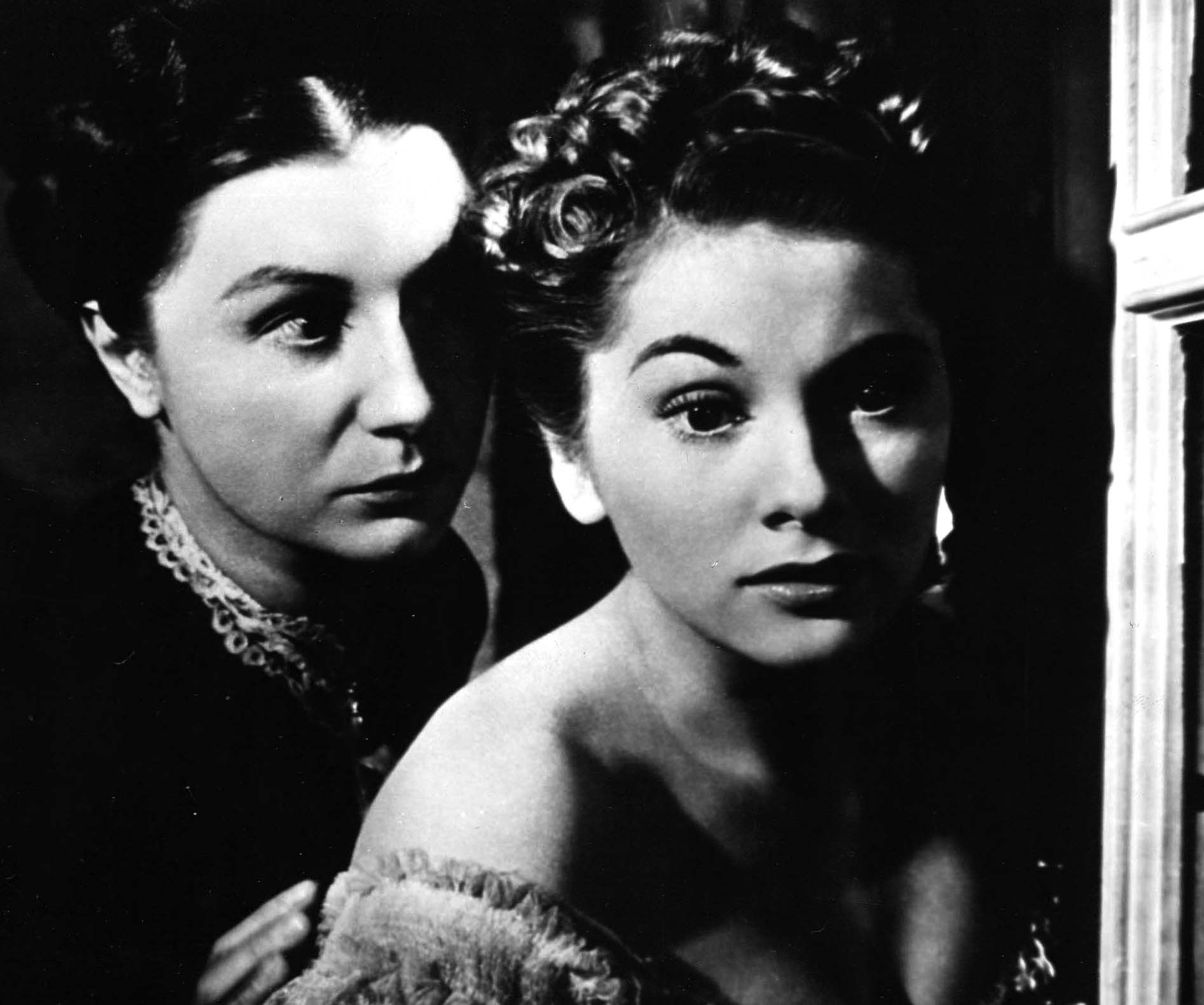
REBECCA
From Alfred Hitchcock’s film adaptation of Rebecca, 1940.
The moment of crisis had come, and I must face it. My old fears, my diffidence, my shyness, my hopeless sense of inferiority, must be conquered now and thrust aside. If I failed now I should fail forever.
―Daphne du Maurier, Rebecca
It must be wonderful to be one of those pedestrians who own the streets. To be one of those people who walks where he likes with Ratso Rizzo–like entitlement, or, better yet, is gracious enough to usher a car forward when, in fact, the car has the right of way. Such people, of course, never give a timid wave of appreciation—a tacit “thank you for not killing me”—when a car lets them cross.
It must be wonderful never to assume your name has been left off the list, or that your card will be declined. It must be wonderful not to have the moment of anxiety, every time you pass through automatic doors, that they will not open. It must be wonderful not to cry every time someone slights you, and feel bruised for days afterward. It must be wonderful to be Rebecca de Winter, rather than her nameless successor.
Whether you consider Rebecca escapist fun, or an uneasy picture of the Electra complex run amok, or a masterpiece of Gothic storytelling, one thing is for sure: du Maurier paints one of the most accurate portraits of shyness in all of English literature. The narrator has none of Jane Eyre’s reserves and mysterious poise, none of the position and dignity of Jane Austen’s uncomfortable heroes. She is instead consumed by the particularly agonizing egotism that is shyness: a paralyzing self-consciousness that is reinforced by every slight, every harsh word, every reaction of the world, real and perceived. (I suppose I should add a spoiler alert here, for those unfamiliar with the plot of Rebecca.)
That she should ultimately triumph is not surprising. Shy characters always triumph. (They are, after all, created by writers.) But the ending of Rebecca is unusual. Usually a shy character has to change: his gifts are recognized and celebrated, he becomes the leader he was always meant to be. He comes out of his shell. Think of just about any children’s book and you’ll recognize the pattern. The heroine of Rebecca, however, manages to get everything she wants on her own terms. She routs her rival, gets her man, even sees the house that has oppressed her destroyed. Yes, she is good in crisis, but as any shy person can tell you, crisis is the easy part: it’s the challenges of day-to-day living that are difficult.
By book’s end, she has not changed, but, rather, reduced the world to the tiny scale with which she is comfortable. She and her husband are alone, he is dependent on her, and she is no longer faced with the manifold social ordeals that, conventionally, a heroine would master. It is hard to say who is redeemed and who’s corrupted. Or, indeed, whether anyone has changed at all. Is it the ultimate triumph, or a nightmare? That’s probably part of the appeal.
When you wave at a car, the wave seems to say, Thank you for not killing me. Maybe it is less silly than strutting around, holding up peremptory hands and pretending you have dominion over all the cars of the streets. But when you thank someone, aren’t you seizing the moral authority? By reminding them of their power, aren’t you asserting your own? Maybe not. Maybe it’s just good manners.


Monday, June 1, 2015

Karl Blossfeldt’s show “Art Forms in Nature”


Karl Blossfeldt’s show 

“Art Forms in Nature” 

Vadehra Art Gallery, New Delhi

  • Posted on: May 9, 2015
  •  
By Monica Arora
23-04-15-Karl Blossfeldt
Let me begin by confessing that I am a huge fan of vintage art. This may not necessarily be creations from centuries ago but art created especially conjured by a visionary, an artist who breaks away from traditional forms and dares to dream and create a fresh form is what truly whets the artistic appetite in an art appreciator. In the early 20th century, before the advent of the digital camera, a natural photograph captured from a relatively basic camera and yet managing to inspire onlookers beyond words is what the path-breaking artist Karl Blossfeldt has achieved through his revolutionary work. Jerome David Salinger, the American author had once said, “An artist’s only concern is to shoot for some kind of perfection, and on his own terms, not anyone else’s.” Karl Blossfeldt has epitomized that through his work.
Hence, when Artsome asked me to review Karl Blossfeldt’s show ‘Art Forms in Nature’ at the Vadehra Art Gallery situated amidst the hustle and bustle of the sprawling Defence Colony in New Delhi, I was truly delighted. Obviously, the art produced by this German photographer and teacher during his lifetime (1865-1932) is iconic and legendary owing to the fact that deploying a very simple homemade camera and lens that could magnify a subject by 30 times, he managed to capture the microcosmic nuances of his specimens, comprising primarily of flowers, plants and their myriad parts.
2Karl Blossfeldt, Saxifraga aizoon, Aizoon saxifrage, rosette of leaves, photogravure
 Producing some 6,000 photographs over a journey of three decades, his first of three revolutionary portfolios was published in 1928, entitled Urformen der Kunst (Artforms in Nature), which became an overnight sensation owing to its unique style of photographs and clarity of detail. The photographs in Tasveer’s exhibition displayed at the Vadehra Art Gallery are selected from this evocative book and this series of exhibitions organised by Tasveer, will be the first time that Blossfeldt’s photographs are being displayed in South Asia.
3Karl Blossfeldt, Equisetum hyemale, Dutch rush, photogravure
This self-taught artist was hailed universally by modernists for his futuristic and seminal work. Of course, being the son of a father who was also studying the growth pattern of flora and fauna, Karl Blossfeldt’s vision as a sculptor, painter and student of plants enabled him to manifest his visualizations as sheer works of unforeseen genius with incredible emphasis on aesthetics and photography as an art. And, his work enabled connoisseurs to not just appreciate his art as aesthetic visuals but also offered a range of detailed angles and meticulous design as templates for architecture and design, besides being used as reference material by students of biology and botany, the world over.
4Karl Blossfeldt, Equisetum hyemale, Dutch rush, cross-section of shoot, photogravure
The philosopher Walter Benjamin declared that Karl Blossfeldt ‘has played his part in that great examination of the inventory of perception, which will have an unforeseeable effect on our conception of the world’. For instance, if one were to magnify or enlarge these innate or inherent characteristics of plants and flowers, these forms of nature were capable of being moulded into architectural designs or even into structured modern design and drawing. Such is the potential of the interpretation of this German professor’s mind-blowing photographs that elements of his flora and fauna images can easily be incorporated into modern disciplines of sculpture, architecture, engineering, all concerned with the business of moulding fresh shapes and forms by the human mind bit intrinsically drawing their genesis from nature.
5Karl Blossfeldt, Forsythia suspensa, Weeping forsythia, tip of branch w/ buds, photogravure
Karl Blossefeldt changed the way the world perceived plants, flowers and natural ecosystems, which has offered an inspiration for generations and generations of young minds looking to harness the potential in simple–looking plants and flowers. Each magnified fern, unfurling leaf, curling frond, flowering panicle, branch, bud, seed capsule, maple-twig, fruit-bearing spike, needle, capitulum, leaf cushion, tendril, petal, fruit or flower is a work of genius and can be interpreted in myriad ways by an eye with a propensity towards designing. For instance in his pieces ‘Delphinium, Larkspur, part of a dried leaf’ or ‘Diantum pedatum, Maidenhair fern, young unfurling fronds’, the delicately uncurling leaves or fronds can be incorporated in a cross-sectional architectural monument design, whilst the ‘Centaurea Grecesina, Knapweed, capitulum’ or even the ‘Cephalaria, Scabious family, capitulum’, can be used as inspiration for creating a dome-like structure. It is all about how say a sculptor or an architect or an engineer perceives and eventually adapts the design in his or her blueprint.
6Karl Blossfeldt, Delphinium, Larkspur, part of a dried leaf, photogravure
7Karl Blossfeldt, Adiantum pedatum, Maidenhair fern, young unfurling fronds, photogravure
8Karl Blossfeldt, Centaurea Grecesina, Knapweed, capitulum , photogravure
9Karl Blossfeldt, Cephalaria, Scabious family, capitulum, photogravure
As the French artist and sculptor Edgar Degas has stated, “Art is not what you see, but what you make others see.” The intricacy of Karl Blossfeldt’s plant portraits and the microscopic detailing is ethereal and their absolute sophistication and beauty left me completely startled as an onlooker. This is one important exhibition that must be seen for the sheer audacity of the Karl Blossfeldt’s creative insight and bold execution.
The exhibition is running at the Vadehra Art Gallery at Defence Colony New Delhi till the 16th of May 2015.


The 100 best novels / No 89 / Song of Solomon by Toni Morrison (1977)


The 100 best novels

writtein English

No 89

 Song of Solomon 

by Toni Morrison (1977)


The novel with which the Nobel prize-winning author established her name is a kaleidoscopic evocation of the African-American experience in the 20th century

Robert McCrum
Monday 1 June 2015 09.00 BST


I
first read Toni Morrison in 1977 when a proof copy of her novel, Song of Solomon, was on offer to the then-independent publisher, Chatto & Windus, for whom I was working as a young editor. Part of my background reading for this, her third book, involved discovering, and falling in love with, her debut, The Bluest Eye (1970), and its successor, Sula (1973). Since then, I have followed most of Morrison’s subsequent fiction, notably Beloved and Jazz, but I remain a diehard fan of the novel that established her name. From 1977 on, she only grew in stature as a contemporary writer of extraordinary power and vision, ultimately becoming, in 1993, the first African-American woman to win the Nobel prize for literature.
Song of Solomon blazed that trail. It was the first book by a black American woman writer to be chosen as a main selection of the all-powerful Book of the Month Club, a recognition unknown to the black community since Richard Wright’s Native Son (1940).
Song of Solomon takes off, and finally comes back to earth, with an exhilarating leap of danger. The idea of “fly” and “flight” (as an escape, or challenge) runs through the story of Macon “Milkman” Dead III, who gets his nickname from being breastfed into childhood by his dominant mother.
Toni Morrison

“Who am I ?” is a central premise of many classic novels in this series, including David Copperfield (No 15) and The Adventures of Huckleberry Finn (No 23). From the arresting first scene of an insurance agent’s suicidal leap, to the closing pages, when Milkman hurls himself into the air against his best friend and nemesis, Guitar, the novel traces Milkman’s coming of age as an African American in search of a better understanding of his heritage. To achieve this, in a telling reversal of traditional black migration, Milkman makes his way to the warm and nurturing south from the frozen and alienating north.
The novel is partly set in an unspecified Michigan town, and the unfolding story, replete with buried treasure, violent deaths and slavery tales, moves steadily south to Pennsylvania, where Milkman’s grandfather had died, and finally to Shalimar in Virginia, the home of his slave ancestors. In the words of the song that Milkman sings:
Solomon done fly, Solomon done gone 
Solomon went across the sky, Solomon gone home. 
Where, in the first and northern half of the novel, Milkman battles his origins, in the south he embraces them, and by the end is at one with his roots.

Song of Solomon is full of characters, especially Milkman’s mysterious sister, Pilate, whose symbolic lives play an important role in the weaving of Morrison’s narrative. The story loops and swoops, in its evocation of the black American experience in the 20th century, expressing a complex literary surface in a musical and often poetic language that’s infused with the rhythms of African American speech and song. Morrison has acknowledged that Song of Solomon liberated her from traditional models in her writing. In a style she would perfect in novels such as Beloved, Morrison conjures her tale from many voices and stories. The overall effect is a kaleidoscope of many gorgeous colours and patterns, evocative of memory and history, and actualised through the compelling figure of Macon Dead, one of the great characters of contemporary American fiction.


A note on the text

In her “Forward” to the Vintage edition, Morrison writes that she used to despise “artists’ chatter about muses – ‘voices’ that could speak to them and enable a vision, the source of which they could not otherwise name… I regarded the ‘mystery’ of creativity as a shield erected by artists to avoid articulating, analysing, or even knowing the details of their creative process – for fear it would fade away.”
She goes on: “Writing Song of Solomon destroyed all that.” She describes how her late father became her “muse”, how his voice was absorbed into her writing, and how the challenge of the novel became the management of “a radical shift in imagination from a female locus to a male one”.
This use of voices has enabled her, writes Morrison, to break away from what she identifies as “a totalising view”. For Morrison, American literature has become “totalised – as though there is only one version. We are not one indistinguishable block of people who always behave the same way… I try to give some credibility to all sorts of voices, each of which is profoundly different. Because what strikes me about African-American culture is its variety.”
Song of Solomon was Morrison’s first step down a road that would become increasingly original and would lead her to the achievements and mastery of Jazzand Beloved.

Three more from Toni Morrison

The Bluest Eye (1970); Beloved (1987); Jazz (1992).


THE 100 BEST NOVELS WRITTEN IN ENGLISH
007 Emma by Jane Austen (1816)
014 Fair by William Thackeray (1848)  
031 Dracula by Bram Stoker  (1897)
035 The Call of the Wild by Jack London (1903)
036 The Golden Bowl by Henry James (1904)
039 The History of Mr Polly by HG Wells (1910)
040 Zuleika Dobson by Max Beerbohm (1915)
041 The Good Soldier by Ford Madox Ford (1915)
042 The Thirty-Nine Steps by John Buchan (1915)
043 The Rainbow by DH Lawrence (1915)
044 Of Human Bondage by W Somerset Waugham (1915)
045 The Age of Innocence by Edith Warthon (1920)
046 Ulysses by James Joyce (1922)
047 Babbitt by Sinclair Lewis (1922)
048 A Pasage to India by EM Forster (1922)
049 Gentlemen Prefer Blondes by Anita Loss ( 1925)
050 Mrs Dalloway by Virginia Woolf (1925)