Tuesday, November 29, 2022

Book Review 030 / The Red Badge of Courage by Stephen Crane


The Red Badge of Courage 

by Stephen Crane

1895


5 October 2015

I am not sure whether this is really a novel in the traditional sense of the word. It’s very short – about 125 pages – and there is very little plot or characterisation. The events of the novel, (a term I will retain for convenience’ sake), take place over a couple of days during the course of a battle in the American Civil War. They are shown largely from the perspective of a raw recruit, who initially is terrified, and runs away, but once he gains his “red badge of courage” (i.e. a wound) he finds new reserves of bravery, and takes an active part in the remainder of the battle.

Monday, November 28, 2022

Book Review 031 / Dracula by Bram Stoker


Dracula 

by Bram Stoker

1897


John Pistelli
17 October 2019

Though “undiscovered” and “forgotten” works are thrust at us from every corner, I find that the most startling books are often the most famous, the most classic. Supposedly so well known they no longer merit study—we might as well throw them in the trash—they are in reality so omnipresent that we don’t closely attend to them. Their messages skulk and lurk in plain sight, like Count Dracula sauntering through central London.

Book Reviw 032 / Heart of Darkness by Joseph Conrad


Heart of Darkness 

by Joseph Conrad

1899 

[A Review]


From humble beginnings, Joseph Conrad’s novella, Heart of Darkness, rose to become a classroom staple for much of the twentieth century. Its themes of racism and colonial exploitation within an evocative and enigmatic story, showcasing techniques that would influence later masters, ensured a prominent place for analysis. Whether it still retains its relevance is an open question. Despite whatever the novel’s shortcomings may be, and however confident we may be in our own moral superiority to the past, it is surely always a mistake to not examine and appreciate the past for what it was.

Book Review 033 / Sister Carrie by Theodore Dreisser


Sister Carrie by Theodore Dreisser 

1900


‘Sister Carrie’ follows a young woman as she travels from her small town life at the age of 18 to the big city. At first she lives with her sister and her sister’s husband. She struggles to find work, and succumbs, quite easily it has to be said, to the blandishments and an attractive and smooth talking young man, who sets her up in a small flat of her own. To provide this scandalous situation with a veneer of respectability they pretend to the neighbours that she is his wife. Bored with this arrangement she begins a secretive romantic liaison with another man. Dreisser loses interest at this point – I have read that he abandoned the novel several times before finishing it – and so injects some liveliness by having the second boyfriend, Hurstwood, rob his employers of $10,000, and flee across the border into Canada, taking Carrie with him. He almost immediately regrets this, pays back most of the money, and moves to New York in hope of finding an income. Carrie plays housewife, but when the money dries up she takes a job on the stage, eventually finding fame and fortune. Her boyfriend finds only poverty and destitution, and eventually kills himself in despair.

Book Review 034 / Kim by Rudyard Kipling


Kim 

by Rudyard Kipling 

1901


A review

There is a fine antidote to all manner of morbidness in the brilliant pages of Kim. Mr. Kipling's last work is, to my mind, his best, and not easily comparable with the work of any other man; for it is of its own kind and of a novel kind, and fairly amazes one by the proof it affords of the author's magnificent versatility. "Not much of a story" may perhaps be the verdict of the ruthless boy reader who revels in the Jungle Book and Captain Courageous, and derives an unholy gratification from Stalky & Co. Kim is, in fact and upon the surface, but an insignificant fragment of human history; a bit out of the biography of a little vagabond of Irish parentage, orphaned when a baby, and left to shift for himself in infinite India. But the subtlety of the East and the "faculty" of the West are blended in this terroe filius, this tricksy foundling of earth's oldest earth. His adventures are many and enthralling. He joins himself, as scout and general provider,—incidentally, also, as chela or disciple—to a saintly old lama from Thibet, "bound to the Wheel of Things," and roaming India in search of the Stream of Immortality. The pious people of the country are permitted to "acquire merit" by feeding and lodging these two, between whom there grows up an odd but very beautiful affection.

Book Review 035 / The Call of the Wild by Jack London


The Call of the Wild 

by Jack London 

1903


Written by Lauryn Smith
22 December 2015

Jack London’s “The Call of the Wild” is an old tale, a children’s story told from a sled dog’s point of view. And it is remarkable.

Writing from the perspective of Buck, an impressive St. Bernard and Shepard mix, London gets readers to feel all the feels as he tells about the 1890s Klondike Gold Rush in the Yukon. To create the piece of historical fiction, he uses the knowledge he gathered during his own year of prospecting gold in the harsh, frigid territory.

Sunday, November 27, 2022

Book Review 036 / The Secrets and Silences of The Golden Bowl by Henry James


The Secrets and Silences of The Golden Bowl

1904


Dinitia Smith on Henry James’s Difficult, Powerful Final Novel


Dinitia Smith
18 MARCH 2022


The Golden Bowl is a novel about secrets, about what happens to an immensely wealthy family when its secrets begin to rise to the surface. It is James’s most difficult work, an interweaving of filaments of words and sentences, luring the reader on as he begins to sense the eroticism and cruelty embedded in it. The secrets in James’s novel are made more awful because they are never explicitly defined, the people often silent, mirroring the book’s atmosphere of concealment and secrecy.

Book Review 037 / Hadrian The Seventh by Frederick Rolfe


Hadrian The Seventh

by Frederick Rolfe

1904


One day George Arthur Rose, hack writer and minor priest, discovers that he has been picked to be Pope. He is hardly surprised and not in the least daunted. “The previous English pontiff was Hadrian the Fourth,” he declares. “The present English pontiff is Hadrian the Seventh. It pleases Us; and so, by Our own impulse, We command.” Hadrian is conceived in the image of his creator, Fr. Rolfe, whose aristocratic pretensions (he called himself Baron Corvo), religious obsession, and anarchic and self-aggrandizing sensibility have made him known as one of the great English eccentrics. Fr. Rolfe endured a lifetime of indignities and disappointments. However, in the hilarious and touching pages of this, his finest novel, he triumphs.

Book Review 038 / The Wind in the Willows by Kenneth Grahame


The Wind in the Willows Kenneth Grahame 

1908


The 100 best novels written in English / The full list

Book Review

The 100 best novels / No 38 / The Wind in the Willows by Kenneth Grahame (1908)


February 6, 2016


It is an incredibly long time since I last read ‘The Wind in the Willows’, and I returned to it with some nervousness – would it have retained its wit and charm? Unsurprisingly, it is one of those novels which contains depths unnoticed in earlier reads. It is simply wonderful, and if you have a couple of hours spare there are few ways of spending them that would be more rewarding than on the riverbank with Ratty, Mole, Toad, and Badger.
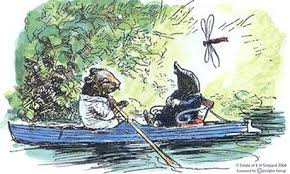
In an interesting article in the Guardian books column back in 2009, ‘Wild Waters are upon us’, Rosemary Hill observed that ‘The Wind in the Willows’ was written within a few years of Beatrix Potter’s ‘The Tale of Peter Rabbit’, E.Nesbit’s ‘The Railway Children’, and J.M.Barrie’s ‘Peter Pan’. Together she argues, very persuasively, these children’s stories came to define the Edwardian Era, “as an idyllic last summer bathed in golden sunshine“, in contrast to the developments in the real world, “a decade of social discontent and growing international tension, when the cracks in the British Empire began to show“. This novel captures brilliant a world of largely suburban contentment – the animals co-exist quite comfortably with the human world, all except perhaps Mr Toad, and their occupations – mainly messing about on boats – are those of middle class people with time on their hands. If ‘Willows’ creates a lost Edwardian idyll, rather than portraying it, the novel is however quite clear that this world is under threat, from development, urbanisation, and not least the dreaded car. The car must have been a rare and slightly frightening sight in 1908, but the way Graeme captures the petrol-head obsession of Toad has close parallels to the car worship of today.

Book Review 039 / The History of Mr Polly by H G Wells


The History of Mr Polly by H G Wells 

1910


January 15, 2016

Most Victorian novels were about prosperous people. Yes, they sometimes had money worries, but they weren’t urban working class. Dickens changed all that, and people from all parts of the class spectrum became suitable subjects. However, the petit bourgouise, the shop keeping class, technically bosses in that they were self employed, but dirt poor nonetheless, were largely ignored. That changed with the Grossmiths’ ‘Diary of a Nobody’ in 1892, and ‘The History of Mr Polly’ is an early entry in this ‘little man and his troubles’ or ‘white collar’ genre.

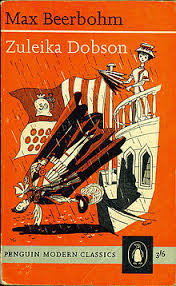
Book Review 040 / Zuleika Dobson by Max Beerbohm


Zuleika Dobson

by Max Beerbohm

1911


November 15, 2016


I finished this novel in something of a bad mood. It is a very bad book, and I resented the effort required to find any redeeming features. The fact that I found some in many ways made my mood worse! As I reflected on the text, I slowly came to accept that perhaps it wasn’t as bad as I originally thought. Don’t you hate it when that happens?zd

Saturday, November 26, 2022

Book Review 041 / The Good Soldier by Ford Madox Ford


The Good Soldier 

by Ford Madox Ford

1915


11 November 2015


This novel has an utterly misleading title. Ford claimed ‘The Good Soldier’ was his publisher’s idea, as an alternative to ‘The Saddest Story’, which may not have caught the public mood, but the commercial appeal of a novel published in 1915 about a ‘good soldier’ must have been hard to resist. Why not go the whole distance and call it “Brits beat the Hun”? It would have had as much relevance.

Book Review 042 / The Thirty-Nine Steps by John Buchan


The Thirty-Nine Steps by John Buchan

1915


This is the novel for which the phrase “what a load of old tosh!” was invented. Buchan, in a short introduction, described it as coming from a genre “which we know as the ‘shocker’ – the romance where the incidents defy the probabilities, and march just inside the borders of the possible”. This is a thinly veiled attempt to pre-empt some of the more obvious criticisms of the utter implausibility of his story. Although having been told that the story will be wildly implausible doesn’t make the plot much easier to swallow.

Book Review 043 / The Rainbow by D. H. Lawrence


The Rainbow 

by D. H. Lawrence


John Pistelli
28 May 2022

You can’t read The Rainbow with a pencil in hand. You can’t highlight sentences on paper or onscreen. There’s just too much of it, and it’s constantly in motion.

I took a creative writing class in high school. The teacher told us to write about an experience. The next day we had to go around the circle and read what we’d written aloud. The class-clown stoner, amid much giggling, read out some stream-of-consciousness gibberish. He had fallen into the kind of displaced stern-mother-and-wayward-son relation to the instructor that is one of the possible high-school teacher-student bonds, so Ms. K. scolded him that he had not written about an experience. “It’s an ongoing experience,” he backtalked. It would have been a good defense—in theory, it’s a great defense—if what he’d written had been any good. It’s also the motto of modernism. It’s also what Lawrence’s 1915 novel The Rainbow is: an ongoing experience, in service to a new vision of life, love, sex, and the universe. The book just keeps coming at you in a torrent of language, all sorts of language, though not in the montage Ulysses style, just an aggressive fusion of the naturalistic, the Biblical, and the psychological. Critics like to quote more than one letter in which Lawrence described the novel as written in a foreign language or as something he found himself translating, which is why much of it is, at least to me, so blurred. For all the experience, there aren’t enough images, not enough real scenes.

Book Review 044 / Of Human Bondage by Somerset Maugham


Of Human Bondage 

by Somerset Maugham

 1915


Book Review

The 100 best novels / No 44 / Of Human Bondage by W Somerset Maugham (1915)


JUNE 8, 2016


Customer in hairdressers: “What’s that book you’re reading, love?”

Rita: “Somerset Maugham, ‘Of Human Bondage’“.

Customer in Hairdressers: [knowingly] “Ohh, my husband’s got loads of books like that.”

(Educating Rita (film) 1983)

Somerset Maugham isn’t read very widely nowadays, despite having been a central figure in English writing for a large chunk of the twentieth century, and despite this name-check in Willy Russell’s much-loved play. My evidence for this sweeping statement is limited, of course, but certainly he is much neglected by film and television companies, which is one way nineteenth and twentieth century writers gain a new audience. I think the main reason must be the dated, slightly faded air of his work – if, that is, ‘Of Human Bondage’ is anything to go by.

Book Review 045 / The Age of Innocence by Edith Wharton


The Age of Innocence 

by Edith Wharton


Molli Sébrir
6 April 2020

The Age of Innocence by Edith Wharton has been sitting on my to-be-read shelf for months now, and I finally decided to pick it up. The book has all of the makings of something I would love: a historical love story set in New York City in the Gilded Age, peppered with feminist ideas. 

Friday, November 25, 2022

Book Review 046 / Ulysses by James Joyce


Ulysses 

by James Joyce

1922


The Seductions of “Ulysses”


Since its publication, a century ago, James Joyce’s epic has acquired a fearsome reputation for difficulty. But its great subject, soppy as it may seem, is love.


By MERVE EMRE
February 7, 2022


Listen to this story

The Twitter account UlyssesReader is what programmers call a “corpus-fed bot.” The corpus on which it feeds is James Joyce’s modernist epic, “Ulysses,” which was published a hundred years ago this month. For nine years, UlyssesReader has consumed the novel’s inner parts with relish, only to spit them out at a rate of one tweet every ten minutes. The novel’s eighteen episodes, each contrived according to an elaborate scheme of correspondences—Homeric parallels, hours of the day, organs of the body—are torn asunder. Characters are dismembered into bellies, breasts, and bottoms. When UlyssesReader reaches the end, it presents the novel’s historic signature, “Trieste-Zurich-Paris 1914-1921,” intact, like a bone fished out of the throat. Then it begins again, arranging, in its mechanical way, the tale of a young Dubliner named Stephen Dedalus and an older one named Leopold Bloom, brought together in a hospital, a brothel, a cabmen’s shelter, and, finally, the kitchen of Bloom’s home—on June 16, 1904, “an unusually fatiguing day, a chapter of accidents.”

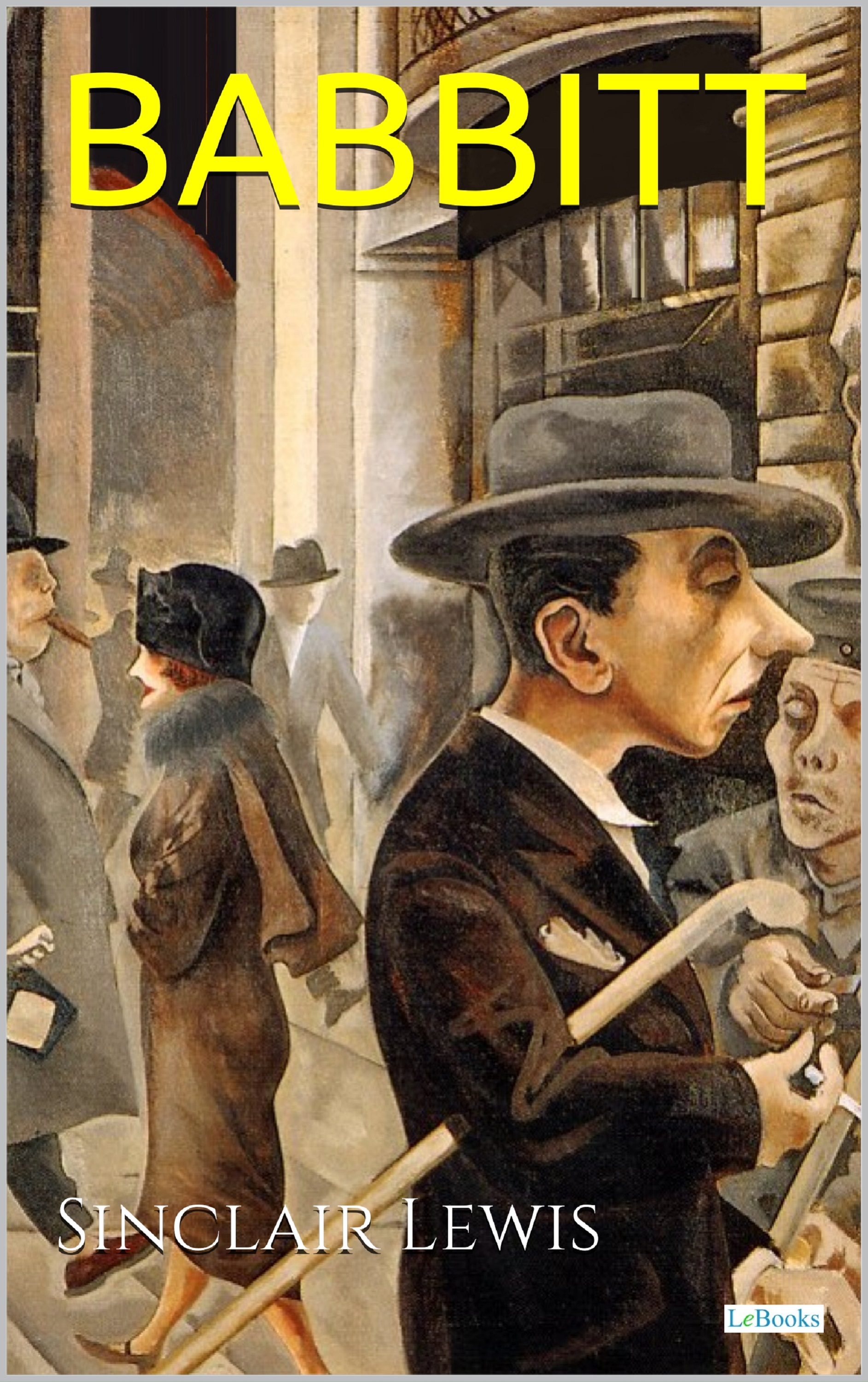
Book Review 047 / Babbitt by Sinclair Lewis


Babbitt

by Sinclair Lewis

1922

Book Review

The 100 best novels / No 47 / Babbitt by Sinclair Lewis (1922)


November 22, 2016


‘Babbitt’, Sinclair Lewis’s satirical portrait of 1920’s America, was written only three years into the prohibition era, and published three years before that other, very different portrait of the USA of the time, ‘The Great Gatsby’. The term ‘babbitt’ was used in the US for some time (I am not sure if it is still current) to signify a person, especially a business or professional man, who “conforms unthinkingly to prevailing middle-class standards and norms”. The name itself is a cleverly constructed combination of ‘babble’, the meaningless babyish talk that Babbitt typically uses when in discussion with his friends, and ‘rabbit’, a small and vulnerable creature, the opposite of the alpha-male that he believes himself to be.