Wednesday, November 27, 2019

Julian Barnes / I was wrong about EM Forster


Julian Barnes: I was wrong about EM Forster

Put off by A Passage to India in his teens, the author has rediscovered a wry, sly and subversive writer

Julian Barnes
Friday 2 December 2016


I
f reading is one of the pleasures – and necessities – of youth, rereading is one of the pleasures – and necessities – of age. You know more, you understand both life and literature better, and you have the additional interest of checking your younger self against your older self. Occasionally I will reread a book in exactly the same copy as I first did decades previously: and there, in, say, a student text of a Flaubert novel, I will find all those annotations which now, initially, embarrass. Key passages underlined, exclamations in the margin of “Irony!” or “Metaphor!” or “Repeated image!” and so on. And yet often, naive and excited as they seem, these comments are pretty much ones I might be making – if not so explicitly – several decades on. That younger reader wasn’t wrong: it was ironic, it was metaphorical, it was a repeated image. I don’t think you are a more intelligent reader at 65 than at 25; just a more subtle one, and better able to make comparisons with other books and other writers.
Sometimes you change your mind about a writer. Perhaps, when you first read them you were only pretending to admire what you’d been told to admire. But also your tastes change. For instance, at 25 I was more open to writers telling me how to live and how to think; by 65 I had come to dislike didacticism. I don’t want to be told how to think and how to live by, say, Bernard Shaw, or D H Lawrence or the later Tolstoy. I don’t like art – especially theatrical art – whose function seems to be to reassure us that we are on the right side. Sitting there complacently agreeing with a playwright that war is bad, that capitalism is bad, that bad people are bad. “You don’t make art out of good intentions,” is one of Flaubert’s wiser pronouncements.

Finally, the Last Word on 'Ulysses' / The Ideal Text, and Portable Too


Finally, the Last Word on 'Ulysses': The Ideal Text, and Portable Too
The 100 best novels / No 46 / Ulysses by James Joyce (1922) 
By RICHARD ELLMANN
June 15, 1986


J
ames Joyce's theme in ''Ulysses'' was simple. He invoked the most elaborate means to present it. Like other great writers, he sensed that the methods available to him in previous literature were insufficient, and he determined to outreach them. The narrator figure who often in earlier novels chaperones the reader round the action disappears. In ''Ulysses'' his place is taken by a series of narrators, usually undependable, who emerge and disappear without being identified. A whole galaxy of new devices and stances and verbal antics, extravagant, derisive, savage, rollicking, tender and lyrical, is held in Joyce's ironic dominion. Behind all the manifold disguises can be felt the pervasive presence of an author who never in the book acknowledges his existence.

William Faulkner / Read, read, read


William Faulkner


READ, READ, READ

by William Faulkner

The 100 best novels / No 55 / As I Lay Dying by William Faulkner (1930)


Read, read, read. Read everything -- trash, classics, good and bad, and see how they do it. Just like a carpenter who works as an apprentice and studies the master. Read! You'll absorb it.Then write. If it's good, you'll find out. If it's not, throw it out of the window.

Tuesday, November 26, 2019

Anita Loos / Sharp, shameless humour of the 'world's most brilliant woman'

Anita Loos


Anita Loos – sharp, shameless humour of the 'world's most brilliant woman'

The writer of Gentlemen Prefer Blondes was an extraordinary, barbed genius of the silent era, Hollywood and Broadway


Pamela Hutchinson
Monday 16 January 2016


Piquant wit … the screenwriter and novelist Anita Loos. 


Anita Loos, the screenwriter and author, claimed – in typically waggish style – to be furious at the women’s lib movement. “They keep getting up on soapboxes and proclaiming that women are brighter than men,” she said. “That’s true, but it should be kept very quiet or it ruins the whole racket.” Loos was a veteran of silent-era Hollywood, when women worked at all levels of the film industry – directing, editing, producing and designing. Scriptwriting, Loos’s forte, was the most feminine department: a “manless Eden” of female screenplay writers, scenario authors, story editors, intertitle artists and “script girls”. Loos may not have been the most successful screenwriter during Hollywood’s silent years (that honour falls to Frances Marion), but she was one of its greatest wits, most popular characters and one of its key storytellers.

Marilyn Monroe / Gentlemen Prefer Blondes

Gentlemen Prefer Blondes

Marilyn Monroe and Jane Russell make a fantastic double act in Howard Hawks's sparkling 1953 comedy, writes Peter Bradshaw

Peter Bradshaw
Thu 25 February 2010

"D
on't you know a man being rich is like a girl being pretty? You may not marry a girl just because she's pretty, but my goodness, doesn't it help?" Marilyn Monroe's unimprovably droll line ­epitomises the pizzazz of Howard Hawks's tremendous musical ­comedy. Monroe and Jane Russell play ­Lorelei and Dorothy, hot showgirls and cool ­customers. Lorelei has a fiercely ­idealistic commitment to marrying rich so that the pure concept of love is not sullied by money worries; Dorothy pragmatically wishes only to follow her heart. Those two faces are incredible in ­juxtaposition: Russell is worldly, amused, intensely in touch: Monroe is sublimely unfocused and ­beatific. A joy.


THE GUARDIAN


Sunday, November 24, 2019

Careless People / Murder, Mayhem and the Invention of The Great Gatsby by Sarah Churchwell / Review


Careless People: Murder, Mayhem and the Invention of The Great Gatsby by Sarah Churchwell – review

Sarah Churchwell has come closer than most to unpicking the enduring mystery of Fitzgerald and his evergreen masterpiece

Robert McCrum
Sunday 2 June 2013


W
hat is it about The Great Gatsby? The dark star of F Scott Fitzgerald's unquiet masterpiece draws writers, critics and film-makers into its force field, drives them a little mad, and hurls them back into the darkness. The book and its author add up to a mystery whose fascination never fades.

The trashy side of Gatsby, amply represented by Baz Luhrmann's movie, remains seductive. The plot, ripped from the pages of a tabloid and crossed with a romantic novelette, has the potency of cheap music. Fitzgerald himself was one of the first to suffer the curse of celebrity. The superstar author of This Side of Paradise, with his "sophomore face and troubadour heart", was so attractive, according to American journalist HL Mencken, that "he might have been called beautiful". To others, he was a doomed creature of the night. Fitzgerald's talent, wrote his rival Hemingway, "was as natural as the pattern that was made by the dust on a butterfly's wings. At one time he understood it no more than the butterfly did."The mystery deepens with the demented figure of his wife, Zelda. What was her role in this mad caprice, she who danced in the fountain at Union Square, who boiled jewellery in tomato soup, and tantalised her husband's friends with sexual innuendo, seeming to Hemingway to threaten the ruin of her husband's genius?
Fitzgerald and wife Zelda with their daughter Scottie, Virginia Beach, August 1927

The attraction of Gatsby intensifies with the text itself, a glittering diamond of brevity less than 60,000 words long. If it was just a lurid tale, its appeal would have faded long ago. But, as well as being a tragic romance, it's also a prose-poem, an elegy to its author's lost love, a hymn to the anxieties of the American dream, and a jazz riff on postwar trauma. Not for nothing did Fitzgerald set it in 1922, the year of The Waste Land.
Put all these elements together, mix in prohibition, bootlegging and the beginnings of celebrity culture, add a soundtrack from Gershwin, plus the creative ambition of a writer tormented by fame, and you have a literary supernova. The Great Gatsby, in short, becomes a tantalising metaphor for the eternal mystery of art.
Sarah Churchwell has come closer than many to the heart of this mystery. Careless People (whose title alludes to Fitzgerald's description of Tom and Daisy Buchanan) is a literary spree, bursting with recherche detail, high spirits, and the desperate frisson of the jazz age. This biography of Fitzgerald's novel is also a portrait of Scott and Zelda, a couple who, as Dorothy Parker put it, always "looked as if they had just stepped out of the sun". In the quest for the key to Gatsby, it elevates a sensational contemporary murder story, what Churchwell calls "a phantom double", to the status of prime suspect.
Churchwell shows that the Hall-Mills case, in which a 34-year-old mother-of-two and her married lover, an Episcopal minister, were found shot through the head in a field outside New Brunswick, was a murder whose lurid coverage exploded into print at the very moment Fitzgerald began his protracted struggle with the novel. This crime, she argues, shadows and informs the novel and suggests a hinterland to its composition that is far darker, and stranger, than previously acknowledged.
Well, maybe. Part of literature's enduring grip is that it's always a bit of a mystery. The problem with forging a cast-iron relationship between life and art is that it can become absurdly reductive. Eleanor Mills was indeed married to "a pale, nervous little man", a possible model for Wilson the mechanic in Gatsby, but Fitzgerald drew on so much personal material, "plagiarising his existence" as one friend said, that it's hard to isolate a single source.
Fitzgerald himself contributes to the confusion as the author of countless contradictory zingers: "Parties are a form of suicide," he said, but he was an Olympic party animal. Churchwell is good on the role of parties in the making of Gatsby. "Gate-crash" is a 20s term, and so are more than 100 synonyms for "drunk", ranging from "squiffy" to "stinko".
This postwar world was "careless" – and crazy. In New York, a new translation of Petronius's Satyricon became all the rage. Trimalchio's dinner party appealed to Fitzgerald. For a while, his work-in-progress became "Trimalchio in West Egg". When The Waste Land appeared in November 1922 it was prefaced by an epigraph about death from Satyricon. Fitzgerald's artistic soul was at one with Eliot's. The novelist concluded one riotous night out in the Bellevue morgue, inspecting corpses.
This was more Dostoevsky than Petronius but, at the same time, he was, writes Churchwell, "still drunk, tearing drunk, roaring drunk". In the party season of 1922-23, he calculated that he averaged barely 100 words a day, and knew he had to get out. In 1924, he and Zelda moved to the Riviera, where he immersed himself in his novel. She probably had an affair with a French aviator.
By 1925, the book was done. "Like Gatsby, I have only hope," Fitzgerald told Gertrude Stein, as he waited for the world's verdict. Now the fate of the novel and the novelist's own creative rallentando fuse into the Gatsby myth. Hemingway wrote: "I did not know the terrible odds that were against him. We were to find out soon enough."
The reviews were not as bad as people claim. Eliot, for one, was full of praise, but the novel did not match the expectations inspired by Fitzgerald's celebrity. Scott and Zelda's lives began to unravel. She had a breakdown and would end up in an asylum. He went to Hollywood to reverse his fortunes and sold some confessional Esquire pieces, later published as The Crack-Up. "My God," he wrote to Zelda, "I am a forgotten man." There was, as he had predicted, no second act in this American life. Fitzgerald died in Los Angeles in 1940, from a heart attack, aged 44. Life and art had become one. His final novel, The Last Tycoon, was unfinished. Dorothy Parker came to view his body. "The poor son of a bitch," she murmured, quoting from Gatsby.

Friday, November 22, 2019

Sinclair Lewis

Upton Sinclair

Upton Beall Sinclair Jr. (Sept. 20, 1878 – Nov. 25, 1968) was a writer of novels of social protest and political tracts; he is best known for his 1906 expose of the meatpacking industry, "The Jungle."

Born in Baltimore, Md., Sinclair was named for his father, an amiable alcoholic who became a symbol for feckless failure in the eyes of his son. Sinclair's mother, Priscilla Harden, was by contrast Puritanical and strong-willed, qualities that Sinclair also embodied. Living in cheap apartments in New York from the age of 10, Sinclair had personal experience of poverty. But he was also an indulged only child who often visited his mother's wealthy relatives in Maryland. The contrast between wealth and poverty troubled him and became his major theme.

Sinclair was one of the best educated American writers of his era, graduating from what is now City University of New York at 18 and attending classes at Columbia College for two more years, but he condemned American education for failing to explain and rectify social problems associated with poverty. Hungry as a young shark, in his words, for money and fame, he began writing boys' stories at 16. At 20 he vowed to give up hack writing and become a serious novelist.


At 21 he married the 18-year-old Meta Fuller. Their son, David, was born the following year, in December 1901. Sinclair's several serious novels failed, and his marriage was in trouble when, in 1903, he turned to what he regarded as the secular religion of Socialism. In 1904 his Socialist contacts sent him to Chicago to write about the plight of meatpacking workers. The resulting novel, "The Jungle," aroused such great indignation — about bad meat, not about mistreated workers, as Sinclair had intended — that it helped secure passage of the country's first Pure Food and Drug laws.

Sinclair used his sudden wealth and fame to support several experiments in communitarian living. He also agitated for various reforms, all detailed in hastily written novels and nonfiction books and articles that did not live up to the promise of "The Jungle." His marriage collapsed in 1911, and in 1913 he married again, more happily, to Mary Craig Kimbrough. In 1916 they moved to Pasadena, Calif. In the productive 12 years that followed, Sinclair wrote nonfiction critiques of American education, religion, journalism, and literature. He also wrote more fiction, including the well-received "Oil!" in 1927 and "Boston," about the Sacco and Vanzetti case, in 1928 (the film based on "Oil!," "There Will Be Blood," effectively captures the best part of the novel, the bringing in of the well).

Sinclair Lewis

In 1934 Sinclair ran for governor of California as a Democrat; he lost, but was said to have altered the state's rigid conservatism. Returning to writing, Sinclair reinvented himself as a historical novelist. "World's End," in 1940, would be the first of 11 "Lanny Budd" novels, in which Sinclair's young protagonist roams the world, meeting leaders both good (Roosevelt, Churchill) and evil (Hitler, Mussolini). By 1953, when the series ended, Sinclair had become a committed cold warrior, convinced that the Soviet Union for which he had once had high hopes was a tyranny worse than Hitler's.

A few more books would follow, but Sinclair spent most of his time caring for his ailing wife until her death in 1961. He married for the third time the following year to a lively widow who made the intensely private writer "put the 'social' in Socialism." He also reconciled with his son, David, from whom he had long been estranged; in 1967, the year before his death, he moved to a nursing home in Bound Brook, N.J., not far from his son's home.

Sinclair Lewis

Sinclair's vast collection of letters and books is housed in the Lilly Library at Indiana University. It includes a famous photograph of the author, who was about 5 feet 7 inches, standing next to a stack of books he had written that is taller than he is: some 90 books in 90 years. Many of those works were admitted propaganda by a talented writer who had more interest in persuasion and politics than in human personality and are no longer read. One wag said he sold his birthright for a pot of message. But a few, including "The Jungle," parts of "Oil!," and "World's End," hold up well. Sinclair himself was that rarity in the literary world, a man of action as well as of ideas.


Thursday, November 21, 2019

How to Make a Living as a Writer, According to Jack London


Jack London

How to Make a Living as a Writer, According to Jack London


By Matt Reimann
Mar 24, 2016. 9:00 AM.


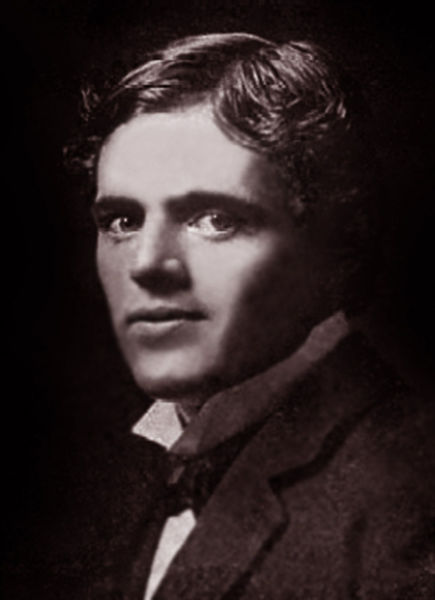
America has a long history of great writers, but a rather shorter history of paying them. Herman Melville, not unlike Walt Whitman and Emily Dickinson, died with practically no money from his work. One of the first people to make a writer’s living in this country was Jack London. Most famous for his novel, The Call of the Wild, London was a diverse writer, and he was decidedly prudent in aligning himself with America’s booming periodical industry.

JackLondon02.jpeg

When Jack London began his literary career around 1900, he was far from the first writer to embrace the opportunities provided by magazines. Some of the great 19th century novels, like Dickens’ Bleak House and Tolstoy’s War and Peace, were first introduced to the world in serial. What distinguishes London amid an already robust tradition was his pragmatism and versatility. Magazines demanded a variety of writing, and Jack London saw an opportunity to make a living off of them by being equally diverse. Not only did he write fiction, he wrote humorous sketches, poetry, war correspondence, and he reported on some of the biggest news of his day, including an evocative account of the 1906 San Francisco earthquake.


Jack London might never have had this voracity for writing if not for his impoverished environment. Always smart and inquisitive, a series of odd jobs and expenses delayed his entrance to high school to age 19, and going to college was only made possible by a loan from the owner of a tavern where he frequently read. However, his sense of adventure was not incongruous with his writing. As a creator of characters who are often in dire survival situations, struggling against nature’s hostilities, it might not be surprising that London himself was a daring soul. Among his most dramatic exploits was a trip to the Klondike in search of gold, during which he endured terrible hunger, and contracted scurvy, causing him to lose four of his teeth.
When London was in his full creative swing, he made an ample living from writing, which would today be worth a salary in the high five figures. His willingness to write knew no bounds, and he welcomed projects that put him in considerable danger. He was assigned in 1904 to report on the Russo-Japanese War, and arrived in Japan in January of that year. This period was a tumultuous one for London. He was arrested by the Japanese soon after arrival. He then moved to Korea, where he was arrested again for being too close to the Chinese border. He was released, but was soon detained again for fighting with the soldiers of the Imperial Japanese Army, whom he claimed stole feed for his horse. His assignment finally ended six months later, after being released with the help of President Theodore Roosevelt.

London left behind a considerable oeuvre, one which even the most dedicated fans would be hard-pressed to read in entirety. What complicates the endeavor is that a good deal of London’s work was published without his name, or has since been lost. In 2015, a piece written by London* in 1903 was unearthed in the archives at the University of Texas at Austin. The essay was published in a periodical named The Editor, and advises aspiring writers how to begin making money from writing, starting from scratch.
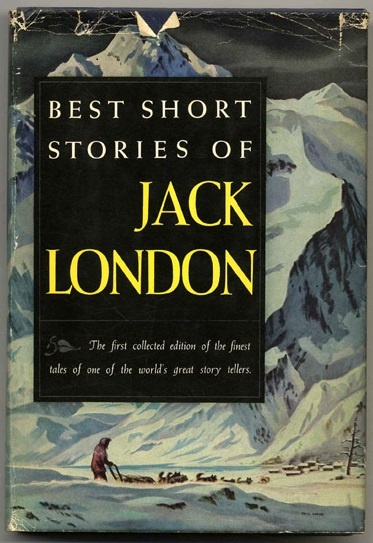
london_stories.jpg
London admits he went into the magazine world entirely blind. He did not know any other writers, nor any example of a successful one. How to get writing in print was a mystery to him, and he spent months sending in manuscripts any place he could, only to receive a trove of rejection slips. This process went on for long, and happened so swiftly that London refused to believe a human, rather than a machine, could read and dismiss his writings with such speed. Eventually, London had his breakthrough, and an editor who was willing to pay him $40 for his 4,000 word short story, “A Thousand Deaths.” This anecdote is surely a relief to anyone who knows the maddening silence of early creativity, but London provides some useful advice useful to any writer employ:

"...Don’t write too much. Concentrate your sweat on one story, rather than dissipate it over a dozen. Don’t loaf and invite inspiration; light out after it with a club, and if you don’t get it you will nonetheless get something that looks remarkably like it..."
In a world in which no one knows where literary attention will go, which trends the papers and publishers will follow, writers are wise to pay attention to London, who above all knew that writing demands hard work. Keep at it, he would say, and make sure to keep a notebook.

Quotes / Frederick Rolf / Hadrian the Seventh


Frederick Rolfe

Hadrian the Seventh 

(1904)


  • Brisk and prompt to war, soft and not in the least able to resist calamity, fickle in catching at schemes, and always striving after novelties – French characteristics remained unaltered twenty centuries after Julius Caesar made a note of them for all time.
    • Prooimion, p. 58
  • He took the imperial hand and shook it in the glad-to-see-you-but-keep-off English fashion.
    • Ch. 13, p. 223
  • An appeal to a goodness which is not in him is, to a vain and sensitive soul, a stinging insult.
    • Ch. 19, p. 296
  • That cold white candent voice which was more caustic than silver nitrate and more thrilling than a scream.
    • Ch. 22, p. 335
  • Most people have only half developed their single personalities. That a man should split his into four and more; and should develop each separately and perfectly, was so abnormal that many normals failed to understand it.
    • Ch. 22, p. 343
  • Pray for the repose of His soul. He was so tired.
    • Ch. 24, p. 360

Hadrian the Seventh
Penguin Modern Classics, Harmondsworth, 1963


.

Wednesday, November 20, 2019

Padraic Colum / A New Work by James Joyce


banner 


A New Work by James Joyce


By PADRAIC COLUM
May 7, 1939
H
ow, in two thousand words or less, is one to review a book which even a cursory examination shows to be unprecedented, a book of considerable length by a thoughtful and tremendously equipped man who has spent sixteen years writing it? The only thing one can do is to indicate the value of the work and to show a way of approaching it with lessened perplexity. I say lessened perplexity, for a certain perplexity cannot wholly be removed from a reading of it and the present reviewer freely acknowledges that there is much in the book that he is still seeking explanation for.

Language, nothing less than the problem of conveying meaning through words, is the first term we have to discuss in connection with "Finnegans Wake." Let us get away from the book for a moment and begin by saying that writing today- I mean what can be described as imaginative writing- is dissociated from the value-making word: that is, it is writing, passing from the brain through the hand to the paper without ever coming out on the lips to be words that a man would say in passion or merriment. I am not speaking now of magazine writing, but of the writing of authors of status- John Galsworthy, for instance. As I write this sentence I see the title of a moving picture before me: it is "The Lone Ranger"; I think that there is more verbal creation in these words than in chapters of Galsworthy's. "Ranger" is a real word, holding a sense of distance, suggesting mountains; "lone" beside it makes the distance inner. There are great writers today who do not put us off with destitute words: Yeats's "The dolphin-torn, the gong-tormented sea" are value-making words.

James Farrell / Revaluing James Joyce's Exiles


banner 


Revaluing James Joyce's 'Exiles'

By JAMES T. FARRELL
July 21, 1946

EXILES By James Joyce. Introduction by Francis Ferguson. 

T
he reprinting of James Joyce's play "Exiles" seems to me to be a good occasion for offering a brief comment on the literary relationship between Ibsen and Joyce. For Ibsen's dramas were among the most significant of the earlier literary influences which went into the forging of the disposition of James Joyce as an artist.