Sunday, August 8, 2021

The 10 best short story collections


The 10 best short story collections

Elizabeth Day chooses the sharpest and smartest of small but perfectly formed works of fiction

Elizabeth Day
Fri 17 Oct 2014 12.00 BST 


Photograph: Neil Bennett

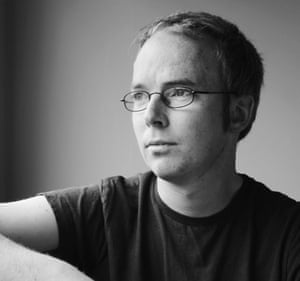
Jon McGregor (2012)
The best short stories should haunt you for days and weeks. The stories in McGregor’s collection have stayed with me for months on end. They are linked by a unity of place – the fenlands of Norfolk and Cambridge – and by precise, elegant prose that elevates everyday occurrences into small, perfectly rendered pieces of art. As Maggie O’Farrell put it in her Guardian review: “The stories wrap themselves around the wholly disconcerting premise that catastrophes can rear up in anyone’s life without warning.”


Photograph: Sophie Bassouls/Sygma/Corbis

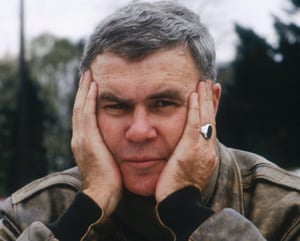
Will You Please Be Quiet, Please?
Possibly the most economical short story writer in this list, Carver, with his precise, punchy prose, conveys in a few words what many novelists take several pages to elucidate. In stories such as “Fat” and “Are You a Doctor?” he writes with flat understatement about suburban disenchantment in mid-century America. The collection – shortlisted for the National Book prize – was written during what Carver called his “first life”, when he almost died of alcoholism. His “second life” started in 1977, when he gave up drinking with the help of Alcoholics Anonymous.


Photograph: Tim Knox

George Saunders (2013)
Winner of last year’s inaugural Folio prize for fiction, Saunders is, according to Entertainment Weekly, “the master of joy bombs: little explosions of grin-stimulating genius that he buries throughout his deeply thoughtful, endlessly entertaining flights of imagination”. Stories such as “Victory Lap” demonstrate his deftness of touch in mixing humour and humanity, as well as showcasing his technical brilliance, incorporating several different points of view in a contained space. And “Sticks”, little over a page in length, is one of the most moving stories I’ve ever read



The Thing Around Your Neck
Chimamanda Ngozi Adichie (2009)
Adichie had written two novels set in her native Nigeria before this collection. It shifts her gaze to the US in 12 stories that explore the experiences of husbands and wives, parents and children, immigrants and permanent residents. The title story delves into the loneliness suffered by a Nigerian girl who moves to an America far removed from her imaginings. A wise and emotive writer, in this collection Adichie touches on her familiar themes of exile, cultural miscommunications and the human desire to reconcile internal and external worlds.


Photograph: Canadian Press/Rex

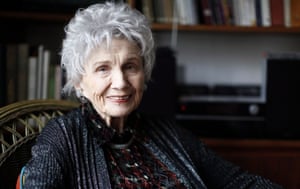
Alice Munro (2004)
The Canadian writer won the Nobel prize for literature in 2013 for her extraordinary work as “master of the contemporary short story”. She also won the 2009 Man Booker International prize for her lifetime body of work and has been called a modern-day Chekhov. Runaway is among her best collections and displays all of Munro’s mastery: the effortless shifts in time, sometimes across decades; the ability to convey an entire life in a few pages; the exploration of complex truths in uncomplicated language.


Photograph: Topical Press Agency/Getty Images

The Garden Party and Other Stories
This collection was first published in 1922, a year before Mansfield’s death at the age of 34 from tuberculosis. A pioneering modernist writer, Mansfield was born and brought up in colonial New Zealand before moving to Britain, where she became friends with DH Lawrence and Virginia Woolf. The title story, one of her best-known works, is written in the modernist style, with the deceptively simple setting of a family preparing for a garden party. Against this backdrop Mansfield brilliantly interweaves meditations on class, life and death, illusion and reality.


Photograph: Richard Saker/Rex Features

Pulse
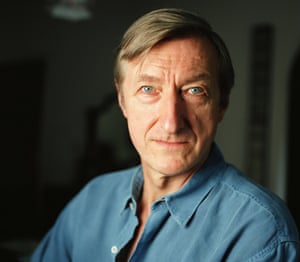
Julian Barnes (2011)
Barnes is best known as a novelist and won the Man Booker prize in 2011 for The Sense of an Ending. As a result, his short stories are rather overlooked and shouldn’t be. Pulse is Barnes’s 17th book and is a masterclass in the shorter form. He is brilliant at evoking social nuance and has an unfailing eye for the tiniest detail that will shine light on the whole. Two particularly wonderful examples from this collection are “Complicity”, about the delicate beginnings of a love affair, and “East Wind”, about a relationship between an estate agent and a foreign waitress.



Photograph: Linda Nylind for the Observer

The Collected Stories
This deliciously fat collection gives the reader the chance to dip in and out of one of the best observers of human behaviour. Moore is notable for her arch tone and her sharp humour. But what makes her special is the way she can shift so smoothly to gut-wrenching poignancy. She writes about terminal illness, family dynamics and infidelity with equal fluency. A particular favourite from this volume is “How to Be an Other Woman” from her first published collection, Self-Help (1985), which was composed almost entirely of stories from her master’s thesis.


Interpreter of Maladies
Jhumpa Lahiri (1999)
This debut collection of nine stories won the Pulitzer prize shortly after it was published in 1999 and was named the New Yorker’s debut of the year. The stories, written with what Michiko Kakutani of The New York Times described as “uncommon elegance and poise”, deal with the diversity of Indian-American immigrant experience and the curious alchemy of love and relationships. My particular favourite in this collection is “A Temporary Matter”, a beautiful mediation on grief, love and loss as a couple try to come to terms with the stillbirth of their child.
The glimpse of truth

That Glimpse of Truth
David Miller (ed) (out 23 October 2014)
Some of the best short stories contain unexpected moments of felicity on which the plot pivots. And so it was that, just as I was compiling this list, I received a giant package containing this doorstep of a book. It might be the most comprehensive collection of short stories… ever, featuring an all-star cast including Angela Carter, Charles Dickens, Roald Dahl and more, selected by David Miller, a literary agent and author.


Two Interviews with Raymond Carver


Two Interviews with Raymond Carver

Raymond Carver's death at fifty in 1988 cut short the career of the most influential American short story writer since Ernest Hemingway. But it did not put an end to Carver's writing--or his influence.

In the years since Carver's death a steady stream of posthumous works has appeared, thanks in large part to the efforts of his widow, the writer Tess Gallagher. These range from Carver's last-written book of poems, A New Path to the Waterfall (1989), to some of his earliest literary efforts: No Heroics Please: Uncollected Writings (1991) and Carnations: A Play in One Act (1992). The biographical volumes Carver Country (1990), . . .When We Talk About Raymond Carver (1991), and Remembering Ray (1993) have kept his memory alive, as have the television documentaries Dreams Are What You Wake Up From (1989) and To Write and Keep Kind (1992). And of course there's Short Cuts (1993), Robert Altman's irreverent Hollywood take on Carver's world.

Raymond Carver / What We Talk About When We Talk About Love / Review


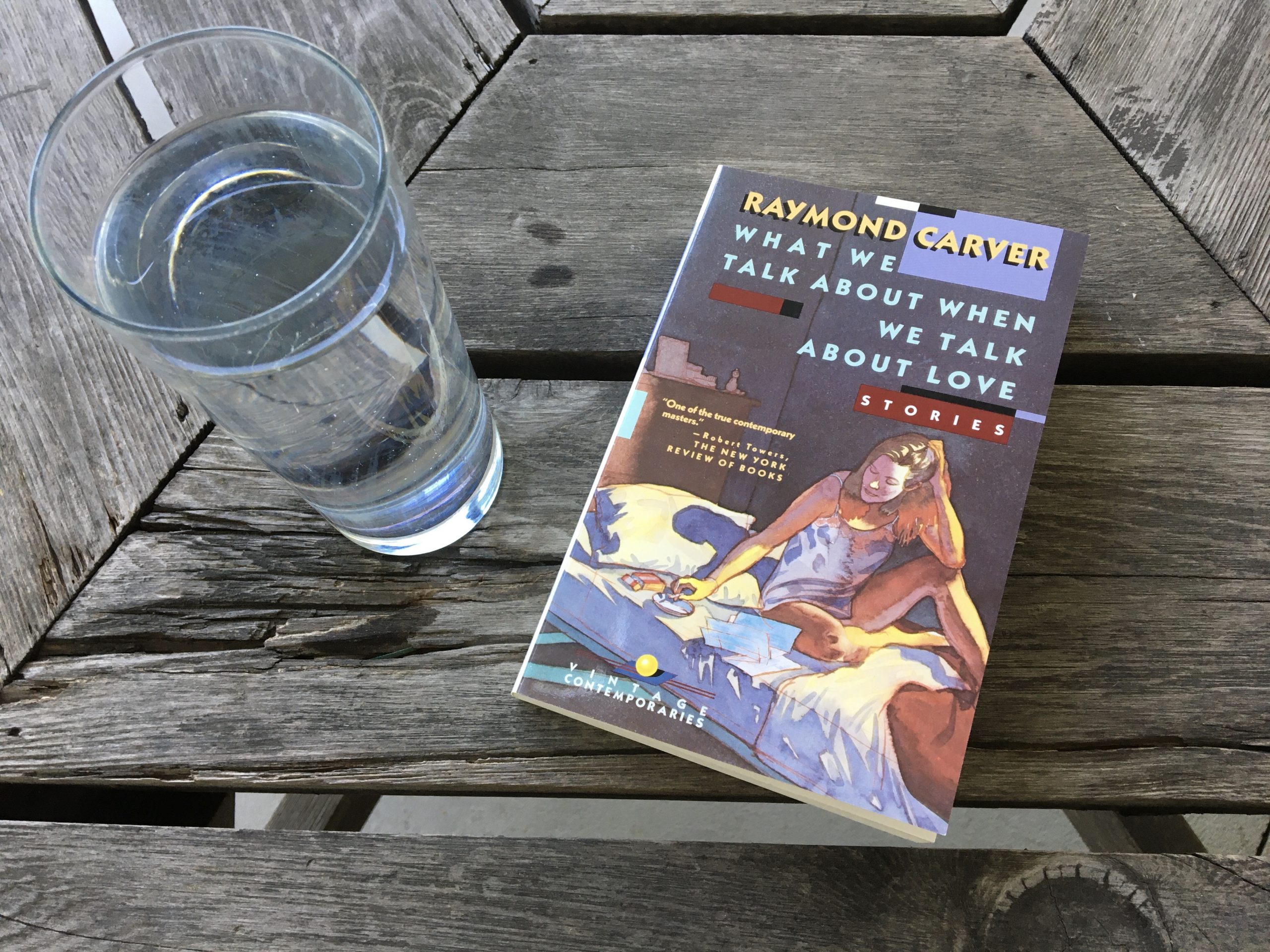
What We Talk About When We Talk About Love by Raymond Carver

Raymond Carver

What We Talk About When We Talk About Love

Raymond Carver, who Stephen King called “surely the most influential writer of American short stories in the second half of the 20th century,” is generally regarded as having revolutionized the form. However, there are those who argue that the Carver style – what King says many critics “miscategorize as ‘minimalism’ or ‘dirty realism’ ” – is actually a product of his editor, Gordon Lish. The two had worked together successfully on Carver’s debut, the 1976 collection Will You Please Be Quiet, Please?, but the relationship became strained when it came to the follow-up, a book Carver called Beginners, but which eventually appeared, in 1981, under Lish’s preferred title, What We Talk About When We Talk About Love. It remains the book most general readers associate with “the Carver style.”

Saturday, August 7, 2021

Interview / Tobias Wolff

1

Tobias Wolff


Tobias Wolff 


John H. E. Paine
May 2003

Tobias Wolff has steadily earned distinction over the last two decades and more as the author of carefully crafted and highly nuanced short fiction whose lineage, as he indicates here, can be traced back through the work of Raymond Carver, Katherine Anne Porter, and Ernest Hemingway to the fiction of Anton Chekhov (His introduction to a collection of Chekhov stories [A Doctor's Visit, 1988] contains some of the most perceptive commentary available on Chekhov as a writer of short stories). He is also an insightful reader of the other “kind” of story (those of Tolstoy and Flannery O'Connor, for example) and an alert observer of contemporary fiction.

Earth, Water, and Fire: Elemental Representations of Feminist Force In Stories by John Cheever, T. Coraghessan Boyle, and Tobias Wolff


John Cheever


Earth, Water, and Fire: Elemental Representations of Feminist Force In Stories by John Cheever, T. Coraghessan Boyle, and Tobias Wolff

Richard C. Kane

Abstract

John Cheever, T. Coraghessan Boyle et Tobias Wolff sont bien connus pour leurs oeuvres qui se cristallisent autour de protagonistes masculins, comme l'illustrent "The Swimmer" et "The Country Husband" de Cheever, ainsi que "Greasy Lake" de Boyle ou encore "Hunters in the Snow" et This Boy's Life de Wolff. C'est certainement en réaction à la prévalence du thème masculin que ces auteurs ont été déboutés par nombre de critiques féministes après avoir été soumis à leur examen.

Friday, August 6, 2021

Mrs. Crasthorpe by William Trevor


Mrs. Crasthorpe

by William Trevor


On the short walk from the churchyard to her car, Mrs. Crasthorpe was aware of a profound humiliation. A lone mourner at her husband’s funeral, she had sensed it first in the modest country church he had insisted upon for what he had called his obsequies. A woman cleric unknown to Mrs. Crasthorpe had conducted a bleak service, had said the necessary words in an accent that appalled Mrs. Crasthorpe, and then had scuttled off without so much as a glance in Mrs. Crasthorpe’s direction. Two men were waiting, leaning on their shovels in the nearby graveyard, and within minutes had returned the clay to where they had dug it from, making a little mound, the coffin gone forever and with it Arthur, all of it a mockery. She was wrong, Mrs. Crasthorpe knew, to blame Arthur for the arrangements he’d put in hand before he went, but she’d become used to blaming him in his lifetime and couldn’t help doing so still.

The Piano Teacher’s Pupil by William Trevor


The Piano Teacher's Pupil 

by William Trevor


“The Brahms?” she said. “Shall we struggle through the Brahms?”

The boy, whose first lesson with Miss Nightingale this was, said nothing. But, gazing at the silent metronome, he smiled a little, as if the silence pleased him. Then his fingers touched the piano keys and, when the first notes sounded, Miss Nightingale knew that she was in the presence of genius.

Wednesday, August 4, 2021

Rodrigo García / A Farewell to Gabo and Mercedes / Review


A warm homage filled with both fond and painful memories.

An account of the days of a remarkable couple.

In a slender, affectionate memoir, film director and screenwriter Garcia pays tribute to his father, Nobel Prize–winning author Gabriel García Márquez (1927-2014), and his mother, Mercedes Barcha, who died in 2020. His father’s life, Garcia reflects, seemed to him “one of the most fortunate and privileged” ever enjoyed by a Latin American. Yet Garcia was impelled to make “a deliberate, if unconscious choice” to distance himself from his father’s fame by living and working in Los Angeles. He traveled frequently to Mexico during his father’s final years, when García Márquez descended into dementia, able to recall only those whom he saw daily—a secretary, driver, cook, and, of course, his beloved wife. When Garcia and his brother visited, he looked at them “with uninhibited curiosity” but no recognition. The man they were speaking to, though welcoming, was “hardly there at all.” However, his death, while expected, still felt like a shock. “Beyond the sadness,” Garcia writes, “is the disbelief that such an exuberant, expansive man, forever intoxicated with life and with the travails of the living, has been extinguished.” When his mother died six years later, the sense of loss was compounded. “The death of the second parent is like looking through a telescope one night and no longer finding a planet that has always been there,” he writes. “It has vanished, with its religion, its customs, its own peculiar habits and rituals, big and small. The echo remains.” Although his parents were determined to keep their personal lives private from inquiring journalists and literary fans, Garcia recounts in sensitive detail his father’s last days. “My father,” he writes, “complained that one of the things he hated most about death was that it was the only aspect of his life he would not be able to write about.” His son sensitively completes the story, and he includes family photos.

A warm homage filled with both fond and painful memories.


KIRKUS


Gabriel García Márquez by Rodrigo García


A Farewell to Gabo and Mercedes

By Rodrigo García


Rodrigo García’s new memoir, A Farewell to Gabo and Mercedes, recounts the ailing health and eventual passing of his father, the writer Gabriel García Márquez, in close detail. Amid family discussions and trips to the doctor, García explores the challenge of writing about grief while living within it. In the below excerpt, García documents the aftermath of his father’s dementia diagnosis and considers the emotional weight of the memory loss upon the renowned writer. 


Writing about the death of loved ones must be about as old as writing itself, and yet the inclination to do it instantly ties me up in knots. I am appalled that I am thinking of taking notes, ashamed as I take notes, disappointed in myself as I revise notes. What makes matters emotionally turbulent is the fact that my father is a famous person. Beneath the need to write may lurk the temptation to advance one’s own fame in the age of vulgarity. Perhaps it might be better to resist the call and to stay humble. Humility is, after all, my favorite form of vanity. But as with most writing, the subject matter chooses you, and so resistance could be futile.

A few months earlier a friend asked how my dad was doing with his loss of memory. I told her he lives strictly in the present, unburdened by the past, free of expectations for the future. Forecasting based on previous experience, which is believed to be of evolutionary significance as well as one of the origins of storytelling, no longer plays a part in his life.

“So he doesn’t know he’s mortal,” she concluded. “Lucky him.”

Of course, the picture I painted for her is simplified. It is dramatized. The past still plays a part in his conscious life. He relies on the distant echo of his considerable interpersonal skills to ask anyone he meets a series of safe questions: “How is everything?” “Where are you living these days?” “How are your people?” Occasionally he’ll venture an attempt at a more ambitious exchange and become disoriented in the middle of it, losing the thread of the idea or running out of words. The puzzled expression on his face, as well as the embarrassment that crosses it momentarily, like a puff of smoke in a breeze, betrays a past when conversation was as natural to him as breathing. Creative, funny, evocative, provocative conversation. Being a great conversador was almost as highly regarded among his oldest group of friends as being a good writer.

The future is also not completely behind him. Often at dusk he asks, “Where are we going tonight? Let’s go out to a fun place. Let’s go dancing. Why? Why not?” If you change the subject enough times, he moves on.

He recognizes my mother and addresses her as Meche, Mercedes, La Madre, or La Madre Santa. There were a few very difficult months not long ago when he remembered his lifelong wife but considered the woman in front of him claiming to be her to be an impostor.

“Why is she here giving orders and running the house if she is nothing to me?”

My mother reacted to this with anger.

“What is wrong with him?” she asked in disbelief.

“It’s not him, Mom. It’s dementia.” She looked at me like I was trying to pull a fast one. Surprisingly, that period passed, and she regained her proper place in his mind as his principal companion. She is the last tether. His secretary, his driver, his cook, who have all worked in the house for years, he recognizes as familiar and friendly people who make him feel safe, but he no longer knows their names. When my brother and I visit, he looks at us long and hard, with uninhibited curiosity. Our faces ring a distant bell, but he cannot make us out.

“Who are those people in the next room?” he asks a housekeeper.

“Your sons.”

“Really? Those men? Carajo. That’s incredible.”

There was an uglier period a couple of years earlier. My father was fully aware of his mind slipping away. He asked for help insistently, repeating time and time again that he was losing his memory. The toll of seeing a person in that state of anxiety and having to tolerate their endless repetitions over and over and over again is enormous. He would say, “I work with my memory. Memory is my tool and my raw material. I cannot work without it. Help me,” and then he would repeat it in one form or another multiple times an hour for half an afternoon. It was grueling. That eventually passed. He regained some tranquility and would sometimes say, “I’m losing my memory, but fortunately I forget that I’m losing it,” or “Everyone treats me like I’m a child. It’s good that I like it.”

His secretary tells me that one afternoon she found him standing alone in the middle of the garden, looking off into the distance, lost in thought.

“What are you doing out here, Don Gabriel?”

“Crying.”

“Crying? You’re not crying.”

“Yes, I am. But without tears. Don’t you realize that my head is now shit?”

On another occasion, he said to her: “This isn’t my home. I want to go home. Home to my dad. I have a bed next to my dad’s.”

We suspect he was referring not to his father but to his grandfather, the colonel (and the inspiration for Colonel Aureliano Buendía), with whom he lived until he was eight. The colonel was the most influential man in his life. My father slept on a small mattress on the floor next to his bed. They never saw each other after 1935.

“That’s the thing about your father,” his secretary says to me. “Even ugly things he can talk about beautifully.”


Rodrigo García was born in Colombia, grew up in Mexico City, and studied history at Harvard University. His features as writer and director include Nine LivesAlbert Nobbs, and Last Days in the Desert. Garcia has directed for television series such as Six Feet UnderThe Sopranos, and Big Love, for which he received an Emmy nomination. He also directed several episodes of HBO’s In Treatment, where, in addition to directing, he served as writer, executive producer, and series showrunner. Garcia currently resides in Los Angeles with his family. 

Excerpted from A Farewell to Gabo and Mercedes: A Son’s Memoir of Gabriel García Márquez and Mercedes Barcha, by Rodrigo García. 


Tuesday, August 3, 2021

The Country of Others by Leïla Slimani review / A compelling exploration of the past


BOOK OF THE WEEK

The Country of Others by Leïla Slimani review – a compelling exploration of the past

The bestselling author of Lullaby works her dangerous magic on her own family history in the first of a planned trilogy

Tessa Hadley

Wed 28 July 2021

The French-Moroccan author Leïla Slimani’s second novel, published in France in 2016 and translated into English as Lullabyis about a nanny who works for a bourgeois professional Parisian couple, and murders the two children in her care. It caused a huge stir globally, won the Prix Goncourt (she was the first Moroccan woman to win the prize), and caught the attention of President Macron, who appointed Slimani his representative for the “promotion of French language and culture”. The novel is uncannily good at searching out the uncomfortable pressure points where class hurts and privilege excludes and crucifies. Interestingly, Slimani deliberately confounds the usual intersections of race with class – most of the nannies in the book are Maghrebi or African, but the murdering one is white, and her employer, the children’s mother, is a French-Moroccan lawyer. Lullaby is a shocking and affecting book, but in the end I think a confusing one. Sentences succeed one another in a suspenseful tension which depends too much on our helpless fascination with the facts of the crime; the novel’s penetration of the privileged couple’s unease and the nanny’s loneliness can’t finally deliver what it seems to promise, which is any explanation of what’s happened. That could only be a matter for psychopathology. The children’s deaths are pitiable and terrible, but have no political meaning.

Leïla Slimani’s Sex and Lies / A brave and honest look at the lives of Moroccan women


Leïla Slimani


Leïla Slimani’s Sex and Lies: a brave and honest look at the lives of Moroccan women


The French-Moroccan novelist Leïla Slimani’s first work of non-fiction is composed of a series of interviews with Moroccan women from different backgrounds and age groups 


Elif Shafak

26 February 2020

Elif Shafak


Throughout the Middle East, nowhere is the need for change more urgent – and the silences more deafening – than in the areas of gender and sexuality. Patriarchal norms are so deeply rooted across the political spectrum that even the most seemingly liberal segments of societies can be homophobic, transphobic and misogynist underneath the veneer of “modernity”.

Monday, August 2, 2021

Leïla Slimani / ‘This book is a mirror to make the elite look reality in the face’


‘After I started writing novels, I understood the power of words’: Leïla Slimani 


Leïla Slimani: ‘This book is a mirror to make the elite look reality in the face’


As her book Sex and Lies appears in English, the bestselling author of Lullaby and face of Macron’s France is emerging as a champion of women’s rights in her native Morocco


Kim Willsher
Sunday 16 February 2020

Leïla Slimani is running late. She texts to say she’s waiting for her children’s nanny to arrive. Can this be true? Does the writer whose bestselling novel Lullaby features a killer childminder and begins: “The baby is dead”, really have a nanny with whom she is perfectly happy to leave her two young children?

Scheherazade’s Heirs / “Sex and Lies” by Leïla Slimani


Scheherazade’s Heirs: “Sex and Lies” by Leïla Slimani


Daniel James Sharp

12 March 2020

Most countries contain contradictions. Scotland, for example, was central to the Enlightenment, but it also has plenty of gangs and high rates of drug use and obesity (facts well known but kept out of the tourist pamphlets). But few countries are as contradictory as Morocco: a country with a split personality.

‘Virginity is an obsession in Morocco’ / An extract from Leïla Slimani’s Sex and Lies


‘Virginity is an obsession in Morocco’: an extract from Leïla Slimani’s Sex and Lies

The author reflects on the challenges faced by young women in the country of her birth, where extramarital sex is a criminal offence


Leïla Slimani
Sunday 16 February 2020

Ileft Morocco more than 15 years ago. With the years and the distance, I have surely forgotten quite how difficult it is to live without the freedoms that have become so natural to me. In France it can be a struggle to imagine the disorientation that comes with a young girl’s discovery of her sexual self in a country where Islam is the state religion and the laws are extremely conservative on everything that relates to sex.

Sunday, August 1, 2021

The Subjective Real in William Trevor’s “Justina’s Priest”


The Subjective Real in William Trevor’s “Justina’s Priest”


Eugene O'Brien
Autumn 2014

As a genre, the short story is one which can be seen as neither/nor or both/and: it does not have the length and scope of a novel, nor does it have the intense yet disciplined formal structure of a poem, and it is for this reason that it is, perhaps, the most under-examined of all literary genres. Despite the fact that it has been practiced by some of the greatest writers in world literature—Chekov, Maupassant, Faulkner, Steinbeck and Hemingway—as well as a significant number of Irish writers—O’Faolain, O’Connor, Joyce, Banville and McGahern—it remains an elusive genre. Studies seldom focus on a single story, as there does not seem to be sufficient material in one story to carry the weight of sustained analysis. In this article, that trend will be reversed, as the focus here is on a single short story by William Trevor, entitled “Justina’s Priest,” from his 2005 collection A Bit on the Side, a collection which Paul Delaney has termed “masterful” (183). The title is part of an ongoing trope of Trevor’s fiction in that “women’s names provide the titles for several of his novels and many of his short stories” (Fitzgerald-Hoyt 143). The reason for the choice of this story is that it offers a fictive and complex perspective on the socio-cultural demise of the influence of the Catholic Church in Ireland. This is a topic that has been the subject of a significant amount of comment, but the fluctuations and consequences of the hegemonic power of this institution have never, I would contend, been dealt with so subtly as in this story.

Writing Aslant / Putting Chisel to Paper—William Trevor’s A Bit on the Side


Writing Aslant: Putting Chisel to Paper—William Trevor’s A Bit on the Side

Claire Majola-Leblond
Autumn 2014

“I don’t write about art to explain it but to explore what has happened between me and the image, both emotionally and intellectually”
Siri Hustvedt (282)1

1It is now well-known that before being a full time writer, William Trevor used to be a sculptor, a carver of wood. In “Mentors” he gives a humorous account of his beginnings, carving an eagle in low relief at St Columba’s School under Oisin Kelly’s supervision:

William Trevor / The master who hid his art


William Trevor
Photo by Brenda Fitzsimons.

William Trevor: The master who hid his art

He could always reinvent and refresh his imagination and surprise his readers in story after story, novel after novel


Wednesday, November 23, 2016

William Trevor once described himself in modest terms as “a storyteller”, suggesting that his fiction “may, now and again, illuminate the human condition”. But his empathetic apprehension of that condition and its mysteries was one of his greatest gifts as a storyteller.

William Trevor made the ordinary and familiar, new and shocking

William Trevor: an Irish writer, an international writer, a great writer.

William Trevor made the ordinary and familiar, new and shocking

Trevor was a world class writer who chronicled the lives of the forgotten, the despairing losers, the innocent and the devious, the lonely and the unloved


Eileen Battersby
Monday 21 November 2016

Detached sympathy, irony and a masterful grasp of the essential menace lurking at the heart of human existence partly – although only partly – attempts to explain the fluid, diverse genius of William Trevor’s singular art.