Friday, June 5, 2020

Marc Behm / The Eye

Marc Eye


The Eye
Created by Marc Behm


An unnamed private detective, known only as "THE EYE" is the hero of one of those peculiar books written in the genre but not 'of' the genre, if you see what I mean. Hired to tail a young man, The Eye witnesses the murder of the young man by his new wife on their honeymoon, and is soon obsessed with her. His obsession seems to know no bounds, and as the novel unwinds, The Eye follows his prey around the world over a span of several years, as she works her way through a string of husbands, and the body count climbs.

As Behm says, in the introduction to the Black Box Edition of Behm's three novels, "It's the story of God in disguise as a Private Eye, searching for his daughter: a quest for grace."

Fair enough, I thought (although this does raise the possibility of some Hotel Dick spotting a weird looking guy sitting in the lobby reading a paper with two eye holes in it and asking someone like Marlowe, à la The Maltese Falcon,"Who's the punk?" to which Marlowe replys "It's just God, on a job" ).

Anyway, amongst many other things, it does raise the question of The Eye as an 'eye' (ie just what is it we actually 'see' when we see something) - as in "you don't see things the way they are but the way you are." Or, to put it another way, just how do men see women in this hardboiled genre. If questions like this don't concern you, then don't worry, because I suspect you'll enjoy the book anyway despite it being the longest tailing job ever written.

An edgy, unsettling novel which seems to evoke strong reaction among any who've read it, it's one of those books you either love or hate. Newgate Callendar in The New York Times Book Review called it "One of the most remarkable combinations of a private-eye novel and psychological suspense story, with an entirely new slant, that has ever been published," and critics in France have hailed Behn as a major new writer. In fact, it was filmed in 1983 , in French, as Mortelle Randonnèe, directed by Claude Miller, and starring Isabelle Adjani. Ironic, since the book started out as a film script for Philip Yordan, but when that project fell through, it became a novel. In many ways it still reads like a 'book of the film'. Still there are plenty of laughs in there as well.
Ojos que te acechan (1999) - CINE.COM


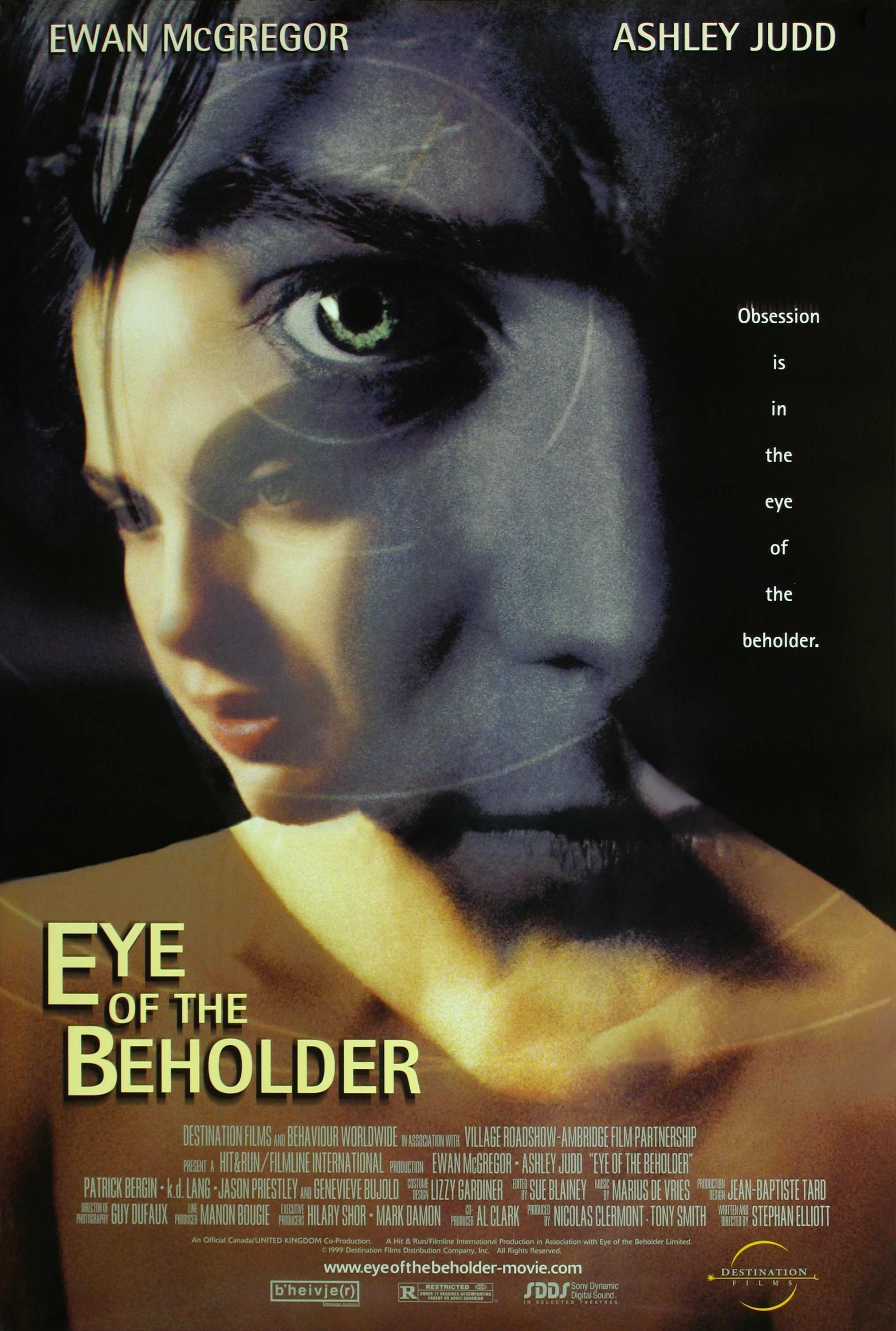
A new film version, this time in English, featuring Ewan McGregor (Trainspotting, etc) as The Eye, filmed in my hometown, with Montreal substituting for a dozen cities around the world, and directed with tons of style by Stephan Elliot (The Adventures of Priscilla, Queen of the Desert) was released in January 2000. Although it's been getting mixed reviews, it certainly is an impressive-looking bit of film.

But then, there always has been a film-like quality to the novel--after all, Marc Behm was a scriptwriter before he turned to writing fiction, working on the classic 1960s flicks Charade (starring Cary Grant and Audrey Hepburn) and Help! (featuring--who else?--the Beatles). Behm currently lives as an expatriate writer in France, and continues to produce distinctive crime-related novels that--unfortunately--remain unpublished in the U.S. In fact, Eye of the Beholder was out-of-print for many years until it was finally reprinted as a tie-in with the new film.

On a final point, Behm said, in response to the critical acclaim that followed the book and labelled him the new Hammett etc, "I've read my share of contemporary thriller writers and I still find that Graham Greene is the master of us all. I find Chandler rather boring and Hammett, although nice to read, belonged to a school of writing I find tiresome."
Sacrilege!

UNDER OATH
  • "The best PI novel ever written.....a roller-coaster ride that combines poignancy and metaphysical anguish: a book that stands alone in the field like an unpolished diamond."
    -- Maxim Jakubowski, of Murder One bookshop in the UK
NOVEL
  • The Eye of the Beholder (1980)
FILM
  • MORTELLE RANDONNÈE (1983; in French)
    Based on the novel Eye of the Beholder by Marc Behm
    Directed by Claude Miller
    Starring Michel Serrault, Isabelle Adjani
  • EYE OF THE BEHOLDER (2000, Seville Pictures)
    Based on the novel by Marc Behm
    Screenplay by Stephan Elliot
    Directed by Stephen Elliot
    Starring Ewan McGregor as THE EYE
    Also starring Ashley Judd, Patrick Bergin, k.d. lang, Jason Priestley, Genevieve Bujold
    Filmed in Montreal
    Producers: Nicholas Clermont, Tony Smith
    Co-producer: Al Clark
    Executive producers: Hilary Shor, Mark Damon
    John Griffin, film critic for The Montreal Gazette, called it "a super stylish, designed-to-the gills thriller...a techno- psycho- road-movie- surreal- serial-killer- romantic thriller that looks and sounds so good you might not mind it's all over the narrative map."

TRILLING DETECTIVE

Marc Behm / A writer lost to translations


Marc Behm


Marc Behm

A writer lost to translations


Marc Behm was a terrific American novelist. So why are his books only available in French?

Maxim Jacobowski
Friday 21 September 2007

The news of the death of Marc Behm on July 12 has only just reached me. Unsurprisingly, I haven't seen a single obituary in either the American or British press - it was through the pages of a French magazine that I found out about his passing. (He was something of a cult figure in France, where he spent the final part of his life after marrying a French woman.)
Behm was born in 1925 in Trenton, New Jersey and served with the US army in Europe during the second world war. Following a decade of small parts as an actor on the stage and US television, he initially made a name for himself as a screenwriter, penning the short story Charade, later expanded into a full-blown screenplay in collaboration with his friend Peter Stone. The film that resulted, directed by Stanley Donen and starring Cary Grant and Audrey Hepburn, is widely acknowledged as a classic.
Two years later, he boarded the Beatles bandwagon and wrote the screenplay for Help! for Richard Lester and moved full-time to Europe. His later screenwriting assignments were of a journeyman nature, with lucrative but artistically frustrating work including Trunk to Cairo, The 13 Chairs, an Edith Piaf biopic and sundry Charles Bronson and Sylvia Kristel vehicles. The screenwriting paid the bills as he shared his time between Paris and the Brittany coast, but it's his second life as a writer that should ensure he is not forgotten.
His first novel The Queen of the Night was published to total indifference in America in 1977 - a curiously baroque and deliberately over-the-top romance set in Nazi Germany which was years ahead of its time and found echoes in Jonathan Littell's blockbusting Les Bienveillantes last year. He followed this up in 1980 with a crime novel The Eye of the Beholder, which has since been recognised as a pivotal work in the history of mystery fiction, has been filmed twice and is constantly reprinted worldwide.
The Eye is a private detective whose daughter has been missing for many years. In his desperate search for her, he comes across a mysterious femme fatale with a unique talent for seducing rich men, swindling and then killing them. Even though he is aware of his own delusion, he pretends she is his daughter and follows her, disposing of evidence and covering her tracks in a sort of road movie with obsession upped to overdrive.
Again, the book had no impact on initial publication and it wasn't until three years later that I published it (alongside the first novel and the then unpublished Ice Maiden, which has long been a film project of Jean-Jacques Beineix) in the UK, where the reviewers went wild for its curious blend of amour fou, crime and fatalism. Of course, in France, Marc's book had already been acclaimed as a modern classic and a film version of the book, directed by Claude Miller, featuring Michael Serrault and Isabelle Adjani made a major impact as Mortelle Randonnee. A later English-language version by the director of Priscilla, Queen of the Desert, Stephan Elliott, was however a bit of a disaster, miscasting Ewan McGregor and Ashley Judd in the main parts.
By then, though, Marc had retired from screenwriting and his writing became something of a hobby. He would complete another five novels, all initially published only in France apart from Afraid to Death, picked up by No Exit Press in the UK. This latter is a fascinating mirror image to Eye of the Beholder, in which the male character becomes the prey of a female stalker cum angel of death, yet again a striking tale of obsession unbound and a disturbing psychological chiller. It was quite unlike the mainstream of contemporary crime fiction, but then Marc was never one for fashions, moving across genres with an easy contempt for the obligations of modern publishing whereby you stick to one mood and type of story and just keep writing it over and over.
Although highly popular in France in translation, his other novels remain unavailable in his own language, a fact to which he was quite indifferent. They include his serial killer epic Off the Wall, two picaresque chase thrillers with a supernaturally gifted heroine, Seek to Know No More and Crabs, and the madcap satire of Pulp Novel. He also wrote a handful of short stories, again collected in book form only in France.
Although Marc lived to a ripe old age, I can't help regretting he didn't write more or make stronger efforts to get his books published in this country. I came across a secondhand copy of The Eye of the Beholder in an Oxfam shop and made it my mission to create an imprint in which I could publish it. Now that I am myself retired from publishing, I can only hope there will be another editor out there who will one day be captured by the dazzling folly of Marc Behm's books and will make those missing novels available. They will astound you.

Thursday, June 4, 2020

Ewan McGregor and Ashley Judd / Eye of the Beholder

Ojos que te acechan (Eye of the Beholder) (1999) – C@rtelesmix

Eye of the Beholder
Film

Time Out says


Ewan McGregor plays the Eye, a surveillance operative in British Intelligence. Investigating blackmail, he witnesses murder. The killer is a blonde - or is she brunette? - who disappears into metropolitan anonymity; yet the Eye will not let it go, and hearing about a suspiciously familiar-sounding crime some months later, he picks up the trail, gradually closing in on Joanna (Judd) even as he loses the plot. The Eye, you see, is an unreliable witness, whose only human interaction is with the voices in his head, and who comes to believe that Joanna and his missing daughter are one and the same. A change of tack for Aussie auteur Elliott, formerly a purveyor of garish, misanthropic camp (most famously The Adventures of Priscilla Queen of the Desert), this swaps bad taste comedy for bad taste romance: it's a love story for sociopaths. Marc Behm's post-modern noir novel - Lolita with a body count - has been filmed before: most hauntingly by Claude Miller as Mortelle Randonnée, with Isabelle Adjani and Michel Serrault; then, unacknowledged and with a gender twist, by Bob Rafelson as Black Widow. Elliott's flamboyantly surreal version is undone by the central miscasting of McGregor - at least a decade too young to be fixated on a long-lost daughter. Judd is more murderous mannequin than 'Marnie', but then the real star is Elliott's inventive mise-en-scène. Staking a claim as the heir apparent to ageing stylists Brian De Palma and Dario Argento, he drives the voyeurism theme to hi-tech distraction. The result is compellingly bonkers.


Eye of the Beholder trailer


Details

Duration:
110 mins

Cast and crew

Director:
Stephan Elliott
Screenwriter:
Stephan Elliott
Cast:
Ashley Judd
Ewan McGregor
Patrick Bergin
kd Lang
Jason Priestley
Geneviève Bujold

Marc Behm / Screenwriter known for Charade and The Eye of the Beholder

Marc Behm

Marc Behm

Screenwriter known for Charade and The Eye of the Beholder


Christopher Hawtree
Tue 30 October 2007

When the opening credits of the Beatles' Help! zap across the screen while they perform that song, few may have noticed screenwriter Marc Behm's name superimposed upon Ringo's drum or recalled it from the equally distinctive credits of Charade (1963). Both films feature a beautiful woman -Eleanor Bron, Audrey Hepburn - caught up in plots generated by some men's quest for a valuable object.

Sylvain Coulombe / Portraits


Wednesday, June 3, 2020

George V. Higgins / The Life and Writings


BCWin15_E_ClassNotes_11
WINTER 2015

George V. Higgins


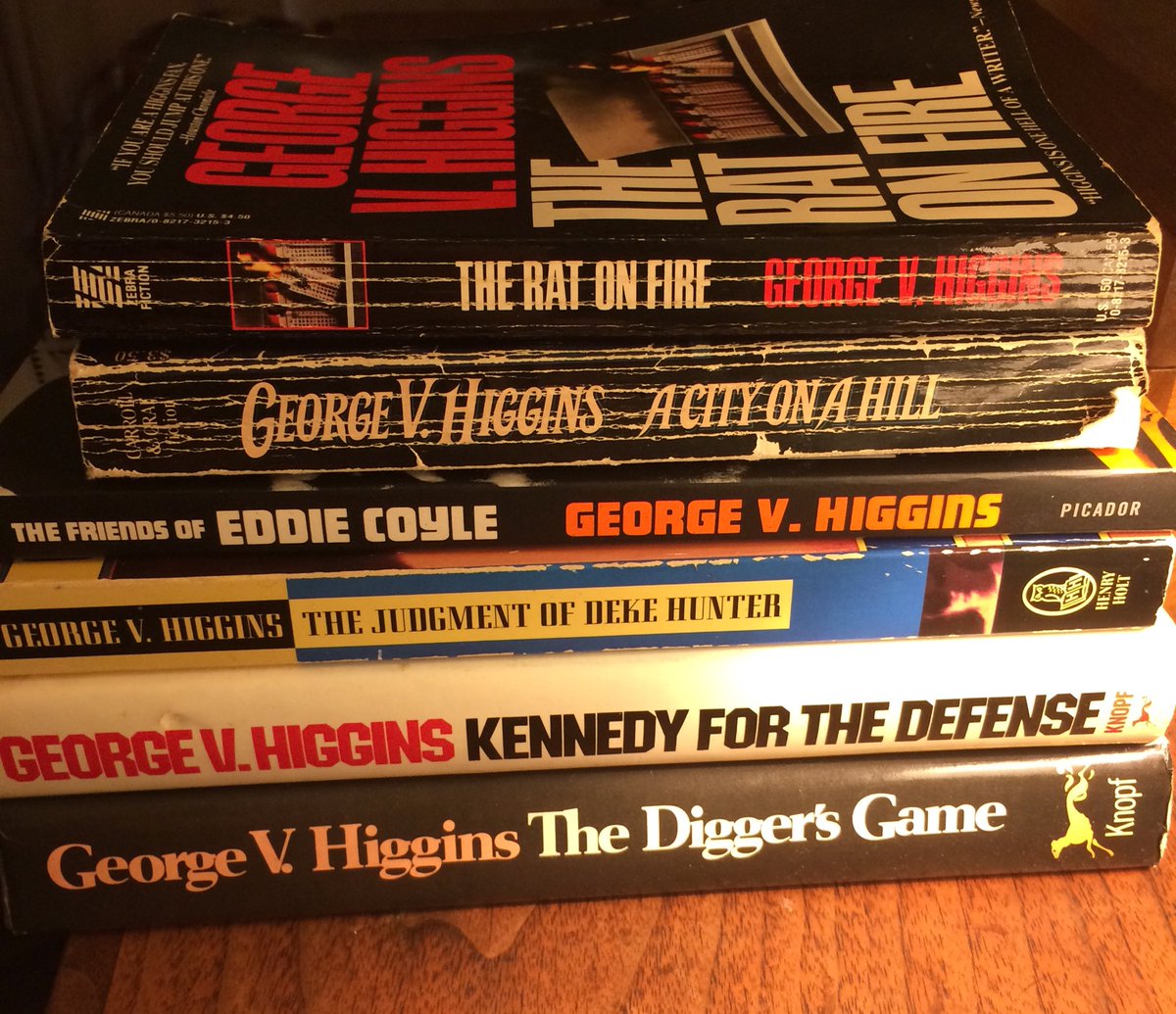
George V. Higgins ’67 (1939–1999) is the subject of a new book George V. Higgins: The Life and Writings by Erwin H. Ford II and published by McFarland in June. Lawyer, newspaper columnist, and college professor, Higgins is perhaps best remembered as the author of popular crime novels, most notably The Friends of Eddie Coyle, many of which were set in Boston.


Tuesday, June 2, 2020

Celebrate Clint Eastwood’s birthday with his 10 best movies

Clint Eastwood. : Art
Clint Eastwood

Celebrate Clint Eastwood’s birthday with his 10 best movies


Clint Eastwood turns 90 today, and we’ve yet to see any evidence that he plans to slow down as one of Hollywood’s hardest-working talents. As actor and director, his films have grossed nearly $3 billion worldwide, and last year’s outstanding “Richard Jewell” proves he remains at the top of his game.

To wish the film icon a happy day, we’ll share our 10 favorite films of his. We should note we’re only picking films in which he appears on screen, so that means no “Mystic River” or “Letters from Iwo Jima." And sorry to all you “Changeling” fans.

We’ll cover plenty of the hits you know and love, but also include some lesser celebrated titles that deserve the love. What are your favorite Clint Eastwood flicks? Read ours below:


The Good, the Bad and the Ugly (1966)

Pour one out for Sergio Leone and his “Man with No Name” spaghetti western trilogy that would help launch Eastwood to leading man superstardom. If we must pick only one, the easy choice remains the operatic finale that packs three hours full of epic showdowns, unexpected humor, Ennio Morricone’s sweeping score and Eastwood in all of his cigar-chomping glory, opposite Eli Wallach and Lee Van Cleef.

Obituaries / George V. Higgins


04/04/13 – La suerte de George V. Higgins | La revista digital de ...
George V. Higgins

Obituary

George V. Higgins


Jack Adrian
Wednesday 10 November 1999 01:02


IT IS unquestionably unfair to dub any writer a one-book man, especially when he's published well over 20. Nevertheless in the case of George V. Higgins the fact has to be faced. He wrote superbly dialogued, complexly plotted, richly characterised novels - yet all just a slight variation on the same basic riff. And, as the years went by and the books stacked up, the similarities began to stand out, hardly helped by their author's reliance, more and more, on pure dialogue, to the point where narrative - scene descriptions, back-story, the intricate social hinterland against which the novels' events were played out - virtually disappeared. Until, in essence, all that remained was "two guys gabbing at each other" - or even one guy soliloquising for paragraph after paragraph, page after interminable page.


That of course is somewhat of an exaggeration; but it is not a travesty. Higgins, in his later books, was perfectly capable of having a character monopolise conversations, events, the plot, everything. He was not a difficult writer to parody.
His "one book" was - in a sense sadly - his very first, The Friends of Eddie Coyle (1972), a thriller of surpassing brilliance in which Higgins dug deep into the political, social and criminal midden that was Boston, Massachusetts. Coyle is a provider of hardware for a bunch of bank heisters, who, to protect himself against being sent up for a second stretch, talks to the cops. His friends are his fellow hoods - gunmen, bagmen, bank-rollers - who trust him about as much as he trusts them ("not a whole hell of a lot"). All are more or less in thrall to the "wise guys", the syndicate wheels who call the shots, take the profits, order (though never ever mete out: that's for the footsoldiers) the punishments, the death-warrants for stupidity and treachery.


The Friends of Eddie Coyle is compulsively readable, driven as it is by the Higgins trademark of low-life dialogue that is as hard and glittery as a velvet-plush trayful of diamonds - dialogue that almost takes the breath away, it is so rock-solid real. The book garnered extraordinary tributes not only from the usual suspects - "the most powerful and frightening crime novel . . . I have read this year", raved the crime-writer Ross Macdonald - but from literary New York too. Norman Mailer homed straight in on the dialogue and made a telling, and critically very sharp, comparison: "Higgins may be the American writer who is closest to Henry Green" (the British experimentalist whose novels were virtually all colloquy) - before descending into excitable blurbwriter-speak: "What I can't get over is that so good a first novel was written by the fuzz."
Yet perhaps only the fuzz - or at any rate a working US District Attorney who never minded getting his hands dirty on a case, and who for nearly half a decade was a federal prosecutor in the Organised Crime Section and the Criminal Division of the Massachusetts Attorney General's office - could have written a first novel that so perfectly mirrored his own hard experience hewing out a kind of justice at the legal coal-face.


Apart from a useful couple of years in newspapers at the start of his career, George Vincent Higgins lived and had his being in the world of the law. He rarely even strayed from his home state of Massachusetts.
He was born in 1939 in Brockton, Massachusetts, educated at Rockland High and Boston College, then Stanford University in California, where he gained an MA in English. He obtained a law degree from the Boston College Law School, and was admitted to the Massachusetts Bar in 1967. Thereafter be rose steadily through the establishment ranks - Deputy Assistant Attorney General (1967-69) and Assistant Attorney General (1969-70) in the Commonwealth of Massachusetts; Assistant US Attorney for the District of Massachusetts (1970-73); Special Assistant US Attorney (1973-74) - before branching out into the private sector. George V. Higgins Inc lasted from 1973 through to 1978; a partnership, Griffin and Higgins, from 1978 through to 1982.

At End of Day by George V. Higgins | Orion - Bringing You News ...


He didn't desperately need the work. His books, even at the end, could still command high initial print-runs (over 30,000 copies in hardback, which most writers would murder for, even in the United States). But in a sense he was addicted to the law, certainly relishing that period during which he was a prosecuting attorney in the Organised Crime Section of the Massachusetts Attorney General's office, and gleefully describing the pursuit of criminals (at a time when the Boston Irish and the Mafia "wise guys" were killing each other in all-out war) as "the last officially sponsored blood sport". His books faithfully depicted the violence, the betrayals, the loquacious invective (after a page or so, in a Higgins novel, as in a David Mamet play, the word "fuck" ceases to have any sensible meaning), the gallows- humour situations of this milieu.
Oddly, despite the rich dialogue, Higgins's books did not effortlessly translate into the cinematic medium. The Friends of Eddie Coyle made an excellent movie, thanks partly to a riveting, and almost poetic, performance by Robert Mitchum as Coyle, but its success was really one for its director Peter Yates.

A thread written by @TomAdams2020: "Best Books (I read) 2019: Carl ...


Higgins always acknowledged John O'Hara as a primary influence, especially O'Hara's short stories. Even so there were a good many superior pulp writers of the 1950s and 1960s whose methods and attitudes clearly rubbed off on him. Elmore Leonard, for instance (certainly not the other way round), and particularly Donald Westlake wearing his "Richard Stark" persona. Their fictional worlds, where the bad guys can be the good guys, the cops come from the outermost circle of hell, and betrayal is the norm, Higgins combined with his own reality. And like them Higgins gave his no-account low-lives an inner landscape, a certain sensibility, so that while discussing how to kill someone they could also grumble about girlfriends, the weather, what kind of oil to use in your car, and enthuse about mayonnaise in a cheese sandwich.
Alas for Higgins - and all those busy churners-out of hardboiled paperback originals a generation ago - most critics think Quentin Tarantino dreamed that angle up.
Jack Adrian
George Vincent Higgins, writer and lawyer: born Brockton, Massachusetts 13 November 1939; married 1965 Elizabeth Mulkerin (one son, one daughter; marriage dissolved 1979), 1979 Loretta Cubberley; died Milton, Massachusetts 6 November 1999.

Cows and cadences / John McGahern by Robert McCrum

John McGahern

Cows and cadences


Robert McCrum remembers John McGahern, a dedicated novelist


T
he John McGahern I knew was more than the author of Amongst Women, Ireland's foremost contemporary novelist. To me, he was a keeper of cows, a farmer in his native Leitrim, living on the edge of a tranquil brown lake, the setting for his last novel, That They May Face the Rising Sun (2002). He liked to joke that he was an amateur farmer who wrote to defray the costs of the herd. This was a characteristic McGahern irony. In truth, he had a deep affinity for the land and its creatures, and he was instinctively a dedicated novelist who found in his isolated farm the solitude he needed to write, described with typical modesty as a process of staring out of the window. The rural landscape of his youth was the source of his inspiration and its stories his stories. He could find meaning in the exchange of glances in an empty room, and was emphatic that it was the half-expressed word that was truly eloquent. He saw the writer's job as conjuring suggestions in the reader's mind, and understood fiction as an imaginative collaboration between the novelist and his audience, especially in Ireland.

McGahern devoted himself to his art with extraordinary single-mindedness. His home had an almost monkish simplicity, illuminated and cheered by the queenly grace and candour of his wife, Madeline. I remember staying at Aughaboneil one springtime, shortly after the international success of Amongst Women, his greatest novel. Sprays of hawthorn were frothing in the lanes, and he responded to the fresh green lanes of the countryside, more poet than novelist, speaking in that wry, humorous brogue. As we walked the blind fields of his land, he repeated its stories, some of them tracing back to the potato famine. McGahern had an extraordinary memory for telling detail, and, slightly at odds with the stripped-down austerity of his prose, a wicked sense of humour.
Behind the mask of the country farmer come to market was a sharp, cosmopolitan intelligence alert to the foibles and vanities of the literary world. McGahern certainly knew the price of cows, but not many Irish writers of his generation had such a sure command of English prose and its subtleties. He often said he lived midway between Sligo and Enniskillen. It was the magic of his writing, expressed most powerfully in his valedictory Memoir (2005), to evoke the soft breath of the Irish language, which he knew intimately, while making the complex, and sometimes painful, translation to the dominant cadences of the English.


Tessa Hadley's top 10 short stories
The 100 best novels / No 97 / Amongst Women by John McGahern (1990)
John McGahern / A brief survey of the short story
John McGahern / A family touched with madness
John McGahern / Farewell to rural Ireland's voice
Cows and cadences / John McGahern by Robert McCrum
A Psychoanalytic Deconstruction of Perspective in John McGahern's 'The Dark'
John McGahern / "Along the edges": along the edges of meaning
Reading John McGahern's "Love of the world" a fistful of images
“Bathed in an incredible sweetness of light” / A Reading of John McGahern’s “The Wine Breath”


Monday, June 1, 2020

John McGahern / Farewell to rural Ireland's voice

John McGahern


John McGahern

Farewell to rural Ireland's voice


Sean O'Hagan recalls the day he met the celebrated Irish writer John McGahern, who died last week


Sean O'Hagan
Sunday 2 April 2006 00.52 BST


W
hen I met John McGahern for the first time last August, just before the publication of Memoir, his extraordinary excavation of a childhood blighted by a bullying father, he fleetingly mentioned his 'illness', and only then when the tape recorder was turned off. He seemed in good spirits, engaging and slightly mischievous as we relaxed, post-interview, in the Dog & Duck in Soho.

As we parted, he invited me to come and visit him at home in County Leitrim, which I said I would, but, because of work and family commitments, never made the time to. I was saddened and filled with regret when I heard the news on Radio 4 last Thursday: 'John McGahern, the Irish novelist, has died, aged 71.'
I would have liked to have got to know him better, but I am grateful, too, that I got to meet him. He was entertaining company, engaging and opinionated, and with a glint in his eye when he told certain stories of home - the kind of stories that, in their gleeful, gossipy detail, spoke volumes about the ongoing cut and thrust of rural Irish life, even in times of relentless change.
He reminded me in some ways of our neighbours at home, farmers mainly, who often step down off an idling tractor to pass the time of day with my father, one muddy boot resting on the gate, as the talk turns inevitably to cattle and land, who has died and who is ill.
This, too, was John McGahern's literary stock in trade, the rendering of small lives lived out against the odds in a country that, when he began writing fiction, seemed unable to shake off the dead weight of its repressive, priest-ridden past. In 1965, his second novel, The Dark, was famously banned in Ireland for being pornographic, and he lost his teaching job on the instructions of the Archbishop of Dublin, the joyless John Charles McQuaid. One gets a measure of what kind of man McGahern was by his reaction to the ban, which was neither to protest it, or accept it, but to simply ignore it. 'I didn't think it was worth protesting about,' he told me. 'It would have given the censorship board too much honour. For me, all that mattered was whether the book was well written or not.'
McGahern wrote steadily and with quiet dedication for a few hours every day and often, he confessed, discarded months of endeavour when it led him nowhere. 'You write and write and create a world,' he said, 'or it can all just as easily disappear.'
In all six of his novels, McGahern created what he memorably described as 'that inner formality of calm that all writing, no matter what it is attempting, must possess'.
In 1990, his fifth novel, Amongst Women, was shortlisted for the Booker Prize and was generally regarded as his masterpiece, at least until the startling arrival of his sixth and final work of fiction, 2002's That They May Face the Rising Sun. Set amid a small rural community in Ireland, the homes of which are spread out around a lake, it is an experimental and impressionistic evocation of everyday life in which, as he put it, 'Nothing happens. And, everything happens.'
He called it his 'anti-novel' and seemed genuinely surprised that it had ended up on the Northern Ireland GCSE syllabus, as well as becoming his bestselling book in America. Success, like his short-lived infamy, never fazed him. The work, long laboured over and refined to a kind of stark, descriptive poetry, was everything.
'In a way, you have to follow your own life,' he said, towards the end of our meeting. 'That's what I wanted to do from the start. Everything begins with one person and one place. It's like John Donne's line: "For love, all love of other sights controls, And makes one little room an everywhere." That's really what I try to do in my writing.' And that is what he did, beautifully, and without compare.


Tessa Hadley's top 10 short stories
The 100 best novels / No 97 / Amongst Women by John McGahern (1990)
John McGahern / A brief survey of the short story
John McGahern / A family touched with madness
John McGahern / Farewell to rural Ireland's voice
Cows and cadences / John McGahern by Robert McCrum
A Psychoanalytic Deconstruction of Perspective in John McGahern's 'The Dark'
John McGahern / "Along the edges": along the edges of meaning
Reading John McGahern's "Love of the world" a fistful of images
“Bathed in an incredible sweetness of light” / A Reading of John McGahern’s “The Wine Breath”