Wednesday, October 26, 2022

Books that made me / Elizabeth Strout / ‘My guilty pleasure? War and Peace. I read it furtively’


Elizabeth Strout


Books

that 

made me


Elizabeth Strout: ‘My guilty pleasure? War and Peace. I read it furtively’

Her in-laws felt so embarrased by her reading it on holiday, they said: ‘Liz, that’s so pretentious, can’t you cover it up?’


Elizabeth Strout

Friday 10 March 2018


The book I am currently reading
A Long Way from Home by Peter Carey. It’s an astonishing piece of work: so Peter Carey, and yet completely on its own, about a couple in the 1950’s who are doing the Redex Trial – a race around the Australian continent – with their navigator. The places the book goes – well, it’s just wonderful; it feels necessary.

The book that changed my life
Honestly, all the good books I have read have somehow changed my life. A good book creates a sense of opening – of the soul, of one’s life, of other people’s lives.

The book I wished I’d written
The Mambo Kings Play Songs of Love by Oscar Hijuelos. The cultural history of Cuban Americans is something I would have had no knowledge about, but boy, did I admire that book!

The book that had the greatest influence on my writing
The Collected Stories of William Trevor. I credit him with a great deal of my ability to find my way around a sentence. What a writer he was; he could flip over a sentence so gently, and show the underbelly in a heartbeat. His work is always quietly compassionate. Also the work of Alice Munro has influenced me. Munro and Trevor have been like two bookends in my writing life.

The book that changed my mind
The Return by Hisham Matar opened my mind. It brought me into unfamiliar territory, and made it familiar; the sense of loss was something I understood right away, and I was so grateful to have read it.

The last book that made me cry
Local Souls by Allan Gurganus. The first novella in this collection of three novellas, called “Fear Not,” had me tearing up almost immediately, and I could not understand why at first. By the end of it, I was weeping openly.

The last book that made me laugh
I recently reread The Brothers Karamazov, by Dostoevsky, and I had forgotten – or maybe I didn’t get it the first time around – how funny he is, how funny the book is in places, the observations thrown out. I laughed out loud a number of times reading it.


The book I couldn’t finish
I can’t remember. But I am not a person who feels obligated to read a book to the last page if it is not doing something for me.

The book I’m most ashamed not to have read
Moby-Dick. I am so embarrassed that I never read that book; I feel as if I should start it right now.

The book I most often give as a gift
I give out Trevor’s Collected Stories like a preacher with his Bible. And people are always glad to have it, I have noticed that.

My earliest reading memory
Pigeon Feathers and Other Stories by John Updike. I must have been about six or seven. Obviously I couldn’t understand much of what was going on, but I did understand this: that to be a child did not pay. Adult life was where the real stuff was happening.

My guilty pleasure
Seriously? It’s War and Peace. The first time I read it, I was on vacation with my in-laws and sitting by the pool one of them said: “Liz, that’s so pretentious, can’t you cover that up?” I almost died. So now I read it furtively in the privacy of my home.

 Anything Is Possible is published by Penguin. 


THE GUARDIAN


THE BOOKS THAT MADE ME
2017
13 October 2017
Eimear McBride / ‘I can never finish Dickens – it’s sacrilege’
20 October 2017
Shami Chakrabarti / ‘Harry Potter offers a great metaphor for the war on terror’

20 August 2021
Books that made me / Frank Cottrell-Boyce / ‘I read Adrian Mole every year, it gets funnier each time’

27 August 2021
Books that made me / Chris Riddell / ‘Maurice Sendak taught us playfulness could be profound’


Oh William! by Elizabeth Strout review / The return of Lucy Barton


Oh William! by Elizabeth Strout review – the return of Lucy Barton

Booker prize / Alan Garner becomes oldest author to be shortlisted


In the third book in the series, the emotional panorama of a long relationship is beautifully observed as Lucy reconnects with her ex-husband


Wednesday 20 October 2021


The most unlikely thing about Lucy Barton, previously seen in Elizabeth Strout’s novels My Name Is Lucy Barton and Anything Is Possible, is how much she loves New York, where she has lived for decades. Returning to the city by plane in Oh William!, she looks out of the window and feels “what I have almost always felt when I have flown into New York, and that was a sense of awe and gratitude that this huge, sprawling place had taken me in”. Yet the Amgash series that Oh William! belongs to is named after the small Illinois farm town where Lucy grew up in “terribly bleak poverty” with harsh and sometimes abusive parents. That’s how hard it is – impossible, really – to shake off your roots. “I have never fully understood the whole class business in America,” Lucy observes, a blind spot she shares with much of the nation, although she blames it on coming “from the very bottom of it, and when that happens it never really leaves you”. Most people think of New York as a challenging place to live, but as far as the gentle, easily frightened Lucy is concerned, the Big Apple has nothing on Amgash.

‘Writers all want to be rock stars’ / Booker winner Shehan Karunatilaka on ghosts, war and childish dreams


Shehan Karunatilaka, who won the 2022 Booker prize on Monday for his novel
The Seven Moons of Maali Almeida. 
Photograph: Sarah Lee


‘Writers all want to be rock stars’: Booker winner Shehan Karunatilaka on ghosts, war and childish dreams


Set during the Sri Lankan civil war and narrated by a dead man, The Seven Moons of Maali Almeida is part murder mystery, part political satire and part love story. Its author recalls the grim events that inspired it – and the editor who kept pushing him to do better

Lisa Allardice
Tue 18 October 2022

When Shehan Karunatilaka woke in his hotel this morning after winning the Booker prize – becoming the first Sri Lankan novelist to do so since Michael Ondaatje won for The English Patient in 1992 – he had more than 300 unread WhatsApp messages, but also tweets from Sri Lanka’s president, the leader of the opposition and other politicians congratulating him. These were met by a furious response from Sri Lankans, who “piled back on them saying: ‘Stay away from this guy. He’s writing about YOU,’” Karunatilaka paraphrases when we talk a little later that morning.

Karunatilaka wins Booker prize for Sri Lankan political satire, The Seven Moons of Maali Almeida


Shehan Karunatilaka


Shehan Karunatilaka wins Booker prize for Sri Lankan political satire, The Seven Moons of Maali Almeida

Sri Lankan novelist Shehan Karunatilaka has won the 2022 Booker Prize for his second novel, The Seven Moons of Maali Almeida.

The win couldn’t come at a better time for Sri Lanka, a country once more engaged in political and economic instability, as it suffers through one of the world’s worst economic crises, with soaring inflation, food and fuel shortages, and low supplies of foreign reserves. And of course, the government was overthrown in July, after President Gotabaya Rajapaksa fled following mass protests.

This is the winner of the Booker Prize 2022 - and the other 5 books on the shortlist


This is the winner of the Booker Prize 2022 - and the other 5 books on the shortlist


Booker prize / Alan Garner becomes oldest author to be shortlisted


  • The Booker Prize 2022 has been won by Sri Lankan author Shehan Karunatilaka.
  • The shortlist featured six works of fiction by authors across four continents and five different nationalities.
  • From civil war to politics, racism, myth and folklore, here's what you need to know about the winner and the other five novels shortlisted.

Tuesday, October 25, 2022

Red Silk / A Conversation with Robert Cliver


Red Silk: A Conversation with Robert Cliver


Written On 19 October 2020. 
Author: Ivan Franceschini And Robert Cliver
Made In China: Spectral Revolutions May–August 2020

In Red Silk: Class, Gender, and Revolution in China’s Yangzi Delta Silk Industry (Harvard University Press 2020), Robert Cliver reconstructs the history of Chinese silk production in the Yangzi River Delta during the wars, crises, and revolutions of the twentieth century. Based on extensive research in Chinese archives and focussed on the 1950s, the book tells the stories of male silk weavers in Shanghai factories, who enjoyed close ties to the Party-state and benefitted greatly from socialist policies after 1949, and the young women toiling in silk thread mills or filatures, without powerful organisations or ties to the new regime. Both groups of workers and their employers had to adapt to rapidly changing circumstances, and their actions compelled the Party-state to adjust its policies, which in turn produced ever-new challenges. The results, though initially positive for many, were ultimately disastrous. By the end of the 1950s, there was widespread conflict and deprivation among silk workers and, despite its impressive recovery under Communist rule, the industry faced a crisis worse than either war or revolution.

Scholars and Spies / Experiences from the Soviet Union, Communist Romania, and China


Scholars and Spies: Experiences from the Soviet Union, Communist Romania, and China


Written On 17 June 2020. 

Author: Ivan Franceschini

In response to the renewed emphasis of the central government on national security, in November 2015 the authorities of Jilin province, in northeast China, introduced a hotline to report possible spies. The dilemma was how to recognise a spy. Local officials instructed concerned citizens to look out for eight revealing signs (Yang 2015). First, spies never explained their work with clarity, wore different professional hats at the same time, and had plenty of funding at their disposal. Second, at gatherings they often came up with controversial topics then withdrew in the shadows to observe how people reacted in order to select contacts to develop. Third, foreign correspondents, journalists writing about foreign affairs, missionaries, or people involved with NGOs were all likely to be spies. Fourth, spies had proper business cards, but worked irregular hours and the information on the card did not hold up to closer scrutiny. Fifth, people who had studied abroad in many different countries or whose history of studying overseas did not match their age were most likely spies. Sixth, spies enjoyed asking sensitive questions, especially on politics, military affairs, public opinion, and trade. Seventh, they held regular meetings in this or that place to exchange materials and documents. Finally, they could be found at academic conferences and business meetings, where they often gave reactionary speeches and exaggerated the positive aspects of foreign countries.

Primo Levi, Camp Power, and Terror Capitalism / A Conversation with Darren Byler


Primo Levi, Camp Power, and Terror Capitalism: A Conversation with Darren Byler


Darren Byler And Ivan Franceschini
October 13, 2021

What does Italian writer and Holocaust survivor Primo Levi have to tell us about life in reeducation camps in Xinjiang today? What role does labour play in these facilities? What is terror capitalism and how does it relate to other frontiers of global capitalism? Can there be such a thing as ‘benign’ surveillance? These and other questions are at the centre of this conversation with anthropologist Darren Byler, who in recent years has emerged as a leading voice in documenting the mass detention of Uyghurs and other Muslim minorities in northwestern China. The impending publication of three books of his—In the Camps: China’s High-Tech Penal Colony (Columbia Global Reports, October 2021), Xinjiang Year Zero (co-edited with Ivan Franceschini and Nicholas Loubere, ANU Press, forthcoming 2022), and Terror Capitalism: Uyghur Dispossession and Masculinity in a Chinese City (Duke University Press, January 2022)—offers us an opportunity to revisit some key aspects of his work.

Ivan Franceschini / The Last Days of Shi Yang


Shi Yang


The Last Days of Shi Yang


Ivan Franceschini
Written On 7 July 2018
Made In China: Anybody Out There? April–July 2018

When they knocked at his door on the afternoon of 7 February 1923, Shi Yang had just come home after a day in court. Guns in hand, a dozen uniformed policemen rushed into the room, led by a detective in plain clothes. The officer was the first to break the silence: ‘The boss of our department wants to meet you for a chat. Hurry up!’ An experienced lawyer, Shi Yang was not easily intimidated: ‘Who is your boss?’ ‘The head of Hankou police, don’t you understand? Stop talking and follow me!’ ‘Since the director of such an important department has ordered you to come in person to fetch me, I will obviously come. Just please don’t be so aggressive. There is no need.’ Compliant, he followed them outside, despite the protests of his wife who insisted on accompanying him. ‘And why would you do that? Go back inside. I didn’t violate any law: wherever they take me, there is nothing to worry about,’ he reassured her.

Monday, October 24, 2022

Master Photographers on Their Art / Peggy Sirota


Peggy Sirota

Master Photographers
on Their Art.


I was working at a clothing store, living in Los Angeles – no training or involvement with photography at the time. I was complaining about the money I was making to a friend of mine, who said, “You should buy a camera and take pictures of your friends. I am sure all your friends want to be actors, just shoot head shots of them.” I was good at art, so I bought a camera and did what he said. I started shooting pictures of people in my back yard. I built a portfolio and then I happened to befriend a photojournalist who looked at my pictures and said I should go into fashion. I loved clothing, I got the bug, and I went for it. I went to the clothing mart in LA and – well, it wasn’t easy, but once you get one client they start to roll in.

Peggy Sirota Doesn’t Play By the Rules


Peggy Sirota Doesn’t Play 

By the Rules

As one of the most sought-after names in celebrity photography, 

Peggy Sirota spends her days with Hollywood royalty. But when...

BY 
SCOTT ALEXANDER
PUBLISHED MAR 10, 2014 8:47 PM

American Photography
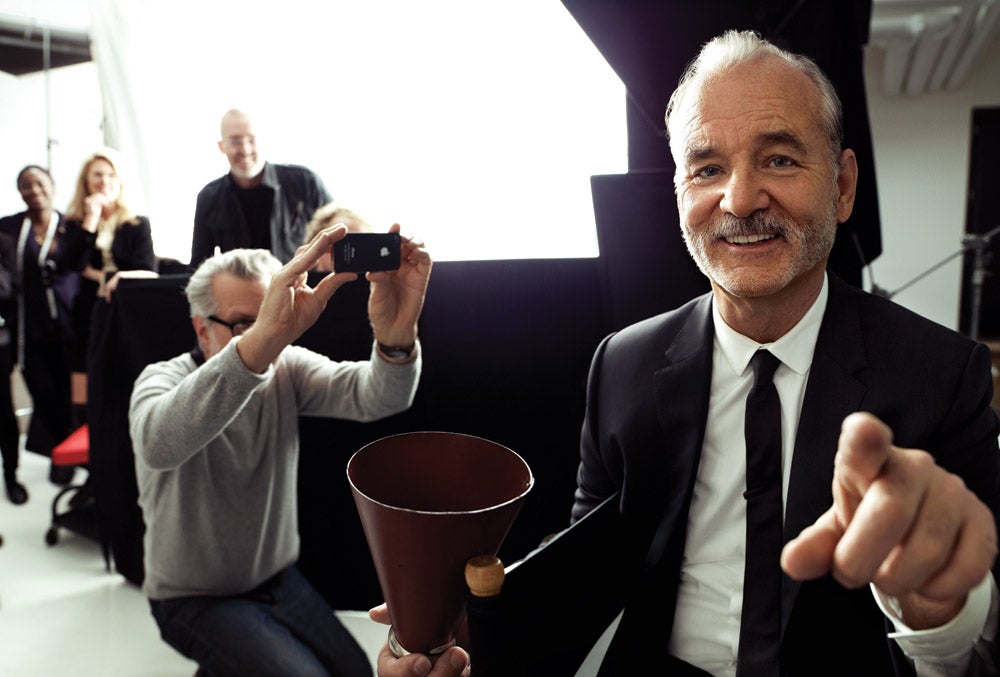
Bill Murray, GQ, 2013. Peggy Sirota
American Photography
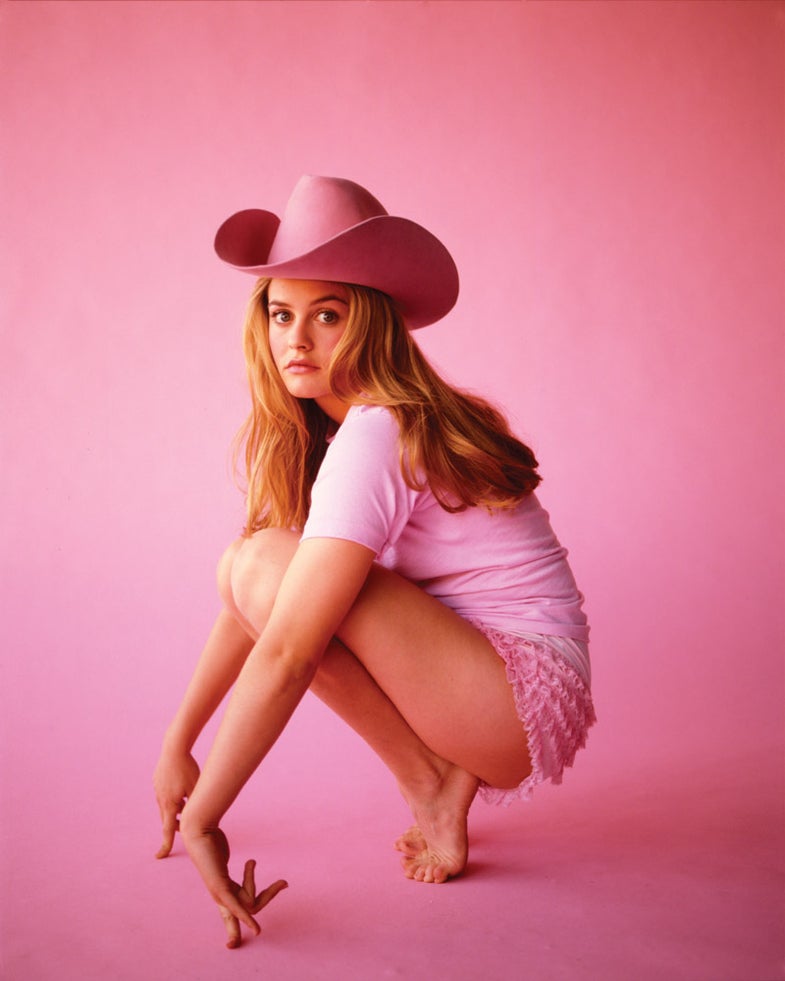
Drew Barrymore in Marie Claire, October 2009. Peggy Sirota
American Photography
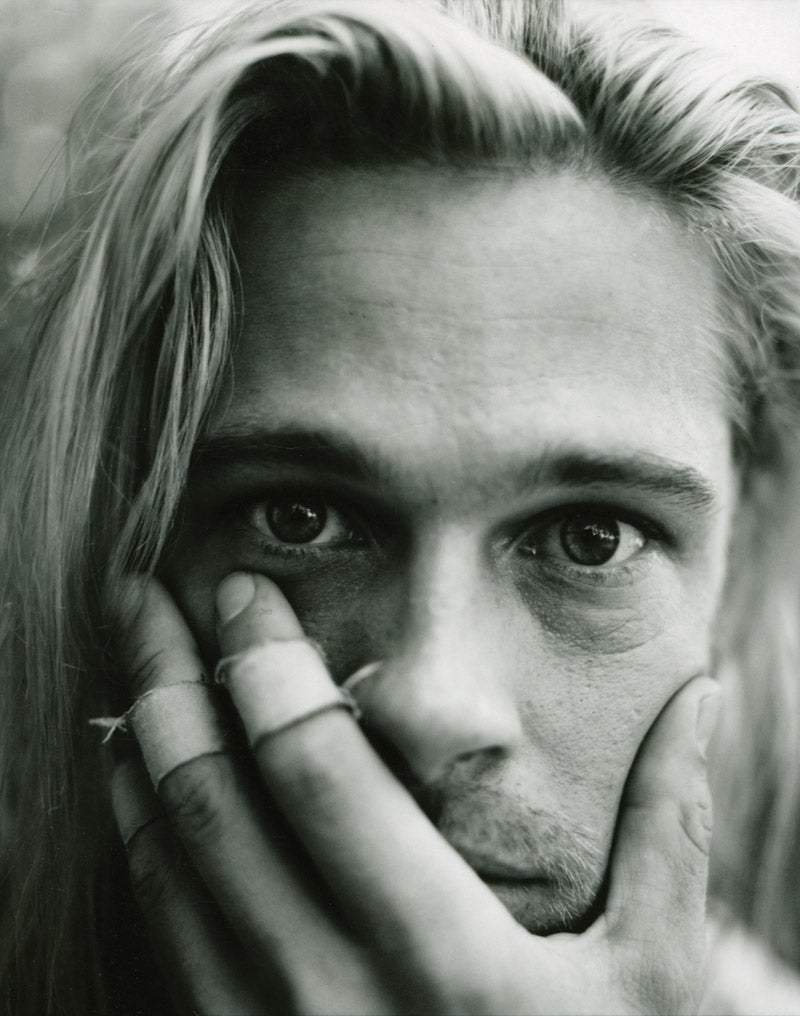
Brad Pitt, Premiere, October 1994. Peggy Sirota

Sunday, October 23, 2022

Eve Babitz Bares It All

Eve Babitz


Eve Babitz Bares It All

Almost eight years after first meeting the artist and author, writer Lili Anolik has spent the weeks since Babitz’s death “holding up the memory of that first encounter and looking at it from another angle.”


LILI ANOLIK
JANUARY 7, 2022

I wrote the book on Eve. Hollywood’s Eve is its title, a play on the title of one of her books, Eve’s Hollywood. People often call it a biography, though I never do. Not if I can help it, at least. A work should reflect its subject. And a biography, by its very nature, is organized, linear, official; and Eve, by her very nature, was magnificently disorganized, and even more magnificently discursive, and always, always off the record and on the sly, i.e., unofficial. She was the secret genius of L.A., the city she was born in back in 1943 when it wasn’t a city or really much of anything at all—a couple of studios that manufactured make-believe, plus sea and sky and sand and space, sunlight colliding with water, creating a hazy luster that turned the world into dazzle and blur, a place where reality was so beautiful it looked unreal. (As Eve herself once observed, “In Los Angeles it’s hard to tell if you’re dealing with the real true illusion or the false one.”) Or rather Eve was the secret genius of L.A. until I went and shot off my big fat mouth. Because before I wrote the book on Eve, I wrote a feature on Eve, for Vanity Fair in 2014, and the secret was out.