Tuesday, June 9, 2020

Christopher Fowler / Missing Marvels


No Orchids for Miss Blandish: Amazon.es: Chase, James Hadley ...


MISSING MARVELS

LONDON

imagesAs many of you know, for several years now I’ve been running a column called ‘Invisible Ink’ in the Independent on Sunday about authors who wrote the popular books which have vanished from bookshelves. Every once in a while I update my favourite ‘missings’, so here’s the current revised list, and you can find more each week in the IoS.
  1. Maryann Forrest wrote three novels, including the terrifying ‘Here: Away From It All’, then vanished. Her real name, it transpired, was Polly Hope, and she gave up because she was busy designing the Globe Theatre with her husband. ‘Here’ is an adult ‘Lord of the Flies’ novel, unsentimental and shattering. It has been republished.
  1. Nicholas Monsarrat wrote ‘The Cruel Sea’ and many other naval dramas, but controversy followed with ‘The Story Of Esther Costello’ about TV evangelism and fundraising; it upset the teaching staff surrounding the blind Helen Keller, who felt that its criticisms were levelled at them. His books were once everywhere; now they seem to have disappeared.
  1. Pamela Branch died you after writing just four hilarious crime novels, and was by all accounts quite a character, as well as being very glamorous. I’m just reading ‘Murder’s Little Sister’, about a hated agony aunt who falls out of a window. Once you get on her wavelength, she’s delicious and very witty.
  1. Alexander Baron wrote an epic novel of Edwardian Jewish gangs, ‘King Dido’, remains a personal favourite; here is a tale that outlines, with infinite care, the causal link between poverty and crime. Its final pages are utterly heartbreaking. It’s one of the greatest and least read novels about London ever written.
  1. JB Priestley is surprisingly unread these days, ‘Angel Pavement’ is a detailed portrait of London seen by the employees of a veneer company, when the genteel firm is wrecked by a tough new employee. It’s funny, moving, and a window into a forgotten London.
    No Orchids for Miss Blandish by James Hadley Chase 2010-01-13 ...
  1. James Hadley Chase wrote ‘No Orchids For Miss Blandish’, a tale of kidnap and rape that caused controversy and became a smashing success. A genuine one-sitting page-turner, it was unlike anything that had been published by an English author before, packed with surprises, non-explicit sex and violence. He supposedly wrote it in a day.
  1. Rachel Ingalls wrote novellas, a format which has fallen from fashion, but tales like ‘Mrs Caliban’ pack a real punch. She’s been named one of the 20th century’s greatest writers but no-one has heard of her. There’s a US republication, but I haven’t seen a UK one.
  1. Hans Fallada‘s life was even more disastrous and extraordinary than his books. He shot his best friend in a duel, spent time in a lunatic asylum, became a morphine addict and went mad.  Try ‘Alone In Berlin’, a true story about an apartment building during WWII. ‘Wolf Among Wolves’ is almost unbearably dark.
  1. Dennis Wheatley is the odd one out here – he’s a fairly dreadful writer, but rather fun. He went from lousy crime and historical novels to pulpy tales of the supernatural before Churchill asked him to work out what the Germans were up to… ‘The Dennis Wheatley Library of the Occult’ was hugely popular in its time, and Hammer adapted his work, their best being ‘The Devil Rides Out’, although I think his best book is ‘The Haunting of Toby Jugg’.
  1. Gladys Mitchell’s sleuth Mrs Bradley was a wizened crone who tested the constraints of the murder genre by pushing them to breaking point. Like the more successful Miss Marple she provided insights into the cases the police overlooked. Unlike Miss Marple she could be a real bitch.
CHRISTOPHER FOWLER


Obituaries / Lionel Davidson

Lionel Davidson — The Crime Writers' Association
Lionel Davidson

Lionel Davidson obituary


Award-winning writer renowned for thrillers such as The Rose of Tibet and The Chelsea Murders

Dennis Barker
Monday 2 November 2009


Graham Greene called Lionel Davidson, who has died aged 87, the first contemporary storyteller to have recaptured the high adventure of Rider Haggard, while Rebecca West once said he was a young Kipling. This was not hyperbole for, as a novelist, Davidson chose the international thriller form, without being submerged by it. He was happy to acknowledge that his "thrillers" had few overt thrills.

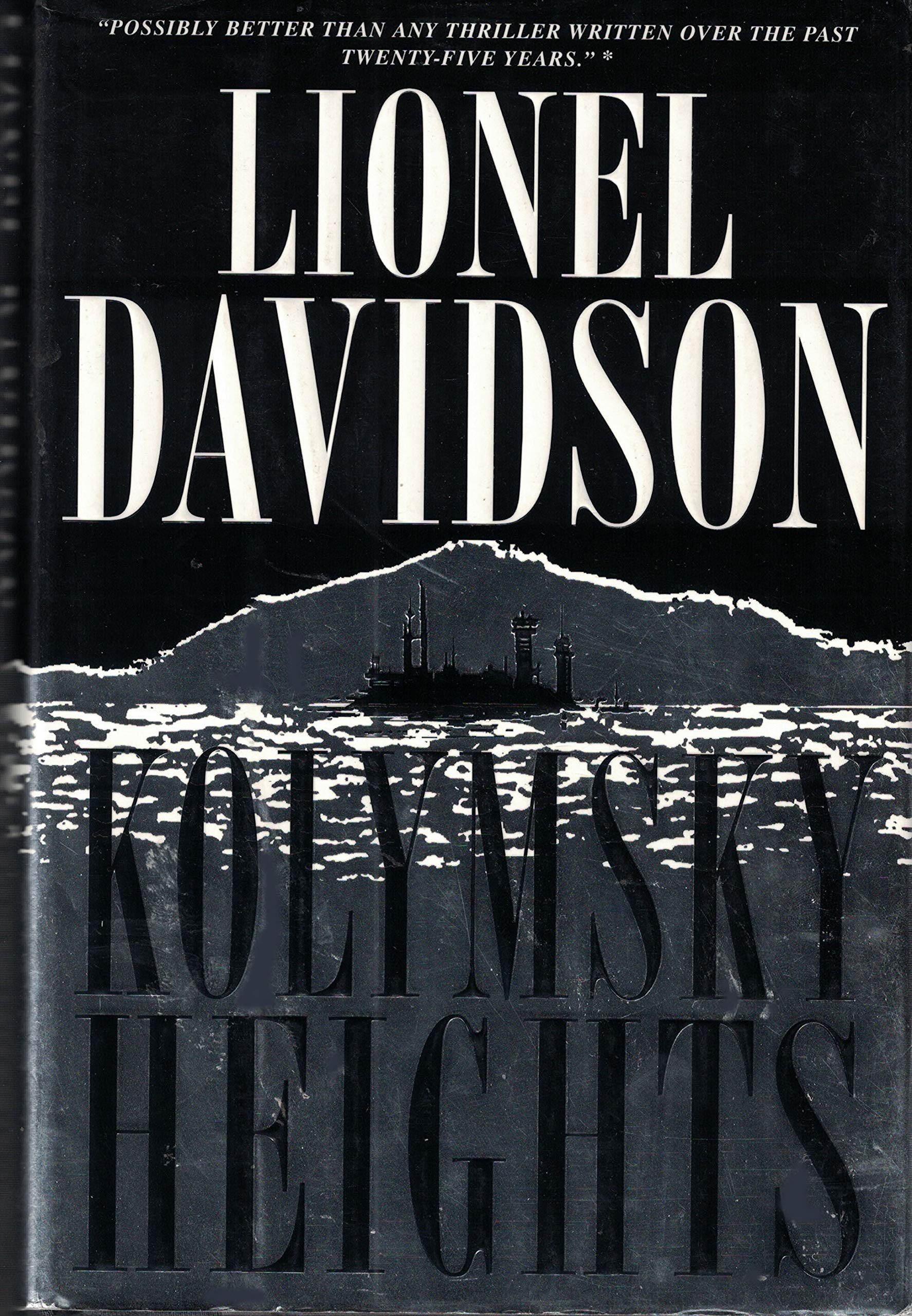
Kolymsky Heights: Amazon.es: Davidson, Lionel: Libros en idiomas ...

In one of his later books, Kolymsky Heights (1994), Davidson had Dr Johnny Porter, a part-Gitxsan anthropologist-cum-CIA agent from British Columbia, infiltrated into an isolated Soviet scientific station in the Arctic, from which – because research into the discovery of a frozen, primitive man, several thousand years old, was so sensitive – no scientist was ever allowed to return.

Monday, June 8, 2020

I May Destroy You review – could this be the best drama of the year?


Michaela Coel, left, and Weruche Opia as Arabella and Terry in I May Destroy You. 
Photograph: Natalie Seery/BBC/Various Artists Ltd and FALKNA


I May Destroy You review – could this be the best drama of the year?

Michaela Coel’s new series is an extraordinary, breathtaking exploration of consent, race and millennial life that works on every level


Lucy Mangan

Monday 8 June 2020


I

n light of current events I feel the need to make a small point before reviewing the new drama written by, starring and in part directed by Michaela Coel, who is a black woman, born in London to Ghanaian parents. Specifically, I mean the killing of a black man, George Floyd, at the hands of police, and the consequent mass protests against the individual and systemic racism that enabled his and many more similar deaths across the world.


This is going to be a rave review, because I May Destroy You (BBC One) is an astonishing, beautiful, thrilling series – a sexual-consent drama if you want the one-line pitch, but so, so much more than that. It works on every level and succeeds by any metric you care to throw at it. As such there will be people who will insist that my (and implicitly any other) praise for it is a result of the current febrile atmosphere. 

But they are racist and wrong. Up here, at the top of the piece, is my best chance of countering the pollution they will introduce to what should be an unadulterated paean of praise to the superlatively talented Coel’s creation. This should, and I hope will, be a springboard to even greater artistic freedom and power in the industry for her.

So. That’s my piece said. Now to I May Destroy You.


Coel plays Arabella, the author of a bestseller, Chronicles of a Fed-Up Millennial, based on her popular Twitter account, and now struggling to finish the first draft of her follow-up book on time. Halfway through her final night of grace allowed by her publisher, she goes out for a break that turns into a night out. The early morning finds her back in front of her laptop with little memory of how she got there except for a vision of a man looming over her in a toilet as a hazily remembered sexual assault takes place. She realises her drink has been spiked. The detached “Huh” she gives to this revelation encapsulates in a syllable the drama’s unique tone and approach – always about 30 degrees off where you were expecting it to come from.

It sums up the contemporary world and sexual landscape Arabella and her friends (aspiring actress Terry and aerobics instructor and heavy Grindr user Kwame, played by Weruche Opia and Paapa Essiedu respectively) live in – the soft contours and shifting boundaries of which they are perpetually navigating in their early 30s. There are no absolutes, no imperatives. There’s an awful lot of relativism about. Room for interpretation. When everything is malleable, where can violation occur? Memory, feelings, are not enough. You have to take a moment.

Arabella gradually piecing the night together and substantiating her suspicions is the throughline for the dozen episodes, but each one takes in so much more it becomes almost – but never quite, because Coel’s discipline and sense of structure are as formidable as the rest of her abilities – dizzying. It becomes, as her family and friends and the connections (and disconnections) between them are fleshed out, a meditation on our responsibilities to ourselves and each other. It scrutinises the different forms of consent (Kwame, for example, has consensual sex with a Grindr date, but is almost immediately then assaulted by him). It demonstrates the subtlety of power distribution and redistribution even within a single conversation. It highlights in passing the difference between unwanted and regretted contact, anatomises the multiple manifestations and pervasiveness of entitlement, and holds up to the light our ability to rewrite stories to make bad experiences bearable or put their damage to some use.

It is, in short, an extraordinary, breathtaking achievement without a false note in it, shot through with humour and with ideas, talent and character to burn at every perfectly plotted turn. The friends are as ineffably, inexplicably funny together as friends always are, the counsellor who recommends handicrafts as a salve for sexual trauma is painfully amusing, and there are innumerable other points at which Coel’s script modulates smoothly and unerringly from comedy to tragedy and back again. It is the drama of the year so far.

If you’re one of the people who would like to go ahead and be racist and wrong about things now, I don’t suppose I can stop you. But watch the programme first for once, would you? It would seem to be the very least you can do.


THE GUARDIAN


A book that changed me / The Magic Toyshop by Angela Carter


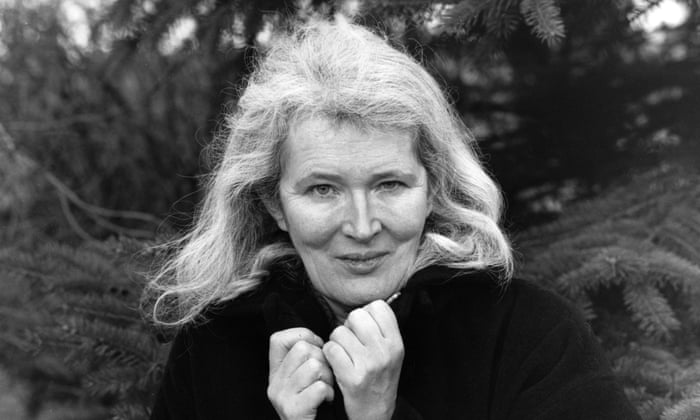
Angela Carter

A book 

that changed

 me 


Angela Carter's exploration of life in a female body taught me to be comfortable in my own

I was 15 and in the bottom set for most subjects at school. The Magic Toyshop changed everything


Evie Wyld
Monday 8 June 2020


T
he Magic Toyshop by Angela Carter was the first book I read at school that seemed to make some kind sense of my life. I was 15, and in the bottom set for every class other than art, where I painted very badly and was praised a disproportionate amount for my terrible, angsty self-portraits; in most of which I appeared bald for some reason.

As the weakest student of every bottom set – quite an accomplishment – I couldn’t spell and my handwriting bordered on illegible. From my point of view, there was a great worthiness about most of the books we studied, a dusty maleness, and it felt like there was nothing so important as a man of about 57 who was very wise and sure of himself. 
Reading the first page of The Magic Toyshop was revelatory. My bad, bald self-portraits began to make sense. I was trying on other skins, attempting to fit comfortably into my own. The story’s protagonist, Melanie, discovers her own body at the age of 15 in a way that completely scandalised our English class – I remember one girl teasing another, asking if she’d ever looked at herself naked in the mirror – an impossible thing to answer without complete ridicule and mortification.
And there was Melanie, setting herself up, between masturbating, to look like Lautrec’s models, “legs apart with a basin of water on the floor”. I remember how outrageous it felt to read about a young woman looking at her own body in a mirror, admiring it. The next thing Melanie did was put into words the dreadful feeling of being assessed by a man – the first few times it happens and you have nothing to compare it to: how magnetic it feels, and how dangerous. 
“It was as if he had put on the quality of maleness, like a flamboyant cloak. He was a tawny lion poised for the kill  and was she the prey? She remembered the lover made up out of books and poems she had dreamed of all summer; he crumpled like the paper he was made of before this insolent offhand terrifying maleness, filling the room with its reek. She hated it but could not take her eyes off him.” 
What a relief when her younger siblings are taken away from Melanie and she is freed of the responsibilities of being “a little mother”.
Alongside the bad portraits, I’d been writing short stories by then for a couple of years, about hideously fantastical things – people who lived inside their own minds under bridges because that was more beautiful than reality, or the setting of one’s self on fire, because of a general sense of ennui and the batteries in one’s Walkman running out. I still have the little booklet of stories I made back then. The writing is desperate to seem serious, to seem huge and wise like the old men we read at school.  
It is often the magical, fabular aspects of Carter’s stories that people focus on, but in The Magic Toyshop I responded to the way she blended this with a clear-eyed realism about what it was to live in a female body. Carter seemed to be saying something about female experience, that it had a different kind of relationship to reality than those breezy male characters I had previously met, confident in their role as subject and point of view. Melanie becomes aware of her body and sexuality as part of a process of literal discovery in which she compares it to America. Rereading this book, I am struck by this metaphor, the female body as colonised land, site of projected meaning, violence and plunder.
In a novel so brilliantly conjured from splayed toothbrush heads, mustard-and-cress sandwiches and prawn shells, bread loaves and cutlery, brickwork and yellow household soap, the female body is both one more familiar object and at the same time something strange and troubling. Melanie is only able to understand her body by turning it into another kind of object, but in doing so she understands this is a power. As a young girl experiencing that moment when your body is both the vessel for your self but suddenly, as if overnight, also a thing, a collection of objects for men to look at, assess, interpret and desire, Carter’s story seemed to speak directly to my life. That this was an experience from which art could be made felt like someone had opened a door somewhere. 
My English teacher, sensing a student pricking up her ears for the first time, took me one Saturday to hear Carmen Callil, Carter’s best friend and editor, talk. She told us that “Angie” couldn’t spell. That was perhaps the most encouraging thing I’d heard from anybody, that the gridlines of schoolwork didn’t mark the limits of ability. In her introduction to the 1981 edition, Callil writes that “all over the world are literary incendiary bombs planted by Angela, and in Britain, young writers whom she encouraged”.
Encouraged is an interesting word that has become gentler in the way it is commonly used. But Callil was no doubt using it in the literal sense, of Carter giving writers the courage to write. I know that had I not read The Magic Toyshop at that point in my life, I would never have felt that my sort of experiences deserved to be written about at all. 
  • Evie Wyld is a writer and the author of After the Fire, A Still Small Voice; All the Birds, Singing; and Everything is Teeth. Her most recent book is The Bass Rock


Patti Smith’s ‘Horses’ is Still Teaching Me How to Be Free

Patti Smith

Patti Smith’s ‘Horses’ is Still Teaching Me How to Be Free

On her iconic debut album, her refusal to fit into the cookie cutter version of womanhood legitimised my own sense of self.

This article originally appeared on Noisey UK.
By Daisy Jones
Dec 15 2016, 9:59 am


According to strange, societal laws, there are certain things boys and girls are "supposed" to do based on their gender. When you're young, it can be easy to internalize these ideas, as though law has decreed that all interests must fall neatly into one gender defined box. But the older you get, the more you realize this is bullshit. Men can enjoy glitter and lipstick; women can become race car drivers, or you can choose to opt out of either. We're all made from oxygen, bones, muscle tissue—and everything in this world should be open to any human who possesses these elements.

Patti Smith

Before that bullshit detector shifts into gear though, there has to be a catalyst. For me, that was Patti Smith. I was born in the early 90s in Britain, an entire two decades after she released her first album, so for me to discuss her legacy within the context of 1970s New York is akin to my nan writing a thinkpiece on Lil Yachty. But what I can say, is that being exposed to her glorious web of weirdness as a teenager informed the way I thought about gender, freedom, and certain tenants I'd like to apply to my own existence. And since then, I've found the necessity of those tenants refreshing themselves all over again.

Tanino Liberatore / Women VII


Tanino Liberatore
WOMEN VII


Sex, lies and despair / Unseen letters reveal Larkin's tortured love


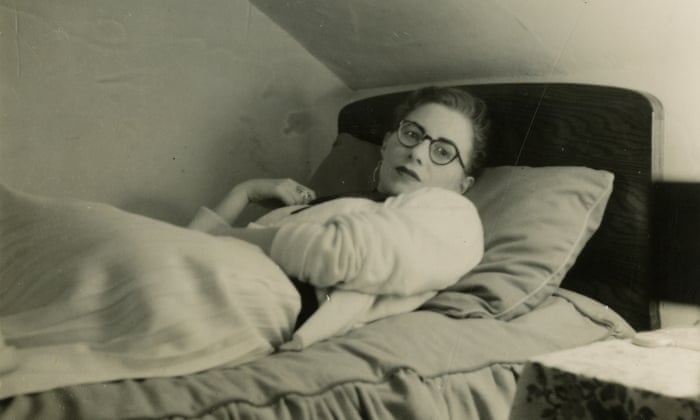
 Monica Jones in a photograph taken by Philip Larkin. Photograph: The estate of Philip Larkin

Sex, lies and despair: unseen letters reveal Larkin's tortured love

A cache of 2,400 letters between the poet and his long-time lover and muse, Monica Jones, charts an explosive and flawed romance

Dalya Alberge
Sunday 24 May 2020

“He lied to me, the bugger, but I loved him.” So Monica Jones described the revered poet Philip Larkin – a pithy but affectionate account of a lover who was serially unfaithful, but whose “utterly undistinguished little house” in Hull she turned into a shrine after his death.
Previously unpublished letters, however, reveal the full extent of her fury, fears and frustrations over a painful four-decade-long partnership with the man who wrote some of the most cherished verse in the English language.

Sunday, June 7, 2020

A Psychoanalytic Deconstruction of Perspective in John McGahern's 'The Dark'


John McGahern

A Psychoanalytic Deconstruction of Perspective in John McGahern's 'The Dark'


By Rebecca A. Demarest
inquire 2010, VOL. 2 NO. 10


You, he, they, and I. All of these pronouns are used in John McGahern’s The Dark to refer to the central character who, when named, is simply given a surname: Mahoney. Young Mahoney is a troubled youth who is coming of age in the brutal Irish society and culture of the 1950’s, and suffers beatings, sexual abuse, and various other traumas and embarrassments at the hands of his father, his priests, and teachers. He is in turns a care-free Irish youth, going on fishing trips with his family and studying hard for his exams, eventually winning a scholarship. But even this victory is sullied by his father and the humiliation he wreaks. In response to these brutal situations, each of the thirty-one chapters in the short novel have four separate points-of-view which serve as a vehicle to illuminate the psychological impact of the situation as well as serve as a coping mechanism for the narrator to come to terms with the trauma he endures.

Saturday, June 6, 2020

Lord of All the Dead by Javier Cercas / Review

Lord of All the Dead

WRITTEN BY JAVIER CERCAS
REVIEW BY PEGGY KURKOWSKI

Lord of All the Dead is a curious book. Labeled as a “nonfiction novel,” it opens with the enigmatic sentence, “His name was Manuel Mena, and he died at the age of nineteen in the Battle of the Ebro.” So begins the journey of acclaimed Spanish writer Javier Cercas to grapple with a painful period in his family’s history and learn more about the young man who went off to fight for Franco in the Spanish Civil War … his great-uncle, Manuel Mena.

Cercas’s previous novels, Soldiers of Salamis and The Impostor, explored Spain’s divisive and fiery descent into chaos, but Lord of All the Dead goes beyond fiction to tell the poignant nonfiction of Cercas’s family and their memories of Manuel Mena. The result is a hypnotic reverie of ifs and what ifs, as Cercas combines the known with the unknown, drawing upon his fiction-writing skills to imagine the first moments of Manuel Mena’s soldierly life all the way to his last terrifying moments in a last-ditch assault in the Battle of the Ebro in 1938. Along the way, nonfiction gives way to “fiction” as Cercas inserts himself into the story as a third-person character, a writer, seeking Mena’s family members, stoic comrades, and those who might answer the question of why Mena chose to fight with Franco’s fascists.

Cercas takes his title, most fittingly, from a line in the epic poem The Iliad. When Odysseus meets Achilles in the house of the dead, he exclaims how Achilles must rule in the underworld, since he was so glorious in life. One understands how Cercas feels about his great-uncle’s life and sacrifice with the haunting response of Achilles: “…I would rather toil as the slave of a penniless, landless labourer, than reign here as lord of all the dead.” Recommended.

HISTORICAL NOVEL SOCIETY


Squeaky Flies in the Mud / A new David Lynch exhibition opens


David Lynch
Photo by: Josh Telles

Squeaky Flies in the Mud: a new David Lynch exhibition opens


By Heidi Harrington-Johnson
November 28, 2019

When I was introduced to the work of David Lynch during a film studies class at university, it was by virtue of his debut film Eraserhead (1977).

Through Lynch’s central character, Henry Spencer, I was pleasantly horrified by what was taking place in black and white on the screen. Spencer’s escapades with the ‘baby’ heralded the film a cult classic, and I a fan of Lynch.

Squeaky Flies in the Mud, a new exhibition by David Lynch, has just opened in New York.

I then saw one of Lynch’s exhibitions. Prior to this, I wasn’t aware that the filmmaker was also an artist specialising in painting, photography, drawing, printmaking and sculpture. Indeed, Lynch was educated at the Boston Museum School and the Pennsylvania Academy of the Fine Arts where he conceptualizsd his first ‘moving painting’ titled Six Men Getting Sick (Six Times) (1967).
This piece was to be a first for the artist in terms of video and filmmaking, and heralded the beginning of a career marked by films such as Blue Velvet (1986), Mulholland Drive (2001), and the popular television series Twin Peaks (1990-91).
David Lynch’s latest exhibition, Squeaky Flies in the Mud, is a first for the artist at Sperone Westwater gallery in New York. Lynch is not a novice in the art scene, having also exhibited for audiences around the world with shows from Brisbane to Poland and Paris. This recent exhibition will feature new works by the artist and filmmaker including paintings, furniture, works on paper, sculptures, and watercolours.
Squeaky Flies in the Mud, on show at Sperone Westwater gallery in New York, closes on 21 December 2019.
David Lynch installation view courtesy Sperone Westwater

HAPPYMAG


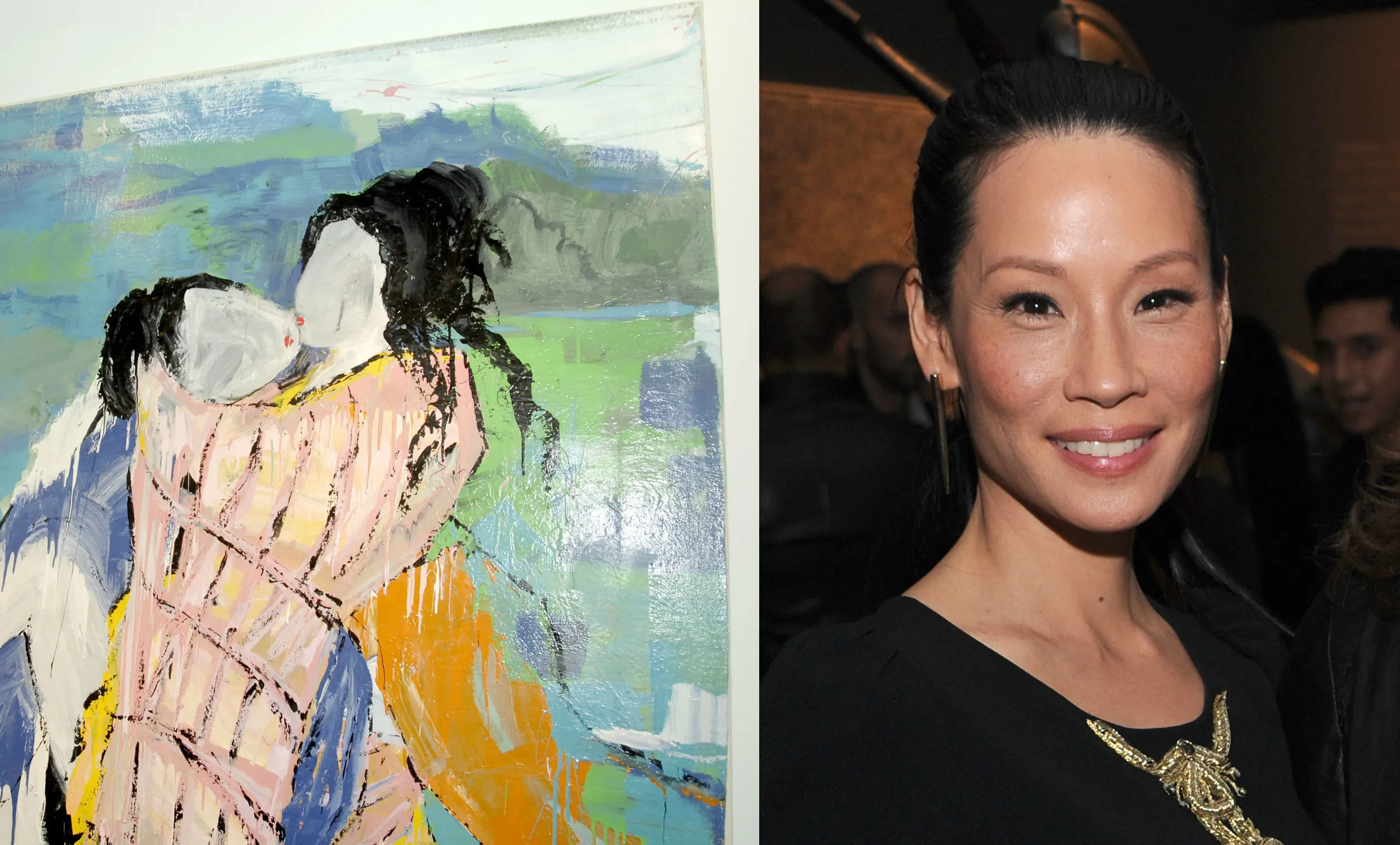
Lucy Liu paints erotic art?


Lucy Liu paints erotic lesbian art and it's literally everythingLUCY LIU PAINTS EROTIC ART?


"Lucy Liu being a painter
and making lesbian art
is keeping me up at night"


Vienna Vernosa
November 6, 2019


Mon premier (My First One)
Lucy Liu


Yes, you read that right. In the latest of viral celebrity moments, 
it was uncovered by Twitter that actor Lucy Liu is also a visual 
artist who paints depictions of lesbian art, among other things. 
“Lucy Liu being a painter and making erotic art is keeping me 
up at night” wrote a Twitter user

Lucy Liu's stunning erotic paintings are taking the art community ...

But that isn’t all she works in. In fact, Liu’s interest in art 
began around 15 years-old and she has since dabbled 
in various mediums including ink drawings, silkscreens, 
paintings and collages. “Because we were an immigrant family 
and I am first-generation, I always had this imbalance of belonging,” 
Liu told Artsy in an interview. “I think at first it was the language barrier, 
not speaking English, but then it started becoming about how I look. 
I think that art helps evaluate some of the psychology of yourself 
as a child, and to illuminate some things you may never have understood.” 
We hold Liu’s characters close to our hearts, with iconic roles in 
Charlie’s AnglesKill Bill: Vol. 1, and Elementary. Yet her talent 
has strangely gone unspoken about as her work has been 
shown publicly and privately since 1993.


Lucy Liu | Art | Shunga
In January, Liu had her first museum exhibition titled 
‘Unhomed Belongings’ at the National Museum of Singapore. 
The exhibition examined racial identity as a first generation American. 
Though it’s rare and quite costly to get your hands on one 
of her pieces (we want 12 of them), Liu’s work is presently 
breaking the internet bridging her notoriety beyond award-winning 
actress and director, to acclaimed artist.

V MAGAZINE