Monday, December 5, 2016

The 25 Best Books of 2016 / Part three


Jade Sharma


The 25 Best Books of 2016

PART THREE


A collection of the best novels, non-fiction, and memoirs from the past year.

At a time when politics have dominated the national conversation in a way that can often feel overwhelming, the best books of 2016 so far have provided escapism and comfort. They've shown us that empathy is a great virtue, and that art can transcend the unhappiness of the everyday. These 25 books are all highly recommended.

By Maris Kreizman and Angela Ledgerwood
Dec 5, 2016


Happy, Font, Interaction, Friendship, Love, Poster, Photo caption, Back, Rejoicing,

18. Rich and Pretty by Rumaan Alam

Rumaan Alam has a near telepathic knowledge of the female mind. His debut novel would still be a lovely, emotionally raw meditation on a complicated friendship between two women, even if the author weren't a man. But Rich and Pretty is especially jolting because it's clearly a feat of intense observation and imagination. Alam understands the petty (and not so petty) jealousies that accompany friendship, and the small digs and larger issues that divide and reunite friends. —MK


Publication, Rectangle, Book cover, Book,

17. Lust and Wonder by Augusten Burroughs

After Running with Scissors and Dry, Augusten Burroughs closes out an unforgettable trilogy of memoirs with Lust and Wonder. In Lust and Wonder we find Augusten sober (or, at least, soberer), a successful writer, and rather unlucky in love. It's only fitting that the next piece of the puzzle to solve involves romantic relationships, and the failures and heartaches that always accompany such quests. That he finds an ideal mate is not a spoiler, but a well-earned happy ending for the lonely and disaffected. That his dream man with the singular laugh happens to be his friend, his literary agent, and a co-parent to their growing menagerie of dogs is even more satisfying. It takes nothing away from Augusten's struggles to acknowledge that in a lifetime of uncertainty and unease, it really does get better. —MK


Text, Font, Publication, Book, Black-and-white, Book cover, Brand,

16. Proxies by Brian Blanchfield

The premise of this autobiographical essay collection is simple: Blanchfield writes from memory alone, without consulting any outside resources to fact check. As the author explains, "I wrote these essays with the internet off." The result is unlike anything written before. The 24 single topic essays in Proxies are short and focused (topics range from owls to housesitting to frottage), but every single one leads to a more personal revelation or a wider point about the author's life or the greater world. The conclusions of his writings feel organic and authentic, and the 20+ pages of corrections at the end of the book only validate how powerful writing from memory and relying only upon what's inside your own brain can be. —MK


15. Problems by Jade Sharma

"Behind every crazy woman is a man, sitting very quietly, saying, 'What? I'm not doing anything.'" If this sentence doesn't make you want to stand up and cheer, stop reading this blurb right now. If you prefer to read books with cuddly, likable heroines who always make good and healthy decisions, stay away from this novel. But if you enjoy complicated protagonists who don't necessarily pass the "likability" test but do speak to the blackest part of your soul, Problems is for you. Jade Sharma's debut is a darkly funny character study of an unhappy yet witty-as-hell woman whose self-destructive streak is as appalling as it is somehow understandable. Problems challenges readers to forget traditional redemption stories and yet to still find empathy for the messiest of heroines. —MK


Text, Elbow, Line, Font, Waist, Chest, Poster, Graphics, Line art, Balance,

14. Party of One by Dave Holmes

Esquire Editor-at-Large Dave Holmes uses music—21 songs, and many others that also get name checked—to tell the story of his life with exactly the amount of humor and sensitivity and celebration of fandom that you'd expect from him (lots). The former MTV VJ and pop culture whiz has written the kind of book where, at the end one of the most affecting and charming chapters in the book about coming out at his very Catholic college, he rewards you for finishing with a photo of Melrose Place's Grant Show. (Thank you, Dave.) Party of One is as charming as it is funny, and it's a testament to how pop music has the power to shape our lives. —MK


Lip, Eye, Forehead, Eyebrow, Eyelash, Colorfulness, Jaw, Iris, Organ, Apartment,

13. What Belongs to You by Garth Greenwell

An American schoolteacher living abroad meets a 23-year-old male prostitute in a public restroom in Bulgaria. Money is exchanged. A long, complicated relationship ensues, one based in lust and shame and dread. What Belongs to You is a short novel, but Garth Greenwell's sentences are expansive and revelatory and poetic. Greenwell juxtaposes the narrator's experiences in an unprogressive, formerly Communist country still recovering its infrastructure, to the narrator's own childhood, growing up gay and closeted in the oppressive American South. What Belongs to You is a lovely meditation on fear and acceptance, desire and oppression, and the disparity between two cultures. —MK


ESQUIRE


The 25 Best Books of 2016 / Part two


Zadie Smith


The 25 Best Books of 2016

PART TWO


A collection of the best novels, non-fiction, and memoirs from the past year.

At a time when politics have dominated the national conversation in a way that can often feel overwhelming, the best books of 2016 so far have provided escapism and comfort. They've shown us that empathy is a great virtue, and that art can transcend the unhappiness of the everyday. These 25 books are all highly recommended.

By Maris Kreizman and Angela Ledgerwood
Dec 5, 2016


Text, Parallel, Rectangle, Engineering, Poster, Graphic design, Graphics,

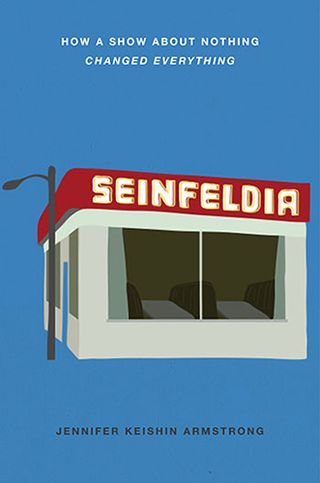
12. Seinfeldia by Jennifer Keishin Armstrong

A little TV show about nothing became a cultural phenomenon that still inspires avid fandoms to this day. In Seinfeldia entertainment reporter Jennifer Keishin Armstrong not only goes behind the scenes of the making of Seinfeld to deliver some great insider stories, she also widens her lens to cover the people who love it. Packed with many delights and great trivia (if you want to know which suggestion from the writers made Julia Louis-Dreyfus burst into tears, you'll have to read the book), Seinfeldia is a smart, fun read by a writer who truly is the master of her domain. —MK


Text, Font, Poster, Graphic design,

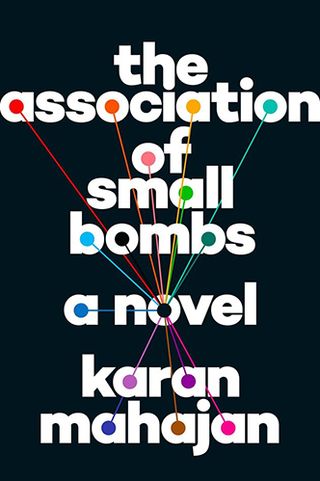
11. The Association of Small Bombs by Karan Mahajan

Just like its beautifully designed cover, The Association of Small Bombs is simple in premise, but it explodes in bursts of brilliant color. Karan Mahajan's masterful novel explores the aftermath of a small bomb detonation in the '90s in Delhi, and the many people whose lives it alters—from the families of victims to the bombers themselves. With great empathy and no lack of humor, Mahajan shows the multitudinous sides to the kind of story that we usually read a line or two about in a newspaper, or hear short mention of on television. —MK


Glass, Stemware, Liquid, Wine glass, Drinkware, Barware, Drink, Tableware, Red wine, Dessert wine,

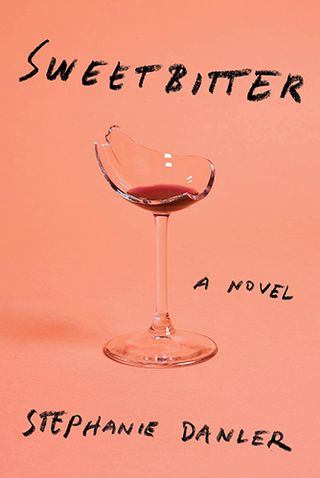
10. Sweetbitter by Stephanie Danler

Sweetbitter is the most delicious (sorry!) summer read. A former server at Union Square Cafe and Buvette, debut novelist Stephanie Danler writes sumptuously about her heroine's education in food and wine as she trains and works at a tony New York restaurant. But you don't need to be a foodie to love Sweetbitter because it's also a heartfelt novel about being a newcomer in a new city, about the dangers of being young and lonely and drunk and in love in New York. It's a grasping glimpse what happens behind the scenes where the rich people dine, but it's more sensual and poignant than you might expect. —MK


Publication, Poster, Book cover, Book, Fiction, Vintage advertisement, Tooth, Thumb, Illustration, Humour,

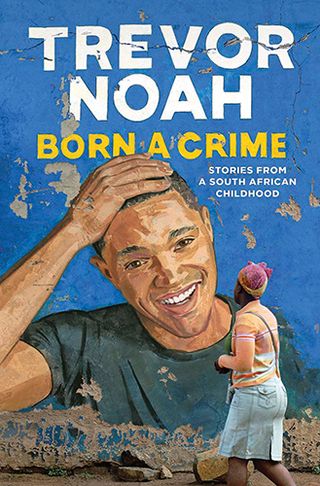
9. Born a Crime: Stories From a South African Childhood by Trevor Noah

In any other circumstance, one might think Born a Crime is a dramatic title for a celebrity memoir, but in Noah's case there's nothing exaggerated about this claim. His very conception and birth was a criminal act—as the child of a black Xhosa mom and a white Swiss dad, he simply wasn't meant to exist in apartheid South Africa, where he was born. It's hard to imagine that the current host of The Daily show was kept mostly indoors in his early years to protect him from a government that could take him away at any moment. Noah's childhood stories are told with all the hilarity and intellect that characterizes his comedy, while illuminating a dark and brutal period in South Africa's history that must never be forgotten. —Angela Ledgerwood


Yellow, Text, Font, Colorfulness, Orange, Publication, Rectangle, Poster, Book, Graphic design,

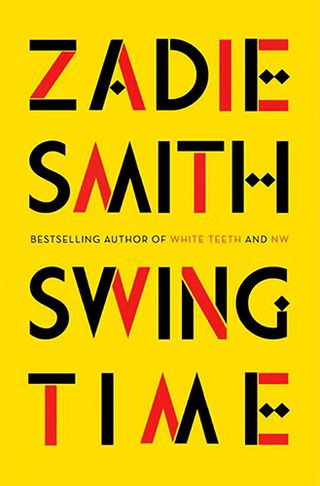
8. Swing Time by Zadie Smith

In classic Smith style, her new novel is sweeping, packed with bold voices, and explores when and how our lives diverge from those we love. There's the fraught friendship between two biracial girls forged over their mutual love of dance, a celebrity pop star attempting to build an orphanage in an African village, and a grown up narrator asking herself, "How did I get here?" She thinks, "A truth was being revealed to me: That I had always tried to attach myself to the light of other people. That I had never had any light of my own. I experienced myself as a kind of shadow." This revelation about identity underpins the entire tale, as does Smith's concern with class and race. —AL


Lip, Hairstyle, Eyebrow, Eyelash, Beauty, Musical instrument, Eye liner, Long hair, Eye shadow, Model,

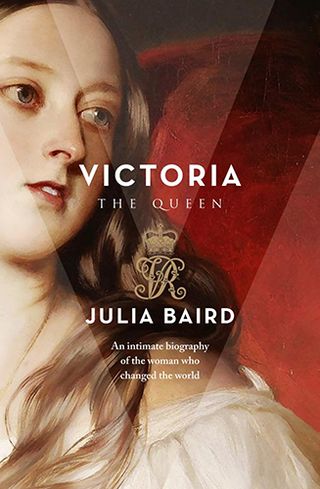
7. Victoria the Queen: An Intimate Biography of the Woman Who Ruled an Empire by Julia Baird

Don't be fooled by the demure portrait of Victoria on the cover—here is a woman who reigned over a quarter of the world's population at the height of her rule. (She also bore nine children and survived eight assassination attempts.) In Baird's deft portrayal, Victoria lives, breathes, and struts before us in all her complexity, and so do her consorts, particularly her politically ambitious husband Prince Albert—and later her "Scottish stallion" and probable lover, John Brown. On a geopolitical level, Baird's sweeping historical portrait also illuminates just how interconnected the European royal families were during this time—Victoria's Belgian cousin, King Leopold II, perpetrated genocide in the Congo while her German nephew, Kaiser Wilhelm II, would go on to initiate World War I. Historical astuteness aside, the pages gallop along enhanced by titillating morsels of info—like a certain Prime Minister's predilection for whipping, in and out of the bedroom. —AL


ESQUIRE


The 25 Best Books of 2016 / Parte one


Colson Whitehead


The 25 Best Books of 2016

PART ONE


A collection of the best novels, non-fiction, and memoirs from the past year.

At a time when politics have dominated the national conversation in a way that can often feel overwhelming, the best books of 2016 so far have provided escapism and comfort. They've shown us that empathy is a great virtue, and that art can transcend the unhappiness of the everyday. These 25 books are all highly recommended.

By Maris Kreizman and Angela Ledgerwood
Dec 5, 2016


Text, Silver, Publication, Book,

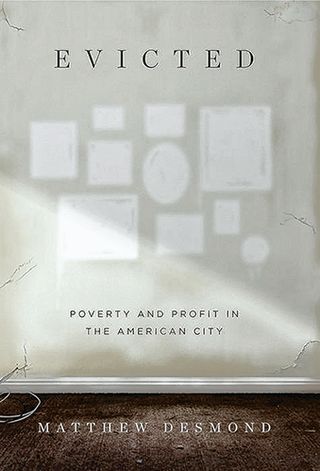
6. Evicted by Matthew Desmond

Evicted is one of those Important Books That Every American Should Read that you might pass up because it looks so Important and Not Fun. But you should know that it's worth a full read—the excellence of Evicted lies not only in the overall message that the housing crisis in America is an endless cycle of pain and inequality, but in the details that humanize the facts and figures that accompany the writing. Matthew Desmond is a sociologist and urban ethnographer who gets in on the ground of the poorest districts in Milwaukee and reports on eight families who are on the brink, along with the landlords and the city officials with whom they interact. With a presidential election coming up, there's no book that speaks more to the injustice of America's infrastructure. —MK


Text, Font, Poster, Bird, Graphic design, Wing, Design, Illustration, Publication, Advertising,

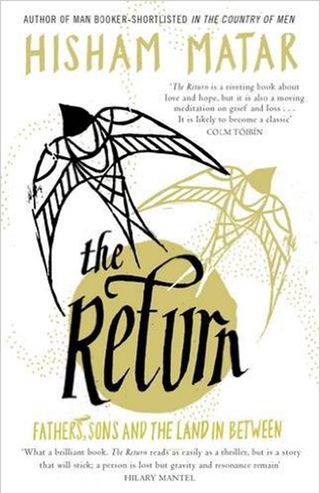
5. The Return: Fathers, Sons and the Land in Between by Hisham Matar

Hisham Matar's award-winning novels and essays have examined the legacy of disappeared fathers, political exile, and totalitarianism. In his most intimate work to date, he reveals the true story of his father's kidnapping by the Egyptian secret police and his delivery to brutal Libyan dictator Muammar Qaddafi in 1990. As one of the Qaddafi regime's most prominent opponents, Matar's father was taken to Abu Salim prison, in Tripoli, known as "The Last Stop" – the place where the regime sent those it wanted to forget. Hopeful that his father was still alive (the family received three letters from his 22 years of his captivity), there was no sign of Matar's father in the wake of Qaddafi's fall. In this haunting memoir, Matar returns to the place of his childhood and grapples with the question of how to live without knowing his father's fate. —AL


4. Innocents and Others by Dana Spiotta

Like Joan Didion and Don DeLillo, two legends to whom she's often compared, Dana Spiotta is a master of observing the way cultural artifacts take up so much space in our daily lives. Her latest novel takes place in the world of film in the 1980s, and two friends who've taken dramatically different paths in their careers as filmmakers. But more than that, Innocents and Others is about the power of the phone—particularly the landline. In the pre-internet age, all you needed to charm and seduce a stranger (even a big shot Hollywood VIP) was a pleasant phone voice and a deep ability to listen. As the two friends' lives intersect with a woman named Jelly, who has anonymous yet romantic phone conversations with the Hollywood elite, it's clear how an undeniable trait of humanity is seek meaningful connection in an isolating world. —MK


Bird, Beak, Raven, Poster, Accipitridae, Feather, Publication, Accipitriformes, Bird of prey, Crow,

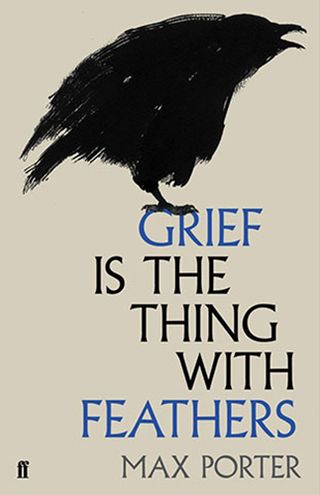
3. Grief Is the Thing With Feathers by Max Porter

Winner of the Dylan Thomas Prize, this Kafkaesque, bizarre, and beautiful debut thrusts us deep inside an East London flat where a widower and his two young boys are reeling from a monumental loss. It's the arrival of an uninvited houseguest—of the belching, burping, slurping (and hugging) kind—in the form of a giant, Ted Hughes-inspired crow that comforts the fledging family. Equal parts novella, poem, and play, Porter obliterates the confines of form, transforming the manuscript into a breathing living organism of its own. This book is guaranteed to change the way you see everyone precious in your life, and it's a powerful reminder to love hard and relish everyday intimate moments. —AL


Font, Poster, Publication, Book cover, Book, Graphic design, Fiction,

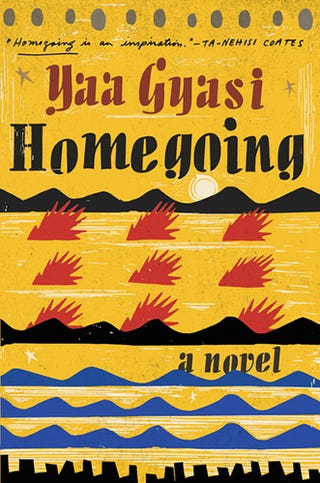
2. Homegoing by Yaa Gyasi

In this exceptional debut, Yaa Gyasi traces the lives and legacies of two African half-sisters, one who is sold as a slave and taken to America in the 18th century, and one who remains in Ghana. The novel spans more than 300 years and many generations, chapter by chapter exploring the lives of the women's descendants. And while it's epic in ambition and scope, Homegoing still manages to feel profoundly intimate and personal. Each and every one of the characters, in each and every decade where their stories are set, is so finely drawn that any of their stories alone could bring you to tears. Together, they're a tour de force that will leave you in awe. —MK


Text, Red, Font, Orange, Poster, Coquelicot, Label, Graphic design,

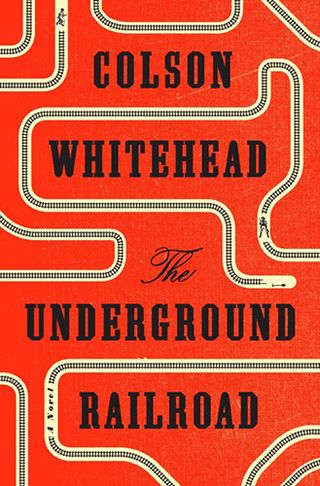
1. The Underground Railroad by Colson Whitehead

Coming in just under the wire because Oprah convinced its publisher to release the book a month early, Colson Whitehead's The Underground Railroad enters the pantheon of one of the Great American Novels. It may not be quite as easy or escapist a read as Oprah's previous book club picks, but it is possibly the most essential. Whitehead's novel, which follows two slaves as they make their escape via the Underground Railroad, is a wonderful reminder of what great literature is supposed to do: open our eyes, challenge us, and leave us changed by the end. —MK

Saturday, December 3, 2016

Tim Parks / To Tell and Not To Tell

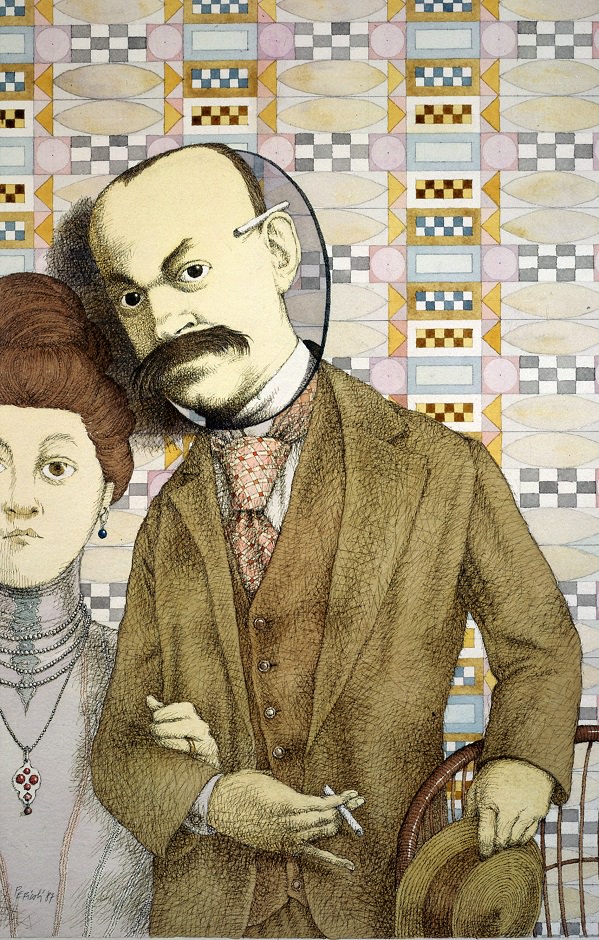
Italo Svevo; drawing by Tullio Pericoli

To Tell and Not To Tell


Tim Parks


“Her husband was deeply hurt when she published her novel…”
“The author’s father was disgusted by what he had written…”
“His wife was furious…” etc.

Is information like this ever more than gossip? Can we learn anything about literature by reflecting on the responses of the writer’s family and loved ones? What Christina Stead’s partner thought about Letty Fox, Her Luck, for example, where the writer presented his daughter by a previous marriage as a promiscuous sexual opportunist. Or how Emma Hardy reacted when she saw her sexual problems discussed in the pages of Jude the Obscure. Or the embarrassment of Faulkner’s parents when he published Soldiers’ Pay.

Friday, December 2, 2016

Tim Parks / Trapped Inside the Novel

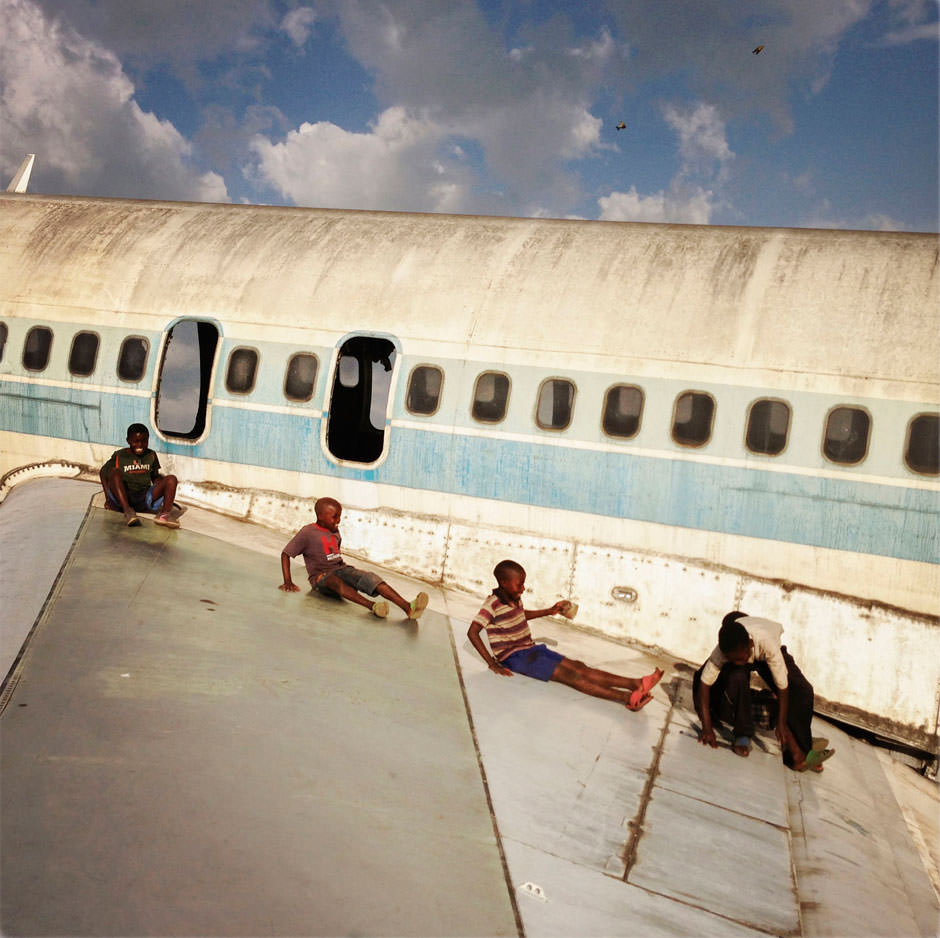
Michael Christopher Brown/Magnum Photos
Goma, Congo, December 14, 2012


Trapped Inside the Novel

By Tim Parks
October 28, 2013, 5:03 pm
I wonder how many people share the experience described by David Shields in Reality Hunger, of tackling some large novel, a work essentially conventional in its structure and brand of realism, that weaves together the lives of its characters over a number of years, and simply feeling that the whole exercise has become largely irrelevant. Shields doesn’t present his remarks as a criticism of writers—the name he mentions is Jonathan Franzen—pursuing the tradition of the long realistic novel. Rather, he suggests it is a change in himself, something he believes has been brought about by the utterly changed nature of contemporary life. He considers the variety of electronic media—the proliferation and abbreviation of all forms of messages, the circumstances created by the ever more rapid transit and greater abundance of information, the emergence of a powerful virtual world that becomes more real to us all the time—and he concludes that given this way of life it is hard for the traditional kind of novel to hold our attention. He then looks at a variety of texts that, unlike the traditional novel, weld together chunks of “reality,” pieces of documentary taken from elsewhere, quotations, fragments, provocations, moments of lyricism, and melodrama, perhaps from film or television, newspapers or websites, to create an entirely different reading experience.

Thursday, December 1, 2016

Tim Parks / Raise Your Hand If You’ve Read Knausgaard

Karl Ove Knausgaard

Raise Your Hand If You’ve Read Knausgaard


ByTim Parks


Is there any consistent relationship between a book’s quality and its sales? Or again between the press and critics’ response to a work and its sales? Are these relationships stable over time or do they change?
Raise your hand, for example, if you know what the actual sales are for Karl Ove Knausgaard’s My Struggle. This mammoth work of autobiography—presently running at three five-hundred-page volumes with three more still to be translated from his native Norwegian—is relentlessly talked about as an “international sensation and bestseller” (Amazon) and constantly praised by the most prestigious critics. “It’s unbelievable… It’s completely blown my mind,” says Zadie Smith. “Intense and vital…. Ceaselessly compelling…. Superb,” agrees James Wood. Important newspapers (The New York Times for one) carry frequent articles about Knausgaard and his work. A search on The Guardian website has ten pages of hits for articles on Knausgaard despite the fact that the first volume of My Struggle wasn’t published in the UK until 2012. In a round-up of authors’ summer-reading tips in the same newspaper, the academic Sarah Churchwell remarks that after sitting on the jury for the Booker prize she looks forward to being “the last reader in Britain” to tackle My Struggle.

Tuesday, November 29, 2016

Tim Parks / Reality Fiction


Reality Fiction

Tim Parks
October 16, 2014, 4:30 pm

It has long been a commonplace that fiction provides a way to break taboos and talk about potentially embarrassing or even criminal personal experiences without bringing society’s censure on oneself. Put the other way round you could say that taboos and censorship encourage creativity, of a kind. But what happens if the main obstacles to free and direct expression fall away?