Friday, June 26, 2026

Claire Fuller / ‘Dylan Thomas showed me that writing could make me feel everything’

Claire_Fuller_01_Portrait_Colour_hi-res
Claire Fuller


The 

Books

 0f my 

life

Claire Fuller: ‘Dylan Thomas showed me that writing could make me feel everything’

The novelist on being inspired by Shirley Jackson, discovering the brilliance of Denis Johnson, and finding comfort in Elizabeth Strout


Claire Fuller
26 June 2026

My earliest reading memory
When I was five and starting school, I would catch a coach from the Oxfordshire village where I lived. Twice a day I read the little metal plaque screwed to the upholstery, which gave the warning “Mind your head when leaving your seat”.

My favourite book growing up
In the late 1970s my dad had a copy of Phenomena by John Michell. Each page covers something strange, which might or might not be true: showers of fish, stigmata, spontaneous human combustion. I would lie on the carpet flicking through the pages and loving the chills it gave me that (maybe) there could be such weirdness in the world.

The book that changed me as a teenager
When I was 14, I was Mrs Ogmore-Pritchard in a school production of Under Milk Wood by Dylan Thomas. It was when we were reading those mellifluous words aloud that I first understood that writing could make me feel everything.

The book that changed my mind
Learning to Love You More by Miranda July and Harrell Fletcher. The book is a list of assignments: some very simple (take a picture of under your bed), and others more challenging (have a one-person demonstration). The public assignments terrified me, but I discovered that I loved having done them and I’ve been searching out that feeling ever since.

The book that made me want to be a writer
We Have Always Lived in the Castle by Shirley Jackson. It was the first book I read through a writer’s eyes, trying to work out how Jackson created the extraordinary Merricat and how she made me feel so much for her.

The author I came back to
I read Angels by Denis Johnson about 15 years ago and thought, “what’s all the fuss?” And then I read Train Dreams and then Jesus’ Son, and now his books are among my favourites ever.

The book I reread
There’s only one book I keep on my desk while I’m writing: Wildlife by Richard Ford. I often pick it up and read a page or two to remind myself what it is I’m supposed to be doing.

The book I could never read again
Last year I read and loved Lonesome Dove by Larry McMurtry but I’d never read it again because it’s 843 pages and there are too many other books I want to read.

The book I discovered later in life
I missed out on nearly all the classics when I was younger so last year I decided to read one a year, starting with Pride and Prejudice. And yes, I rather enjoyed it.

The book I am currently reading
I run a book club at the Cabinet Rooms in Winchester. And as well as our regular monthly choices, I’ve selected The Stand by Stephen King to read over the course of a year. I cannot wait to pick it up again.

My comfort read
I have a comfort author: Elizabeth Strout. I love her writing, her stories, her characters. I’ve just finished her latest, The Things We Never Say, and it was a delight.

 Hunger and Thirst by Claire Fuller is published by Fig Tree. 


THE GUARDIAN


Thursday, June 25, 2026

Powerful twin earthquakes kill at least 164 people, injure 1,000 in Venezuela


Emergency services work at the site of a collapsed building on Wednesday afternoon, in Caracas, Venezuela.REUTERS TV (REUTERS)


Powerful twin earthquakes kill at least 164 people, injure 1,000 in Venezuela

Dozens of buildings have collapsed in the capital, Caracas, and the airport roof has caved in, according to official reports. The number of casualties is expected to rise. The government has declared a state of emergency

Fiona Mozley on York / ‘The Mystery Plays influenced my writing more than any book’


York, viewed from above the York Minster bell towers.

Fiona Mozley on York: ‘The Mystery Plays influenced my writing more than any book’

This article is more than 8 years old

The Booker prize-shortlisted author reveals why her hometown’s past is both a blessing and a curse

Fiona Mozley
27 January 2018

My hometown is known for a few different periods of ascendency and cultural boom, and these eras loom large. Indeed, as anyone who has visited York will know, this “looming” is literal as well as metaphorical: York Minster is the largest gothic cathedral north of the Alps. In addition to its later medieval churches and treasures of stone and glass, York also has Roman remains, Viking artefacts, and a very active Richard III society. Whenever I tell someone I’m from York they will invariably mention the Jorvik Viking Centre, and fondly recall its moving “time travel” carts that take visitors through a reconstructed Viking-era street. As a teenager, the city’s fixation with its past could become wearisome.

Awake Awake by Fiona Mozley review – in pursuit of false memories

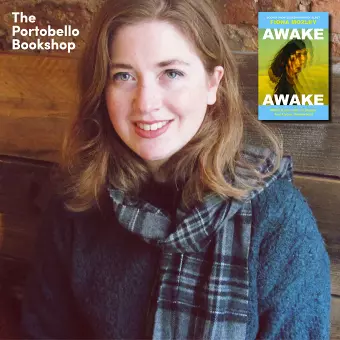
 Fiona Mozley - Awake Awake at The Portobello Bookshop

Awake Awake by Fiona Mozley review – in pursuit of false memories

From the Booker-shortlisted author, a tantalisingly unreliable account of childhood, history and mental uncertainty


Tue 23 Jun 2026 

The historian and novelist Fiona Mozley acknowledged in a 2018 piece for the Guardian that the city of York had a major influence on both her careers. Childhood and adolescence in a place such as York, full of time and times, can generate conflict between “the desire to live in the past and the need to extract oneself from it”. Awake Awake, a follow-up to her previous novels, 2017’s Booker-shortlisted Elmet and 2021’s Hot Stew, engages with two types of memory: the personal and the historical. They’re not exactly at odds, but as far as living in the past is concerned they feed on one another in a complex, entangled relationship.

Wednesday, June 24, 2026

Lost memoir of Hiroshima survivor found after decades in US archive


A visitor walks past a mural of the Atomic Bomb DomePhotograph: Pierre Emmanuel Deletree/


Lost memoir of Hiroshima survivor found after decades in US archive 

Written in 1947, Kiyoshi Tanimoto’s account of the horrors of the atomic bomb attack will be published in August and is being made into a film


Dalya Alberge
Tuesday 23 Jun 2026


The memoir of a man who survived the horrors of Hiroshima is to be published for the first time this summer after its discovery in a US archive.

The 230-page memoir was written almost 80 years ago by Kiyoshi Tanimoto, who witnessed the city’s destruction after the atomic bomb was dropped in 1945. He will now be portrayed in a feature film by Takehiro Hira, whose acclaimed roles include the detective in the Netflix Japanese-British drama Giri/Haji. Pre-production begins in November, ahead of the shoot in February 2027.

The film is being produced by Donald Rosenfeld, a former president of Merchant Ivory Productions, whose period classics include Howards End, starring Emma Thompson. Rosenfeld told the Guardian that with today’s impending nuclear threats, a film about Hiroshima and the publication of a survivor’s account could not be more timely.

“It’s an in-depth look at what this terrible bomb did,” he said. “It is so topical now with the Iran situation and North Korea. You can’t imagine anything worse than Hiroshima, but it could be worse – supposedly 10,000 times stronger today. We really have to make sure it doesn’t happen again.”

On 6 August 1945, the US attacked Hiroshima with an atomic bomb in an attempt to end the second world war. The world’s first nuclear attack decimated the city, reducing it to rubble. An estimated 120,000 people were killed within the first four days after the blast. Bodies were burned and disfigured through acute exposure to radiation. Three days later, the Americans dropped a plutonium bomb on Nagasaki, killing about 73,000 people. On 15 August, Japan surrendered, bringing an end to the war.

Tanimoto, who died in 1986 aged 77, was a Hiroshima Methodist priest, whose life was spared because he happened to be away that day, transporting a wardrobe to another town.

He returned to find unimaginable horrors. Having thought they could never be put into words, he eventually decided that a memoir “would help ensure that no one experienced it ever again”, his daughter Koko Tanimoto Kondo said.

In the memoir’s foreword, Kondo writes of the need for future generations to remember it as “memory is our hope for survival as human beings”.

Having lain unpublished and forgotten in a US archive, the memoir will be published on 6 August, Hiroshima’s anniversary, by Random House in the US and Penguin worldwide. The book has already been sold in most major territories. Rosenfeld described it as “beautifully written”.

Tanimoto’s newly published memoir features a foreword by his daughter, Koko Tanimoto Kondo. Photograph: supplied

The memoir will be released by publishers worldwide this summer, with a 9,000-word foreword by Kondo, now 81. She writes: “For many years I could not live in Hiroshima, the city of my birth. On the day the atomic bomb dropped I was eight months old, a baby in the arms of my mother. It was 40 years before she could bring herself to tell me, in her own words, how I had survived. Few people would talk about that time. Their memories kept them quiet.”

She adds that “the blast flattened almost everything in central Hiroshima” and that the heat was about 4,000C at ground level: “It burned through wood, tile, concrete and human flesh.” She is also involved with the film, introducing the film-makers to survivors or their families as part of their research.

The film takes its title, Hiroshima, 8:15, from the exact time the bomb was dropped. It is being directed and written by Phil Joanou, who made the crime drama State of Grace.

The memoir was found in the Beinecke rare book and manuscript library at Yale in New Haven, Connecticut, among the papers of John Hersey, the American Pulitzer prize-winning reporter who died in 1993.

Hersey had struck up a friendship with Tanimoto when visiting Hiroshima eight months after the bomb, which inspired his 1946 nonfiction account, titled Hiroshima, on which the film is also based.

In the screenplay, seen by the Guardian, Tanimoto returns to a city engulfed by towering flames and toxic smoke, its buildings and people broken and burned, while thick black droplets rain down “almost like oil falling from the sky”. He encounters men, women and children whose clothes have been shredded from their bodies.

In one scene, he comes across a tram, toppled over, its side ripped open. “The occupants inside incinerated. He is drawn to the victims. Frozen. Like Pompeii. Each in a different pose. Their bodies carbonised. Charcoal black.”

While British prisoners of war were among those who suffered extreme brutality at the hands of their Japanese captors, Tanimoto says in one scene: “We deserved to lose. We could not win. Did we deserve the atomic bomb? Perhaps ... perhaps not. But no one yet understands ... what it was like here.”


THE GUARDIAN