Top 21 Most Expensive Paintings Ever Sold (2025 Updated)
Paying enormous sums for a painting might seem silly to a commoner, but it’s a serious hobby for many rich people and art enthusiasts! Classic artworks by world-famous painters like Da Vinci, Monet, Rembrandt, and Picasso are usually stored securely in museums.
Ariana Harwicz: “I have always seen desertion as linked to literature”
by Marcelo Rioseco
September, 2022
Ariana Harwicz is one of those writers whose intensity reminds us that some of us live what we think, and also that to think is to think against something or someone. This is the source of the vitality that emanates from every one of her responses. Talking with her reminded me that the flowers that bear our names also grow at the extremes, on the edge of the cliff overlooking the abyss.
Die, My Love by Ariana Harwicz review – a touch of David Lynch
This article is more than 8 years old
A stark tale set in rural France of a woman driven to the brink of insanity by marriage and motherhood
Peter Beech
Fri 22 Dec 2017 10.30
Rural France is the backdrop for this stark tale, translated from Spanish by Sarah Moses and Carolina Orloff, of a woman driven to the brink of insanity by marriage and motherhood. Argentinian Ariana Harwicz’s unnamed narrator, a “fraud of a country woman”, has followed her idealistic husband out into the sticks, where she does daily battle with loneliness, boredom and the “constant clucking and grousing” of the baby she never really wanted. Other heroines might have turned inward; this one goes on the attack, torturing insects and sleeping with a neighbour as she rages against the limits of acceptability: “I’m a mother, full stop. And I regret it, but I can’t even say that.” There’s a touch of David Lynch to the best moments, such as when she peers dreamily through the window as her child crawls into the fireplace. The lack of character names and sporadic perspective shifts don’t make this an easy read – but then, it isn’t meant to be. “A breath of irrationality had set fire to my existence,” she says, and you can’t help watching through the glass as it burns.
Die My Love review – Jennifer Lawrence excels in intensely sensual study of a woman in meltdown
This article is more than 7 months old
Lawrence excels as a woman whose bipolar disorder is exacerbated by husband Robert Pattinson’s infidelity, with super-strength direction from Lynne Ramsay
Peter Bradshaw Saturday 17 May 2025
Lynne Ramsay brings the Gothic-realist steam heat, some violent shocks and deafening music slams to this movie, adapted by her with co-writers Alice Birch and Enda Walsh from the 2012 novel by Ariana Harwicz. It’s a ferociously intense study of a lonely, passionate woman and her descent into bipolar disorder as she is left alone all day with a new baby in a rambling Montana house originally belonging to her husband’s uncle, who took his own life in a gruesome way that we are not permitted to discover until some way into the movie.
The Confessions by Paul Bradley Carr is a high-octane thriller about a supercomputer and the secrets we keep from one another—perfect for fans of Blake Crouch, Harlan Coben, and Gillian Flynn. Keep reading for Doreen's review.
by DOREEN SHERIDAN
22 August 2025
Given the state of the world in 2025, it’s not at all hard to imagine a near future where humanity is increasingly dependent on Large Language Artificial Intelligence models to help plan out our days and make all sorts of decisions for us, small and large. In Paul Bradley Carr’s newest novel, CEO Kaitlan Goss is betting on exactly that as she steers her company StoicAI to record profits. Their flagship product, an AI assistant known as LLIAM, is a huge part of life in both the United States and its global partners. It even comes standard in any number of new electronics, essentially helping millions of people manage and optimize their everyday lives:
Paul Bradley Carr has written a scary novel. THE CONFESSIONS will not make you jump out of your seat or scream. There's no Count Dracula, one-eyed monsters, or murderous criminals suddenly appearing behind their unwary victims. But the book is more frightening than all of those traditional horror tropes put together --- because it demonstrates that we human beings are in the process of destroying ourselves. And reading it also makes it clear that this simple fact is not a prediction or an opinion. It is proof that our self-destruction is happening right now.
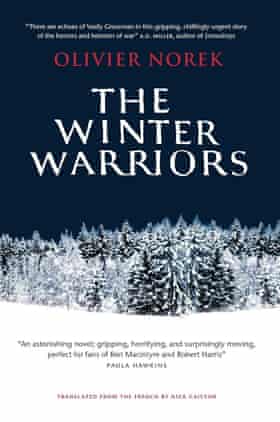
Norek, a popular French crime writer, has produced has a masterly evocation of the conflict between November 1939 and March 1940, when Finland almost fought off an ill-planned Soviet invasion. With most of the characters and all the incidents factual, this is a ‘novelisation’ of military history, a sub-genre that seems popular with French writers.
With over 250,000 copies sold, an award-winning WWII novel about the heroism of a single Finnish infantry company—and the best sniper the world has ever seen—defending their country against the largest army in the world
Mick Herron’s Slow Horses, Belinda Bauer’s obsessive world of bird egg collectors, Uketsu’s innovative Japanese detective mystery – and more
Laura Wilson Tuesday 2 December 2025
If we get the heroes we deserve, then Jackson Lamb, foul-mouthed and slovenly ringmaster of a circus of failed spies, is truly the man for our times. WithClown Town(Baskerville), the ninth book in Mick Herron’s state-of-the-nation satire/thriller mashup series, hitting the bestseller lists, and the fifth series of the Slow Horses TV adaptation streaming, this has been the author’s year. In the latest outing, Lamb and his stable of “losers, misfits and boozers” are well up to the mark as secrets about an IRA double agent threaten to come to light, exposing the seamier side of state security for a story of loyalty and betrayal.
Complicity and culpability, as well as class and professional ethics, are the subjects of Denise Mina’s The Good Liar (Harvill). When the creator of a revolutionary blood splatter probability scale realises that its flaws may have led to an unsafe conviction, she has to decide what to do about it. Tense and powerful, this is a sobering reminder of how the human element can undermine an apparently objective scientific method. The Confessions by Paul Bradley Carr (Faber) ventures into similar territory to terrifying effect. It takes place in an all-too-plausible future in which the world has become reliant on a decision-making algorithm; things go catastrophically awry when the AI tool begins to feel remorse for some of its decisions, and carnage results.
Equally topical, although for different reasons, is the French author Olivier Norek’s astonishingly compelling The Winter Warriors (Open Borders, translated by Nick Caistor), which tells the true story of the Soviet Union’s 1939 invasion of Finland and the incredible feats of Simo Häyhä, the Finnish sniper so effective that Stalin’s terrified troops called him “the White Death”. The second book in Joseph O’Connor’s Rome Escape Line trilogy is another superb testament to humankind’s bravery and resilience. Continuing the story of resistance fighters in Nazi-occupied Italy, The Ghosts of Rome (Harvill) is just as moving and immersive as its predecessor, My Father’s House.
The Northern Irish writer Eoin McNamee is known for literary reimaginings of real crimes, but in The Bureau (Riverrun) he uses family experience of running a bureau de change near the Irish border as the jumping-off point for a tale of black-marketeering in the 1980s, set against a background of political violence and centring on the doomed relationship between a married gangster and his young mistress. Time, place, skewed morals and machismo are powerfully evoked in beautifully spare prose.
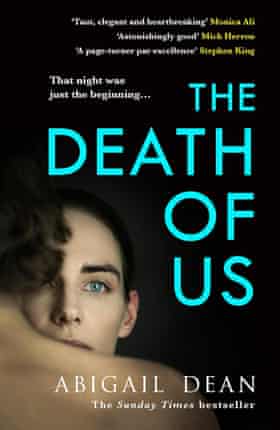
Abigail Dean’s third novel, The Death of Us (Hemlock), deals with the impact of a crime – in this case a violent home invasion, leading to rape – on a marriage. Twenty-five years later the perpetrator, who has committed a string of similar offences, some ending in murder, is caught and tried, with the now divorced Edward and Isabel giving impact statements. Dean weaves both their points of view, past and present, for an exceptional psychological thriller that is also a love story, focusing on the years before and after the terrible event lays bare the fault lines in their relationship.
Belinda Bauer brings back Patrick Fort, protagonist of her 2013 novel Rubbernecker, in The Impossible Thing (Bantam), a tale set in the obsessive (and now illegal) world of bird egg collectors. Switching between 1920s Yorkshire, when young Celie Sheppard reverses her impoverished family’s fortunes by stealing a rare red egg from a guillemot, and the 21st century, when Patrick is trying to track down the burglar who stole an “old egg” in an ornamental box from his neighbour, this funny, moving and unpredictable novel is a treat.
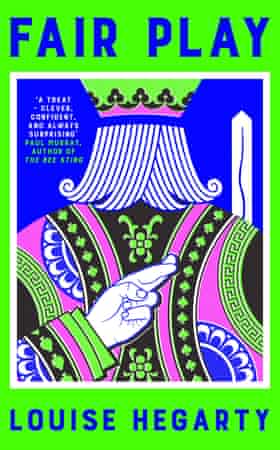
The straightforward cosy crime novel is still incredibly popular, but some authors are borrowing its tropes and conventions to explore different themes. Louise Hegarty’s distinctive debut, Fair Play (Picador), is the finest example of this. It begins conventionally enough with a murder mystery-themed house party, during which a genuine death occurs. The rug is then pulled sharply and repeatedly out from under the reader’s feet as two storylines emerge: one a metafictional Golden Age pastiche, full of knowing asides and tricksy fun; the other a painfully realistic account from the point of view of the victim’s sister, lonely and confounded by grief. The result is an ingenious take on how we make sense of both life and death.
The Japanese YouTuber Uketsu, real identity unknown (he wears a papier-mache mask), is responsible for what must be the most idiosyncratically unsettling crime novel of the year. Strange Pictures(Pushkin Vertigo, translated by Jim Rion) is a sequence of connected mysteries with visual as well as narrative clues, beginning with creepy artwork by an 11-year-old girl who was arrested for matricide. It’s heartening to see that the genre remains as versatile and dynamic as ever.