Shuggie Bain by Douglas Stuart review – lithe, revelatory debut
This heart-rending novel set in 1980s Glasgow is deservedly on the Booker longlist and may even give Mantel a run for her money
Alex Preston
Sunday 9 August 2020
O
ne of several surprises in a tendentiousBooker longlistwas the number of debut authors selected – eight of the 13 novels are by first-timers, the largest share in the 51-year history of the prize. It has also raised hackles that nine of the books are by Americans. Douglas Stuart, author of the longlisted debutShuggie Bain, may hold an American passport, but his novel is resolutely, wonderfully Scottish at heart. I first read the book as part of the selection process for the Observer’sannual January lookahead to the best first novels of the year. It sang then and returning to it now has been a delight. Rarely does a debut novel establish its world with such sure-footedness, and Stuart’s prose is lithe, lyrical and full of revelatory descriptive insights. This is a memorable book about family, violence and sexuality, and could even give Dame Hilary a run for her money when it comes to the Booker’s final knockings in October.
Such a Fun Age by Kiley Reid review – an essential new talent
A thrilling millennial take on the 19th-century novel of manners investigates race, friendship and privilege
Sara Collins
Thu 2 January 2020
U
S author Kiley Reid offers a refreshing take on an age-old question: can we connect across barriers of race, gender, wealth and privilege? Emira Tucker, who works in Philadelphia as a babysitter for news anchor Peter and lifestyle guru Alix, takes their toddler, Briar, to an upscale supermarket where suspicions are stirred because she is black and the child is white. The security guard accuses her of kidnapping, and is only appeased when Emira calls Peter. (Peter is “an old white guy”, she declares, “so I’m sure everyone will feel better”.) A lesser novel would have lingered here, in territory that’s painfully familiar from countless viral incidents. But in Reid’s debut the incident heralds a caustically funny skewering of the sort of well-intentionedliberal who congratulates themselves on having black guestsat dinner.
Mayflies by Andrew O’Hagan review – a bittersweet tale of friendship
From a boys’ wild weekend to fortysomething crisis … male fragility falls under the spotlight in a novel of two halves
Elizabeth Lowry Sat 12 Sep 2020 07.30 BST
T
here’s a nod to Alan Sillitoe’s classic about postwar working-class life, Saturday Night and Sunday Morning (1958) – and the 1960 film starring Albert Finney – in Andrew O’Hagan’s ebulliently dark novel about a group of Ayrshire lads coming of age in Thatcher’s Britain. Twenty-year-old Tully Dawson, a machinist in the local factory who “impersonated Arthur Seaton … by taunting his boss all week and drinking pints of Black and Tan all weekend” is the wisecracking ringleader of this gang. He’s Finney with spiked-up hair and a record collection: where the angry young men of the 50s just had the pub, the angry young men of the 80s have post-punk rock.
In her memoir Living History, Hillary Clinton introduces her husband, Bill Clinton, as "the person who would cause my life to spin in directions that I could never have imagined."
Is it me, or does the word "spin" conjure a car spinning off the road?
Curtis Sittenfeld's new novel, Rodham,imagines what would have happened if she had righted the wheel. Rodham is a nauseating, moving, morally suggestive, technically brilliant book that made me think more than any other in recent memory about the aims and limits of fiction.
A love letter from the novelist to the great film director
The Hollywood film director of movie greats such as Some Like It Hot, was hugely underrated, says Jonathan Coe. His new novel attempts to redress the balance
David Marsland
29 October 2020
I
n Jonathan Coe, the film director Billy Wilder has long had one of his fiercest cheerleaders. For decades, at every chance he gets, in articles and interviews,Coe has cited the director of classics like Some Like it Hot as his “greatest influence”. Coe even admits to having sent the gravely-ill Wilder a fan letter, desperate for Wilder to know how much he loved the Private Life of Sherlock Holmes before he died. Wilder dictated a response from his sick bed, dismissing the flick as “not a success,” but adding, in a very Wilder way, “It is wonderful to see that for somebody it has become an obsession.”
In imagining a fictional relationship between Some Like It Hot director Billy Wilder and a young Greek woman working as an interpreter on one of his later films, Jonathan Coe has created a beautiful, bittersweet novel that is itself crying out for the silver screen treatment, writes Allan Massie
By Allan Massie Wednesday, 28th October 2020, 6:11 pm
Jonathan Coe’s new novel is sheer delight – well, a bittersweet delight with a dark and horrible background. Mr Wilder is Billy Wilder, the Austrian-born refugee from Nazi Germany who made good in Hollywood as a director and scriptwriter, creating some of my favourite movies, among them Sabrina, The Apartment and Some Like It Hot, the last two written with his close friend, the Romanian-born Iz Diamond, who is also a character in the novel.
I discovered Billy Wilder’s films in the late 1970s, when I was a teenager. But the first film of his that I saw (on television) was not one of his acknowledged masterpieces – such as Double Indemnity, Sunset Boulevard or Some Like It Hot – but The Private Life of Sherlock Holmes, his reimagining of the great detective’s personal life, which had been a commercial and critical flop.
I’ve written elsewhere about how my love for this film developed into a full-blown obsession. And of course it led me to watch all of Wilder’s other films, and to find out as much as I could about his life: his formative years in Vienna and Berlin, his flight from Nazi Germany in 1933, his transition from Hollywood screenwriter to Hollywood director. I became fascinated, in particular, by his meticulous, craftsmanlike approach to screenwriting, the formal solidity of his plots, the elegance of his narrative structures. Before the age of video recorders, I recorded his films off the television onto audio cassette and listened to them in bed at night, absorbing the rhythms of his dialogue. His influence on my development as a writer was much greater than that of any novelist.
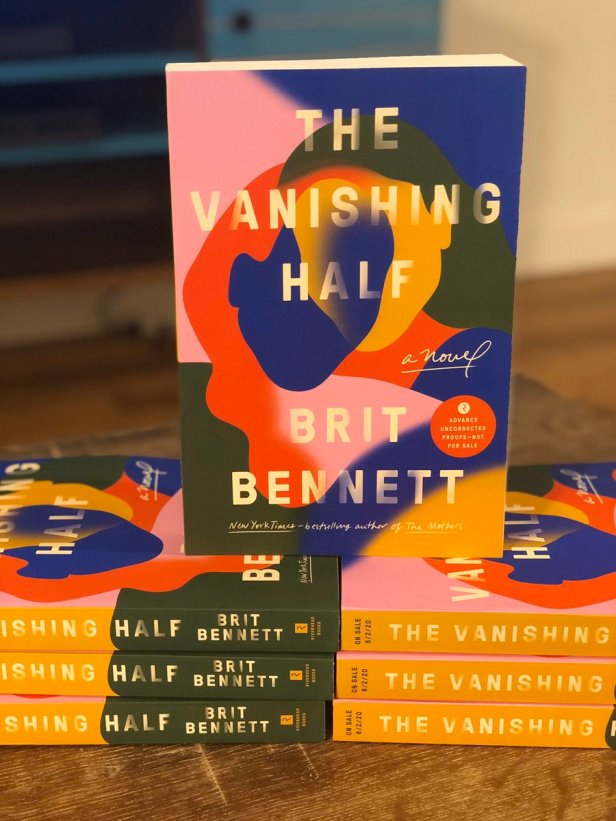
From The New York Times – bestselling author of “The Mothers”, a stunning new novel about twin sisters, inseparable as children, who ultimately choose to live in two very different worlds, one black, and one white.
The Vignes twin sisters will always be identical. But after growing up together in a small, southern black community and running away at age sixteen, it’s not just the shape of their daily lives that is different as adults, it’s everything: their families, their communities, their racial identities. Ten years later, one sister lives with her black daughter in the same southern town she once tried to escape. The other secretly passes for white, and her white husband knows nothing of her past. Still, even separated by so many miles and just as many lies, the fates of the twins remain intertwined. What will happen to the next generation, when their own daughters’ storylines intersect?
Utopia Avenue by David Mitchell review – a musical journey
This portrait of a 60s band on the rise conveys the spirit of the age with gleeful energy
SARAH PERRY
Friday 10 July 2020
David Mitchell’s eighth novel, Utopia Avenue, arrives both as a distinct and distinctive book, and as a further chapter in the ongoing “metanovel” that constitutes his work to date. At first, it appears closer in theme and style to the semi-autobiographical Black Swan Green than to the giddying, multivalent Cloud Atlas or The Thousand Autumns of Jacob de Zoet: it is placed firmly and with pleasing particularity in the 1960s, and is in effect a coming-of-age novel. What comes of age is Utopia Avenue, “the most curious British band you’ve never heard of”. The band comprises the middle-class folk singer Elf Holloway, who calls to mind Sandy Denny, and who is cautiously examining her sexuality; Jasper de Zoet, whose genius on lead guitar is compromised by aural hallucinations; Dean Moss, bassist, not yet wrenched out of his traumatising family past; and the drummer Griff, who is of the four the most opaque, though we are assured he is a Yorkshireman.
They are brought together and in due course managed by Levon Frankland, previously seen as a much older man in The Bone Clocks, whose fur hat and blue glasses Dean worriedly parses as those of “a queer beatnik”. An immense cast – drawn from homes in Kent, clubs in the West End and parties in New York – attends the band, as Mitchell traces Utopia Avenue’s uneven trajectory from the Gravesend Working Men’s Club and the bar at Brighton Polytechnic via Italy to Manhattan, which seems from the air to float “on glassy dark, a raft laden with skyscrapers”. The band acquire success, ardent fans and a degree of pleasant notoriety, but not – of course – happiness; and Mitchell is expert at excavating the seams of loss, ambition and mere chance that lie under the edifice of fame. Each member experiences the irresolvable tensions between the demands and rewards of art and ambition, and the opposing forces of duty, failure and sorrow. Death arrives suddenly; love is offered, withdrawn and squandered. The impulse to make music is inexplicable, irresistible and constant.
The reader is impelled from the first by a kind of rushing, gleeful energy: “Dean hurries past the Phoenix Theatre, dodges a blind man in dark glasses, steps on to Charing Cross Road …” It is London, 1967. Here is Foyles, here is the Pillars of Hercules pub, here are pigeons on Greek Street; the phone boxes are “littered with Sellotaped-on pieces of paper with girls’ names and phone numbers”. It is both familiar and impossibly distant, the capital as signifier of the era in which the band is formed – modernity butting up against a grim, confined sensibility. There is LSD in the clubs and sex to be had in bedsits and studio flats, but Elf’s father reminds her that “at the bank, we don’t employ married women”, and Dean’s landlady, having turfed him out on to the street, props in the window a sign that reads “BLACKS & IRISH NEED NOT APPLY”.
Set against all this, the band’s reaching after an authentic musical identity represents a generation moving away from postwar manners and mores like a train departing a station, and Mitchell superbly conveys the energy and spirit of the age. I have long considered myself hopelessly ignorant of 20th-century popular culture, but responded to the sight of familiar names and faces with the delighted recognition of having spotted them across a crowded bar: Leonard Cohen, kindly enough, but reluctant to be drawn; Syd Barrett, attentively licking a Rizla; Jimmy Savile, damned by hindsight and broadly despised. Of these cameos, the arrival of an elegant odd-eyed gentleman in a trenchcoat coming down a flight of stairs is particularly delightful, and I often wondered what others had passed me by.
Donna Bae and Jim Sturgess in Cloud Atlas (2012). Photograph: Snap Stills/Rex Features
Mitchell is evidently enthralled by both the romance and the practicality of music. The novel is presented as a series of albums – on vinyl, of course – composed of songs, each of which is devoted to a character, so that we are drawn for a time to Elf and her perfidious ex-boyfriend; and then on to Dean, and his large working-class family (Mitchell elects to convey Dean’s class by rendering his estuary accent in type – “What about my gear? Stealing that too, are yer?” – which grates a little). Whole songs and scraps of lyrics by band members are reproduced on the page, and are simultaneously trite and sincere, like all the best pop songs; the frustrating, elusive magic of wresting melody out of four strings and a pick-up is vividly evoked, as Jasper “slams into an amp-blowing, bent-string howl and fires off a scale of triads, sliding from high E, all the way down”.
The novel’s prose is for the most part consciously easeful and frictionless: it is a supremely readable novel, if the quality of readability is taken to be one which is difficult to achieve and a relief to encounter. It is enlivened by an attentive eye for the particulars, as when “rudderless cloud-wrecks float by, unmoored”, or when, at a dinner party, “served in a pea-green porcelain boat, the mussel shells are blue-black on the outside and flint-grey inside … candles are beeswax, linen is starched, cutlery is heavy”. At times, the frictionless quality of the prose extends to the story itself, so that it is possible to read for several pages at a time without quite feeling that events and characters have landed on the consciousness.
The book is most alive and most compelling when Mitchell slips the surly bonds of the realist premise and lands in his own extraordinary imagined worlds. This is particularly the case in his handling of Jasper de Zoet (evidently descended from Jacob of the thousand autumns), who passes the novel fending off a kind of madness which arrived during a game of cricket when he was 16 years old, in the form of a disembodied “knock, knock”. There is a tenderly depicted and entirely persuasive friendship between young Jasper and his schoolfriend Heinz Formaggio, who attempts to unravel the meaning of the knock; and later, when Jasper attends (or appears to attend) a bizarre “psychosurgical” clinic, the reader is in the realm of The Bone Clocks – of the Horologists and the Oil of Souls. Here Jasper is attached by Dr Marinus to a “mnemo-parallax”, revisits his memories in reverse, and is coaxed towards sanity; I suspect it is for the reader to determine whether the novel has turned absolutely to the fantastical, or whether Jasper entered a deep psychosis and emerged more or less healed.
This is not a novel that traces the vertiginous rise and calamitous fall of superstars; it is subtler, and cannot be read as a cautionary tale warning young readers against the perils of fame and fortune. Mitchell does not castigate or punish Utopia Avenue for their yearning after lights and adulation: he is kinder and more wise. He proposes instead that nothing could be more natural, or in fact more commendable, than acting on the old and common longing to be heard above the crowd, even – perhaps particularly – at the cost of security and sanity. After all, says Jasper de Zoet, “applause is the purest drug”.
• Sarah Perry’s Melmoth is published by Serpent’s Tail. Utopia Avenue is published by Hodder
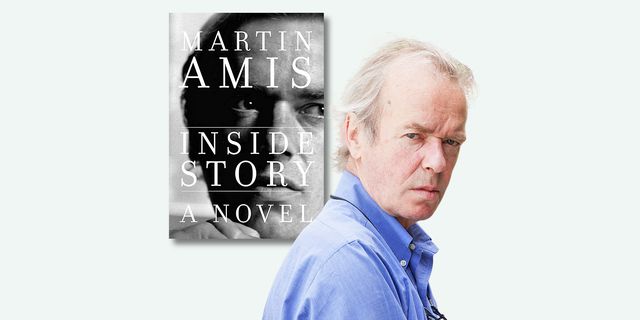
Inside Story by Martin Amis, review: An exhilarating hybrid ‘novel’, wrapping memory and invention
Amis describes this work as a novel, but this reads more like a work of auto-fiction, with his wife, children, siblings and friends appearing under the lightest of covers
Boyd Tonkin
October 2, 2020
Every decade or so, Martin Amis publishes a sort of supersized progress report on his life (and art) so far.
The novel London Fields (1989) capped his early period of satirical, and apocalyptic, urban grunge. Then the majestic family memoir Experience (2000) set out his stall as a grown-up soul-bearer and truth-teller. If A Pregnant Widow (2010) reverted to fiction, the author’s semi-disguised biography shaped its people and events – above all, the tormented life and early death of his younger sister, Sally.
Martin Amis and Don DeLillo, two literary lions, offer starkly different takes on the world: Review
In a book he dubs "novelized biography," Martin Amis offers his Inside Story on love, loss, and mortality, while Don DeLillo confronts the perils of the modern world (and what happens without it) in The Silence.
By Leah Greenblatt
October 16, 2020 at 11:00 AM EDT
Inside Story by Martin Amis
Martin Amis has hardly lived an unprolific life: His catalog contains some 30 works of fiction and nonfiction, along with uncountable correctives, essays, and opinions. Or an unexamined one; his bestselling 2000 memoir Experience famously captured the towering figure of his father, the late British novelist Kingsley Amis, and the familial winds that shaped him.
But all that feels like a warm-up, in many ways, for his latest — 521 dense, zigzagging pages of what he likes to call a “novel, not loosely but fairly strictly autobiographical.” If you can parse that, you may have a running start on Inside Story: a giant octopus of a book spritzing out regular inky puffs of lit-world gossip, historical digressions, romantic confessions, and vintage score-settling, with footnotes. It is also, nominally, a guide on how to write (take on sex, dreams, and religion at your own peril, he advises; be equally suspect of alliteration).
At its heart, though, which almost always also means at its best, Story is the tale of three losses: Saul Bellow, Christopher Hitchens, and Philip Larkin. The first was a long-ago interview subject who became a beloved mentor and friend; the second, a peer and platonic soul mate; the third is a little more complicated. (Larkin’s fabled poetry, Amis largely admires; his status as a family acquaintance and a sort of anti–bon vivant, less so.)
None of them died easy deaths; Hitchens’, following esophageal cancer in 2011 at age 62, remains an open wound for Amis, and the one that inspires the book’s most intimate and illuminating chapters. His great Martin-y mind is still a thing to marvel at, all the clever wordplay and synaptic leaps, but it’s the tender, ordinary moments — watching old movies with a gently addled Bellow, eating Tex-Mex near the Houston hospital where “Hitch” spent his last days — that stay. —Leah Greenblatt
The Silence by Don DeLillo
Don DeLillo has been writing about imagined dystopias for nearly half a century; it just took this long, apparently, for reality to catch up with him. So it’s all the more disappointing to see such a master punting the subject as perfunctorily as he does in The Silence, a cool, fragmentary slip of a novella centered around some sort of vague catastrophic event.
It’s Super Bowl Sunday 2022, and a clutch of comfortable New Yorkers — a poet, a professor, a claims adjuster — gather to watch the game when the television screen suddenly pixelates and goes blank; other machines soon follow. Even at 84, DeLillo’s shrewd, darkly comic observations about the extravagance and alienation of contemporary life can still slice like a scalpel when he wants them to; Silence, though, settles mostly for paper cuts. —LG
Prior to the release of his latest novel, Inside Story, the literary agitator doesn't hold back about everyone from Tolstoy to Margaret Thatcher to the French.
By Ryan Chapman
There's consistency to a Martin Amis novel. Whether it's Money, London Fields, or the dozen others, you can reliably expect a transgressive take on Western culture, peppered throughout with black wit. Plenty of smoking, a bit of sex, and deep pleasures on the level of the sentence. Ruminations on apocalypses global and personal. Amis' newest novel, Inside Story—also his longest—is something of a surprise, then, unlike anything Amis has written. It's unlike anything anyone has written.
There are autofictional portraits of his long friendships with Christopher Hitchens, Saul Bellow, and Philip Larkin, with moving accounts of their passing. There's a memoir of his affair with the ribald Phoebe Phelps, who may have seduced his father, the novelist Kingsley Amis—and who does not exist. There are interstitial chapters on writing fiction, with lines like, "Keep an eye on the suffixes; maintain a safe distance between words ending (say) with -ment, or -ness, or -ing; and the same goes for prefixes, for words beginning (say) with con-, or pre-, or ex-. Try it. You'll notices that the sentences feel more aerodynamic." Oh, and it's a study of 9/11. And Jewish statehood. And Trump.
Maaza Mengiste's The Shadow King opens with a woman, Hirut, sitting on the floor of a train station in the Ethiopian city of Addis Ababa, holding an old metal box. She's traveled here, the reader is told, "to rid herself of the horror that staggers back unbidden. She has come to give up the ghosts and drive them away." She's awaiting the box's owner, an Italian photographer she hasn't seen in decades. "It has taken so long to get here," Mengiste writes. "It has taken almost forty years of another life to begin to remember who she had once been."
The importance of memory — of those that came before us, and of things we'd rather forget — is at the heart of The Shadow King, the second novel from Ethiopian American author Mengiste. It's a sprawling, unforgettable epic from an immensely talented author who's unafraid to take risks.