Thursday, November 14, 2024

The legacy of Lucy, the ‘Australopithecus’ that changed our idea of human evolution 50 years ago


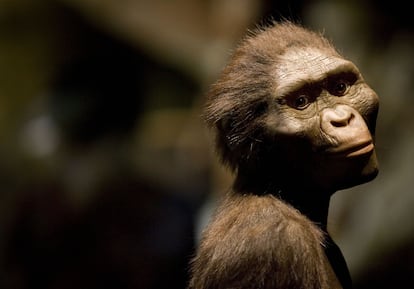
Australopiteca ‘Lucy’
Sculptural representation of Lucy on display at the Houston Museum of Natural Science.DAVE EINSEL (GETTY IMAGES)

HUMAN EVOLUTION

The legacy of Lucy, the ‘Australopithecus’ that changed our idea of human evolution 50 years ago

The fossil remains of the unique hominid were found in Ethiopia in 1974, traveled around the world, were the subject of controversy and became an icon of science. Even today they continue to provide answers to where we come from


FACUNDO MACCHI
NOV 12, 2024 - 09:41 COT

On the evening of November 24, 1974, in a camp in northeastern Ethiopia, American anthropologist Donald Johanson and his assistant Tom Gray were drinking cold beer around the fire while a goat was cooking on embers. They were celebrating, along with a handful of colleagues: that very morning they had found the fossilized bones of what appeared to be a hominid never before described by science. They sang and danced to the music of the Beatles. Their song Lucy in the Sky With Diamonds came on and someone ventured: “Why don’t we call her Lucy?” The name stuck, and Lucy became the most famous fossil in history. Her discovery led to thousands of questions. The two main ones were: what species did she belong to? And was humanity beholding its closest primate relative?

Wednesday, November 13, 2024

Samantha Harvey’s ‘beautiful and ambitious’ Orbital wins Booker prize


Samantha Harvey’s ‘beautiful and ambitious’ Orbital wins Booker prize

The British author’s novel about astronauts on the International Space Station was chosen unanimously as the winner, says judging chair Edmund de Waal

Ella Creamer

Tuesday 12 November 2024


Orbital by Samantha Harvey, the only British writer shortlisted this year, has won the 2024 Booker prize, the UK’s most prestigious prize for fiction.

Tuesday, November 12, 2024

Frank Auerbach, leading figurative painter who fled Nazis, dies aged 93


Frank Auerbach

Frank Auerbach, leading figurative painter who fled Nazis, dies aged 93

Saved by the Kindertransport scheme, the artist later fell in with Soho’s artistic crowd including Francis Bacon and Lucian Freud


Tim Jonze

Tuesday 12 November 2024


Frank Auerbach, the artist who arrived in Britain under the Kindertransport scheme and went on to become one of the most significant figurative painters of the postwar era, has died aged 93.

Monday, November 11, 2024

‘I feared for my life’: stories of sexual harassment on the Camino de Santiago


‘I feared for my life’: stories of sexual harassment on the Camino de Santiago

Female pilgrims tell of terrifying aggression, the lingering effects and their belief that their cases are far from isolated


Ashifa Kassam and Mabel Banfield-Nwachi
Mon 11 Nov 2024 05.00


It was on the outskirts of the northern Spanish town of Mieres, as she raced past colourful houses built of stone and wood-framed windows, that Sara Dhooma wrestled with the possibility that she might die.

Women walking Camino de Santiago speak of ‘terrifying’ sexual harassment


Women walking Camino de Santiago speak of ‘terrifying’ sexual harassment

Sexual aggression said to be ‘endemic’ on route through Spain, Portugal and France with solo female pilgrims at risk

 and 

Mon 11 Nov 2024 05.00 GMT


Lone female pilgrims walking the Camino de Santiago have spoken of being subjected to “terrifying” sexual harassment in near-deserted areas of rural Spain, Portugal and France.

A twisted tale of strange sisters: Hervé Guibert’s photographs of his reclusive great-aunts in 1970s Paris


A twisted tale of strange sisters: Hervé Guibert’s photographs of his reclusive great-aunts in 1970s Paris

The late French writer and artist convinced his eccentric relatives to star in a gothic photo novel which is finally being published in English following renewed interest in his work

Sean O’Hagan

Sunday 10 November 2024

In 1974, Hervé Guibert, a precocious 18-year-old fledgling artist, asked his great-aunts, Suzanne and Louise, if he could make a film about them. The pair lived a life of reclusive eccentricity in a Parisian hôtel particulier (grand urban house) in the 15th arrondissement alongside a pampered German shepherd guard dog called Whysky. Though Guibert was one of their very few regular visitors, they dismissed his suggestion outright. Undaunted, he wrote a play based on their life – it was never produced – and took hundreds of photographs of them, mostly from across the table at their regular lunches.

Sunday, November 10, 2024

A psychoanalyst in search of the logic of the absurd


Lógica del absurdo
GURIDI

A psychoanalyst in search of the logic of the absurd

It is there in our night dreams, in our Freudian slips, in our jokes… Bewildering situations incite us to search for meanings and explanations elsewhere, even when these lie beyond evidence-based facts


DAVID DORENBAUM
OCT 03, 2024 - 05:02 COT

During a therapy session, one of my patients, perplexed by the furor over the U.S. election, tells me: “I’ve never been interested in politics, let alone U.S. politics. So why can’t I take my eyes off that antiquated cartoon character [Trump]?” To which he himself replies: “Because it’s absurd… a farce.” Another patient, middle-aged and with a successful career, comes to see me, tormented by an order that states: “If you don’t pray two hours before going to work, you’ll be fired.” And he asks: “If it’s absurd, why do I do it?” The more vivid his obsessive experience, the more compelling the compulsion.

Donald Trump’s Revenge


Donald Trump’s Revenge


The former President will return to the White House older, less inhibited, and far more dangerous than ever before.

Electing Donald J. Trump once could be dismissed as a fluke, an aberration, a terrible mistake—a consequential one, to be sure, yet still fundamentally an error. But America has now twice elected him as its President. It is a disastrous revelation about what the United States really is, as opposed to the country that so many hoped that it could be. His victory was a worst-case scenario—that a convicted felon, a chronic liar who mismanaged a deadly once-in-a-century pandemic, who tried to overturn the last election and unleashed a violent mob on the nation’s Capitol, who calls America “a garbage can for the world,” and who threatens retribution against his political enemies could win—and yet, in the early morning hours of Wednesday, it happened.

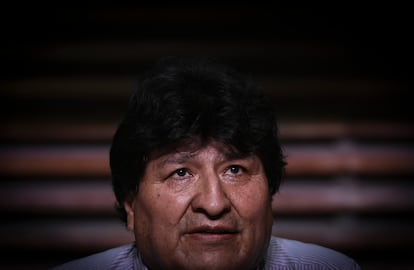
The Evo Morales case: When sexual violence against women gets stuck in the political mud


Evo Morales in Buenos Aires, Argentina, in 2020.
Evo Morales in Buenos Aires, Argentina, in 2020.MARCELO ENDELLI (GETTY IMAGES)

The Evo Morales case: When sexual violence against women gets stuck in the political mud 

Recent accusations of sexual abuse levied against the former president of Bolivia point to a pact of silence in service of the country’s political elite and a troubling history with the legal status of statutory rape


ANDRÉS RODRÍGUEZ
OCT 19, 2024 - 20:28 COT


Evo Morales is holding a press conference in the Bolivian city of Cochabamba. He’s seated behind a bank of microphones, alongside his lawyer Nelson Cox, and is holding a sheath of papers. They are flanked by women leaders. Two rows of provincial assembly members and party members serve as their escort. For 20 minutes, he responds to accusations that have recently arisen pertaining to alleged aggravated statutory rape with incitement to prostitution, related to having sexually abused a 16-year-old girl in 2016. Bolivia’s former president reads his favorable polling results and calls the accusations part of a political strategy to disqualify him from the presidential race in 2025. “This campaign is so dirty, such a pack of lies. Everyone is after Evo because he is a winner,” he says before ending the presentation to a standing ovation from his followers.

Friday, November 8, 2024

The Party by Tessa Hadley review – sex and the postwar city


Review

The Party by Tessa Hadley review – sex and the postwar city

The author’s novella about two young women whose yearning for freedom comes at a price sometimes feels unconvincing and underpowered


Rachel Cooke
Tue 5 Nov 2024 07.00 GMT


While Tessa Hadley’s The Party began its life as a New Yorker short story, it seems that it wouldn’t, for her, go away. At some point she found herself moved to continue the narrative, and so it became the first of the three chapters of what is now a novella. In my mind, these chapters resemble the mirrors you might find sitting on top of an old-fashioned dressing table, each one providing a different angle, sometimes lovely and sometimes unexpectedly ugly, for the person (the reader) who happens to be gazing into them. The book begins with a party, after all: noses must be powdered, and lips carefully blotted. Only later does anyone notice that the hair on the back of a head has unaccountably become matted, that smudged mascara has darkened pale cheeks.