
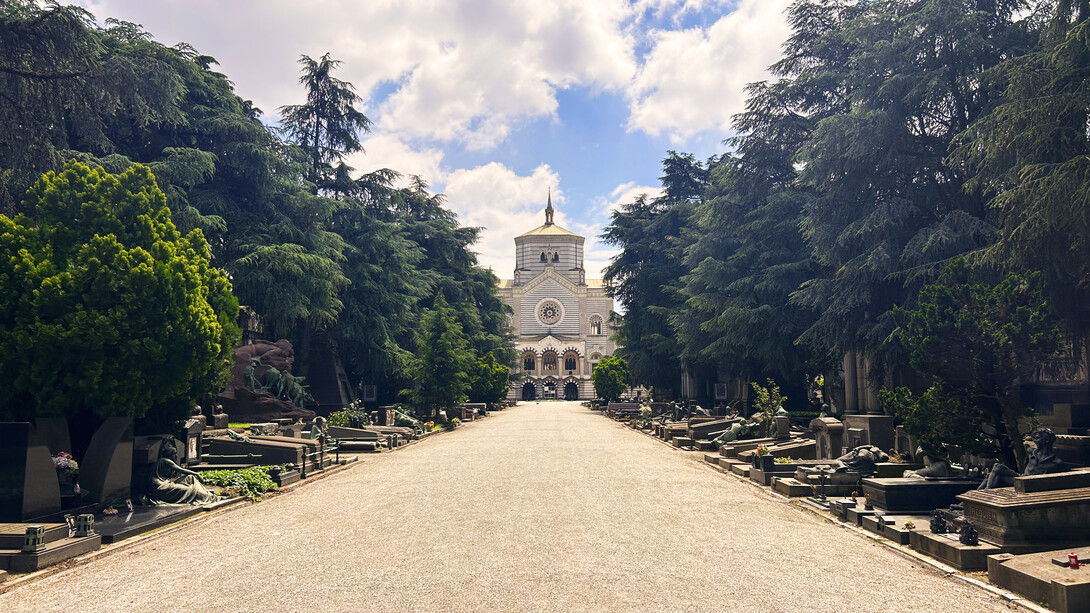
The monumental cemetery of Milan: a graveyard museum
An open-air museum standing in between life and death, art and architecture
The Monumental Cemetery of Milan (Cimitero Monumentale di Milano), located in the Garibaldi district of Milan, Italy, is one of the most important cultural heritage sites in Europe. Filled with rich architectural monuments and sculptures, the cemetery is the resting and remembering place of many famous people in Italian history, such as; Bruno Munari, Salvatore Quasimodo, Alessandro Manzoni, Carlo Cattaneo, Luca Beltrami, etc. The cemetery was designed by Carlo Maciachini (1818–1899), who won the design competition held by the municipality of Milan in 1863. Even though it was not completed until 1887, the burials began in 1866, and the cemetery continued extending to 250,000 m2.
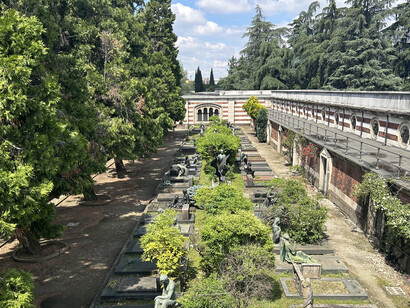
The cemetery is very interesting in terms of religious values because, aside from the Catholic burials, there are two other dedicated parts described as Non-Catholic (Protestants, Greek Orthodox, Armenians) and Jewish. The site is symmetrically arranged around the courtyard with separate entrances and separated into a few areas that divide the various faiths. There are several pathways throughout the cemetery, emphasizing the significance of urban planning during the design process.
The unique thing about Cimitero Monumentale is that it is considered to be an open-air museum. From the viewpoint of someone who was raised in Turkey, this seemed as an odd function or a description of a cemetery. Upon visitation, the “cemetery” function felt even more far than museum. Obviously, it was a cemetery, but only in such sense of the content of the writings: names and dates. It was more than just a cemetery; it was also a park, a sculpture museum, a mixed-style small cityscape, and, most bizarrely, a tourist destination. The sense of serenity and attention to aesthetical details on the graves were truly amazing. It was quite shocking because, generally, cemeteries are not places to visit except for funerals or remembrance days. They have an eerie atmosphere but personally, it feels emptier even though they are surrounded by nature.
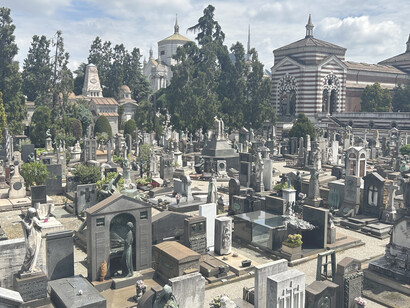
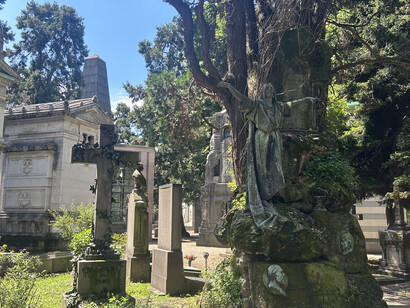
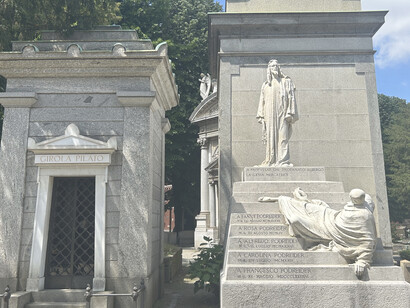
The first thing that struck me about the cemetery was how unique each grave was. All of the graves at Cimitero Monumentale had different forms and shapes. Stones with personal or religious statements, mausoleums, sarcophaguses, accessible aediculae built for a single family, or sculptures that serve as tombs themselves. Furthermore, the departed also had personal touches, such as actual images placed on stones, sculptures representing different facets of their lives, religious symbols, or, primarily in the section devoted to Catholics, crying angels. The typefaces of the texts were also fairly diverse from one another. Each grave was customized. They were so personalized that some were created by well-known architects, artists, and sculptors. All the graves had some kind of architectural intervention, allowing artistic choices to be glorified even more.
Most cemeteries, including those of various faiths, include graves that are nearly identical or quite similar. At least there is a shared stylistic language. Behind this is the belief that all departed people are treated the same as bodies under the earth in terms of physical appearance since their souls are no longer in the body. The emptiness feeling when encountered supports the belief. As I realized, the difference in my encounter was because of the extreme personalization of the graves in Cimitero Monumentale. A significant number of them conveyed emotion and personality through the grave's visuality, sculptural embellishments, images, architectural components, phrases, and even typography.
The graves presented individuality between the deceased. It is a different perspective for remembrance. It was a worthwhile experience to discover and see a glimpse of various life stories through exhibited art and architecture in a cemetery. It is crucial to emphasize that Cimitero Monumentale is a unique museum that defies preconceived notions about cemeteries by enabling visitors to dive into the human experience and memory. It is a tribute to the crossroads of life, death, art, and architecture.
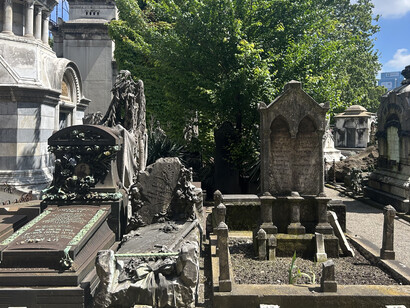
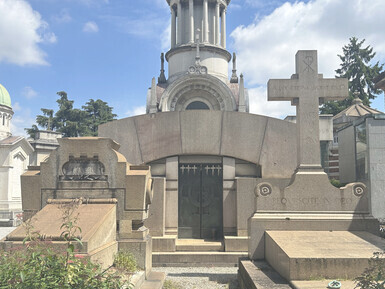
- Jewish section, this historic cemetery, nestled in Milan's Garibaldi district in Italy, serves as the resting place for notable figures such as Bruno Munari and Alessandro Manzoni
- Catholic section, Cimitero Monumentale, situated in Milan's Garibaldi district in Italy, is unique for its sections dedicated to non-Catholic burials, including Protestant, Greek Orthodox, Armenian, and Jewish
- Non-Catholic (Protestan, Greek Orthodox, Armenian) section, often described as an open-air museum, the cemetery, located in Milan's Garibaldi district in Italy, combines park-like serenity with artistic and architectural brilliance
- Catholic section, the personalized graves, featuring sculptures and architectural elements, make it a compelling tourist destination and a testament to Milan's cultural history, situated in the Garibaldi district of Italy
- Catholic section, located in Milan's Garibaldi district in Italy, it was designed by Carlo Maciachini and completed in 1887, featuring diverse architectural monuments and sculptures
- Catholic section, its layout, located in Milan's Garibaldi district in Italy, emphasizes urban planning with symmetrically arranged areas and separate entrances for different faiths


No comments:
Post a Comment