Friday, October 31, 2025

Jo Nesbø / ‘Tom Sawyer was my first murder mystery’


Jo Nesbø


The 

Books

 0f my 

life


Jo Nesbø: ‘Tom Sawyer was my first murder mystery’

This article is more than 2 years old

The Norwegian crime writer talks about his early influences, changing tastes and the age-limit for enjoying Hemingway


Jo Nesbø
Fri 22 Sep 2023 10.00 BST


My favourite book growing up
Adventures of Huckleberry Finn and Tom Sawyer. My father grew up in New York; I guess that’s why there were a lot of American books in our house. These two by Mark Twain were food for the imagination for a kid like me. The Huck book was my first road novel, Tom Sawyer my first murder mystery.

The book that changed me as a teenager
The Thief’s Journal, Jean Genet’s classic novel about life and exploitation as a gay man living on the margins in 1930s Europe, changed my view on what literature can and should deal with. At that age, I found it tough reading because the mental landscape of the main character was repellent to me. Not his sexual orientation, but because he found some kind of pleasure in being treated badly. I couldn’t grasp that. And that was probably what drew me to the novel.

The book that made me want to be a writer 
Both On the Road by Jack Kerouac and Charles Bukowski’s Ham on Rye were important. I do think writing is a result of reading, like making music is a result of listening to music. That it’s mainly a social reflex, like stories being told around a dinner table; somebody has contributed a story, now it’s your turn.

The book I could never read again
I was a big fan of Ernest Hemingway. Recently I started rereading (which I very seldom do) a novel of his, and realised it felt dated. I don’t know if it’s because Hemingway, like Raymond Chandler, has influenced so many writers that they now can come across as almost comic copies. When I mentioned my disappointment, my 25-years-younger editor said, with a world-weary sigh: “But, you know, Hemingway is a young man’s writer.”

The book I discovered later in life
Joseph Roth’s The Radetzky March. I was recently going through the books I’ve inherited from my parents. It follows three generations of a family, with the breakdown of the Austro-Hungarian monarchy as a backdrop, and it’s a gem of a novel. It has this sense of time and place that I know is impossible to construct – it has to already be there within the writer. It’s sad, it’s epic and it has a tragic gravity to it that brings a lump to my throat: the fact that you can’t go back, that the past – not the future – is the promised garden.

The author I came back to 
Well, Henrik Ibsen was mandatory reading when you went to school in Norway, and at that young age he felt old and boring. It was only later, when I was living a life where I could relate, that I started reading him. I went on to read all of his plays, every one of them, and realised what a great entertainer he is.

The book I am currently reading

The Righteous Mind by Jonathan Haidt. Haidt has a background in social anthropology and psychology and it’s a convincing argument on how morality has evolved and on how it divides us in politics and social behaviour, enlightening when it comes to understanding why some Americans vote Republican in spite of being decent, intelligent human beings. Like David Hume said, reason is the slave of emotions. We use our intellect to find confirmation that what we feel and want to be true is actually the truth. Confirmation bias may carry us from our childhood to our grave, without ever feeling we were proved wrong. That goes for “them” and for me and you, Guardian readers.


THE GUARDIAN


THE BOOKS OF MY LIFE

2021
The books of my life / Amanda Gorman / ‘I wanted my words to re-sanctify the steps of the Capitol’Mary Beard / ‘Virgil was a radical rap artist of the first century BC’

Gabriel Byrne: ‘I’ve never played Hamlet, but in many ways I am him’Stephen King: ‘I loved Lord of the Flies the way kids love Harry Potter’

Curtis Sittenfeld / ‘Sweet Valley High is not respected – but I found the books riveting’
Elif Shafak / ‘Reading Orlando was like plunging into a cold but beautifully blue sea’
Jason Reynolds / “Reading rap lyrics made me realise that poetry could be for me”
Michael Rosen / ‘My comfort read? Great Expectations’
Siri Hustvedt / ‘I responded viscerally to De Beauvoir’s The Second Sex’
Alan Garner / ‘The Chronicles of Narnia are atrociously written’
Rose Tremain / ‘My comfort reads are MasterChef cookbooks’
Oliver Jeffers / ‘Catch-22 was the first time I had a physical reaction to a book’
Penelope Lively / ‘Beatrix Potter seemed so exotic, unlike my world of palm trees’


2022
David Baddiel / The book that changed me? John Berger’s Ways of Seeing
Edmund White / ‘My earliest reading memory is a lady toad with a nasty temper’
David Mitchell / ‘If I need cheering up, Jamie Oliver’s recipes usually help’
Isabel Allende / ‘I have been displaced most of my life’

Nikesh Shula / 

Olivia Laing / 

Viet Thanh Nguyen / 

Madeline Miller /

Barbara Trapido / 

Monica Ali / 

Sebastian Barry / 

Hanif Kureishi / 

Neil Gaiman / 

Lee Child / 


PAGE 7

Meg Mason / 

Esther Freud / 

Maggie Shipstead / 

Ian Rankin / 

Julian Barnes / 

Sadie Jones / 

Tahmima Anam / 

Tess Gerritsen / 

Abdulrazah Gurnak / 

Susie Boyt / 

Sara Paretsky / 

Sebastian Faulks / 

Karen Joy Fowler / 

Eimear McBride / 

Sam Byers / 

Denise Mina / 

Adam Kay / 

Barbara Kingsolver / ‘Middlemarch is about everything, for every person, at every age’

Kit de Waal / 

Sunjeev Sahota / 

PAGE 6

Shehan Karunatilaka / 

Michael Morpurgo / 

Michelle Zauner / 

Amy Blum / 

Philip Pullman / 

2023

Alex Wheatle /

Colin Thubron / 

Audrey Maggee / 

Joseph O'Connor /

Ned Beauman / 

Kevin Jared Hosein / 

Carlo Roveli / 

Benjamin Myers / 

Charlotte Mendelson /

Warsan Shire / 

Katherine Rundel / 

Louise Kennedy / 

Colson Whitehead / 

Han Kang / 

Dreda Say Mitchell / 

PAGE 5

Jessie Burton / 

Kamila Shamsie / 

Jenny Erpenbeck / 

Gary Shteyngart

Attica Locke /

Richard Ford / ‘I don’t read for comfort. Comfort I source elsewhere’

Elly Griffiths /
Juno Dawson / 
DBC Pierre / 
Patrick DeWitt / 
Lisa Jewell / 
Ayòbámi Adébàyó /
Lynda La Plante / 
Preti Taneja / 
Chimamanda Ngozi Adichie / 

Lauren Groff / ‘Virginia Woolf’s Flush is delightfully bananas’

Paul Lynch / 

John Niven / 

PAGE 4

Natalie Haynes / ‘I couldn’t stop reading Stephen King - even at the top of the Eiffel Tower’
Richard Armitage / ‘I used to stand on the Lord of the Rings to reach the top shelf in my wardrobe’

Dolly Alderton / 

Jonathan Escoffery / 

Joanne Harris / 

Hernan Diaz / 

Irenosen Okojie / 

Bob Mortimer / 

Francis Spufford / 

2024

Mieko Kawakami / “Franz Kafka es mi lectura reconfortante”


2025
Niall Williams / ‘When I first read Chekhov, I thought: “He’s not so great”’
Graham Norton / ‘The Bell Jar changed how I felt about books’


Venom Queen / Amanda Seyfriend


AMANDA SEYFRIED

Amanda Seyfried, born on December 3, 1985, in Allentown, Pennsylvania, began her journey in the entertainment industry as a child model before transitioning to acting in the late 1990s. Her early television work in “As the World Turns” and “All My Children” honed her craft, but it was her breakout role as Karen Smith in the 2004 comedy “Mean Girls” that introduced her to global audiences. Her blend of comedic timing and natural charm captured Hollywood’s attention, propelling her into a series of acclaimed projects that showcased her ability to balance innocence with emotional depth. By the mid-2000s, she had emerged as one of the most promising young actresses of her generation, seamlessly navigating between independent films and major studio productions.

Thursday, October 30, 2025

Warhol, Pollock and other American spaces


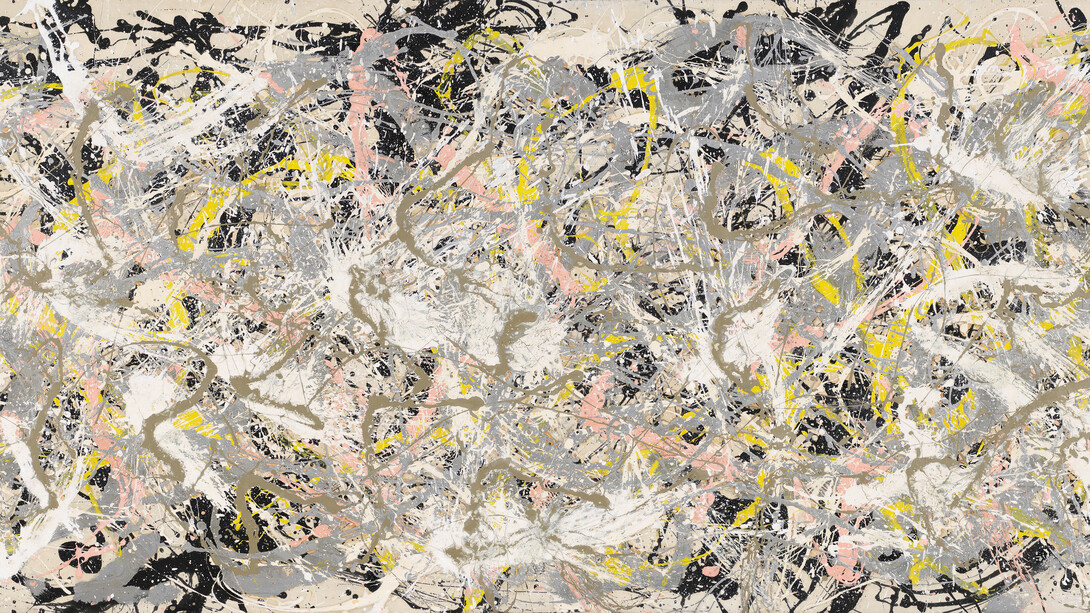
Jackson Pollock, Number 27 (detail), 1950. Courtesy of Museo Nacional Thyssen-Bornemisza
Jackson Pollock, Number 27 (detail), 1950. Courtesy of Museo Nacional Thyssen-Bornemisza 

Warhol, Pollock and other American spaces

21 Oct 2025 — 25 Jan 2026 at the Museo Thyssen-Bornemisza in Madrid, Spain

24 OCTOBER 2025

The Museo Nacional Thyssen-Bornemisza is organising an exhibition that brings together the work of Andy Warhol and Jackson Pollock, two key figures in 20th-century art who focused on issues relating to new spatial strategies. Like other artists of that generation also present in the exhibition, they were united by their interest in changes in the pictorial tradition, spatiality and, in some cases, the use of large formats.

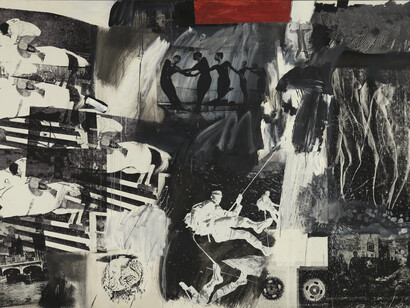
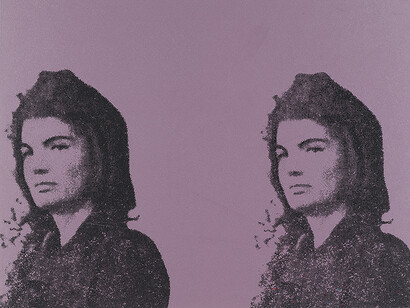
The works featured in the exhibition reveal how Jackson Pollock (1912–1956) was not always an “abstract master”, while also presenting a more complex Andy Warhol (1928–1987) than the artist of dispassionately depicted, banal themes from popular culture. Midway between the abstract and the figurative, in their own way both set out to reassess the concept of space and its use as a place of concealment; a space revisited through repetition and seriality. Pollock and Warhol disrupted the notion of background and figure and developed a project which, through its very pictorial strategies, had something of camouflage about it. Frequently present in the works of both artists are traces and vestiges that refer to certain autobiographical aspects. 

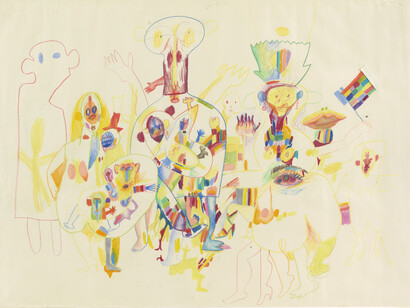
The exhibition, which has benefited from the collaboration of the Comunidad de Madrid and the Department of Culture, Tourism and Sports of the City Council of Madrid, features more than one hundred works, many of which have never previously been seen in Spain. Loaned from around thirty institutions in the United States and Europe, they include works by Warhol and Pollock as well as other artists such as Lee Krasner, Helen Frankenthaler, Marisol Escobar, Sol LeWitt and Cy Twombly. Among them, Brown and silver I by Pollock, Express by Robert Rauschenberg and Untitled (Green on maroon) by Mark Rothko are all from the Thyssen collection.


Robert Rauschenberg, Express (detail), 1963. Courtesy of Museo Nacional Thyssen-Bornemisza
Marisol, Untitled, 1960. Courtesy of Museo Nacional Thyssen-Bornemisza
Andy Warhol, Jackie II (sheet 5 in: 11 Pop Artists II), 1966. Courtesy of Museo Nacional Thyssen-Bornemisza
  1. Robert Rauschenberg, Express (detail), 1963. Courtesy of Museo Nacional Thyssen-Bornemisza 
  2. Marisol, Untitled, 1960. Courtesy of Museo Nacional Thyssen-Bornemisza 
  3. Andy Warhol, Jackie II (sheet 5 in: 11 Pop Artists II), 1966. Courtesy of Museo Nacional Thyssen-Bornemisza

MEER


Balthus in Madrid


Balthus. Courtesy of Museo Thyssen-Bornemisza

Balthus

19 Feb — 26 May 2019 at the Museo Thyssen-Bornemisza in Madrid, Spain

11 FEBRUARY 2019


In 2019 the museum presents an exhibition on the legendary artist Balthasar Klossowski de Rola (1908-2001), known as Balthus. The exhibition is jointly organised with the Fondation Beyeler in Riehen / Basel, where it will be seen from September 2018 to January 2019.

Considered one of the great masters of 20th-century art, Balthus is undoubtedly one of the most unique painters of his time. His diverse, ambiguous work, which has been equally admired and reviled, pursued a direction that ran completely counter to the rise of the avant-gardes. Balthus himself named some of his influences derived from the tradition of art history, ranging from Piero della Francesca to Caravaggio, Poussin, Géricault and Courbet. A more detailed study of his work also reveals references to more recent movements such as Neue Sachlichkeit and his employment of devices derived from 19th-century children’s book illustrations. In his divergence from modernity, which could now be described as “post-modern”, Balthus evolved a personal and unique type of avant-garde art and a figurative style that defies classification. His particular pictorial language, with its use of solid forms and strongly defined outlines, combines the procedures of the Old Masters with certain aspects of Surrealism. The resulting images involve numerous contradictions, juxtaposing tranquillity with extreme tension; reverie and mystery with reality; and eroticism with innocence.

The exhibition, curated by Raphaël Bouvier with the support of Michiko Kono, and Juan Ángel López-Manzanares, brings together paintings from every period of Balthus’s career from the 1920s onwards. It casts light on aspects such as the different types of intellectual interaction between the dimensions of space and time that exist in his paintings; the relationship between figure and object; and the essence of his enigmatic oeuvre.


Balthus. Courtesy of Museo Thyssen-Bornemisza
  1. Balthus. Courtesy of Museo Thyssen-Bornemisza
  2. Balthus. Courtesy of Museo Thyssen-Bornemisza
  3. Balthus. Courtesy of Museo Thyssen-Bornemisza

MEER


Karl Blossfeldt


Karl Blossfeldt. Courtesy of Museo Thyssen-Bornemisza

Karl Blossfeldt

6 Sep — 5 Oct 2019 at the Museo Thyssen-Bornemisza in Madrid, Spain

13 SEPTEMBER 2019

The Museo Thyssen-Bornemisza and LOEWE Perfumes present a selection of 40 photographs from the album Urformen der Kunst [Original forms of art], by the German photographer and sculptor Karl Blossfeldt (1865-1932), who photographed plants and flowers throughout his life. Published in 1928, it was the work that brought Blossfeldt to public attention and gave him entry to the art scene of the day, making him one of the most important of the New Objectivity photographers.

The high quality of the paper and printing of these fascinating photographs further enhances the beauty of their powerful images, in which lighting and composition are used to emphasise the sculptural and graphic qualities of the plants. From the outset Blossfeldt’s photographs were compared to African sculptures and provided a source of inspiration for the Bauhaus industrial designers and creators.


Karl Blossfeldt. Courtesy of Museo Thyssen-Bornemisza
  1. Karl Blossfeldt. Courtesy of Museo Thyssen-Bornemisza
  2. Karl Blossfeldt. Courtesy of Museo Thyssen-Bornemisza
  3. Karl Blossfeldt. Courtesy of Museo Thyssen-Bornemisza

MEER