Thursday, April 2, 2026

The Director to Flesh / The 25 best books of 2025

 Random House, Penguin Group The book covers of Will There Ever Be Another You; Big Kiss, Bye-Bye; What We Can Know (Credit: Random House/ Penguin Group)

Random House, Penguin Group

From a "richly atmospheric" novella to a "virtuosic" debut – this is the very best fiction of the year, as chosen by BBC journalists.


The Director to Flesh: The 25 best books of 2025

Rebecca Laurence and Lindsay Baker
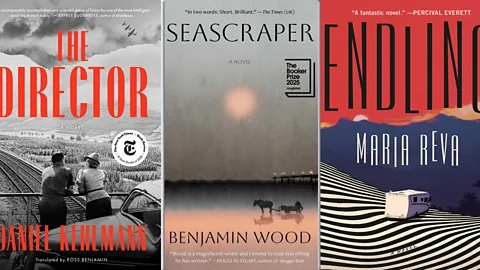

Simon and Schuster, Scribner, Knopf Doubleday Publishing Group (Credit: Simon and Schuster, Scribner, Knopf Doubleday Publishing Group)Simon and Schuster, Scribner, Knopf Doubleday Publishing Group

The Director by Daniel Kehlmann

This part-fictionalised historical novel from the bestselling German-language novelist and playwright Kehlmann explores themes of art, power and complicity through the complex life of one of the great Austrian film-makers of the Weimer era, GW Pabst. Pabst flees the Nazi regime to LA, then fails to find success amid Hollywood's Golden Age (Kehlmann imagines that he is ghosted by Greta Garbo and Louise Brooks, actresses he discovered). Upon Pabst's return to his homeland, he is hired by Goebbels to make films for the Reich's Ministry of Propaganda. "The crux of The Director is whether it's weakness or necessity that makes Pabst compromise", writes the LRB. "A book about dreams and of dreams within dreams…", writes The New York Times, "The Director itself is a marvellous performance – not only supple, horrifying and mordantly droll, but fluidly translated and absolutely convincing." (RL)

Francisco Fonseca / A Lamp in a Window


Francisco Fonseca 
A Lamp in a Window


Carolyn Bessette


Carolyn Bessette


Barbara Ehrenreich never stopped trying to change the world


Barbara Ehrenreich

Barbara Ehrenreich never stopped trying to change the world

Published: September 5, 2022 

We’ve just lost one of the world’s finest writers about inequality and class – and the business of being alive in the United States today. Barbara Ehrenreich, best known for her “classic of social justice literature”, Nickel and Dimed, died on Thursday, aged 81.

My favorite best picture Oscar winner winner / The Lost Weekend


My favorite best picture Oscar winner: The Lost Weekend

Concluding our series of Guardian writers’ all-time Academy picks, Benjamin Lee explains why this harrowing 1946 winner is still one of the most vital films about alcoholism ever made


Benjamin Lee
Fri 24 Feb 2017 

W

hen the Academy chooses to reward a film that revolves around an “issue”, it’s usually one that takes said issue, smooths out any jagged edges and then uses it to bludgeon the audience into exhausted submission. Subtlety and even a vague awareness of reality are concepts that get ignored in favor of an after-school special full of simplistic preaching (*coughs* Crash *ends cough*).

Wednesday, April 1, 2026

Dickens’s critique of reason without imagination


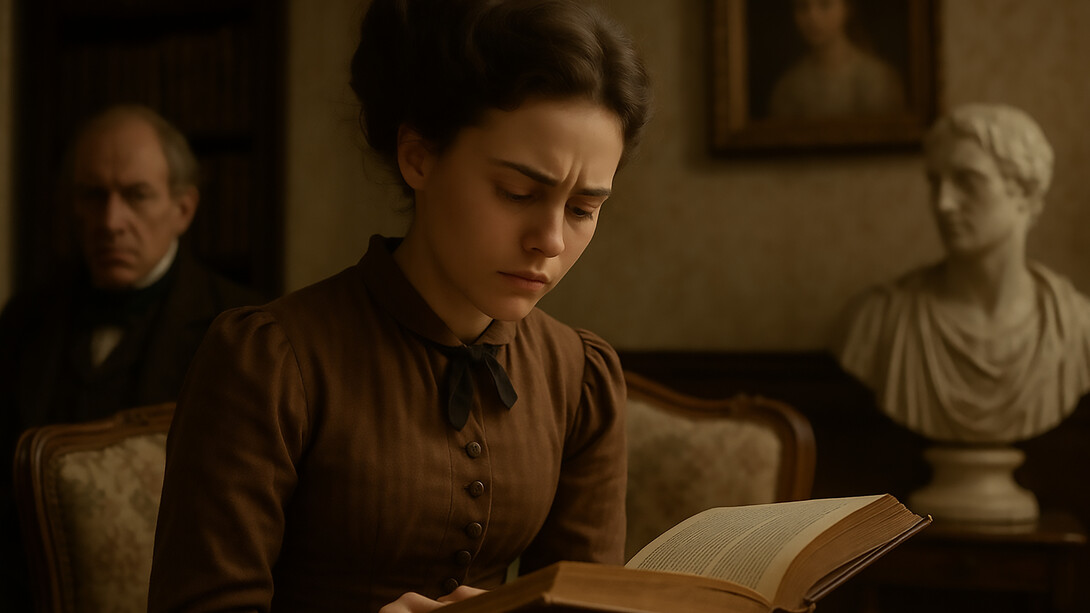
A young woman studies in a Victorian room, caught between the weight of facts and the quiet stirrings of imagination


Dickens’s critique of reason without imagination

Hard Times exposes the emotional, moral, and social costs of a world built on rigid rationality

10 FEBRUARY 2026, 


The Age of Enlightenment emphasised reason over emotion, with the unexplained relegated to the realms of superstition and ignorance. Gothic writers of the late eighteenth century and Romantic poets of the early nineteenth century sought to reintroduce a sense of wonder and awe of the natural world. In Hard Times, Dickens looks at how facts stifle and corrupt individual expression of emotion and empathy. He also exposes the delusion and hypocrisy the characters labour under regarding their own lives.

Lewis’s satire on faith and weakness


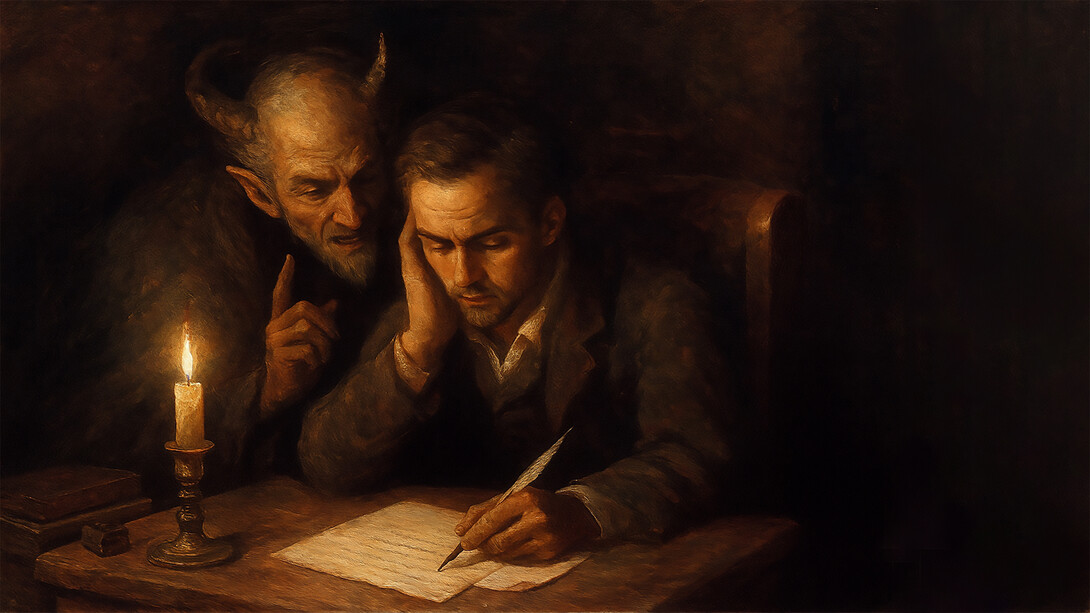
A man writes by candlelight as a shadowed figure whispers over his shoulder — a haunting reflection of temptation and moral struggle from The Screwtape Letters


Lewis’s satire on faith and weakness

A devil’s-eye view of how the soul drifts from grace

20 DECEMBER 2025, 


This book takes the form of a series of letters between two demons, Uncle Screwtape and his nephew Wormwood. The idea is to take a satirical look at the trials and tribulations of a new Christian from the devil’s point of view. How he manipulates our emotions and our circumstances to produce a negative outcome.

Percival Everett’s James and the voice of freedom


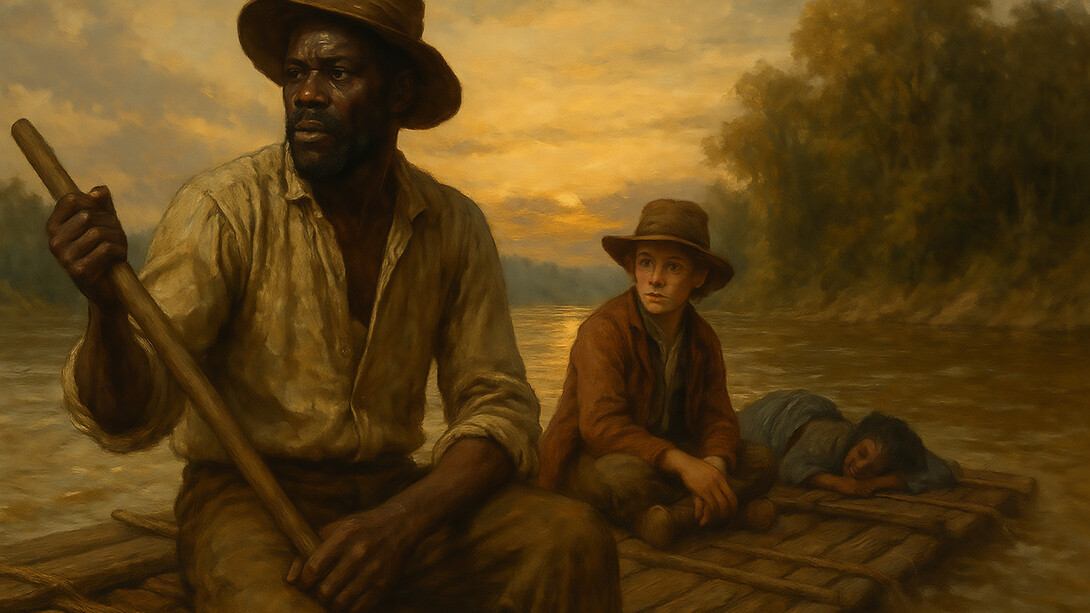
Jim and Huck drift along the Mississippi at twilight, a journey of survival, freedom, and uneasy companionship


Percival Everett’s James and the voice of freedom

Based on a retelling of Mark Twain’s Adventures of Huckleberry Finn

20 NOVEMBER 2025, 

Many of our modern novels draw from, or are influenced by, what has been written in the past. Percival Everett’s Pulitzer Prize-winning novel, James, retells Mark Twain’s Adventures of Huckleberry Finn from Jim’s point of view. This makes it less of a young boy’s adventure and more of a comment on the evils of slavery. Therefore, early in the book, Everett establishes Jim as a family man with a wife and daughter. Unlike Huck, he is rooted in the country and has responsibilities for other people.