Wednesday, December 31, 2025

The Other Name: Septology I-II by Jon Fosse


The Other Name: Septology I-II by Jon Fosse tr. Damion Searls (Fitzcarraldo, Oct. 2019; Transit, April 2020)Reviewed by Spencer Ruchti

The Other Name: Septology I-II
by Jon Fosse
tr. Damion Searls
(Fitzcarraldo, Oct. 2019; Transit, April 2020)

Reviewed by Spencer Ruchti


JON FOSSE’S THE OTHER NAME: SEPTOLOGY I-II


Not long into Part I of Jon Fosse’s Septology, the narrator, Asle, confesses to speaking with the dead. His young wife, Ales, has killed herself; this suicide becomes the mournful obsession of Fosse’s seven-part novel. “There’s no big difference or distance between life and death, between the living and the dead, even though the difference can seem insurmountable it isn’t,” Asle thinks. In the four decades following the publication of his first book, Raudt, svart, Jon Fosse has written repeatedly on suicide, melancholy, excruciating loss, the role or absence of God, and the border between this life and whatever follows. To read his enormous body of work in panorama is to see the frequent exchanges between the living and the dead, but also beautiful white visions as the curtain draws shut. “The whole of Septology is possibly just an instant, a loaded one, a moment of death. When a person dies it is said that one sees life repeated. Septology can maybe read as such a moment,” Fosse has said in an interview with his Norwegian editor Cecilie Seiness. This “instantaneous” novel of moments is also the longest Fosse ever written. One can’t help but assign it the reverence of a denouement as the author approaches the twilight of his career.

Review / Kidnapped by Robert Louis Stevenson


Kidnapped 

by Robert Louis Stevenson 

'The story was quite fast paced and the sword fighting is described very well'

St George's Book Club
Wed 17 Dec 2014 15.00 GMT


This is a classic adventure novel about a teenage boy called David Balfour set in 18th century Scotland.

Daisy Hildyard’s Emergency


Emergency

by Daisy Hildyard

(Fitzcarraldo, April 2022)


DAISY HILDYARD’S EMERGENCY


“I was raised in rural Yorkshire … I still have a deep feeling, which dates from my childhood, that you shouldn’t waste anything, especially words”—the matter-of-fact tone set by this phrase from Daisy Hildyard’s previous Fitzcarraldo-published book, The Second Body, glides, or say, steps into her latest, the novel Emergency. Words aren’t the subject here, but rather what they point at. Language is like glass, meant only for seeing through, for designating what is on the far side. The style recalls earlier modes of signifying: the tree is the tree. Simply that, without complication, complexity, or nuance. It’s an illusion, of course, that the world can be transcribed in words, but the mimetic writing here is convincing enough to persuade that this world is the world. As John Berger might have put it, each lion is Lion, each ox is Ox. Or indeed, in current terms it might be called phenomenological writing: descriptive, attentive, making an experience of engaging directly with the world available to its reader. And as with glass, the effect is of seeing more clearly than with the unframed and unfiltered point of view, than with the bare, the illiterate eye.

Tuesday, December 30, 2025

Márta Patak / Cocoa and Kalács at Lilla's House


Dankó Pista Street - Pécsi Street corner, Kaposvár, 1969 (Photo: Fortepan / Bojár Sándor)

Márta Patak: Cocoa and Kalács at Lilla's House

Next in our texts for foodies, a chance to reminisce on the sweet snack times of childhood playdates, in this excerpt, translated by Anna Bentley, from Hungarian writer Márta Patak's novel Mindig péntek (Always on a Friday).

8th December, 2022

Kim by Rudyard Kipling / A Review


Kim

by Rudyard Kipling


John Pistelli
14 July 2019

Many readers of my generation were introduced to Rudyard Kipling’s Kim (1901) by a later novel, Michael Ondaatje’s The English Patient (1992). Ondaatje’s warmly lyrical and fragmentary narrative concerns three figures—a Canadian nurse, a Canadian thief, and a Sikh sapper—gathered in a ruined Italian monastery at the end of World War II around the bed of the eponymous burned man, putatively an Englishman but really a Hungarian count who bears the literal and fatal scars of a romance doomed by political geography. This “English” patient is a devotee of Kim; he instructs his Canadian nurse how best to read the novel aloud:

Julie Myeerson / Anxiety is everywhere


Anxiety is everywhere


City dwellers feel more stress, a new study shows. But it's hiding amid the cows and cow parsley too

Thursday 23 June 2011 

N
ew research showing that the brains of city dwellers operate differently from the brains of those living in rural areas – and that this possibly explains an increase in urban mental health problems – will come as no surprise to most people. According to the study by the University of Heidelberg and McGill University, the two regions of the brain governing emotion and anxiety show signs of over-activity for city dwellers.

Monday, December 29, 2025

The big picture / Brigitte Bardot visits Pablo Picasso in Cannes, 1956


The big picture: Brigitte Bardot visits Pablo Picasso in Cannes, 1956

This article is more than 15 years old
The 21-year-old 'sex kitten' holds her own against the old predator, Picasso, during a visit to his studio at Vallauris, near Cannes, during the film festival in 1956

Peter Conrad
Sunday 8 May 2010

When the first Daguerreotype photograph was taken in the 1830s, a French artist sonorously prophesied: "From this day, painting is dead." It took Picasso to prove him wrong, by demonstrating the limits of photographic vision. The camera is restricted to surfaces; painting, if it is as aggressive and inquisitorial as Picasso's, can torment and transform the world of appearances, violently metamorphosing matter. "Reality must be torn apart," Picasso told his lover, Françoise Gilot. People, especially women, had to undergo the same painful fate.

Brigitte Bardot (1934 - 2025)


Brigitte Bardot
(1934 - 2025) 


Brigitte Bardot / Le Mépris


Brigitte Bardot
LE MÉPRIS


Brigitte Bardot was a zeitgeist-force and France’s most sensational export


Brigitte Bardot

Brigitte Bardot was a zeitgeist-force and France’s most sensational export

Bardot titillated the world for five decades, but the controversy and voyeurism surrounding her shouldn’t overshadow an intriguing film career


Peter Bradshaw
28 December 2025


Bardot … there was a time when it couldn’t be pronounced without a knowing pout on the second syllable. French headline-writers loved calling the world’s most desirable film star by her initials: “BB”, that is: bébé, a bit of weirdly infantilised tabloid pillow-talk. When Brigitte Bardot retired from the movies in the mid-70s, taking up the cause of animal rights and a ban on the import of baby seals, the French press took to calling her BB-phoque, a homophone of the French for “baby seal” with a nasty hint of an Anglo pun. But France’s love affair with Bardot was to curdle, despite her fierce patriotism and admiration for Charles de Gaulle (the feeling was reciprocated). As her animal rights campaigning morphed in the 21st century into an attack on halal meat, and then into shrill attacks on the alleged “Islamicisation” of France, her relations with the modern world curdled even more.

Saturday, December 27, 2025

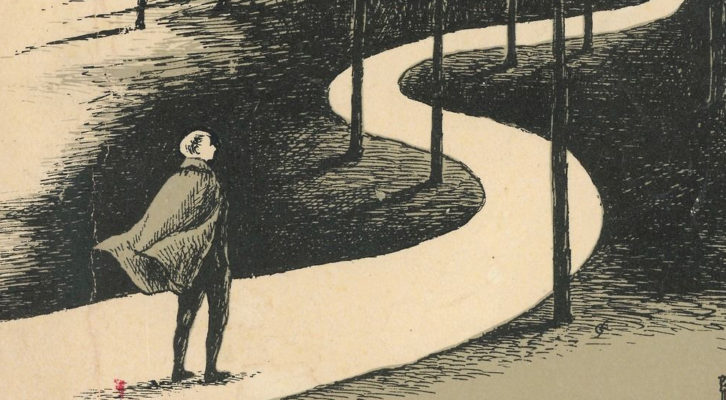
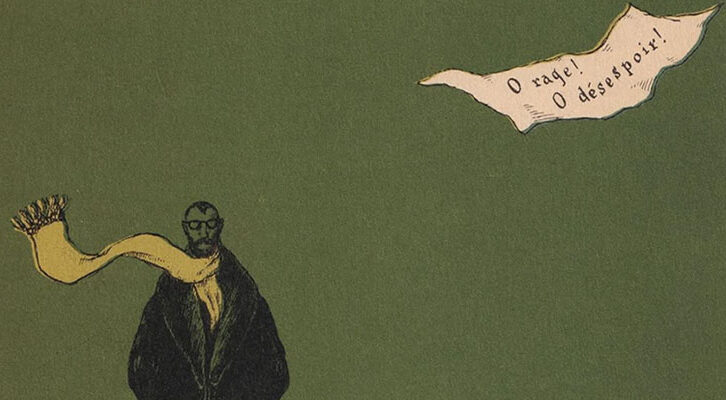
Edward Gorey's Illustrated Covers for Literary Classics


Between 1953 and 1960, before he was a household name as the master of the cutely macabre, Edward Gorey worked as a book designer and illustrator for Doubleday Anchor. During his tenure, he designed some fifty book covers (and in some cases, drew inside illustrations) for their new paperback series, which was aimed at “serious” readers and students. (He also illustrated and designed for lots of other writers’ books outside of the Doubleday gig, of course, in addition to writing and illustrating over a hundred of his own.) As collector Lance Casebeer wrote, “there is a haunting thematic consistency about the Gorey-drawn covers.

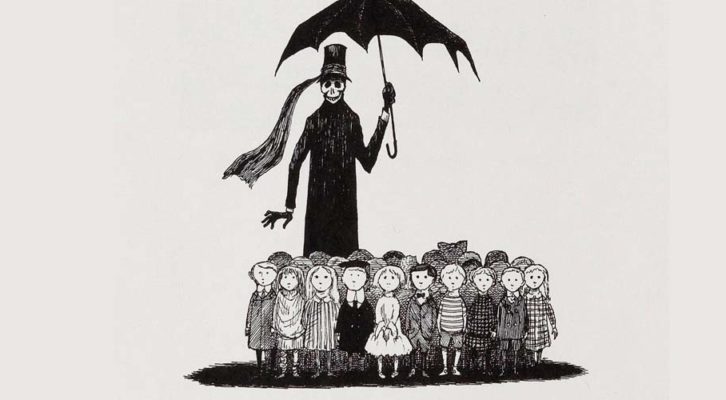
On the Dark(er) Side of the Perpetually Dark Edward Gorey


“A is for AMY who fell down the stairs. B is for BASIL assaulted by bears.” These were the first sentences I read by Edward Gorey, whose last name seemed too delightfully perfect to be real, like Lemony Snicket. I was in a bookshop in London, holding a novelty copy of The Gashlycrumb Tinies, an abecedarian in which each letter reveals the grisly and somehow perversely delightful death of an unfortunate child. Clara wastes away; Desmond, perhaps mercifully, is tossed from a sleigh; Olive, infinitely unlucky, is run through with an awl. It was like reading bedtime stories for semi-adults, and it was too glorious not to purchase. It was the kind of cute-brutal book that ironically seemed like it might cheer the right kind of wrong person up on a bad day, not unlike Tim Burton’s Melancholy Death of Oyster Boy.

Edward Gorey's "Great Simple Theory About Art" is essential reading for writers

“Many of Edward Gorey’s most fervent devotees,” Stephen Schiff wrote in a profile of the artist in The New Yorker in 1992, “think he’s (a) English and (b) dead. Actually, he has never so much as visited either place.” Alas, he has now visited at least one: Gorey—born nearly a century ago, on February 22, 1925—died in 2000, leaving behind a vast catalogue of work—the macabre, deadpan, funny and sometimes brutal illustrations and short narratives for which he has become a cult icon—and a mysterious personal legacy.

Thursday, December 25, 2025

Collected Poems of Bob Kaufman / Review


“AN UNIMAGINARY LANDSCAPE THAT EXISTS IN A REAL UNREAL WORLD”

Bob Kaufman was, it’s often said, a poet of the streets, a poet whose life and work manifested a deep knowledge of its nooks and crannies, its hustles, its dogged, imaginative techniques of survival, and its flashes of surreal poetic clarity. The street is a place of protest, but also of homelessness, of addiction, of those cast outside without access to shelter, property, labor, the legitimized forms of social life. In moments of social unrest, the street comes alive, as autonomous zones are established and the police—that permanent army of occupation—are pushed back. But the street is also where the crowd splinters into many voices, heard and unheard. Like so much of the life of the street, Kaufman’s work has fallen through the cracks. In his lifetime, Kaufman published just three full-length books: Solitudes Crowded with Loneliness (1965), Golden Sardine (1967), and The Ancient Rain: Poems 1956-1978 (1981). Kaufman lived a peripatetic existence predominantly around San Francisco’s North Beach bohemia, with a spell in New York’s Lower East Side. He died at the early age of sixty in 1986.

Mr. Beethoven by Paul Griffiths / Review


Mr. Beethoven
by Paul Griffiths
(Henningham Family Press, May 2020)

Reviewed by Jon Day


PAUL GRIFFITHS’S MR. BEETHOVEN


Historical novelists are more parasitic than most writers of fiction. They hang their stories on the scaffolding of established fact, inhabiting and exploiting gaps in the historical record. In this, writing historical fiction is a bit like performing music. Both activities depend on balancing fidelity to your sources with creative embellishment of them. Too free an interpretation and you might be accused of ignoring the facts or deviating from the score; too constrained and you’ll be writing biography rather than fiction, mechanically reproducing a piece of music rather than performing it.

Nataliya Bagatskaya / Women and cats


Nataliya Bagatskaya
WOMEN AND CATS


Wednesday, December 24, 2025

Remembering Willem de Kooning


Willem de Kooning in 1950; photograph by Rudy Burckhardt

Remembering Willem de Kooning

On April 24, 1904, artist and former resident of our neighborhood, Willem de Kooning, was born in Rotterdam, The Netherlands. He would go on to be one of the 20th century’s leading artists within the Abstract Expressionist movement, a key figure in making New York the center of the art world.

Willem de Kooning / 1994 - 1997


Willem de Kooning

Willem de Kooning  

 [1904-1997]


Willem de Kooning, one of the greatest artists of the twentieth century, died on March 19, 1997 in East Hampton, New York, where he had lived since 1963. De Kooning described art and the process of art with the following quote: "Art never seems to make me peaceful or pure. I always seem to be wrapped up in the melodrama of vulgarity". He had lived with Alzheimer's Disease during most of the past ten years of his life but finally reached the spirit of peace. At the time of his death he was 93.

Francis Bacon / Giacometti


Francis Bacon

Francis Bacon
1909-1992


Francis Bacon is one of the most powerful and unsettling figures in 20th-century art. His paintings, almost obsessively focused on the human figure, expose the body as a space of tension, violence, and vulnerability, stripping it of all idealization. Through visceral and radical painting, Bacon reformulated figurative language in an era dominated by abstraction, demonstrating that the representation of the body could still be a site of risk and truth.