 Sophie Turner at the Fox Reality Channel's Really Awards on 13 September 2009 BIOGRAPHY `SOPHIE TURNER | |
| Born | Sophie Turner 30 April 1984 Melbourne, Australia |
|---|---|
| Years active | 2001–present |
| Height | 5 ft 9 in (1.75 m) |
| Hair color | Blonde |
| Eye color | Blue |
| Measurements | 36-24-36 (US) |
| Weight | 125 lbs |
| Dress size | 2–4 |
| Website | |
http://www.supermodelsophie.com/.jpg) SOPHIA TURNERBiography
Sophie Turner is an Australian model and reality television personality who first gained notoriety as a contestant on the Australian television series Search for a Supermodel.
Sophie Turner was born in Melbourne, Australia in 1984, the youngest of four children. Turner was first scouted at the age of 14, while she was on a suburban Adelaide beach. She was asked to enter a swimsuit competition, which she won. Sophie was titled Australia’s ‘Miss Beach’ in 1997. In 2008, Turner earned a Bachelor of Laws from Flinders University of South Australia.
.jpg) .jpg) .jpg) .jpg) .jpg) .jpg) .jpg) .jpg)      | |

Monday, February 20, 2012
Beautiful Women / Sophie Turner


Friday, February 17, 2012
Wislawa Szymborska Dies at 88

Wislawa Szymborska, Nobel-Winning Polish Poet, Dies at 88
By RAYMOND H. ANDERSONThe New Yor TimesPublished: February 1, 2012

The cause was lung cancer, said David A. Goldfarb, the curator of literature and humanities at the Polish Cultural Institute in New York, a diplomatic mission of the Polish Embassy.
 |
| Wislawa Szymborska with her Nobel Prize medal in 1996 |
Ms. Szymborska (pronounced vees-WAH-vah shim-BOR-ska) had a relatively small body of work when she received the Nobel, the fifth Polish or Polish-born writer to have done so since the prize was created in 1901. Only about 200 of her poems had been published in periodicals and thin volumes over a half-century, and her lifetime total was something less than 400.
The Nobel announcement surprised Ms. Szymborska, who had lived an intensely private life. “She was kind of paralyzed by it,” said Clare Cavanagh, who, with Stanislaw Baranczak, translated much of Ms. Szymborska’s work into English.
“Her friends called it the ‘Nobel tragedy,’ ” Dr. Cavanagh, a professor of literature at Northwestern University, said in an interview on Wednesday. “It was a few years before she wrote another poem.”
Ms. Szymborska lived most of her life in modest conditions in the old university city of Krakow, working for the magazine Zycie Literackie (Literary Life). She published a thin volume of her verse every few years.
She was popular in Poland, which tends to make romantic heroes of poets, but she was little known abroad. Her poems were clear in topic and language, but her playfulness and tendency to invent words made her work hard to translate.
Much of her verse was contemplative, but she also addressed death, torture, war and, strikingly, Hitler, whose attack on Poland in 1939 started Worl War II in Europe. She depicted him as an innocent — “this little fellow in his itty-bitty robe” — being photographed on his first birthday.
Ms. Szymborska began writing in the Socialist Realist style. The first collection of what some have called her Stalinist period, “That’s What We Live For,” appeared in 1952, followed two years later by another ideological collection, “Questions Put to Myself.”
Years later she told the poet and critic Edward Hirsch: “When I was young I had a moment of believing in the Communist doctrine. I wanted to save the world through Communism. Quite soon I understood that it doesn’t work, but I’ve never pretended it didn’t happen to me.
“At the very beginning of my creative life I loved humanity. I wanted to do something good for mankind. Soon I understood that it isn’t possible to save mankind.”
By 1957, she had renounced both Communism and her early poetry. Decades later, she was active in the Solidarity movement’s struggle against Poland’s Communist government. During a period of martial law, imposed in 1981, she published poems under a pseudonym in the underground press.
She insisted that her poetry was personal rather than political. “Of course, life crosses politics,” she said in an interview with The New York Times after winning the Nobel in 1996. “But my poems are strictly not political. They are more about people and life.”
Ms. Szymborska “looks at things from an angle you would never think of looking at for yourself in a million years,” Dr. Cavanagh said on the day of the Nobel announcement. She pointed to “one stunning poem that’s a eulogy.”
“It’s about the death of someone close to her that’s done from the point of view of the person’s cat,” she said.
That poem, “Cat in an Empty Apartment,” as translated by Dr. Cavanagh and Mr. Baranczak, opens:
Die — You can’t do that to a cat.
Since what can a cat do
in an empty apartment?
Climb the walls?
Rub up against the furniture?
Nothing seems different here,
but nothing is the same.
Nothing has been moved,
but there’s more space.
And at nighttime no lamps are lit.
Footsteps on the staircase,
but they’re new ones.
The hand that puts fish on the saucer
has changed, too.
Something doesn’t start
at its usual time.
Something doesn’t happen
as it should. Someone was always, always here,
then suddenly disappeared
and stubbornly stays disappeared.
Wislawa Szymborska was born on July 2, 1923, near Poznan, in western Poland. When she was 8, her family moved to Krakow. During the Nazi occupation, she went to a clandestine school, risking German punishment, and later studied literature and sociology at the prestigious Jogiellonian University in Krakow.
Her marriage to the poet Adam Wlodek ended in divorce. Her companion, the writer Kornel Filipowicz, died in 1990. She had no children, and no immediate family members survive.
Czeslaw Milosz, the Polish exile who won the Nobel Prize in Literature in 1980, said of Ms. Szymborska’s Nobel selection: “She’s a shy and modest person, and for her it will be a terrible burden, this prize. She is very reticent in her poetry also. This is not a poetry where she reveals her personal life.”
Her work did, however, reveal sympathy for others — even the biblical figure who looked back at Sodom and turned into a pillar of salt. Ms. Szymborska speculated in the opening lines of “Lot’s Wife” on why she looked back:
They say I looked back out of curiosity,
but I could have had other reasons.
I looked back mourning my silver bowl.
Carelessly, while tying my sandal strap.
So I wouldn’t have to keep staring at the righteous nape
Of my husband Lot’s neck.
From the sudden conviction that if I dropped dead
He wouldn’t so much as hesitate.
From the disobedience of the meek.
Checking for pursuers.
Struck by the silence, hoping God had changed his mind.
Her last book to be translated, “Here,” was published in the United States last year. Reviewing it for The New York Review of Books, the poet Charles Simic noted that Ms. Szymborska “often writes as if on an assigned subject,” examining it in depth. He added: “If this sounds like poetry’s equivalent of expository writing, it is. More than any poet I can think of, Szymborska not only wants to create a poetic state in her readers, but also to tell them things they didn’t know before or never got around to thinking about.”
In her Nobel lectura, Ms. Szymborska joked about the life of poets. Great films can be made of the lives of scientists and artists, she said, but poets offer far less promising material.
“Their work is hopelessly unphotogenic,” she said. “Someone sits at a table or lies on a sofa while staring motionless at a wall or ceiling. Once in a while this person writes down seven lines, only to cross out one of them 15 minutes later, and then another hour passes, during which nothing happens. Who could stand to watch this kind of thing?”
A version of this article appeared in print on February 2, 2012, on page A25 of the New York edition with the headline: Wislawa Szymborska, 88, Nobel Poet.

My hero: Michael Ondaatje by Teju Cole
 |
| Michael Ondaatje: ‘shadowed and prismatic prose’. Photograph: Murdo Macleod |
My hero:
Michael Ondaatje by Teju Cole
Here’s a celebrated writer who can’t stop taking risks on the page
Teju Cole
Friday 17 February 2012
W
hen you are starting out, each great writer gives you specific forms of permission. Michael Ondaatje's work taught me how to be at home in fragments, and how to think about a big story in carefully curated vignettes. All his books were odd, all of them "unfinished" the way Chopin's Études are unfinished: no wasted gestures, no unnecessary notes.
In Coming Through Slaughter, I encountered the use of photographs in a text in a non-straightforwardly illustrative way, long before WG Sebald did the same thing. Running in the Family was an exhilarating confusion of genres that I read and reread, and loved each time, and still couldn't decode. The English Patient was like a fine film by Chris Marker (quite different from the fine film Anthony Minghella made of the same book). And the latest, The Cat's Table, is fleet and gently magical, a book full of love.
For purposes of marketing, writers are designated as poets, novelists, or something else. But writing is about matchmaking, an attempt to marry sensations with apt words. Ondaatje makes language translucent – the exact word, the exact placement of a comma – and the reader has the uncanny feeling of encountering ideas directly. His work is about the things I care most about: memory, threshholds, solitude, work (usually the work of hands), dangerous loves, half-remembered songs and scars of all kinds. It is a particular constellation of thoughts and experiences, so particular to me, I sometimes feel, that I'm unsure if I'm reading or if I'm the one being read.
The kind of hushed attention that Ondaatje brings to his work isn't to everyone's taste. His lyricism leaves some sceptical. The shadowed and prismatic prose regularly runs into unsympathetic critics. But that is precisely what I value about it. Here's a celebrated writer, celebrated and loved by many, who can't stop taking risks on the page, who can't stop making one-of-a-kind books. To read him is to understand that he's very good at being free. No noisy certainties here. His ambiguities are quiet and precise. I want to be like that when I grow up.
• Teju Cole's Open City has been nominated for the National Book Critics Circle award.
THE GUARDIAN

018 My hero / Francisco Goya by Diana Athill
019 My hero / Max Stafford-Clark by Sebastian Barry
020 My hero / Arthur Holmes by Richard Fortey
2009
001 My hero / Oscar Wilde by Michael Holroyd
002 My hero / Harley Granville-Barker by Richard Eyre
003 My hero / Edward Goldsmith by Zac Goldsmith
004 My hero / Fridtjof Nansen by Sara Wheeler
005 My hero / Mother Mercedes Lawler IBVM by Antonia Fraser
007 My hero / Ernest Shepard by Richard Holmes
008 My hero / JG Ballard by Will Self
009 My hero / Alan Ross by William Boyd
010 My hero / Ben the labrador by John Banville
011 My hero / Vicent van Gogh by Margaret Drabble
012 My hero / Franz Marek by Eric Hobsbawm
2010
017 My hero / Jack Yeats by Colm Tóibín
018 My hero / Francisco Goya by Diana Athill
019 My hero / Max Stafford-Clark by Sebastian Barry
020 My hero / Arthur Holmes by Richard Fortey
021 My hero / Patrick Marber by Craig Rainer
022 My hero / John Keats by Helen Dunmore
023 My hero / Edith Wharton by Lionel Shriver
024 My hero / Elizabeth Barrett Browing by Sara Paretsky
025 My hero / Nelson Mandela by Gordon Brown
026 My hero / Billy Wilder by David Nicholls
027 My hero / Samuel Beckett by Nick Clegg
028 My hero / Margaret Atwood by Caroline Lucas
029 My hero / Colette by Helen Simpson
030 My hero / Cyd Charisse by Tony Parsons
031 My hero / Nicolai Medtner by Philip Pullman
032 My hero / Jean Genet by Ahdaf Soueif
033 My hero / Jeri Johnson by Kate Moss
034 My hero / John Maynard Keynes by Joan Bakewell
035 My hero / Patti Smith by Joseph O'Connor
022 My hero / John Keats by Helen Dunmore
023 My hero / Edith Wharton by Lionel Shriver
024 My hero / Elizabeth Barrett Browing by Sara Paretsky
025 My hero / Nelson Mandela by Gordon Brown
026 My hero / Billy Wilder by David Nicholls
027 My hero / Samuel Beckett by Nick Clegg
028 My hero / Margaret Atwood by Caroline Lucas
029 My hero / Colette by Helen Simpson
030 My hero / Cyd Charisse by Tony Parsons
031 My hero / Nicolai Medtner by Philip Pullman
032 My hero / Jean Genet by Ahdaf Soueif
033 My hero / Jeri Johnson by Kate Moss
034 My hero / John Maynard Keynes by Joan Bakewell
035 My hero / Patti Smith by Joseph O'Connor
036 My hero / Robert Lowell by Jonathan Raban
037 My hero / Beryl Bainbridge by Michael Holroyd
038 My hero / Charles Schulz by Jenny Colgan
039 My hero / Oliver Knussen by Adam Foulds
040 My hero / Annie Proulx by Alan Warner
041 My hero / David Lynch by Paul Murray
042 My hero / Edwin Morgan by Robert Crawford
043 My hero / Anne Lister by Emma Donoghue
044 My hero / Jane Helen Harrinson by Mary Beard
045 My hero / Edmund Burke by David Marquand
046 My hero / Shelagh Deleaney by Jeanette Winterson
047 My hero / Christopher Marlowe by Val McDermid
048 My hero / Gwen John by Anne Enright
049 My hero / Michael Mayne by Susan Hill
050 My hero / Stanley Spencer by Howard Jacobson
051 My hero / William Beveridge by Will Hutton
052 My hero / Jean McConville by Amanda Foreman
053 My hero / Alexander Pushkin by Elaine Feinstein
058 My hero / Cy Twombly by Edmund de Waal
2011
079 My hero / Gene Wolfe by Neil Gaiman
087 My hero / Alberto Moravia by John Burnside
096 My hero / Isaac Babel by AD Miller
097 Lucian Freud by Esi Edugyan
037 My hero / Beryl Bainbridge by Michael Holroyd
038 My hero / Charles Schulz by Jenny Colgan
039 My hero / Oliver Knussen by Adam Foulds
040 My hero / Annie Proulx by Alan Warner
041 My hero / David Lynch by Paul Murray
042 My hero / Edwin Morgan by Robert Crawford
043 My hero / Anne Lister by Emma Donoghue
044 My hero / Jane Helen Harrinson by Mary Beard
045 My hero / Edmund Burke by David Marquand
046 My hero / Shelagh Deleaney by Jeanette Winterson
047 My hero / Christopher Marlowe by Val McDermid
048 My hero / Gwen John by Anne Enright
049 My hero / Michael Mayne by Susan Hill
050 My hero / Stanley Spencer by Howard Jacobson
051 My hero / William Beveridge by Will Hutton
052 My hero / Jean McConville by Amanda Foreman
053 My hero / Alexander Pushkin by Elaine Feinstein
058 My hero / Cy Twombly by Edmund de Waal
2011
079 My hero / Gene Wolfe by Neil Gaiman
087 My hero / Alberto Moravia by John Burnside
096 My hero / Isaac Babel by AD Miller
097 Lucian Freud by Esi Edugyan
100 Thomas Tranströmer by Robin Robertson
102 My hero / David Hockney by Susan Hill
2012
102 My hero / David Hockney by Susan Hill
2012
134 My hero / Homer by Madeline Miller
146 My hero / Roald Dahl by Michael Rosen
156 My hero / Barack Obama by Lorrie Moore
146 My hero / Roald Dahl by Michael Rosen
156 My hero / Barack Obama by Lorrie Moore
174 My hero / Alice Munro by Nell Freudenberger
176 My hero / Mae West by Kathy Lette
181 My hero / Lydia Davis by Ali Smith
184 My hero / Louise Bourgeois by Tracey Emin
185 My hero / Albert Camus by David Constantine
176 My hero / Mae West by Kathy Lette
181 My hero / Lydia Davis by Ali Smith
184 My hero / Louise Bourgeois by Tracey Emin
185 My hero / Albert Camus by David Constantine
190 My hero / Iris Murdoch by Charlotte Mendelson
194 My hero / René Descartes by James Kelman
199 My hero / Albert Camus by Geoff Dyer
2015
194 My hero / René Descartes by James Kelman
199 My hero / Albert Camus by Geoff Dyer
2015
2016
279 My hero / Truman Capote's In Cold Blood at 50
280 My hero / George Weindelfel by Antonia Fraser
281 My hero / Dmitri Shostakovich by Julian Barnes
282 My hero / Charlotte Brontë by Tracy Chevalier
283 My hero / Margaret Foster by Valerie Grove
284 My hero / David Cesarini by David Herman
285 My hero / Umberto Eco by Jonathan Coe
286 My hero / Louise Rennison by Philip Ardagh 280 My hero / George Weindelfel by Antonia Fraser
281 My hero / Dmitri Shostakovich by Julian Barnes
282 My hero / Charlotte Brontë by Tracy Chevalier
283 My hero / Margaret Foster by Valerie Grove
284 My hero / David Cesarini by David Herman
285 My hero / Umberto Eco by Jonathan Coe

Wednesday, February 15, 2012
Philip Routh / The Rise and Fall of Jerzy Kosinski

THE RISE AND FALL OF JERZY KOSINSKI
by PHILLIP ROUTH
_______________________
THE PINNACLE
Fifty years ago Jerzy Kosinski stepped off a plane at Idlewild Airport. The 24-year-old from Poland arrived in New York with little money and few contacts – two of his early jobs were parking lot attendant and movie theatre projectionist – but he swiftly rose to a pinnacle. One from which he would precipitously fall.
Fall indeed. Many today would ask: Who is Jerzy Kosinski?
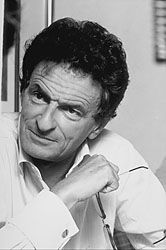 Foremost, he was a writer.
His first novel, The Painted Bird, published in 1965 (eight years after Kosinski's arrival), was heralded as a classic by the likes of Elie Wiesel and Arthur Miller. Widely translated, it received France's Prix du Meilleur Livre Etranger.
Steps, his second novel, won the National Book Award in 1969.
Being There (1971) was made into a film starring Peter Sellers. Kosinski's screenplay was cited as best of the year by The Writers' Guild of America and The British Academy.
His next five novels were best sellers.
He served two terms as president of P.E.N., the international organization of writers and editors.
There was an award from the American Academy of Arts and Letters and teaching stints at Princeton and Yale, but Kosinski's renown extended beyond the written word.
He was a 12-time guest on Johnny Carson's "Tonight Show."
He played a small but significant role in the movie Reds, directed by his friend Warren Beatty (he got billing over Jack Nicholson).
He would have been at the Beverly Hills home of another Hollywood friend, Roman Polanski, on the night that Polanski's wife Sharon Tate and four others were murdered by members of Charles Manson's "Helter Skelter" family; but, on his flight from Paris to Los Angeles, his luggage was unloaded by mistake in New York, which delayed him by a day.
He posed half naked for the cover of The New York Times Magazine.
Away from the public spotlight, at dinner and cocktail parties held in New York penthouses, Kosinski was on a first name basis with the famous – Henry Kissinger, fashion designer Oscar de la Renta, theatre critic John Simon, Senator Jacob Javits – and also with those anonymous bankers and industrialists whose decisions drive the world's economy. He was often the center of attention, for he had the gift of beguiling.
His appearance was striking. His face was framed by a dense mass of tightly-curled black hair. His eyes, under wizard-like brows, were large, black and bright. His nose had the hook of a predatory bird's beak. His mouth, unusually long and thin, seems, in photographs, to be clamped shut like an oyster shell.
But that mouth opened, and out came exotic stories told in an exotic accent. Accounts of his adventures in the cryptic world of communist Poland and the Soviet Union, chilling tales of his childhood in Nazi-dominated Eastern Europe, stories about his visits to sex clubs that catered to every desire.
Kosinski was a kind of emissary, one dressed in suit and tie, bringing dispatches from life's underbelly. Yet he did it with a raconteur's wit, and he always retained a sense of mystery. Did he participate in the sexual circus he described or was he just an observer? In all his stories, what was truth, what was made up?
Despite his free-wheeling lifestyle, Jerzy Kosinski had a wife. She did not accompany him on his night time prowls (other women did), but it was entirely due to her that he was in a room entertaining the affluent and powerful.
Before the marriage he had been an academic studying social psychology and had written two books of anti-communist essays under the pseudonym of Joseph Novak. Mary Hayward Weir, the widow of an industrialist, admired his writing, which led to their first meeting. She employed the young man to catalogue the books in her library.
When they married Jerzy was 29, Mary 47.
Kosinski was suddenly part of a world that included a Park Avenue duplex, homes and vacation retreats in Southampton, London, Paris, Florence. There were servants, a private jet, a boat with a crew of seventeen. And, of course, those parties.
The marriage ended after four years (two years later Mary died of brain cancer). Though his life of opulence was over, he had published The Painted Bird, and thereafter his writing provided him with a substantial income. He traveled extensively, skied, played polo.
Shortly after Mary Weir's death, Kosinski began a relationship with Katherina (Kiki) von Fraunhofer, a descendent of Bavarian aristocracy. After 20 years together, they married; four years later, in 1991, Jerzy Kosinski committed suicide. He was 57.
THE FALL
Eight years before he got into a bathtub and put a plastic bag over his head, the writing career of Jerzy Kosinski had been fatally damaged. The first blow came in the form of a Village Voice articled entitled "Jerzy Kosinski's Tainted Words."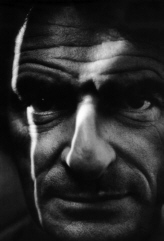
Three major accusations were made.
One was that Kosinski didn't deserve credit as the author of his books. Someone came forward claiming that he had written The Painted Bird; others said that Kosinski wrote it in Polish and that the translator had not been acknowledged. As for the seven episodic novels that followed, it was alleged that Kosinski provided the ideas but editors did the actual writing; the books were, in effect, ghostwritten.
Another accusation was plagiarism -- that Kosinski filched the concept and structure of Being There from a 1932 Polish novel entitled The Career of Nikodem Dyzma by Tadeusz Dolega Mostowicz.
The third accusation was the most damning. Kosinski had always insisted – at parties, in interviews, in writing – that he was the boy in The Painted Bird (which, he said, was not strictly a novel but was "auto-fiction"). This nameless boy, who has black hair and black eyes and is thus suspected of being a Jew or a Gypsy, is six when World War II breaks out. He wanders from village to village. In the first printing the locale is central Poland, but in every subsequent edition it is Eastern Europe. For four years he is witness to and victim of horrific cruelty and barbarism – committed not by the Nazis but by peasant villagers, who are superstitious, ignorant and brutal. After being thrown into a pit of excrement, in which he nearly suffocates, the boy loses the power of speech. At the end of the novel he regains it.
Poles who read the book were highly indignant about how they were depicted (for 23 years the novel was banned in Poland). Then accusations from Polish researchers began to emerge. Kosinski's story was a lie. He had not suffered atrocities at the hands of Polish peasants. Instead, he and his family had lived through the years of Nazi occupation not only in safety, but in comfort. And their protectors? – Poles.
Documents, personal accounts and even photographs were produced. In the Polish version, the Jewish Lewinkopf family, to escape the Nazis, moved from Lodz (where the Lodz ghetto and the nearby Chelmno Extermination Camp would claim hundreds of thousands of Jewish lives) and changed their name to Kosinski, a common Polish one. They lived in the homes of Poles and their true identity was concealed by Poles. They carried on their lives as Catholics. Jerzy was baptized and received Holy Communion; he served as an altar boy. The Lewinkopf/Kosinski family was in fearful hiding, but not in a potato cellar or barn. They even employed a maid.
The Poles branded Jerzy Kosinski a Holocaust profiteer because the novel, which drew critical comparison with The Diary of Anne Frank, was immediately granted the status of a chronicle of the Holocaust.
But Anne Frank was in that attic. If you take away the authenticity of The Painted Bird, what is left?
TRUTH
 Truth can be elusive. The information about Kosinski's rise and his years of success should be fairly accurate, since it is a matter of public record or comes, undisputed, from multiple sources. But the accusations that precipitated his fall present problems. I encountered so many contradictory and questionable "facts" that everything I read became suspect. I began to believe nothing.
Kosinski – the man who, according to both friends and foes, liked to operate from behind smoke and mirrors – was no help in clearing up matters. One example: When he writes about his relationship with Mary Weir, what emerges is a picture of a devoted couple separated only by her tragic death. Why does he omit the fact that they divorced? Could it be that he did not want his marriage to a wealthy socialite 18 years his senior to be perceived as a career move? Reading Kosinski on his personal life, I constantly sensed I was being steered in a direction that suited his purposes.
I consulted two highly-respected texts. Contemporary Authors, published by Gale Research, relates the story of how Kosinski, as a boy, lived through the experiences depicted in The Painted Bird, while American Writers (edited by Jay Parini) bluntly states that Kosinski lied about his wartime experiences; he was safe with his parents. Two teams of "experts," working with the same information, came to opposing conclusions.
At this point I decided to take a different approach in this essay – a personal one. Though my emotions will come into play, they will be in response to Kosinski's work, not to the man. I'll rely on simple logic, and for my texts I'll use the novels he wrote (or didn’t write).
The easiest accusation to tackle is the one about plagiarism. I believe that a Polish novel entitled The Career of Nikodem Dyzma exists, but I find no indication that it was translated into English. So I cannot compare it to Being There. Still, how could a novel written in Poland in 1932 correspond closely to the adventures of Chauncey Gardiner (a.k.a. Chance the Gardener) in New York in the 1960s? Television had not been invented in 1932; Chance is a product of television. He moves into the lofty realms of corporate wealth. Being There remains strikingly relevant to the media-driven America of 2007. Kosinski may have borrowed the premise of the idiot whose simpleminded utterances are interpreted as profundities, but he had to considerably shape this premise to fit his purposes.
Did Kosinski write his novels? I came across no solid, unassailable proof that he didn't: only people making those claims and others refuting them (some being editors stating that they did nothing more that normal editorial work on his books). We do have Kosinski's admission that he was not only very receptive to editorial advice, but that he actively solicited help. He would send copies of a novel-in-progress to friends, asking them to mark places that "didn't sound right" (he lacked confidence in his command of the English idiom). He was a compulsive reviser. In his 1972 Paris Review interview there is a facsimile of a galley proof page of Passion Play with Kosinski's handwritten changes. A note states that, between the first and third set of galley proofs, he shortened the novel by one third, cutting over 100 pages. This can be seen as a sign of insecurity. But insecurity is no fault – not if it motivates the writer to work hard to get it right.
I find Kosinski's novels to be stylistically similar. The prose is detached, flat, terse, and it has an emotional remoteness that is unique. The voice of the novels comes across as that of one person.
Next we move to the thorniest accusation. Even though documents, personal testimonials and even photographs have been produced by Polish researchers which "prove" that Jerzy Kosinski spent his boyhood in safety, I had my doubts. Documents can be forged, personal accounts can be fabricated, old photographs of a black-haired boy do not constitute evidence. Could resentment about how Kosinski depicted the Polish peasant have led to a campaign to discredit his book?
On the other hand, those who see The Painted Bird as a realistic portrayal (the words "brutal truth" are often used in reviews) may be predisposed to accept as true that which isn't. We expect monsters when we think about Europe in the throes of World War II, and Kosinski provides them in abundance. That these monsters are not jack-booted Nazis would seem to undermine the Holocaust connection. The explanation given by his supporters is that Kosinski's broad theme was the victimization of the powerless; if the evildoers in this firsthand account were peasants in Poland, so be it. Kosinski's comments on the novel's title corroborate these arguments. He states that he witnessed, as a child, a favorite entertainment of villagers. They would trap a bird, paint its feathers vivid colours, and then release it. When the painted bird returned to its flock the other birds attacked and killed it.
The first time I read The Painted Bird, I was unaware of these complexities. I believed that the book was a fictionalized account of events which the author had actually experienced. But as I moved from one gruesome scene to another I lost that belief. A gut feeling grew, and a strong one. These things never happened.
In chapter four a miller gouges a plowboy's eyes out with a spoon. In chapter five a mob of women attack a character named Stupid Ludmila; one of them pushes a bottle filled with excrement up her vagina and kicks it so that it breaks; then they beat her to death. In chapter six a carpenter is devoured by rats.
Any one of these horrors might be accepted as the truth, but the stringing together of one after another (and many more follow) is highly suspect. I came to believe that I was reading the fantasies of a sick mind.
All this is done artfully. Kosinski establishes a pervasive sense of dread; he builds up to each event with deliberation; he describes it with imagery that penetrates deep into the reader's consciousness. I am not questioning the power of the writing. I am questioning its morality. Detractors have called the novel pornographic, contending that it excites a form of lust. Some act out that lust, in basements with bloodstained concrete floors. Marauding armies seem to be infected with it. Leaders of countries have conducted reigns of terror based on it. It’s a deplorable but undeniable part of the history of man. And, as a confirmation of its existence in the here and now, there are writers and filmmakers who make millions by providing grisly fare to a public that wants to vicariously enjoy it. Kosinski recognized that his novel had this appeal. In an interview conducted seven years after the novel was published, he talks of readers who "pursue the unusual, masochists probably, who 'want' sensations. They will all read The Painted Bird, I hope."
But, as befits the man, Kosinski's literary ambitions were extravagant. If The Painted Bird was to be considered a serious work of art, he knew that its sensationalistic aspects must be overshadowed. What redeeming element could raise it above its parade of repellent scenes? How could he get a reputable publisher to consider the novel? The solution was something an expert dissembler like Kosinski was well-equipped to carry off. What greater significance, what greater validation could he bestow upon the novel than to claim it to be the truth?
At parties held in Mary Weir's penthouse, Kosinski told stories of his childhood during the war. Since these parties were well-represented by the artistic set, people in publishing were present. It is easy to imagine Kosinski taking a senior editor aside -- suddenly serious, his black eyes intense – and confiding that the stories weren't fabrications, that they had actually happened to him. And more, much worse than anything he had spoken of. But he had written about these things. It was something he was compelled to do, to tell it all.
Executives at Houghton Mifflin promoted the book as a true account of what the author endured, and it was widely accepted as such by critics, most of whom gave it extravagantly glowing reviews. With his first novel, Kosinski had reached a pinnacle.
Stripped of its authenticity, The Painted Bird is still a Holocaust novel. It is not about the acts of peasants but about the damaged psyche of Jerzy Kosinski. I believe that as a boy he hid in comfort, but he was still hiding from monsters. Hiding from the trains that took Jews to extermination camps, where they were herded into ovens. Of these things he surely knew, and they haunted his thoughts.
The cover of my Bantam edition of The Painted Bird shows a detail from the Hell panel of Hieronymus Bosch's "The Last Judgment." The painting is crowded with grotesque tortures that fascinate and repel. But was Bosch ever in hell? Did he witness what he depicted? We are seeing the same type of sickness that afflicted Kosinski, though Bosch's was religiously motivated. There is no indication that Kosinski had any religious beliefs. He may have worshiped power. It would have been one of the childhood lessons he absorbed into his blood and bones, along with lessons about the need to lie, the need to hide. But power was most important. It is the prevailing theme of his work. Steps, his second novel, is composed of brief, disconnected episodes that portray variations on the relationship between victim and victimizer. Brutality is present, though not nearly to the intensity as in The Painted Bird. In Steps the means of subjugation are mainly psychological.
The Painted Bird can be seen as an exercise in power. It is an attack on the reader's sensibilities. It is also an act of seduction, for Kosinski entices the reader into complicity with his dark inner world. As the miller twists the spoon in the plowboy's eyes, we are made both victim and victimizer.
ETERNITY
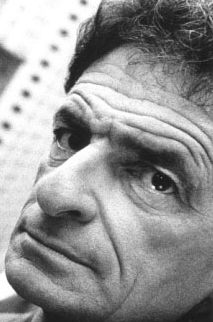 The 1982 Village Voice article and the swirl of controversy that followed it marked the end of the literary career of Jerzy Kosinski. The string of novels that he was producing every two or three years came to a halt. One more book, The Hermit of 69th Street, was published six years after the article appeared. It was long (over 500 pages) and was about an author besieged by false accusations. It quickly sank into obscurity.
Whatever Kosinski felt inwardly, he did not live the life of a hermit. He devoted much time and energy to social and humanitarian causes. He worked for the creation of the Jewish Presence Foundation, aimed at "empowering" Jews. He also was involved with the establishment of AmerBank, the first Western bank chartered in post-communist Poland.
He still had money; he still traveled; he still had friends. It is fitting that Kosinski’s last night was spent at a crowded party in an Upper East Side townhouse. Fitting because that's where his life of fame and fortune began.
The party was given by the author Gay Talese. According to The New York Times, Talese detected no signs of depression. "Last night, he was moving in and out of the crowd as I've seen him on so many occasions."
Kiki told police that she had last seen her husband at 9 p.m., before he left for the party. The next morning she found him in his bathroom (they had separate bedrooms and bathrooms). He was naked in a tub half-filled with water, a plastic shopping bag twisted around his head. She said that he had been depressed about a heart condition. He had left a note in his office. In it were these words: "I am going to put myself to sleep now for a bit longer than usual. Call the time Eternity."
In researching his death, I again came across conflicting reports: the seriousness of his heart condition is definitely in doubt; some accounts of his suicide include barbiturates washed down with alcohol.
In the end, I don't understand Jerzy Kosinski. At some level, he must have judged his life as successful. Using his talent, wits, boldness and determination, he went far, if you consider the boy growing up under the most menacing of shadows. Was he happy? There is so much darkness in his novels, I wonder how much brightness there was in his life (inside him, in the place he kept hidden). I am left with a sense of pity, which I'm sure he would not want me to feel. He would prefer respect. And I can grant him that.
In the last moments of his life he again displayed an indomitable will. For Jerzy Kosinski, old age, with its frailties and loss of independence, was something he chose not to deal with. He 'chose.' He acted. He would not be a victim -- even of Time.

Subscribe to:
Posts (Atom)