Showing posts with label Anne Rice. Show all posts

Tuesday, December 14, 2021

Interview with the Vampire by Anne Rice / Excerpt


Interview with the Vampire
by Anne Rice
Excerpt

"I see--" said the vampire thoughtfully, and slowly he walked across the room towards the window. For a long time he stood there against the dim light from Divisadero Street and the passing beams of traffic. The boy could see the furnishings of the room more clearly now, the round oak table, the chairs. A wash basin hung on one wall with a mirror. He set his briefcase on the table and waited. 

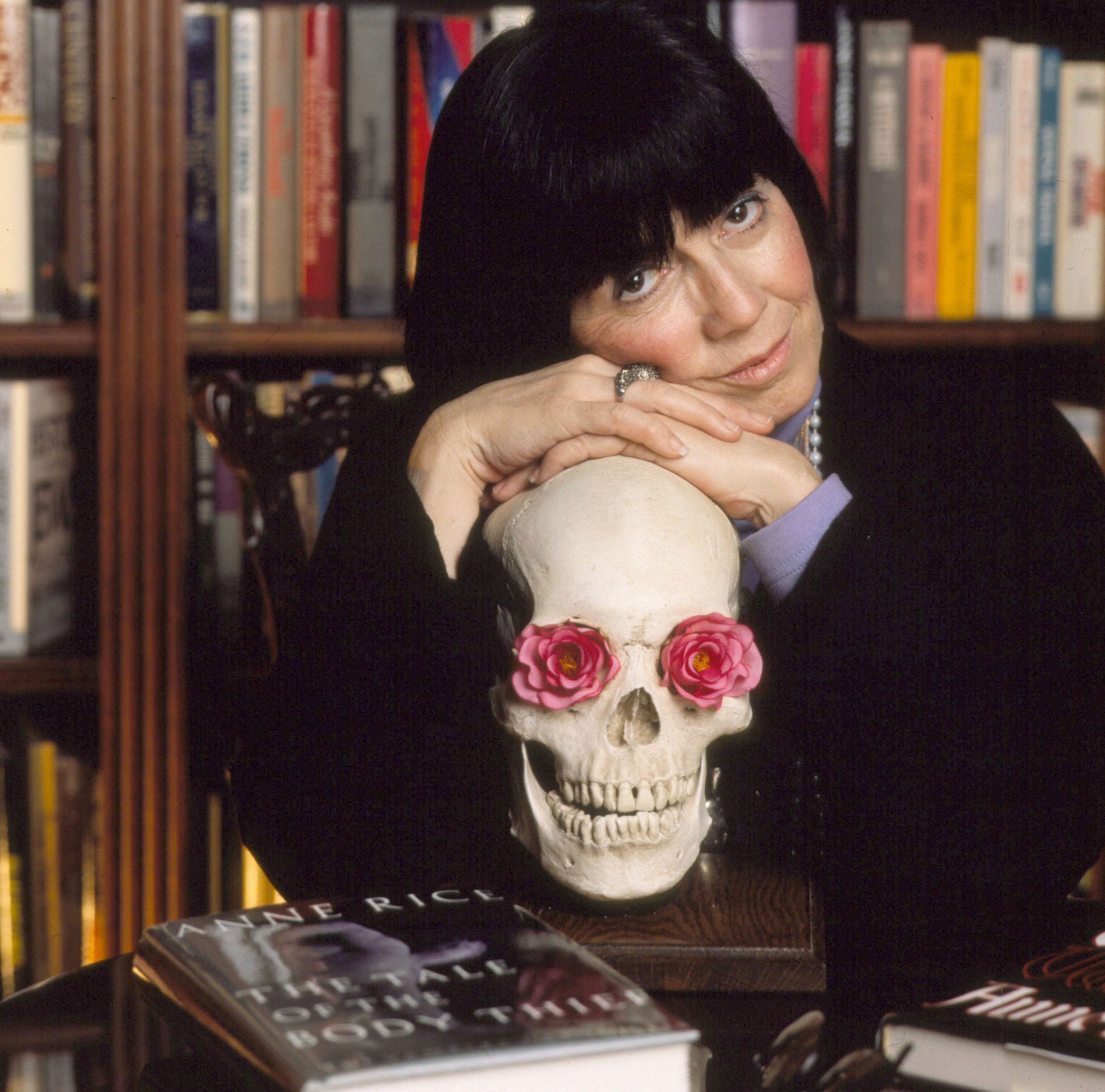
Anne Rice, author of Interview With the Vampire, dies aged 80


Anne Rice wrote more than 30 books including the Vampire Chronicles, the Sleeping Beauty series and novels about angels and the life of Christ.


Anne Rice, author of Interview With the Vampire, dies aged 80

Horror writers pay tribute after bestselling gothic novelist dies of complications from stroke

Anne Rice wrote more than 30 books including the Vampire Chronicles, the Sleeping Beauty series and novels about angels and the life of Christ. 


Alison Flood
Sun 12 Dec 2021 13.27


Anne Rice, the bestselling author of Interview With the Vampire, has died at the age of 80.

The gothic novelist’s son, Christopher Rice, said in a statement on Sunday morning that Rice had “passed away due to complications resulting from a stroke”, adding: “The immensity of our family’s grief cannot be overstated.”

Anne Rice Talks Inspiration, Atlantis, and, Yes, Vampires


Anne Rice, author of the acclaimed <em>The Vampire Chronicles</em>
Anne Rice, author of the acclaimed The Vampire Chronicles ROB KIM/GETTY IMAGES


Anne Rice Talks Inspiration, Atlantis, and, Yes, Vampires


An interview with the famed author ahead of the release of her upcoming novel “Prince Lestat and the Realms of Atlantis.”

BY MARIANA ZAPATA
NOVEMBER 18, 2016

BEFORE THE OFTEN-CHEESY VAMPIRES OF modern teenage literature, there were the beautifully dark and complicated vampires of Anne Rice’s novels. These vampires not only reflect a rich and complex inner life that is in constant flux, but also serve as a stand-in for the human condition. Long after we’ve forgotten about Twilight, it’s likely Prince Lestat and his world will continue to populate our imagination.

Women's love affair with the vampire


Helen Chandler and Bela Lugosi as Mina Harker
and Count Dracula in Dracula by Ted Browning, 1931.


Women's love affair with the vampire – archive, 1993

2 January 1993 The vampire, continually being re-interpreted and renewed, can be incorporated into almost any sexual fantasy


Steven D Wright
Thu 2 Jan 2020 05.30 GMT

Francis Ford Coppola has underlined the peculiar timeliness of the Dracula myth in the Aids era, but a newfound interest in vampirism was already well-established – especially among women. Why? “Well, quite a lot of women like horror, you know,” explains horror aficionado, Anne Billson, film critic and now author of Suckers, a vampire novel. “But,” she admits, “it is the romantic image of the vampire, as seen in the novels of Anne Rice, that is really responsible for lots of other women being attracted to the vampire.”


Anne Rice, a gothic novelist from New Orleans, or “Queen of the Fanged” as one horror magazine titled her, is easily the most important figure in the modern mythology of the vampire. Her first novel, Interview With The Vampire, a classic of the genre, re-invents the legend and puts the vampire’s side of the story. Louis, a 200-year-old vampire from New Orleans, is a highly moral character who cares deeply about his victims and is unhappy with his immortality.


This sympathetic approach won a huge audience. According to research done by US academic Norine Dresser in her American Vampires: Fans, Victims, Practitioners (1987), the vampire does indeed have a romantic appeal for young women. She quotes one fan, who describes how she always fell in love with the vampire type, “mature, worldly, articulate, gentlemanly, powerful, hypnotic and tragically unattainable for more than a short period of time.” This fascination is apparent among the membership of The Velvet Vampyre, a British vampire appreciation society. The genre is a hot bed of “haemosexuality” as one wit termed it. The vampire, continually being re-interpreted and renewed, can be incorporated into almost any sexual fantasy. And vampirism is a paradigm of wild sex that doesn’t actually involve “real” sex. There is no guilt, no genitals and no grim promises to call you later. As another female fan explained, “our commonest complaint about mortal man is lack of foreplay and a vampire’s lovemaking is all foreplay.”


The “vamp”, a dangerously alluring woman who drained men of their lifeblood, was a popular figure in early movies: a feminist image in the pre-feminist times and now again in the “post-feminist” age. This re-think makes perfect sense to Carole Bohanan of The Velvet Vampyre: “Men are fascinated by the thought of a woman who could also destroy them and to retain glamour and beauty while being deadly at the same time – that is something else. That is a really powerful image.”

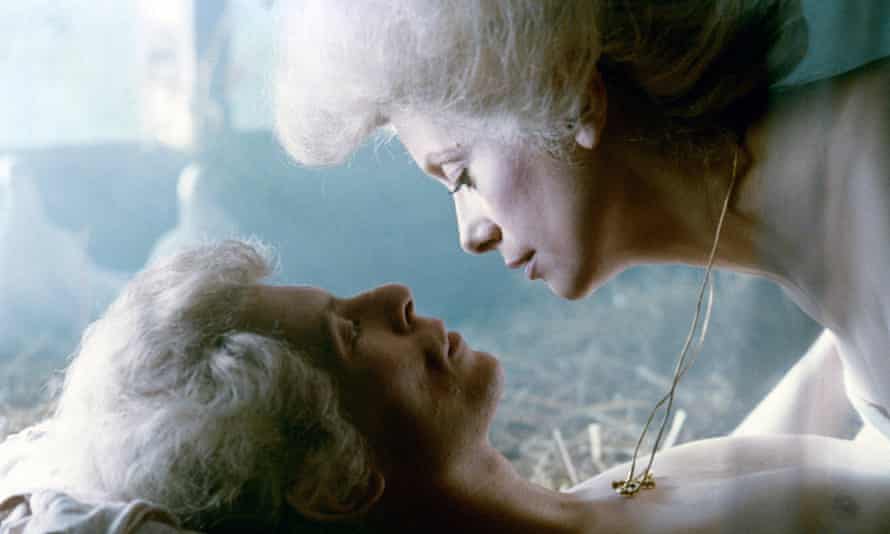
David Bowie and Catherine Deneuve in The Hunger by Tony Scott, 1983.
David Bowie and Catherine Deneuve in The Hunger by Tony Scott, 1983. Photograph: Allstar/MGM

A variation appeared, ironically, in the teen vampire movie, Buffy The Vampire Slayer. Although primarily a light comedy/romance concerning Californian teenagers, the film does present a strong feminist message: Buffy, a blonde shopaholic cheerleader, undergoes a radical transformation to become a fearsome fighter, a slayer of vampires.

The return of the bonkbuster: how horny heroines are starting a new sexual revolution


The return of the bonkbuster: how horny heroines are starting a new sexual revolution

I longed for novels about female desire - women empowered by sex and their expressions of lust. So I sat down and wrote my own


Daisy Buchanan
Wed 31 Mar 2021 06.00 BST


T

he idea for my novel Insatiable emerged from a simple question: where were all the horny women? I knew that we were secretly legion. In fact, I suspected that I was surrounded by women, sitting on buses, standing in queues, staring out of the window and simultaneously entertaining all kinds of filthy daydreams. After all, millions of us had bought and read Fifty Shades of Grey. Even if half the sold copies were bought by people who wanted to mock it, that left millions of genuinely horny women unaccounted for – and buying the sequels.


 Illustration: Monika Jurczyk Monsie


I was not transported in the way I had hoped; I did not find Christian sexy, I did not relish the BDSM and, most of all, I struggled to connect with the beautiful, blank lead character, Anastasia. She seemed similar to every other sort-of-horny woman I had seen on screen, a sexual object before she was a sexual subject, a person who had to be perfect and prove herself desirable before she was allowed to pursue desires of her own.

Anne Rice / ‘I settle in a recliner every evening with a Diet Coke, to watch the best TV I can find’


'I always wanted to be a writer.'
Photograph: Glenn Koenig
 
Interview

Q&A: Anne Rice


‘I settle in a recliner every evening with a Diet Coke, to watch the best TV I can find’

Rosanna Greenstreet
Saturday 25 October 2014

Born in New Orleans, Rice, 73, wrote The Vampire Chronicles. The series started with her 1976 book, Interview With The Vampire, which became a movie starring Tom Cruise and Brad Pitt. Prince Lestat, her first new Vampire Chronicles novel in more than a decade, is published on Tuesday. She is widowed with one son, and lives in California.

Tuesday, September 8, 2020

Anne Rice / Playboy Interview

A Comprehensive Guide to Anne Rice, the Queen of Sexy Vampire Fiction
Anne Rice

Anne Rice: Playboy Interview (1993)

A candid conversation with the author of The Vampire Chronicles about sex and violence, gays and bloodsuckers, and her helpful fans from the S&M scene
In 1976 Anne Rice came upon the literary scene with an extraordinarily innovative novel called “Interview with the Vampire.” Critics were not sure what to make of her richly imagined, deadly serious portrait of Lestat de Lioncourt—an 18th century vampire who poured out his tale of centuries on the run, of the eternal struggle between good and evil and of the meanings of death and immortality. But readers had no trouble seeing this vampire as an ultimate outsider—a symbolic figure for teens, gays and lonely urban apartment dwellers. It became an instant cult classic and the basis for a series of novels, “The Vampire Chronicles”—including “The Vampire Lestat,” “The Queen of the Damned” and, most recently, “The Tale of the Body Thief”—which have sold nearly 5 million copies.
The handful of critics who condemned “Interview with the Vampire” as a clever literary stunt could not have guessed how profoundly Rice identified with her fictional character’s emotions. For two years, she had watched helplessly as her only daughter, Michele, battled leukemia, dying before her sixth birthday. In her grief and frustration, she turned to alcohol and to marathon binges at the typewriter. The novel—which features a six-year-old vampire—emerged as a sort of catharsis. Prior to this crossroad in her life, Rice had been a “perpetual student” and aspiring writer who lived in the heart of San Francisco’s Haight-Ashbury district during the rock-and-roll revolution of the Sixties.

Friday, August 17, 2018

Richard Matheson / I Am Legend is named vampire novel of the century


I Am Legend is named vampire novel of the century


Richard Matheson's 1954 novel bats off competition from Anne Rice's Interview with a Vampire to win one-off Bram Stoker prize

Alison Flood
Tuesday 3 April 2012


Apologies to Stephenie Meyer and her sparkly crew of vampires; bad luck to Anne Rice and her bloodthirsty Lestat. Richard Matheson's story of a world overrun by the undead, I Am Legend, has been named vampire novel of the century.
The one-off prize was dreamed up by the Horror Writers Association in conjunction with the Stoker family estate to mark the centenary of Dracula creator Bram Stoker's death, and saw a jury chaired by Dracula expert Leslie S Klinger pick Matheson's 1954 novel over titles including Stephen King's Salem's Lot and Rice's Interview with a Vampire. The 86-year-old author could not attend the Bram Stoker awards ceremony in Salt Lake City this weekend due to ill health, but sent a video message thanking his fellow horror authors for the award, and revealing how his thrice-filmed story of a man alone in Manhattan battling hordes of vampires was first inspired by Stoker's own story.
"I am certainly honoured and delighted that you have chosen I Am Legend as the vampire novel of the century, which is a rather dubious but interesting distinction," said the author. "When I was a teenager I went to see Dracula with Bela Lugosi and at that time, even as a teenager, the thought occurred to me that if one vampire is scary, what if all the world were full of vampires?"


Matheson read Stoker's novel, he said, on nightly trips to the toilet while he was a soldier. "When I was in the army and the infantry during basic training I would go down to the latrine at night while the other soldiers were sleeping, and I would sit there reading Dracula: why, I don't know. I was pretty tired, I should have gone to sleep," he said. "I enjoyed it at the time, never knowing I was going to write a book about vampires and certainly not that it would be derived from the idea I had when I first saw Bela Lugosi."

Rice posted congratulations to Matheson on her Facebook page, describing his novel as "legendary", and saying the writer had "been an inspiration to me and to so many. He is a legend himself". The Interview with a Vampire author added that she didn't mind losing "to a man whose stories were inspiring me when I was still a kid writing everything with a ball point pen in a school notebook". King has previously said that Matheson was "the author who influenced me the most as a writer", and that I Am Legend was "an inspiration to me".

The ceremony also saw the Bram Stoker award for superior achievement in a novel handed to Joe McKinney's Flesh Eaters, about a zombie plague, with authors including Alan Moore, Peter Straub, King and even Joyce Carol Oates also snapping up prizes. Oates won the horror gong for superior achievement in a fiction collection for The Corn Maiden and Other Nightmares, six tales of suspense in which the title story sees an 11-year-old child kept in a basement by an older girl from her school, and told the world has ended.


Wednesday, July 13, 2005

Dumbledore's death in the style of Anne Rice


Dumbledore


Harry Potter

Dumbledore's death in the style of Anne Rice

Wednesday 13 July 2005

It was rumored to have been a noble death, and that brought mild comfort into the hearts of the bereaved mourners that stood in huddled groups, watching through tear-veiled eyes as the gilded casket was ceremoniously interred in the mausoleum.

It was also a tragedy. That a man as beloved and respected as Albus Dumbledore, who had defeated the dark wizard, Grindenwald, could be destroyed so suddenly by but a mere handful of enemies was inconceivable. . .

How could something so horrific be allowed to happen? That was the question that people demanded of the heavens and of each other; as they nursed their guilt-ridden hearts. Any would have willingly given their own lives in place of his.

"If only I had been there." was the common phrase, amongst the self-flagellating hordes.


Dumbledore

In the manner of wounded dogs, that bite the hand that attempts to salve the wound, they rounded, teeth bared, on the person whom they perceived as a failed hero. He who had been with Dumbledore, but had been unable to save him.

" Why didn't you save him?" They demanded, closing in on their prey.

When Albus Dumbledore had been disarmed, captured, and tortured by the villainous Deatheaters, where had his pet spy been? There to save him with brave flourishes and self-sacrifice? Not as they saw it.

How could he explain to them what those last minutes had been like? He had stood by, helpless, as Dumbledore was questioned, then when faced with the possibility of the truth serum, which would have endangered them all, Dumbledore had whispered his last request into Snape's mind.

" For the sake of Merlin, Severus, let me have your wand." even his mental voice had been pain-laced, and weary.

So careful, that it looked like an accident, he, Snape, had edged closer to the bound figure, so that Dumbledore's hand, which had somehow escaped it's bonds, could seize the implement from him.

Before any of the Deatheaters could respond, Dumbledore had turned the wand on himself, offering only a brief and inconspicuous nod of dignified gratitude to his saviour. His last words echoed still through Snape's mind;

"AVADA KEDAVRA!"

" How did he die?" The people demanded of Snape, later at the trial.

And Snape answered;

" I killed him."

Jayme Goodman


THE GUARDIAN