Showing posts with label Paul Bailey. Show all posts

Wednesday, September 16, 2020

Disgrace by JM Coetzee / Sex and other problems

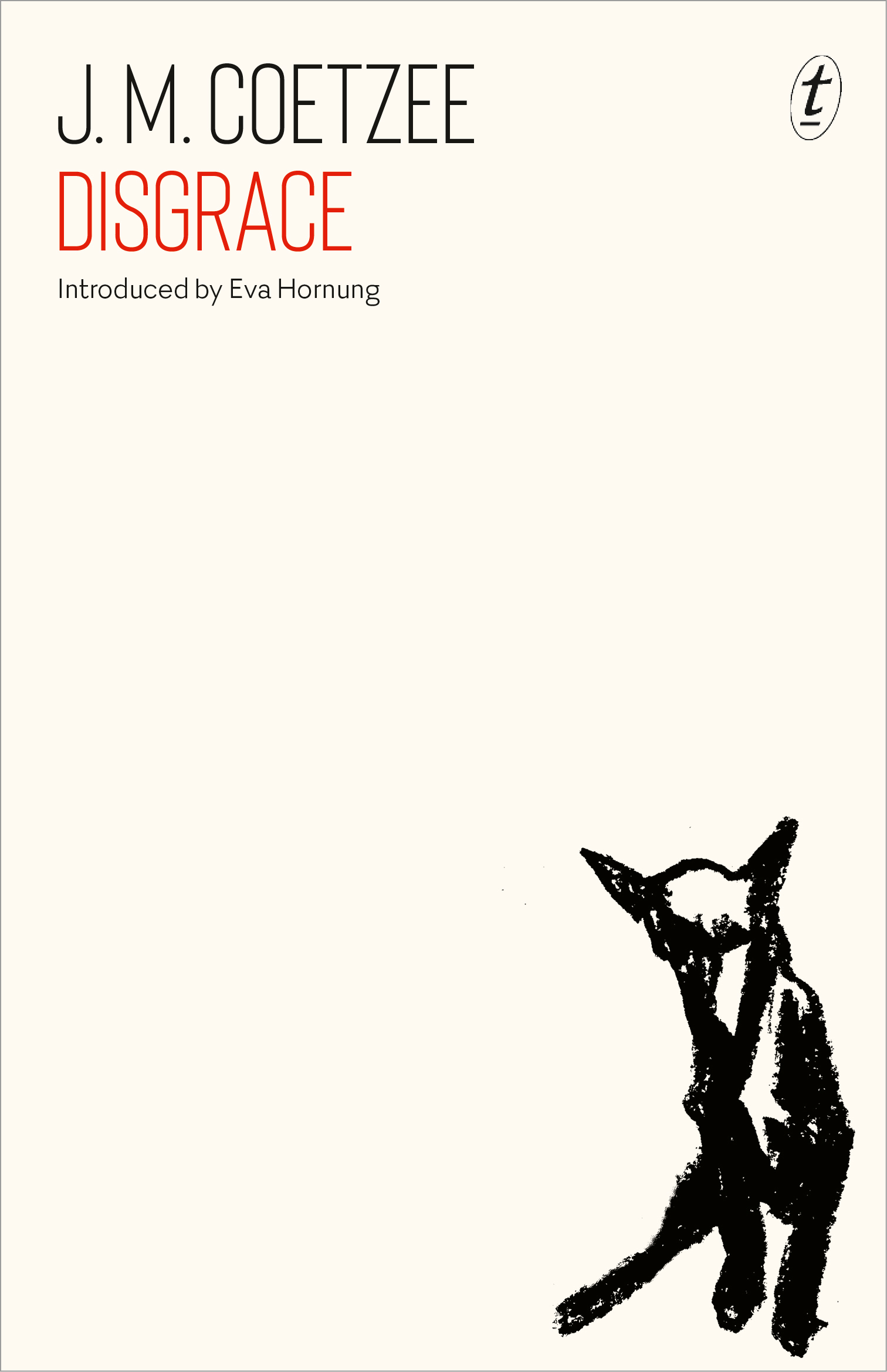
Text Publishing — Disgrace, book by J. M. Coetzee

Disgrace
Sex and other problems

Beyond shame and tragedy, a damaged survivor edges towards hope in the new South Africa. Paul Bailey praises a novel of quiet distinction


Paul Bailey
Saturday 3 July 1999 00:00
AT THE beginning of this painful novel, Professor David Lurie prides himself on having "solved the problem of sex rather well". He is 52, twice divorced, and no longer capable of, or willing to sustain, a deep emotional relationship. Each Thursday afternoon, he visits a woman who calls herself Soraya for professional purposes. They make love at a leisurely pace. He arrives at two pm and leaves 90 minutes later, having first paid her R400. He is content for another week. Next Thursday, he reflects, his problem will be solved again.

Tuesday, March 8, 2016

Paul Bailey / Author, author


Author, author

by Paul Bailey


'I loathed the patronising sentimentality that was then an essential ingredient in fictional depictions of old age'

Saturday 15 January 2011 00.05 GMT

I
started writing my first novel, At the Jerusalem, when I was 28. It was published a few weeks after my 30th birthday in 1967. The principal character is a woman in her 70s, Faith Gadny, who has lost both her husband and daughter and is left at the mercy of her son Henry and his wife Thelma, with whom she lives for a short, unhappy time. It is Thelma who decides that her mother-in-law would be better cared for in an institution for the elderly, and so she is dispatched to the Jerusalem, a former Victorian workhouse where most of the action of the book is set. The other inmates, all women, try to befriend her but she will have little or nothing to do with them. She finds them coarse and common, and they, in turn, decide that she is snooty and stuck-up. I refrained from making Mrs Gadny an object of pity, a plaster saint, because I loathed the patronising sentimentality that was then an essential ingredient in fictional depictions of old age.

Chapman's Odyssey by Paul Bailey / Review by Leo Robson

Paul Bailey


Chapman's Odyssey by Paul Bailey – review


Paul Bailey's writing is infectiously entertaining but marred by the weight of literary allusion

Leo Robson
Sunday 9 January 2011 00.05 GMT


F
rom its title onwards, this attractive if slightly limp novel claims kinship with Paul Bailey's more robust exercises in male self-inquiry, Peter Smart's Confessions and Gabriel's Lament. It follows the same recipe of commotion recollected in tranquillity, but opts for the less intimate third-person and places as much emphasis on the circumstances of recollection as on the memories themselves, which once again relate to a grim upbringing in south London and the escape route offered by literature and music. The earlier heroes were named after tangential figures in literary history – Christopher Smart's father, Edmund Spenser's best friend – and while Harry Chapman in the new book has no such forebear, his surname enables the book's playful title. Chapman's Odyssey alludes to a famous translation (by George Chapman) that figured in yet another Bailey novel (Sugar Cane).

Chapman's Odyssey by Paul Bailey / Review by Alfred Hickling


Chapman's Odyssey by Paul Bailey


Alfred Hickling admires Paul Bailey's enigmatic hospital-bed drama


Alfred Hickling
Saturday 22 January 2011 00.05 GMT


B
efore Paul Bailey became a novelist he embarked on an acting career. He seems to have been rehearsing the role of an old man for most of his life. Bailey's 1967 debut, At the Jerusalem, was written in his 20s but focused on an elderly heroine's journey from an old people's home to a lonely death in a mental ward. Old Soldiers, from 1980, featured two septuagenarians assailed by memories of the first world war; while Bailey's best-known work, the Booker-nominated Gabriel's Lament, features a wild eccentric who endures to the age of 94.

Paul Bailey's top 10 stories of old age


Paul Bailey's top 10 stories of old age

From comedy by Kingsley Amis to Shakespeare's tragedy, the novelist considers literature 'where the old take precedence'
William Trevor
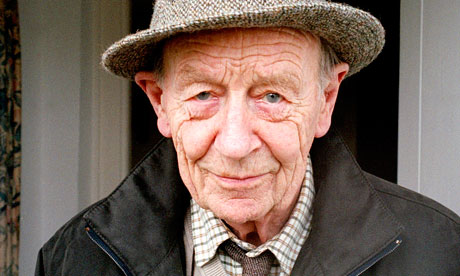
William Trevor at home in Exeter. Photograph: Eamonn McCabe for the Guardian
Paul Bailey was born in 1937 and worked as an actor before taking up full-time writing in 1967. His novels include At The Jerusalem (1967), which won the Somerset Maugham award; Peter Smart's Confessions (1977) and Gabriel's Lament (1986), both shortlisted for the Booker prize; and Sugar Cane (1993), a sequel to Gabriel's Lament.
He has also written plays for radio and television, and his non-fiction includes two volumes of memoir, An Immaculate Mistake: Scenes from Childhood and Beyond (1990), and A Dog's Life (2003). Three Queer Lives: An Alternative Biography of Naomi Jacob, Fred Barnes and Arthur Marshall (2001), is a biography of three gay popular entertainers from the 20th century.
Chapman's Odyssey, Bailey's new novel, tracks the psychic voyage made by an elderly writer, bedbound in hospital, through the characters, real and imaginary, that have meant most in his intense imaginative life. In the Guardian's review, Alfred Hickling described it as "an enigmatic work whose meaning is worth grasping for. It is the kind of book that could be construed as a deeply moving, valedictory statement of a valuable career."
"When I wrote my first novel At the Jerusalem in the 1960s I wasn't especially conscious that I was tackling the subject of old age. My characters were real women who just happened to be advanced in years. I am in my seventies now, so when writing Chapman's Odyssey I was looking back on a life lived, which every so often resembled my own. I like to think that the narrative has a certain youthful energy, however, but I might be mistaken. Old age is a fact of life and should not be isolated from it. More sentimental rubbish has been written about the 'plight of the elderly' than I can bear to contemplate.
"There are hundreds of novels in which elderly characters feature – in the great works of Dickens, Dostoevsky and Balzac, for example. They function in the narrative but don't occupy centre stage. Here are some titles in which the old take precedence."


1. "Old Love" by Isaac Bashevis Singer

This is one of the master's most poignant short stories, written in his own old age, about a romantic affair between a couple of pensioners.


2. "Ending Up" by Kingsley Amis

Perhaps only Amis could make someone suffering from nominal aphasia as funny as he is touching. The tone throughout is mordantly comic.


Alice Munro

3. "The Bear Came Over the Mountain" by Alice Munro

This heartbreaking long short story about a woman with Alzheimer's and the weird course her life takes while her husband watches in dismay and confusion has all the honest virtues that distinguish Munro from virtually every other living storyteller.


4. "Memento Mori" by Muriel Spark

Spark's masterpiece, with its echoing reminders that we must all die, is horrifically funny from beginning to end. The dialogue throughout is a joy.

5."Doctor Faustus" by Thomas Mann

Mann's great novel is concerned with the life of a famous composer who, as the title suggests, has forged a pact with the devil. No other novel matches its deep knowledge of the creative urge.

6. "As a Man Grows Older" by Older by Italo Calvino

This comic masterwork isn't strictly about old age, but it is concerned with the attainment of knowledge that comes with the passing of the years.


7. "The Old Boys" by William Trevor
Trevor's first novel is funny and moving and quietly observant of the eccentricities to which the elderly are prone.

8. "Confusion" by Stefan Sweig

This novella is told in the first person by an elderly professor who looks back on the unhappy man who was the greatest influence in his life. The story ends with a surprising and touching revelation.

9. "King Lear" by William Shakespeare
It's not a novel, of course, but it is arguably the greatest play in the language. We watch in pity and terror as a once proud man is reduced to almost nothing.

10. "The Book of Job"

One of the masterpieces of the Old Testament, especially in the King James translation. As with King Lear, Job is the victim of malign fate. He has to suffer the indignities of sores and lesions before he is restored to humanity.