
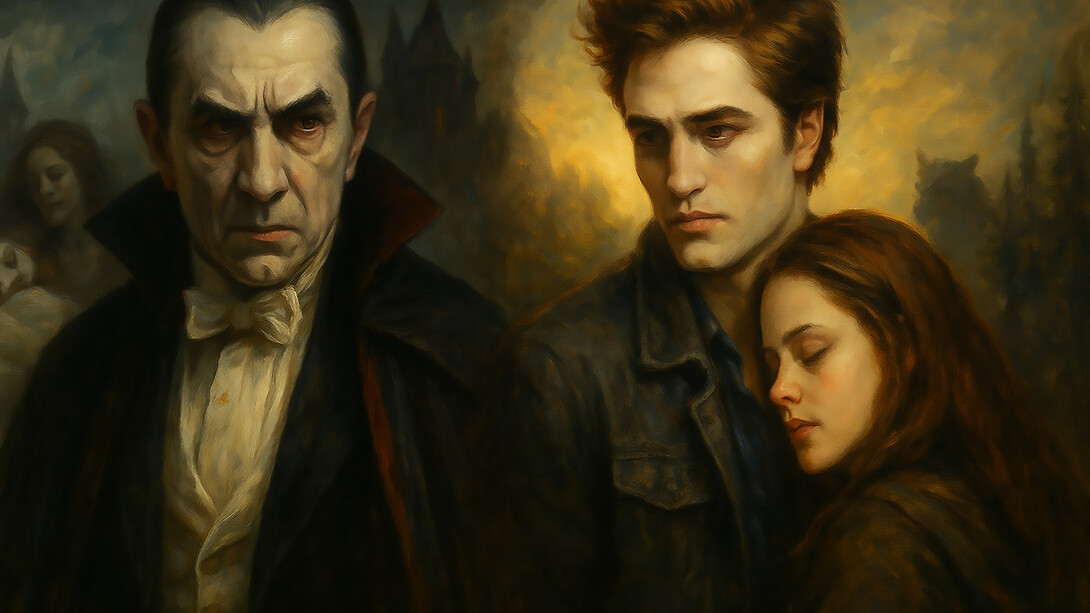
Monster to muse: the evolution of the vampire
How Bram Stoker’s Dracula and Stephenie Meyer’s Twilight transformed fear into fascination across centuries of storytelling
Structurally, Bram Stoker’s Dracula follows some of the conventions of previous Gothic novels using diaries, letters, and personal accounts. Despite the title, the reader sees very little of the eponymous character, but he is an ever-present driving force in the novel. The story begins with Jonathan Harker’s journal regarding his trip to Count Dracula’s home, where he is to finalise some property transactions. Before he even arrives, the reception he receives at the mention of the Count’s name causes fear and suspicion; people make the sign of the cross, and crosses are lining the side of the roads. Fear and superstition in the eighteenth century were often associated with simple, uneducated people; therefore, it is appropriate that both Jonathan and the reader begin as sceptics.

