Proust: The Search by Benjamin Taylor review – a beguiling biography
How did a simpering, high-class layabout write a work of such profound moral seriousness?
Kathryn Hughes
Thursday 19 November 2015
Athird of the way through this beguiling biography, Benjamin Taylor offers a statement from Marcel Proust that he believes explains why the (arguably) greatest novelist of the 20th century dribbled away nine years of his life translating Ruskin into French before getting down to writing À La Recherche du Temps Perdu. “There is no better way of becoming aware of what one feels oneself than by trying to recreate in oneself that which a master has experienced. In this profound effort that we make, it is our own way of thinking, together with the master’s, that we bring to light.”
The Crimson Petal and the White by Michel Faber 864pp, Canongate, £17.99
Kathryn Hughes
Sat 28 Sep 2002 00.03 BST
Michel Faber has produced the novel that Dickens might have written had he been allowed to speak freely. All the familiar tropes of high-Victorian fiction are here - the mad wife, the cut-above prostitute, the almost-artist, the opaque governess - but they are presented to us by a narrator with the mind and mouth of the 21st century. Where once the Victorian novel was lace-like with decorous gaps and tactful silences, now it is packed hard with crude fact and dirty detail. Faber's prostitutes douche themselves regularly and dab hopelessly at old stains, while his child-bride - knowingly called "Agnes" - is racked by terror of her own monthly bleeds. Faber's governess is a whore, his mad woman a Catholic visionary, and his Lady Bountiful - whose name, not by chance, is Emmeline - likes to masturbate.
Devils, Lusts and Strange Desires: The Life of Patricia Highsmith – review
When friends mean less than plots ... a flawed portrayal of the noir novelist as a figure bordering on the grotesque
Kathryn Hughes Fri 22 Jan 2021 09.00 GMT
In middle age Patricia Highsmith perfected a particularly ghastly party trick. Invited to a swanky London dinner, she arrived with 30 “pet” snails in her handbag which she proceeded to tip out on to the table. The snails immediately started their determined looping across the linen tablecloth, leaving behind a lattice of silvery slime. Everyone, including Highsmith herself, pretended not to notice.
Whistler’s Mother review – a painting that’s not what it seems
A meticulous study of Anna Whistler, by Daniel E Sutherland and Georgia Toutziari, is a treasure trove of odd information
Kathryn Hughes Saturday 12 May 2018
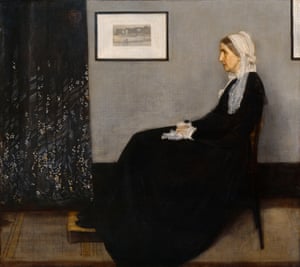
Arrangement in Grey and Black No 1, known as Whistler’s Mother. Photograph: Jean Schormans/RMN/National Gallery of Victoria
Over the last century and a half Whistler’s mother has been having a high old time. Perhaps 1934 was the giddiest year: Cole Porter name-checked her in “You’re the Top” while the US government put her on a postage stamp to celebrate Mother’s Day. More recently the playwright Edward Bond turned her into the devil in a wheelchair inGrandma Faust, while in 1997 Rowan Atkinson gurned in front of her asMr Bean. WheneverWhistler’s Mother(its official title isArrangement in Grey and Black No 1) tours the world, gallery crowds flock to stare at the elderly, seated figure staring enigmatically into the middle distance.Along with the Mona Lisa and Girl With a PearlEarring, she has become an instantly quotable pin-up of popular art. Which is odd because “Whistler’s mother” doesn’t exist, not really. The fact that the woman in the picture was indeed the artist’s mother was not, at least for James McNeill Whistler, the point at all. The London-based American painter had no interest in doing family portraits – Anna Whistler was a stand-in for someone who hadn’t turned up – nor was he concerned with conjuring up “wisdom”, “age” or even “mothers” in general. As the picture’s real title suggests, what actually drove him was the technical challenge of modulating tones of black and grey in a way that made them legible in half-light.
He had done something similar nearly 10 years earlier in The White Girl when he’d painted his mistress Jo Hiffernan in a froth of white on more white. Now here was another aesthetic experiment, this time at the opposite end of the colour spectrum.
For a painter who said he wasn’t interested in mimetic portraiture, illustrative anecdote or symbolic signalling, it’s ironic that Whistler is now best remembered for a painting that appears to do all three. There’s something telling, too, in the fact that Anna Whistler herself never seemed to grasp that she was only there as a useful arrangement of shape and volume rather than as a subject who actually mattered.
When Whistler finished the picture and murmured “Oh Mother … it is beautiful,” it was his handiwork he was admiring, not her bone structure. And there’s no getting away from the odd fact that, while everyone agreed that the picture was the very spit of Anna, they quickly spotted one deliberate distortion. Instead of an accurate rendering of her neat little patrician slippers, Whistler had given his mother “sprawling, flat peasant feet”.
Photograph of Anna Whistler; she lived with ‘Jemie’ in London for nine years.
Daniel E Sutherland and Georgia Toutziari are adamant that we shouldn’t try to read anything into this. Yet they proceed to offer such a treasure trove of odd information about Whistler mère et fils that it seems a dereliction of curiosity, duty even, not to probe further.
You can’t help noticing, for instance, how strangely the flesh-and-blood Anna was positioned in her adult son’s life, managing to be simultaneously at its centre and entirely to one side. Living around the corner from his studio in Chelsea, the American-born widow acted as “Jemie’s” amanuensis, agent, cheerleader and chief scold. She prepared lunch for visitors at his studio, nagged him to number his engravings in order to boost their market value, and told him to make friends with important people who might buy his work. She remained hugely proud of what she called “my painting”, claiming it not just as a portrait but as an emblem of the contribution she had made to her darling son’s career.
“He always confides in his mother,” Anna approvingly told her friends which, unsurprisingly, turns out to be the opposite of true. Whistler was instead careful to present his mother with a tightly edited version of his extremely rackety life. Whenever she met his disreputable male friends, they were instructed to be on their best behaviour. How else can one explain the fact that this deeply religious woman believed the boisterously drunk and gay Algernon Swinburne to be a delightful young man fit to be her honorary son?
And as for Hiffernan, Jemie’s Irish mistress, Anna seems to have thought that she was nothing more than his favourite model. When in 1870 the girl-mad Whistler had an illegitimate son by a local chambermaid, the news was kept from Anna, who sailed on oblivious, offering prayers and tracts to anyone she thought looked spiritually peaky.
While Sutherland and Toutziari are meticulous in rendering the busy life of Anna Whistler – she crossed the Atlantic 11 times as she followed her peripatetic husband and sons around the world – they remain uninterested in teasing out the emotional resonances of these constant dislocations. What we get instead is a respectful portrait of a woman who prided herself on her moral restraint and good breeding, yet whom, for some unaccountable reason, her son decided to paint with cumbersome feet that appear poised to step on other people’s toes.
• Whistler’s Mother: Portrait of an Extraordinary Life is published by Yale.
A vain and unpleasant man - but what pictures! Daniel Sutherland is dazzled by Whistler's work, and takes the artist at his own estimation Kathryn Hughes Friday 4 April 2014
I
t is one of the great unfairnesses in life that bad people sometimes produce great art. That is certainly true of James Abbott McNeill Whistler, about whom it is hard to think of anything nice to say. Vain, pugnacious, a rotten father and kind to his mother only because he was terrified of her, Whistler is not the sort of man you relish spending 400-plus pages with. But then you look at his Nocturnes – in which the industrial Thames becomes a serene, shimmering mystery – and you realise you could forgive him almost anything.
James Abbott McNeill Whistler
Living by the mantra of "art for art's sake" meant, in Whistler's case, not withdrawing from the world but hurling himself at it, fists flying. He called his autobiography The Gentle Art of Making Enemies and was careful to follow his own advice. Friends and rivals could reckon on being beaten up by the bantam scrapper, or else find themselves blackballed from their favourite members' club on his say-so. Keeping a beady eye on his paintings' prices, he accused anyone who sold or bought too low of personally picking his pocket. No stunt was too crass if it was good for trade: for his Arrangement in White and Yellow show at the Fine Art Society in 1883, visitors were told to arrive wearing cravats, kerchiefs and buttonholes the colour of egg yolk.
Up close and personal, Whistler was even more tiresome, practising the kind of effortful wit that gave young Oscar Wilde dangerous ideas. On one occasion when he accidently shot his host's dog, Whistler declared: "It was a dog without artistic habits and had placed itself badly in relation to the landscape." This was delivered in a voice that contemporaries described as "caustic nasal", interrupted by a laugh like a peacock's shriek. Then there was his startling streak of white hair, which was not technically his fault, yet still managed to seem like an affectation. Yet despite all this, he was impossible to dismiss. Any writer encountering him found themselves compelled to put him in a book, just to show everyone else what they'd missed. Proust, James, Wells, Du Maurier and WS Gilbert all did their version of the Yankee chancer whose claims of genius teetered between the preposterous and the plausible.
Ah, but then there is the art. After a failed career at West Point military academy – did anyone apart from his widowed mother seriously think he'd make a soldier? – Whistler fetched up in Paris in the mid 1850s and developed a way of seeing that put him at a slant from his British contemporaries. While the pre-Raphaelites were still laboriously rendering each leaf and whisker of a view, Whistler was exploring an art of perception and suggestion. It was his patron Frederick Leyland, "the Liverpool Medici", who first suggested that "Nocturnes" might be the best description of what he was trying to do. His paintings weren't about anything, and aimed neither to tell a story nor teach a lesson. Rather, they used tonal contrasts to evoke mood and feeling, rather like a piece by Chopin. You can see this working best in the Thames pictures, where heavy fogs smudge the outlines of boats, bridges and warehouses – what remains is a harmonious arrangement of bleeding blacky blues and greens.
Famously, not everyone was convinced. For Ruskin, still the leading art critic in the 1870s, Whistler's Nocturne in Black and Gold, an account of the sky above Cremorne Gardens during a fireworks display, was the equivalent of "flinging a pot of paint in the public's face". Here is the beginning of the "my three-year-old could do better than that" plaint against abstract art that is still going strong today. Typically Whistler decided to sue Ruskin and, equally typically, it wasn't the principle of the thing that drove him. What stung the artist was that Ruskin had implied that he was guilty of "cockney impudence" in asking 200 guineas for something that looked as though it had been done by a toddler during a particularly hectic play session. Whistler fancied himself a gentleman – so the cockney slur stung. But more than that, he wanted to uphold the right to set the value of his art. Cheekily he agreed that he had indeed "knocked off" the painting in a couple of days, but the point was that the high fee was for "the knowledge I have gained in the work of a lifetime".
Although the verdict went with Whistler, he got only a farthing in damages and was soon facing bankruptcy. At times like these, "art for art's sake" went out of the window as he threw himself into hackwork to dig himself out of a hole. He put his sublime talent as an etcher to work and published a book of crowd-pleasing views including Old Battersea Bridge and a lithograph of The Toilet, a portrait of his mistress, Maud Franklin. He did illustrations for art catalogues and hurried out portraits of "the heads of blokes" and "their pet ballet dancers".
These jobbing pieces are very different from what Whistler could do when he had only himself to please. The portrait of his mother – properly titledArrangement in Grey and Black No 1 – is so much more than a genre picture of an old lady in a white cap. The subject is not Anna Whistler at all, nor is it Old Age, Wisdom or Regret of any of those other sententious one-worders that the High Victorians liked to affix to their drawing-room art. Rather, it is a commentary on the very business of picture-making. Using a severely restricted palette, Whistler draws attention to the arrangement of large, simplified forms, so that the curves of the model's face, dress and chair are grounded by the rectangles of the curtain, footstool and the floor. If you were given to the sort of grandstanding that Whistler himself went in for, you might claim this as the moment that modernism first peeps through the dusty shutters of representational art.
The great boast of Daniel Sutherland's new biography is that his is the first to have complete access to the artist's letters, the majority of which are held at the University of Glasgow. But letters do not automatically take you closer to someone's core. If there is no core – and Whistler seems to have had a chip of ice where the rest of us have something a bit more pliable – then what letters do is give you information about your subject's surface rather than his depth. Every one of Whistler's communications reads like a little polished mirror, designed to dazzle and deflect the spectator's eye outwards.
You want to weep at the waste of it all – not just the way Whistler squandered his talent on "blokes heads", but also the way that Sutherland fails to acknowledge the challenge of writing a biography when all you have is a series of glittering facades to play with. Instead he takes Whistler at his own estimation (a genius) and repackages the other stuff – the bad faith art, the preening, the viciousness – as the necessary folly of a great man. It is a generous approach but not an illuminating one.
• Kathryn Hughes is writing a book about famous Victorians' body parts.
The strange cult of Emily Brontë and the 'hot mess' of Wuthering Heights
Brontë was no romantic child of nature but a pragmatic, self-interested Tory. Why is she still adored for her ‘screeching melodrama’ of a novel? Kathryn Hughes 21 July 2018
Heroine chic … Shannon Beer as Catherine Earnshaw in the 2011 TV adaptation of Wuthering Heights. Photograph: Allstar/Artificial Eye
Over this ecstatic high summer, visitors to the Haworth parsonage museum will be able to watch a film that simulates the bird’s-eye view of Emily Brontë’s pet hawk, Nero, as he swoops over the moors to Top Withens, the ruined farmhouse that is the putative model for Wuthering Heights. You’ll be able to listen to the Unthanks, the quavery Northumbrian folk music sisters who have composed music in celebration of Emily’s 200th anniversary. If that’s not enough, you can watch a video installation by Lily Cole, the model-turned-actor-turned-Cambridge-double-first from Devon, which riffs on Heathcliff’s origins as a Liverpool foundling. Finally, Kate Bush, from Kent, has been busy on the moors unveiling a stone. In short, wherever you come from and whoever you are, you will find an Emily Brontë who is sufficiently formless yet endlessly adaptive to whatever you need her to be – a rock, a song, a bird in flight.
In 1950 the thirty-two-year-old tyro poet Muriel Spark drew up a proposal for a “Critical Biography” of Mary Shelley. The project was never going to be easy to sell to publishers. Spark was virtually unknown outside the London poetry scene and, in any case, there was little interest in female novelists of the nineteenth century. Mary Shelley was remembered mostly for having run away with Percy Bysshe Shelley while he was still married to his first wife.