Showing posts with label Agatha Christie. Show all posts

Friday, March 10, 2023

The Mousetrap / Agatha Christie’s West End hit to make Broadway debut after 70 years

It’s a scream … Mary Law in the West End production of The Mousetrap in 1957.


The Mousetrap: Agatha Christie’s West End hit to make Broadway debut after 70 years

Whodunnit running in the West End since 1952, interrupted only by Covid, will open in New York in 2023


Chris Wiegand
Friday 25 November 2022


The world’s longest-running play, The Mousetrap, is to finally make its Broadway debut. The announcement was made on Friday to mark the 70th anniversary of the London production of Agatha Christie’s whodunnit.

Thursday, March 9, 2023

Philomel Cottage By Agatha Christie


Philomel Cottage
By Agatha Christie

"Good-bye, darling."
"Good-bye, sweetheart."
Alix Martin stood leaning over the small rustic gate, watching the retreating figure of her husband, as he walked down the road in the direction of the village.

Wednesday, March 8, 2023

Mark Lawson / Crime's grand tour

Photo by Juan Yanes


Crime's grand tour 

European detective fiction

by Mark Lawson


Crime fiction is a magnifying glass that reveals the fingerprints of history. From Holmes and Poirot to Montalbano and the rise of Scandi-noir, Mark Lawson investigates the long tradition of European super-sleuths and their role in turbulent times

Sunday, June 28, 2020

What Agatha Christie can teach us about Brazil / Translated literature and cultural dynamics


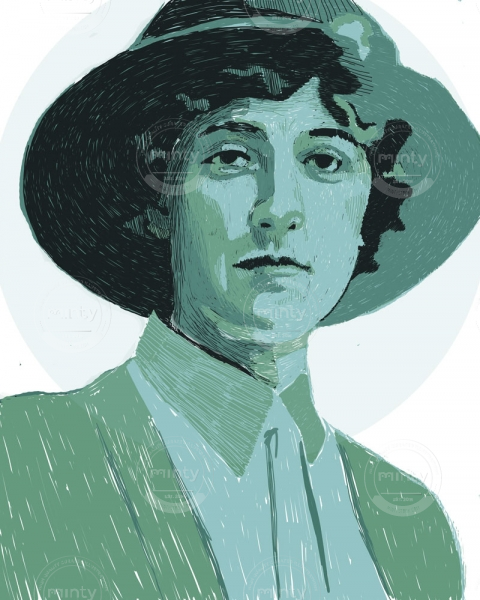
Agatha Christie, British author - Illustration price | Minty
Agatha Christie

WHAT AGATHA CHRISTIE CAN TEACH US ABOUT BRAZIL: TRANSLATED LITERATURE AND CULTURAL DYNAMICS

Vanessa Lopes Lourenço Hanes
Pós-Graduação em Estudos da Tradução (PGET)
Universidade Federal de Santa Catarina

1611 / A Journal of Translation History No. 98 / 2015

Basis and framework

British writer Agatha Christie (1890-1976) was (and is) a unique phenomenon in literary history worldwide. Due to this, from the perspective adopted in this study, a topic such as “Agatha Christie in Brazil”, just like “Hemingway in Europe” or “Tolstoy in Germany”, might be envisaged from the point of view of what Goethe termed as “World literature” (for more information on Goethe’s concept of Weltliteratur, see Eckermann (1930). But, considered this way, such topics are never simple, since the entire issue of world literature is never simple. As a matter of fact, not even the supposedly “less broad” concept of “national literature” is a simple one. And it certainly is paradoxical to talk about world literature without first considering the concept of national literature.

At first, the idea of world literature sounded almost blasphemous, mainly because the Nation-State strongly cultivated the idea of a national literature. At the end of the 18th century, Goethe linked the idea of national literatures with particular cultural traditions, but only after the second half of the 20th century literary theoreticians and comparatists such as René Étiemble (1975) and Jonathan Culler (2007) discover that the very concept of literature was hardly any older than the idea of national literature.

Friday, July 19, 2019

Crime's grand tour: European detective fiction


Agatha Christie

Crime's grand tour: European detective fiction
Crime fiction is a magnifying glass that reveals the fingerprints of history. From Holmes and Poirot to Montalbano and the rise of Scandi-noir, Mark Lawson investigates the long tradition of European super-sleuths and their role in turbulent times

Mark Lawson
Friday 26 October 2012


One of the functions of fiction is to serve as a kind of tourism, either showing us places, situations and people that we might not otherwise reach or scrolling through snapshots of events or sensations that we remember. Crime stories rarely serve the latter purpose – most admirers of homicide novels will, thankfully, never become or even know a murder victim – but are a perfect illustration of the former.
Throughout its history, crime literature has operated as a sort of imaginative travel agency, taking customers across borders and introducing them to unknown cultures. The story commonly considered the birth of the whodunit – Edgar Allan Poe's "The Murders in the Rue Morgue" (1841) – was written by an American and set in Paris. Since then, the genre has regularly been a ticket for a Grand Tour.
Agatha Christie, an enthusiastic globe-trotter through her wealth and marriage to an archaeologist, sent Hercule Poirot on the Orient Express, Nile cruises and aeroplane journeys, depicting trips that the majority of her audience was unlikely ever to experience for real. Later in the 20th century, readers, listeners and viewers of detective tales learned about France from Simenon's Maigret and the Netherlands through Nicolas Freeling's Commissaris Van der Valk, who achieved the rare double of topping both the TV ratings lists (in the ITV series starring Barry Foster) and the pop charts, with the Simon Park Orchestra's recording of the theme tune, "Eye Level".And, these days, Britons have a greater understanding of Scandinavian culture than ever before: not from exports such as Abba, Bjorn Borg, Volvo or Ikea, but through what was – at least until the recent apothesois of sado-masochistic soft porn – the biggest publishing phenomenon of the 21st century: the super-selling mystery stories of writers from Sweden (Stieg Larsson, Henning Mankell) and Norway (Jo Nesbø).

Monday, November 13, 2017

How we made the original Murder on the Orient Express

There was no snow – we had to order 10-truckloads from the Alps’ … Jacqueline Bisset, third from right, and Albert Finney, centre, in the 1974 film. Photograph: Allstar/Cinetext/EMI


How we made the original Murder on the Orient Express


‘I don’t think the cast of the new film have the same horsepower we had’


Interviews by Cath Clarke
Monday 13 November 2017

Richard Goodwin, producer

It was difficult to persuade Agatha Christie to sign over the rights. She’d hated the film version of The ABC Murders. But she trusted us. Sidney Lumetwas directing, even though his agent didn’t want him to. She called it “the dumb train movie”. She wanted him to work in Los Angeles, but he didn’t like it there.
The cast were all such huge stars, yet somehow the film cost only $4.5m. Were there any divas? No, they were well behaved, although Lauren Bacallinsisted on having her shoes made in Paris, Albert Finney got paid more because his Hercule Poirot had most of the lines, and Sean Connery got a percentage because he was such a big star. The rest all got paid the same: $100,000 each.
Vanessa Redgrave would spend all her lunchtimes converting the workers, making speeches about politics in the canteen, while the rest of the actors would sit and listen to John Gielgud telling his amazing stories. Eventually, the guys in the canteen asked if we could get Vanessa to go and talk to someone else.

We had terrible trouble filming the scene where the train is blocked by a snowdrift. The problem was that it hadn’t snowed. Everywhere you looked, it was just brown. We were shooting in France, near the Swiss border, so I ordered 10 trucks to come down from the Alps with snow. Sidney was relaxed about it all. “Don’t worry,” he said. “It’s going to be all right.” And that night it snowed heavily and it all worked out beautifully. You need luck in movies. Perfectly good, well-meaning films get nowhere because they don’t have any luck. I don’t think it’s all about skill.


I only met Agatha Christie briefly. She was ancient by then and using a wheelchair. She was very much an observer, watching everything. We showed her the film and she liked it. I know it’s a terrible thing to say, but I don’t think the actors in the new film have the horsepower of the ones we had. Ingrid Bergman – you couldn’t believe she’d be doing that part, such a tiny role. It was extraordinary, really. They all did it for Sidney. They loved him.


‘Lauren insisted on having her shoes made in Paris’ … Bacall and Albert Finney.
FacebookTwitterPinterest
 ‘There’s no such thing as a small part – only small actors’ … Bacall and Albert Finney. Photograph: Sportsphoto/Allstar/EMI

Jacqueline Bisset, actor


I wasn’t a fan of Agatha Christie. And my role as Countess Helena was slight. All the roles were, but I was happy because it was Sidney Lumet. He was so flattering. “There is no such thing as a small part,” he said, “only small actors.” In other words, if you’d been chosen for Murder on the Orient Express, you were a good actor.
It was quite an adjustment for all of us – except for Albert Finney, who had a tremendous amount to say, reams of dialogue. I remember it all being slightly tedious – except for lunchtimes, which were fascinating. Lunch was wonderful.


I knew Albert already, but he was so disguised I completely forgot it was him. As far as I was concerned, he was just this odd guy with a French accent who was always talking, talking, talking. When I saw Anouk Aimée, Albert’s wife, at a party at the end of filming, I said: “Anouk, what are you doing here?” She looked at me like I was barmy and said: “Well, I am married to Albert.” But I’d never seen him out of makeup.
It can’t have been easy playing Poirot. It was all exposition, but I think Albert pulled it off. I wouldn’t have wanted that part. I remember being shocked by that hairnet he had to wear. It wasn’t very attractive.


Thursday, August 7, 2014

Agatha Christie / I Like Living

Oleg Oprisco
[via Whitezine]
Photo by Oleg Oprisco
I LIKE LIVING
by Agatha Christie

"I like living. I have sometimes been wildly, despairingly, acutely miserable, racked with sorrow, but through it all I still know quite certainly that just to be alive is a grand thing."


— Agatha Christie, From An Autobiography