Showing posts with label Italian writers. Show all posts

Monday, June 22, 2026

The Daughters of the Moon by Italo Calvino


Italo Calvino


The Daughters of the Moon

by Italo Calvino

Deprived, as it was, of a covering of air to act as a protective shield, the moon found itself exposed right from the start to a continual bombardment of meteorites and to the corrosive action of the sun’s rays. According to Thomas Gold, of Cornell University, the rocks on the moon’s surface were reduced to powder through constant attrition from meteorite particles. According to Gerard Kuiper, of the University of Chicago, the escape of gases from the moon’s magma may have given the satellite a light, porous consistency, like that of a pumice stone.

Tuesday, August 12, 2025

Elsa Morante's 'The Island of Arturo': Exploring Growth Through Symbolism


Elsa Morante's 'The Island of Arturo': Exploring Growth Through Symbolism


Alessandra Cipolloni
9 May 2024


Often hailed as a literary enigma, Elsa Morante (1912-1985) carved a distinct path within the Italian literary landscape. Her captivating narratives, imbued with a blend of lyricism and psychological depth, transcended the boundaries of conventional genres. Morante’s work delved into the complexities of human emotions, particularly the transformative power of storytelling and the yearning for connection in a world fraught with isolation. 

Monday, September 23, 2024

Elena Ferrante / In a manner of spraking


The girl with no face Painting


Tommaso Moriconi

Elena Ferrante

In a manner of speaking


Text by Deborah Orr
Photography by Mathilde Agius
Issue n° 13, Spring & Summer 2016

Elena Ferrante is a pseudonym. Elena Ferrante does not exist. Which makes the acclaimed Italian novelist, whoever she may be, quite difficult to interview. For her fans, this is tantalising. Ferrante’s novels, particularly the quartet set in her hometown of Naples, have an autobiographical feel, and the author has done little to discourage that impression. One of the two women whose lives the books trace is called Elena, and is a writer, after all. 

Tuesday, September 10, 2024

Natalia Ginzburg, the Last Woman Left on Earth


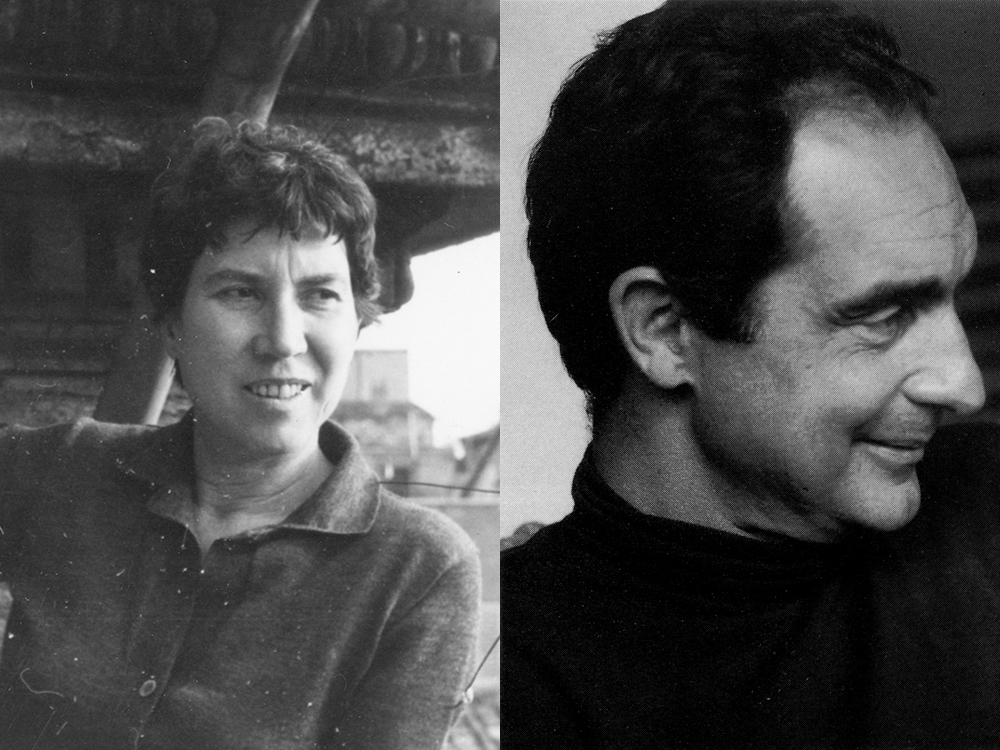
NATALIA GINZBURG AND ITALO CALVINO. GINZBURG PHOTO: COURTESY OF ARCHIVIO STORICO EINAUDI. CALVINO PHOTO: COURTESY OF THE AUTHOR’S ESTATE.


Natalia Ginzburg, the Last Woman Left on Earth

By 


On September 21, 1947, Italo Calvino—then the twenty-four-year-old book critic for Piemonte’s L’Unitá newspaper—published a review of Natalia Ginzburg’s second novel, The Dry Heart. The review, which is presented below in English for the first time, opens with this proposal: “Natalia Ginzburg is the last woman left on earth. The rest are all men—even the female forms that can be seen moving about belong, ultimately, to this man’s world.” For a moment, if you’re familiar with Calvino’s surreal masterpiece Invisible Cities, written twenty-five years later, you feel as if you’re teetering on the edge of one of that book’s bewildering scenes—all glimpse and symbol, hallucination posing as anthropology. But no, the young writer is merely trying to find the perfect words to describe the entirely singular aesthetic of a novelist who is vexingly (to him, it would seem) female. Calvino’s review stands in the Ginzburg archives as one of the most bizarre, yet also astute, as he pinpoints the way her made-up worlds are hyperrealistic voids, her characters both humane and remote, her Minimalism dependent on small mundane artifacts, her domesticity suffocating and vast. “It’s a shame we’ll never know Ginzburg’s reaction to this review,” the Ginzburg biographer Sandra Petrignani writes, “that positioned her in a new world of fiction, modern precisely because it is ancient.”

Sunday, July 9, 2023

The Lying Life of Adults by Elena Ferrante review / A girl's own story

Into the depths of Naples … Margherita Mazzucco in the TV adaptation of Ferrante’s 2012 novel, My Brilliant Friend.


BOOKS OF THE YEAR

BOOK OF THE WEEK

The Lying Life of Adults by Elena Ferrante review – a girl's own story


The confusions and clarity of female adolescence are explored in an astonishing novel set in Ferrante’s familiar Naples

Lara Feigel
Wed 19 Aug 2020 07.30 BST

Elena Ferrante is so good on the bodily feelings of female adolescence: the sweaty, clotted skin, the sudden bulges as breasts form, the awkwardly exciting transformations. She is good, also, on the way that childhood friendships change, becoming infused with desire and longing. Her characters startle themselves with their readiness to betray their friends for the newly discovered opposite sex, but they startle themselves too when they jettison their heavy, often rather insulting male suitors and return to their nimbler companions.

Tuesday, December 27, 2022

Italo Calvino / Cosimo Piovasco di Rondò

Il barone rampante sull'albero

Italo Calvino
Cosimo Piovasco di Rondò
IL BARONE RAMPANTE


Il barone rampante è il secondo romanzo della trilogia I nostri antenati, e viene pubblicato nel 1957 dalla casa editrice Einaudi. Il nuovo romanzo prosegue il tentativo di Calvino di unire l’ispirazione realistica del Neorealismo con la componente dell’invenzione fiabesca.

Tuesday, December 6, 2022

Oriana Fallaci / The art of the interview


Oriana Fallaci

Oriana Fallaci

The art of the interview

It can be adversarial, revelatory, somewhere between conversation and interrogation. This month we showcase a triumph of the genre.

OSMAN SAMIUDDIN  |  
O
f the many aspirations of an interview, one is that it be as much like a regular conversation as possible. Sadly, that rarely happens. A conversation is a consensual experience, with a sense of equality usually underpinning it - it does not happen if one does not want it to, and, in principle, it is not competitive. Unlike a conversation, an interview is not necessarily an exchange of ideas and arguments.

Alfred Hitchcock: Mr. Chastity by Oriana Fallaci


Alfred Hitchcock and Oriana Fallaci


ALFRED HITCHCOCK: MR. CHASTITY BY ORIANA FALLACI

June 14, 2016


Oriana Fallaci interviewed Alfred Hitchcock in 1963 when his movie The Birds screened in Cannes


Oriana Fallaci interviewed the British suspense master in 1963 when his movie The Birds screened in Cannes, but while she had a good understanding of the cruelty beneath the surface of the filmmaker she so admired, she clearly was hoodwinked by his narrative of being a devoted, even sexless, husband, entitling the piece, “Mr. Chastity.”

***

by Oriana Fallaci

For years I had been wanting to meet Hitchcock. For years I had been to every Hitchcock film, read every article about Hitchcock, basked in contemplation of every photograph of Hitchcock: the one of him hanging by his own tie, the one of him reflected in a pool of blood, the one of him playing with a skull immersed in a bathtub. I liked everything about him: his big, Father Christmas paunch, his twinkling little pig eyes, his blotchy, alcoholic complexion, his mummified corpses, his corpses shut inside wardrobes, his corpses chopped into pieces and shut inside suitcases, his corpses temporarily buried beneath beds of roses, his anguished flights, his crimes, his suspense, those typically English jokes that make even death ridiculous and even vulgarity elegant. I might be wrong, but I cannot help laughing at the story about the two actors in the cemetery watching their friend being lowered into his grave. The first one says to the other, “How old are you, Charlie?” And Charlie answers, “Eighty-nine.” The first one then observes, “Then there’s no point in your going home, Charlie.” …

Tuesday, October 25, 2022

Primo Levi, Camp Power, and Terror Capitalism / A Conversation with Darren Byler


Primo Levi, Camp Power, and Terror Capitalism: A Conversation with Darren Byler


Darren Byler And Ivan Franceschini
October 13, 2021

What does Italian writer and Holocaust survivor Primo Levi have to tell us about life in reeducation camps in Xinjiang today? What role does labour play in these facilities? What is terror capitalism and how does it relate to other frontiers of global capitalism? Can there be such a thing as ‘benign’ surveillance? These and other questions are at the centre of this conversation with anthropologist Darren Byler, who in recent years has emerged as a leading voice in documenting the mass detention of Uyghurs and other Muslim minorities in northwestern China. The impending publication of three books of his—In the Camps: China’s High-Tech Penal Colony (Columbia Global Reports, October 2021), Xinjiang Year Zero (co-edited with Ivan Franceschini and Nicholas Loubere, ANU Press, forthcoming 2022), and Terror Capitalism: Uyghur Dispossession and Masculinity in a Chinese City (Duke University Press, January 2022)—offers us an opportunity to revisit some key aspects of his work.

Wednesday, October 5, 2022

The 100 best books of the 21st century / No 11 / My Brilliant Friend by Elena Ferrante


The 100 best books of the 21st century

No 11

My Brilliant Friend by Elena Ferrante


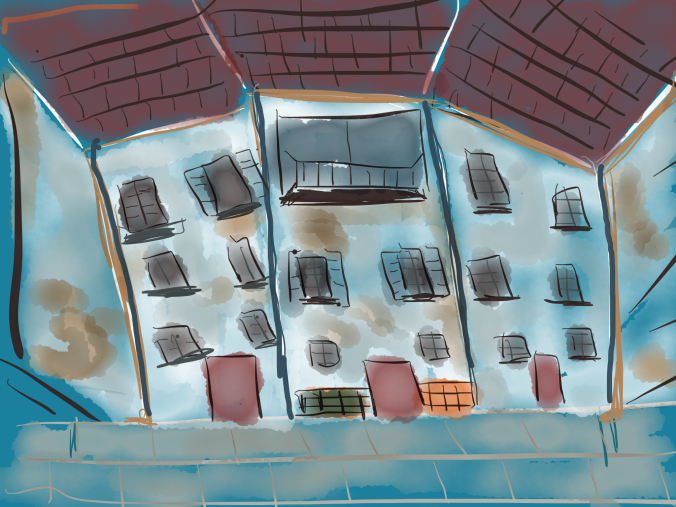
“Cellar Window in the Courtyard” –illustration 2016 by jpbohannon

MARCH 30, 2016 
J.P. BOHANNON

The English translation of Elena Ferrante’s L’amica geniale has been given the title My Brilliant Friend and for much of the book we believe it to be a reference to Lila Cerullo, the daughter of the shoemaker and the much-admired friend of the narrator Elena Greco (known as Lenù). And indeed, the phrase fits, for Lila is a precociously wise, driven, and independently thinking little girl. (The novel spans the two girls’ lives from six to sixteen.) And yet, much later in the book, when Lila is being fitted for a wedding dress, it is she who utters the phrase, calling the quieter, less assured Lenù “my brilliant friend.” Much to Lenù’s delight.

Elena Ferrante / The global literary sensation nobody knows


Elena Ferrante: the global literary sensation nobody knows

She shuns publicity and her identity is a mystery. Yet, as the last in her acclaimed series of novels about two friends in Naples is published, Elena Ferrante’s reputation is soaring, with Zadie Smith, James Wood and Jhumpa Lahiri among her fans. Meghan O’Rourke on a literary mystery


Meghan O'Rourke
Friday 31 October 2014
Elena Ferrante is an Italian novelist who was born in or near Naples. She seems once to have been married; she may have lived in Greece; she appears to be a mother. Or so we think. In our self-promoting, Twitter-saturated age, Ferrante is an outlier, an author who wishes to remain totally private. She refuses face-to-face interviews, has only given a handful of written ones (a few of her letters have been published), and makes no personal appearances; no photographs of her have been published. In 1991, shortly before the publication of her style-defining first book, Troubling Love, Ferrante sent a letter to her editor, explaining that she would not be promoting it: “I believe that books, once they are written, have no need of their authors. If they have something to say, they will sooner or later find readers; if not, they won’t.” Anonymity, she thought, would preserve “a space of absolute creative freedom”, a freedom all the more necessary because her books stick “a finger in certain wounds I have that are still infected”.

Elena Ferrante / ‘We don’t have to fear change, what is other shouldn’t frighten us'


‘Naples is already part of me, as I am of Naples.’


Interview

Elena Ferrante: ‘We don’t have to fear change, what is other shouldn’t frighten us'


In a rare interview, the author answers questions from booksellers and translators around the world, about everything from the coronavirus to writing as therapy


Sat 29 Aug 2020 05.01 BST

Neapolitan dialect plays an important role in your novelsCould one say that you are doing a work of translation, hearing the voices of these characters in dialect and turning them into Italian? Marcello Lino, translator, Brazil

Of course, but it’s a vexed, I would say unhappy, translation. To explain this I have to talk about the nature of the narrators I’ve constructed up to now. In my books, the narrator is the “voice” of a woman with Neapolitan origins, who knows dialect well, who is well educated, who has lived far from Naples for a long time, and who has serious reasons for hearing Neapolitan as the language of violence and obscenity. I’ve put “voice” in quotation marks here because it’s not at all about voice but about writing. Delia, Olga, Leda, Elena, explicitly or implicitly, are writing their story and in doing so resort to an Italian that is a sort of linguistic barrier against the city they come from. To varying degrees, they have fabricated for themselves – let’s say – a language of flight, of emancipation, of growth, and have done it against the dialect-speaking environment that formed them and tormented them during childhood and adolescence. But their Italian is fragile. Dialect instead is emotionally robust and at moments of crisis imposes itself, moves into the standard language, emerges in all its harshness. In other words, when, in my books, Italian succumbs and takes on dialectal cadences, it’s a sign that, in the language as well, past and present are getting anxiously, painfully confused. I don’t, in general, mime dialect: I let it be felt as the possible eruption of a geyser.

Wednesday, March 30, 2022

Adam, One Afternoon By Italo Calvino


Adam, One Afternoon
By Italo Calvino

The NEW gardener's boy had long hair which he kept in place by a piece of stuff tied round his head with a little bow. He was walking along the path with his watering-can filled to the brim and his other arm stretched out to balance the load. Slowly, carefully, he watered the nasturtiums as if pouring out coffee and milk, until the earth at the foot of each plant dissolved into a soft black patch; when it was large and moist enough he lifted the watering-can and passed on to the next plant. Maria-nunziata was watching him from the kitchen window, and thinking what a nice calm job gardening must be. He was a grown youth, she noticed, though he still wore shorts and that long hair made him look like a girl. She stopped washing the dishes and tapped on the window.

Sunday, December 12, 2021

Montalbano returns in Andrea Camilleri's posthumous novel

Andrea Camilleri


Montalbano returns in Andrea Camilleri's posthumous novel

This article is more than 1 year old
Riccardino, author’s final book of the popular crime series, hits shelves a year after his death


Agence France-Presse in Rome
Thu 16 Jul 2020 19.25 BST

The last whodunnit featuring the famed Sicilian police inspector Salvo Montalbano has hit the shelves in Italy, nearly a year to the day after the death of the author Andrea Camilleri.

Riccardino was first penned in 2005 and then tweaked in 2016, after which Camilleri gave it to his publisher on the promise that it would not be released until after his death. He died on 18 July 2019 at the age of 93.

Riccardino by Andrea Camilleri / Review


Riccardino by Andrea Camilleri

By Paul Burke
15 October, 2021

Translated by Stephen Sartarelli — The publication of the Inspector Montalbano stories in English spans nearly two decades so it’s no wonder we have formed such an attachment to the irascible but brilliant detective. Now, however, the curtain is about to fall and we must say goodbye.

Thursday, July 8, 2021

Oriana Fallaci / The Rage and the Pride


  • Oriana Fallaci

“THE RAGE AND THE PRIDE” 

[LA RABBIA E L’ORGOGLIO] 

by Oriana Fallaci

The Rage and The Pride hit Italy with a maelstrom of emotion. It was a body blow to the country’s cravenness. Italy of course split. But it was also abruptly enfolded in an astonishing act of love that in a sense rendered it more united and more aware of its identity. Oriana went straight for the heart, forcing even those who agreed with none of her thoughts to think. Even those who, wrongly, considered her slightly racist.*
by Oriana Fallaci
You ask me to speak this time. You ask me-this time at least-to break the silence that for years I have imposed upon myself in order that my voice not get mixed up with the sound of the cicadas. And I will break that silence-because I have learned that even in Italy some have rejoiced as the Palestinians in Gaza did the other night on TV. “Victory! Victory!” Men, women, and children. I assume that those who do such a thing can be defined as men, women, and children. I have learned that some high grade cicadas, politicians or so-called politicians, intellectuals or so-called intellectuals, and others who don’t deserve to be called citizens, have behaved in the same way. “Good!” they say, “The Americans deserve it!” And I’m very, very, very angry. I’m angry with a cool, lucid, rational anger, an anger that wipes out any detachment, any indulgence, that commands me to answer, and finally to spit on them. And I do spit on them. The African- American poet Maya Angelou, herself as angry as I am, yesterday roared: “Be angry! It’s good to be angry, it’s healthy!” But whether or not it’s healthy for me I don’t know. However I do know it’s not healthy for them-I mean whoever admires the Usama bin Ladens, whoever expresses understanding, sympathy, or solidarity toward them. You’ve fired a detonator that has too long wanted to explode, with your request. You’ll see. You’ve also asked me to explain how I myself experienced this apocalypse. In sum, to furnish my own testimony. And so I shall begin with that. I was at home-my house is in the center of Manhattan, and at exactly nine o’clock I had the sensation of a danger that probably would not touch me, but that certainly concerned me. The sensation one feels in war-or rather in combat-which each pore of your skin feels the bullet or the rocket coming in at you, and you prick up your ears and shout to whoever is standing beside you “Down! Get down!” I rejected it. I was certainly not in Vietnam. I was not in one of those fucking wars that have made a torment of my life ever since the Second World War. I was in New York, for God’s sake, on a beautiful September morning in the year 2001. But the inexplicable feeling continued to possess me. Then I did something that in the morning I never do. I turned on the television. Actually, the audio wasn’t working. But the screen was. And on each channel-here you have almost a hundred of them-you saw one tower of the World Trade Center burning like a gigantic matchstick. A short circuit? A little, careless plane? Or an act of terrorism? I stared almost paralyzed and while I was staring, while I was posing those three questions to myself, a plane appeared on the screen. It was big and white. A commercial airliner. It was flying very low. And, flying very low, it turned toward the second tower as a bomber aims at its target-throws itself at its target. And I understood. I understood also because at that moment the audio came back, transmitting a chorus of wild shouts. Repeated, wild shouts. “God, oh God! Oh, God! God! God! Goooooood!” And the plane slipped into the second tower as a knife slips into a slab of butter.

Oriana Fallaci / The Rolling Stone Interview

Oriana Fallaci            

ORIANA FALLACI: THE ROLLING STONE INTERVIEW (1976)

How to uncloth an emperor: A talk with the greatest political interviewer of modern times
by Jonathan Cott
Little man whip a big man every time if the little man’s in the right and keeps a’ comin’.
motto of the Texas Rangers
When Oriana Fallaci went to interview Ethiopia’s Haile Selassie, the emperor’s two pet Chihuahuas, named Lulu and Papillon – sensitive antennae of the monarch’s autonomic nervous system, geiger counters registering the presence of friend or foe – stopped dead in their tracks. And after this interview (in which the emperor sounded “sick or drunk”) was published in Italy, the Ethiopian ambassador in Rome was recalled to his homeland, and no word of or from him was ever heard again.

Monday, June 7, 2021

Final fragments of Giuseppe Tomasi di Lampedusa