Nicola Barker: ‘Each novel has its own specially designed notebook. These are sacred objects to me’
The novelist on why she loves marker pens, Post-it notes and notebooks – and why she is a ‘clucky, agenda-driven mother hen’
Nicola Barker
Saturday 18 November 2017 10.00 GMT
I
work on an old apple laptop that isn’t online – it’s heavy and the keyboard is worn. It tells you if a word is spelled incorrectly (in American English so all my Ss need to be Zs or the page is covered in irritable red marks) but it doesn’t suggest alternatives. Every so often a key locks and you’ll look down at the screen and see or It also likes to impose random gaps and spaces on to the text (in geometric boxes) that are impossible to remove so you have to copy the narrative and open a new document. When I completed my last book, H(a)ppy, I suspected that I’d need a new laptop and I bought one and began working on it but this one was online. And it was way more portable. So I began slouching on the sofa (instead of sitting at my desk) and working whenever I felt the urge.
'Where do I think best? In bed' – authors reveal their dream retreats
A hotel on the Moray Firth estuary; an adrenaline-filled auction room in west London; an ad man’s office in Manhattan on DVD … AL Kennedy, William Boyd and others celebrate their cultural hideouts
by William Boyd, AL Kennedy, Nicola Barker, Joan Bakewell and Daljit Nagra Friday 29 December 2017
AL Kennedy
AL Kennedy: My bed
I’m typing this in bed – but more of that later. Writers asked to expatiate on cultural or creative spaces may tend to feel they have to swear they can’t add one word to another without staying in a Tuscan palazzo, or being surrounded by folk musicians from obscure mountain villages and their charmingly artisanal children. (Sort of like Michael Redgrave inThe Lady Vanishesonly more lifestyley.) This helps advertisers offer you Tuscan holiday packages, or mountain socks made from homespun doghair.
Best summer books 2018, as picked by writers and cultural figures – part seven
From Pulitzer prize-winners to Penguin classics, poetry anthologies to the latest page-turners, here are the books to take to the beach this summer
Sun 8 Jul 2018 09.00 BST
Niven Govinden
I recommend Territory of Light (Penguin, translated by Geraldine Harcourt), Yuko Tsushima’s stories of marital disappointment, parenthood and loneliness following a separation in 70s Tokyo. It’s unflinching and brings to mind Elena Ferrante’s early work. Caryl Phillips’ novel A View of the Empire at Sunset (Vintage), about the becoming of Jean Rhys, fully inhabits the despair of damp prewar London and stifling colonial society abroad. Edouard Louis’s History of Violence (Harvill Secker), detailing a sexual attack and its aftermath, is shocking, but also tender in its examination of class difference and queer desire. Books I’m packing for Arles include Annie Ernaux’ s The Years (Fitzcarraldo Editions, translated by Alison L Strayer), Will Ashon’s forthcoming Wu-Tang epic, Chamber Music (Granta) and Nikesh Shukla’s The One Who Wrote Destiny (Atlantic).
Mark Kozelek
I’ve been travelling over the last month and I’ve been bouncing back and forth between books during my travels. The first is called Iron Ambition: My Life With Cus D’Amato (Sphere) by Mike Tyson and Larry Sloman. I’m a fan of Cus D’Amato, who also trained world champions Floyd Patterson and José Torres. I’m also reading Nietzsche for the first time, partly because Cus had Mike reading Nietzsche at 15 years old. I’m halfway through Thus Spake Zarathustra (Wordsworth, translated by Thomas Common) and will admit I can’t make head or tail of some of it. I think the book is telling me to believe in myself, to think at a higher-than-average level, and to not get bogged down with petty things. Ideal holiday reading.
Suzanne O’Sullivan
Anybody who wants a real treat must read Martina Evans’s Now We Can Talk Openly About Men (Carcanet). Full of insight and humour, it tells the story of two women’s lives in Ireland during the civil war. As a poet, Evans’s ability to choose just the right word is unerring. I also highly recommend Maggie O’Farrell’s I Am, I Am, I Am (Tinder), a memoir that rivals the beauty of her novels. My own summer holiday will be spent in Sweden doing research for a book. While there, I plan to reread some old favourites – starting with Tom Wolfe’s The Electric Kool-Aid Acid Test (Vintage).
Julie Myerson
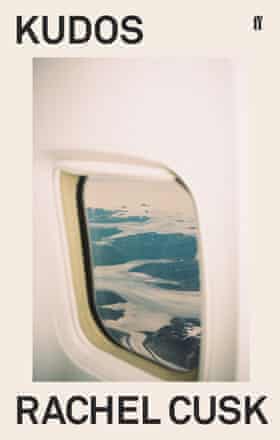
Rachel Cusk’s Kudos (Faber) is one of the most astoundingly original and necessary books I’ve ever read. It made me laugh, think and cry. She’s my friend, but I recommend it without apology: I envy anyone who hasn’t read it yet. I was startled, but also very moved, by the almost abrasive directness of Rose Tremain’s memoir Rosie (Chatto & Windus). It did exactly what memoirs ought to do: made me want to rush straight back to her fiction. My ideal holiday (a bit of a fantasy at the moment) would therefore be a fortnight in Rome with all of Tremain on a Kindle, along with John Updike’s Rabbit (Penguin) quartet – which people have been ordering me to read for years – as well as Motherhood (Harvill Secker) by Sheila Heti, which I’ve been hoarding, and Never Anyone But You (Corsair) by the unfailingly brilliant Rupert Thomson.
Nicola Barker
I know it sounds a little sad, but I tend to get really excited when I receive the Polity Press’s new catalogue. They publish so much clever, challenging and fascinating stuff. Over the summer I plan to read Alain Corbin’s A History of Silence (Polity). Corbin writes sparely, beautifully and with an exquisite fastidiousness about, well… something and nothing: quiet. In the first chapter he recommends George Rodenbach’s The Bells of Bruges (Dedalus, translated by Mike Mitchell) and Max Picard’s The Flight from God (St Augustine’s Press). I intend to consume all three of the above, at home or on trains, in an atmosphere of gentle reverence.
Viet Thanh Nguyen
Luis Alberto Urrea’s The House of Broken Angels (Little, Brown) is a great American novel, if we understand “America” to be all of the Americas, including Mexico. It’s profane, funny and moving. Sayaka Murata’s Convenience Store Woman (Portobello, translated by Ginny Tapley Takemori) takes a universal space, the convenience store, and turns it into the setting for a darkly comic (and very short) novel about alienation and identity in an urban, capitalist society. Alexander Chee’s How to Write an Autobiographical Novel (Mariner) is a collection of essays about race, writing, politics, queerness and sexuality that is urgent and insightful. I’ll be in Paris for much of the summer, and I’ll be takingÉdouard Louis’ The End of Eddy (Vintage, translated by Michael Lucey), Leila Slimani’s Lullaby (Faber), Han Kang’s The Vegetarian (Portobello), Min Jin Lee’s Pachinko (Head of Zeus), Lisa Ko’s The Leavers (Dialogue) and Jenny Zhang’s Sour Heart (Bloomsbury).
Philip Hensher
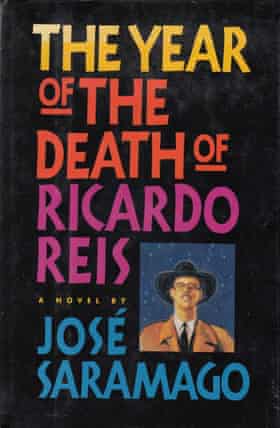
This year, I’m packing José Saramago’s novels - I’ve only just got round to him, and I’m knocked out by the worldly precision and the combination of substance and grandeur. The Year of the Death of Ricardo Reis (Vintage, translated by Giovanni Pontiero) was a revelation, and I’m looking forward to the half dozen more now in a pile. The two new novels I really want to take away are both by favourite Australian authors: Michelle de Kretser’s The Life to Come (Allen & Unwin) and Tim Winton’s The Shepherd’s Hut (Picador). They’re both writers of wonderful freshness and energy. Just right for two weeks’ retreat at an Austrian health farm, to fit in between forest walks, massages, advanced treatments and 650 exquisitely tantalising calories a day.
Viv Albertine
One of my favourite books this year was Nine Island (Catapult) by Jane Alison, which is funny and wise and such a closely observed account of a single woman’s life during her time living in Florida. It’s so vividly described that I didn’t read it as fiction, which shows how good a writer Alison is. Her protagonist J’s reflections on sex, love and other people are so unapologetic and honest, I felt less alone and freakish while reading the book. Another that had me in its grip, due to her insightful and direct voice, was Kudos (Faber) by Rachel Cusk. Cusk has a piercing intellect but demonstrates it through perspicacity, not by showing off on the page. I came to the graphic memoir Persepolis (Pantheon) by Marjane Satrapi via my 19-year-old daughter. It is set in Iran around the Islamic revolution when the author is 10. We accompany her through her gradual awakening to politics, love, oppression and the complexity of families – and her drawings are enchanting. I am going to Hastings, East Sussex, for a week’s course at the art school. The books I’ll take with me are Motherhood (Harvill Secker) by Sheila Heti, and Zadie Smith’s new collection of essays, Feel Free (Hamish Hamilton).
Nikesh Shukla
Ponti (Picador) by Sharlene Teo is a sultry, hilarious dissection of mother-daughter relationships, and the effect of time and teenagehood on friendships, against the backdrop of Singapore B-movies. It oozes confidence. On Michael Jackson (Granta) is Margo Jefferson’s excellent, empathic take on the singer, encapsulating the pressures of being a child star, the most famous person on the planet and having a complicated legacy that can sometimes make people forget about the music. Meanwhile, Crudo (Picador) by Olivia Laing is a hot and heavy look at post-Brexit Britain through the eyes of newlywed Kathy as she summers in Italy. It’s Olivia Laing’s fiction debut and is very much a self-assured interrogation of the times we live in. James Smythe’s I Still Dream (Borough) is his most accomplished work – a past, present and future of AI, which is as human as it is otherworldly, and utterly engrossing. I am going to east Devon and will be taking the short story collection Heads of the Colored People (Chatto & Windus) by Nafissa Thompson-Spires, the memoir This Really Isn’t About You (Picador) by Jean Hannah Edelstein and Londoners (Granta) by Craig Taylor.
Paul Morley
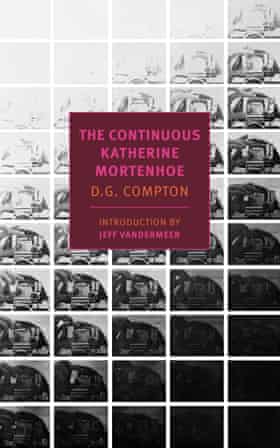
Don Paterson’s wonderfully learned The Poem: Lyric, Sign, Metre (Faber) is pure joy for footnote freaks and those who like to get high thinking about thinking. Not so much about how to be a poet as how to be in a poem, or even be a poem, it also works as a great book about music. DG Compton’s The Continuous Katherine Mortenhoe (Gateway), written in 1974, coolly anticipated society being occupied with reality TV, and continues its journey from depicting an imaginary world to approaching nonfiction. I’ll be in Lisbon, switching between Shirley Collins’s All in the Downs (Strange Attractor) and Lamont Hawkins’s Raw: My Journey Into the Wu-Tang Clan (Faber), to see what they have in common. I’ll also be taking a handful of those nourishing one-pound Penguin Modern classics so I can go on holiday with George Orwell’s Notes on Nationalism, Albert Camus’s Create Dangerously, James Baldwin’s Dark Days, Kathy Acker’s New York City in 1979 and Samuel Beckett’s The End.
We look back on a year that saw Arundhati Roy’s return and George Saunders’ Man Booker victory, along with dark short stories and a haunting last novel
Justine Jordan Thursday 30 November 2017
O
ne of the joys of the novel is its endless capacity for reinvention, and 2017 saw fiction writers trying out fresh approaches and new forms. The Man Booker winner was a debut novel from an author with 20 years of short stories under his belt: George Saunders’s magisterial Lincoln in the Bardo (Bloomsbury), in which the death and afterlife of Abraham Lincoln’s young son is told through snippets of civil war memoir and a cacophony of squabbling ghosts, was a fantastically inventive exploration of loss, mourning and the power of empathy. There was an injection of the fantastic, too, in Mohsin Hamid’s Exit West (Hamish Hamilton), which added the device of magical portals opening up across the globe to its spare, devastating portrait of victims of war, creating a singular parable about modernity, migration and the individual’s place in the world.
Jon McGregor has always written about communities; in the acclaimed Reservoir 13 (4th Estate), he deepened his pursuit of a collective voice, encompassing the natural world as well as the human in a cyclical tale of the years going by in an ordinary English village wounded by a girl’s disappearance. Each of Nicola Barker’s books is a world unto itself; with H(a)ppy (William Heinemann), winner of the Goldsmiths prize, she pushed the novel towards objet d’art, using colour and madcap typography to conjure a visionary dystopia of surveillance and control in which creativity and individuality refuse to be constrained.
There were notable returns and some new directions from fiction’s biggest names: Colm Tóibín replayed Greek myth in House of Names (Viking); John Banville channelled Henry James in the Portrait of a Lady sequel Mrs Osmond (Viking); Salman Rushdie went back to realism in The Golden House (Jonathan Cape); and Alan Hollinghurst layered historical snapshots of gay life in The Sparsholt Affair (Picador), a beautifully written chronicle of art and love in a changing Britain.
Jennifer Egan followed up her zippy Pulitzer winner A Visit from the Goon Squad with a more conventional novel of American dreams, Manhattan Beach (Corsair); while Arundhati Roy’s second novel appeared a mere two decades after her first: The Ministry of Utmost Happiness (Hamish Hamilton) was a sprawling, kaleidoscopic fable about love and resistance in modern India. Roddy Doyle excelled himself with Smile (Jonathan Cape), a typically bittersweet novella about a middle-aged man’s memories of his schooldays which pulls the rug shockingly from under the reader’s feet. And in June we said goodbye to the prodigiously talented Helen Dunmore, who died shortly after the publication of her haunting last novel, Birdcage Walk (Windmill), set in an 18th-century Bristol where revolution is in the air.
George Saunders … magisterial. Photograph: David Levene/The Guardian
Of the many classical reboots, the most interesting was Kamila Shamsie’s Home Fire (Bloomsbury Circus), which contrasts the role of the modern state with timeless bonds of love and loyalty by replaying the Antigone myth through the story of two sisters and their jihadi brother. Hogarth Press’s project to novelise Shakespeare continued, with master stylist Edward St Aubyn recasting King Lear as the downfall of a media mogul in Dunbar. Debut novelist Preti Taneja set her fierce, freewheeling version, We That Are Young (Galley Beggar), in contemporary India, with fascinating results.
The trend for autofiction continued, with two scorching novels powered by personal history: Meena Kandasamy’s When I Hit You: or, A Portrait of the Writer as a Young Wife (Atlantic) brutally exposed the violence of an abusive marriage within the constraints of Indian society; and The End of Eddy by Édouard Louis, translated by Michael Lucey (Harvill Secker), is a savage account of growing up poor, gay and victimised in rural France. Meanwhile, the intimate horrors of a toxic marriage – and toxic parents – were skewered in Gwendoline Riley’s pin-sharp First Love (Granta).
Two slim, terrifying volumes lingered in the mind: Fever Dream by Argentinian writer Samanta Schweblin, translated by Megan McDowell (Oneworld), was a gloriously creepy fable taking in bodyswapping, maternal dread and the dangers of GM crops. In Such Small Hands by Andrés Barba, translated from the Spanish by Lisa Dillman (Portobello), a traumatised young girl’s arrival in an orphanage is the trigger for an explosion of love, hate and repressed desire. Both are quickly read, never forgotten. Another gem in translation was Olga Tokarczuk’s Flights, translated by Jennifer Croft (Fitzcarraldo), which in the vein of WG Sebald knits together snippets of fiction, narrative and reflection to meditate on human anatomy and the meaning of travel: this is a delicate, ingenious book that is constantly making new connections.
The Lie of the Land.
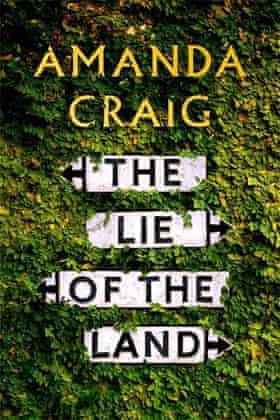
If you’re after the juicier pleasures of a realist pageturner, pick up Amanda Craig’s canny portrait of the bitter divisions in a marriage and the UK: The Lie of the Land (Little, Brown) sees a privileged couple who feel too poor for London move to rural Dorset. There they discover how the other 90% live in an elegantly written expose of all the things the elite would rather not consider about poverty, inequality, food production and class, with a nailbiting mystery thrown in.
Debuts to celebrate included Yaa Gyasi’s ambitious, multi-generational saga of the effects of the slave trade, Homegoing (Penguin); Gabriel Tallent’s intense tale of abuse and self-determination in backwoods California, My Absolute Darling (4th Estate); and Sally Rooney’s witty anatomisation of modern attitudes in post-crash Dublin, Conversations With Friends (Faber). Former US soldier Brian Van Reet’s Spoils (Jonathan Cape) was a brilliantly written account of kidnap and conquest in the early stages of the Iraq war; for the Iraqi perspective, turn to Muhsin al-Ramli’s The President’s Gardens, translated by Luke Leafgren (Maclehose), which follows a group of friends growing up under Saddam Hussein.
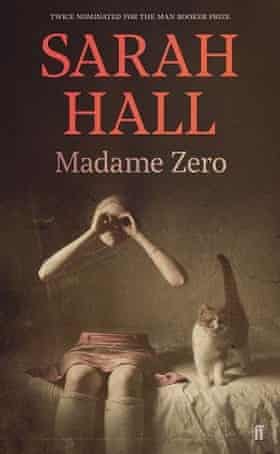
The year’s short stories tended to the dark and the disturbing: standout collections included Sarah Hall’s Madame Zero (Faber), elegant tales of sex, motherhood and transformation, and June Caldwell’s Room Little Darker (New Island), a supercharged gothic debut from an Irish writer to watch. Another debut, Eley Williams’s Attrib. And Other Stories (Influx), cornered the market in cerebral playfulness.
Madame Zero.
Finally, two novels that make fitting reading for the season. Bernard MacLaverty’s Midwinter Break (Jonathan Cape), about an elderly married couple on a mini-break in Amsterdam, may put you off the festive sherry: its portrayal of the tightening vice of alcohol addiction is unparalleled. But its profound exploration of love, companionship, faith, work and our search for meaning in life made it a tender masterpiece, and one of the year’s essential reads.
Ali Smith’s Winter (Hamish Hamilton) is the second in her seasonal quartet, following the Booker-shortlisted Autumn, and once again tackles the biggest subjects with the lightest touch. A capacious, generous shapeshifter of a novel taking in Greenham Common and Barbara Hepworth, Shakespeare and global migration, it juxtaposes art with nature and protest with apathy, finding surprising alliances in a family riven by feuds. It’s a book with Christmas at its heart, in all its familiarity and estrangement: about time, and out of time, like the festival itself.