Showing posts with label Laura Wilson. Show all posts

Monday, December 22, 2025

The best crime and thrillers of 2025


Review

The best crime and thrillers of 2025

Mick Herron’s Slow Horses, Belinda Bauer’s obsessive world of bird egg collectors, Uketsu’s innovative Japanese detective mystery – and more


Laura Wilson
Tuesday 2 December 2025

If we get the heroes we deserve, then Jackson Lamb, foul-mouthed and slovenly ringmaster of a circus of failed spies, is truly the man for our times. With Clown Town (Baskerville), the ninth book in Mick Herron’s state-of-the-nation satire/thriller mashup series, hitting the bestseller lists, and the fifth series of the Slow Horses TV adaptation streaming, this has been the author’s year. In the latest outing, Lamb and his stable of “losers, misfits and boozers” are well up to the mark as secrets about an IRA double agent threaten to come to light, exposing the seamier side of state security for a story of loyalty and betrayal.

Complicity and culpability, as well as class and professional ethics, are the subjects of Denise Mina’s The Good Liar (Harvill). When the creator of a revolutionary blood splatter probability scale realises that its flaws may have led to an unsafe conviction, she has to decide what to do about it. Tense and powerful, this is a sobering reminder of how the human element can undermine an apparently objective scientific method. The Confessions by Paul Bradley Carr (Faber) ventures into similar territory to terrifying effect. It takes place in an all-too-plausible future in which the world has become reliant on a decision-making algorithm; things go catastrophically awry when the AI tool begins to feel remorse for some of its decisions, and carnage results.
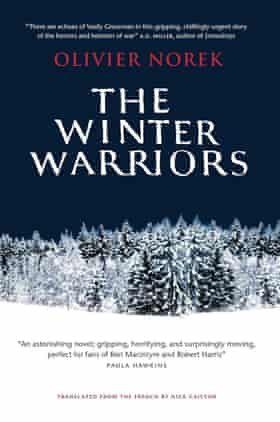
The Winter Warriors by Olivier Norek (Author), Nick Caistor (Translator)

Equally topical, although for different reasons, is the French author Olivier Norek’s astonishingly compelling The Winter Warriors (Open Borders, translated by Nick Caistor), which tells the true story of the Soviet Union’s 1939 invasion of Finland and the incredible feats of Simo Häyhä, the Finnish sniper so effective that Stalin’s terrified troops called him “the White Death”. The second book in Joseph O’Connor’s Rome Escape Line trilogy is another superb testament to humankind’s bravery and resilience. Continuing the story of resistance fighters in Nazi-occupied Italy, The Ghosts of Rome (Harvill) is just as moving and immersive as its predecessor, My Father’s House.

The Northern Irish writer Eoin McNamee is known for literary reimaginings of real crimes, but in The Bureau (Riverrun) he uses family experience of running a bureau de change near the Irish border as the jumping-off point for a tale of black-marketeering in the 1980s, set against a background of political violence and centring on the doomed relationship between a married gangster and his young mistress. Time, place, skewed morals and machismo are powerfully evoked in beautifully spare prose.
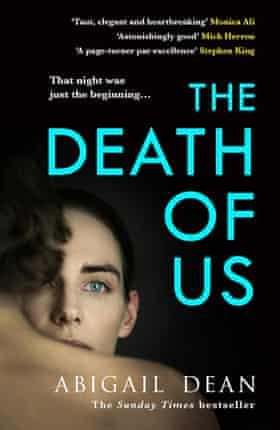
The Death of Us by Abigail Dean

Abigail Dean’s third novel, The Death of Us (Hemlock), deals with the impact of a crime – in this case a violent home invasion, leading to rape – on a marriage. Twenty-five years later the perpetrator, who has committed a string of similar offences, some ending in murder, is caught and tried, with the now divorced Edward and Isabel giving impact statements. Dean weaves both their points of view, past and present, for an exceptional psychological thriller that is also a love story, focusing on the years before and after the terrible event lays bare the fault lines in their relationship.

Belinda Bauer brings back Patrick Fort, protagonist of her 2013 novel Rubbernecker, in The Impossible Thing (Bantam), a tale set in the obsessive (and now illegal) world of bird egg collectors. Switching between 1920s Yorkshire, when young Celie Sheppard reverses her impoverished family’s fortunes by stealing a rare red egg from a guillemot, and the 21st century, when Patrick is trying to track down the burglar who stole an “old egg” in an ornamental box from his neighbour, this funny, moving and unpredictable novel is a treat.
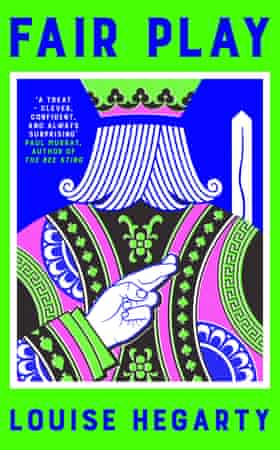
fair play

The straightforward cosy crime novel is still incredibly popular, but some authors are borrowing its tropes and conventions to explore different themes. Louise Hegarty’s distinctive debut, Fair Play (Picador), is the finest example of this. It begins conventionally enough with a murder mystery-themed house party, during which a genuine death occurs. The rug is then pulled sharply and repeatedly out from under the reader’s feet as two storylines emerge: one a metafictional Golden Age pastiche, full of knowing asides and tricksy fun; the other a painfully realistic account from the point of view of the victim’s sister, lonely and confounded by grief. The result is an ingenious take on how we make sense of both life and death.

The Japanese YouTuber Uketsu, real identity unknown (he wears a papier-mache mask), is responsible for what must be the most idiosyncratically unsettling crime novel of the year. Strange Pictures (Pushkin Vertigo, translated by Jim Rion) is a sequence of connected mysteries with visual as well as narrative clues, beginning with creepy artwork by an 11-year-old girl who was arrested for matricide. It’s heartening to see that the genre remains as versatile and dynamic as ever.


THE GUARDIAN


Saturday, September 20, 2025

The best recent crime and thrillers – review roundup


Willism

Crime and thrillers roundup

REVIEW

The best recent crime and thrillers – review roundup

The Predicament by William Boyd; The Killer Question by Janice Hallett; The Impossible Fortune by Richard Osman; 59 Minutes by Holly Seddon; Deadman’s Pool by Kate Rhodes


Laura Wilson
Friday 19 September 2025

The Predicament by William Boyd (Viking, £20)
A second adventure for amateur spy Gabriel Dax, first seen in Boyd’s 2024 novel Gabriel’s Moon. It’s early 1963, and Dax, a travel writer, is in his Sussex cottage working on his latest book, struggling with emotional baggage and yearning for his MI6 handler and sometime girlfriend, Faith Green. She persuades him to go to Guatemala to check out the popular leftwing leader who is threatening to topple the country’s CIA-backed government, but Dax is forced to flee when things go seriously awry. He ends up being sent to West Berlin to gather intelligence on a possible assassin, whose arrival in West Germany just before the visit of US president John F Kennedy may not be coincidental. Beautifully crafted, with echoes of le Carré, Greene and Forsyth, this is a superb evocation of a vanished world, seen through the eyes of a relatably hapless accidental hero.

The Killer Question by Janice Hallett

The Killer Question by Janice Hallett (Viper, £18.99)
Hallett’s latest centres on that staple of British social life, the pub quiz, and like its predecessors it’s told in emails, WhatsApp messages, texts and transcripts. We know from the start that things haven’t gone well for pub landlords Sue and Mal Eastwood: their nephew is pitching a true crime documentary to Netflix, promising “intrigue, tension, betrayal, deception and … murder”. Rewind to five years earlier: Sue and Mal, desperate to keep their struggling business afloat, are pleased at the arrival of a new quiz team. However, the Shadow Knights proceed to sweep the board every week, prompting accusations of cheating. So far, so nerdy – but when the body of someone already outed as a quiz cheat is discovered in a nearby river, things take a darker turn. Some suspension of disbelief is necessary – why Sue and Mal chose to communicate via WhatsApp rather than talking to each other is unclear – but Hallett is a master of misdirection, and this plot is up there with her fiendishly clever best.

The Impossible Fortune by Richard Osman

The Impossible Fortune by Richard Osman (Viking, £22)
The fifth novel in Osman’s bestselling Thursday Murder Club series sees crime-solving pensioners Elizabeth, Joyce, Ibrahim and Ron engaging with secret codes, drug dealers, impecunious aristocrats and cryptocurrency, with assistance from former cocaine queenpin Connie, friendly cop Donna, Bogdan the handyman and Ron’s clever nine-year-old grandson. Although still grieving for her husband, Elizabeth steps up when Nick, the best man at Joyce’s daughter’s wedding, confides that somebody is trying to kill him. Nick and his business partner Holly own a high-security storage facility and once accepted a payment in bitcoin, the value of which has risen to £350m. They want to cash out, but the money is protected by two codes, and as Nick and Holly have one each, neither can access it alone. When Nick disappears, the quartet gets on the case. The central mystery is a satisfactory head-scratcher, but the true pleasure is a gently humorous read, peopled with characters who feel like old friends.

59 Minutes Holly Seddon

59 Minutes by Holly Seddon (Orion, £10.99)
Seddon’s seventh novel is a high-concept, inhale-at-a-sitting tour de force. On a Friday afternoon in November, the announcement of an imminent nuclear strike on southern England – just 59 minutes until impact – causes instant chaos. The public are told to seek immediate shelter, but Carrie, stuck in a crowd of panicked commuters at Waterloo station, is desperate to get home to her family. Frankie and Otis, on a romantic minibreak in Devon, are trying to find enough supplies to sustain them until it’s safe to leave their rented cottage, but the queue at the local store soon degenerates into a melee, with worse to follow. As the clock ticks down, Seddon paints a terrifyingly convincing picture of what happens when everything we take for granted breaks down in a matter of seconds, as well as creating characters you’ll be rooting for and keeping up a breakneck pace with a plot that twists, turns, and – without giving too much away – somersaults back on itself.

Deadman’s Pool Kate Rhodes

Deadman’s Pool by Kate Rhodes (Orenda, £9.99)
The eighth novel in Rhodes’s splendid series set on the Isles of Scilly begins when DI Ben Kitto’s dog discovers the remains of an emaciated girl on the uninhabited island of St Helen’s. Kitto and his colleagues are baffled: no one has been reported missing, and rumours about rich islanders being involved in a people-smuggling conspiracy are dismissed as the imaginings of bored schoolkids. Kitto’s narrative is interspersed with that of Mai, a Vietnamese girl who is being held captive in a basement, alone now that her younger sister and her baby – the result of rape by her captor – have been taken away. And when a tiny baby is found abandoned at the police station, the race is on to find the mother before it’s too late. An atmospheric and moving depiction of a tightly knit community in a rugged and often dangerous landscape, Deadman’s Pool is tense and deftly plotted, the pathos fuelling true suspense.

THE GUARDIAN


Thursday, January 13, 2022

The Leopard by Jo Nesbø / Review by Laura Wilson


The Leopard by Jo Nesbø


Laura Wilson goes on a Nordic murder spree


Laura Wilson
Saturday 22 January 2011

S

ince The Girl With the Dragon Tattoo was published in 2008, there's been something of a Nordic noir bonanza in this country, with every new Scandinavian crime novel, whether good, bad or indifferent, being engulfed in a blizzard of hyperbole, and every author trailed as "the next Stieg Larsson". While this label is neither intelligent nor helpful, it is probably fair to say that, in terms of both critical and commercial success, Norwegian Jo Nesbø is the writer to whom it is the most applicable.

Thursday, January 6, 2022

Turn the page


Jo Nesbø


Turn the page

Alfred Hickling, Jane Housham and Laura Wilson on Paper | Hobson's Island | Piano | The Devil's Star

Saturday 19 November 2005


Paper by Bahiyyih Nakhjavani (Bloomsbury, £7.99)

One of the weirdest instances of grave robbing occurred in the mid-19th century, when Egyptian mummies were exported to America so that the rags could be pulped in the paper mills of Maine. The Persian writer Bahiyyih Nakhjavani includes this among reams of fascinating paper-related facts (interesting to note that the very first paper mill was established in Baghdad in 793) in a poetic account of a Persian scribe's quest to find the perfect sheaf. Nakhjavani's dream-like fable is peopled with a drifting cast of mullahs, moneylenders, envoys and emperors. The frequent passages of paper-fetishism have a fleeting, musical sensuality without ultimately making very much sense: "Each sheet was impeccably trimmed, and as wide as a hand span of hope. Each page was no longer than belief and as cool as the human soul." But as the use of print becomes increasingly prevalent, the scribe finds there's a declining market for exquisite calligraphy inscribed with a sharpened thumbnail: "As the scribal bonds between books and men began to break, Persia became paperless." Wasn't that supposed to have happened in offices about 10 years ago?

Alfred Hickling