Showing posts with label Cities / Istanbul. Show all posts

Friday, May 22, 2026

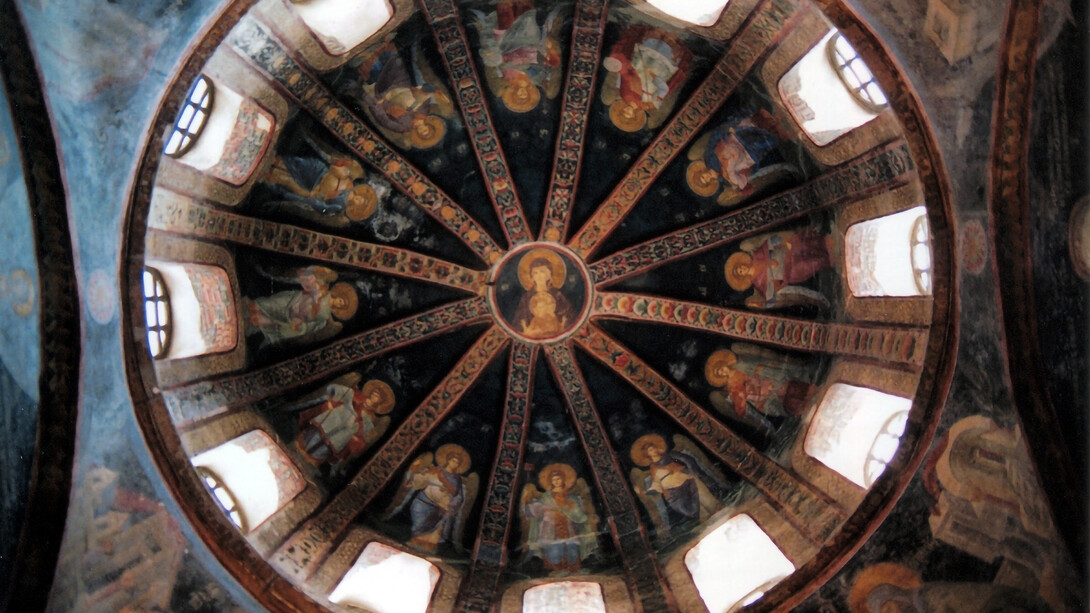
Erdal İnci and the Kariye / Preserving a Byzantine legacy


The southern dome of the inner narthex of the Chora Church in Istanbul, Turkey, features stunning Byzantine mosaics depicting Christ, Istanbul, Turkey

Erdal İnci and the Kariye: preserving a Byzantine legacy

A contemporary artist's perspective on the historical layers of the Chora

13 APRIL 2025, 

The Kariye Church, the main surviving church of the Khora Monastery, dates back to the sixth century and is one of the most important monuments of Byzantine art due to its magnificent mosaics and frescoes. It is part of the UNESCO World Heritage Sites of the Historic Areas of Istanbul. The name "Khora" possibly refers to the area's rural nature, as "Khora" means "country" or "outskirts." In the Ottoman period, it was known as Kariye, which could relate to the word "karye," meaning "village." Some of the representations of the Virgin Mary and Christ inside the church carry the "Khora" attribute, suggesting possible mystical meanings beyond the word’s literal meaning.

Monday, May 18, 2026

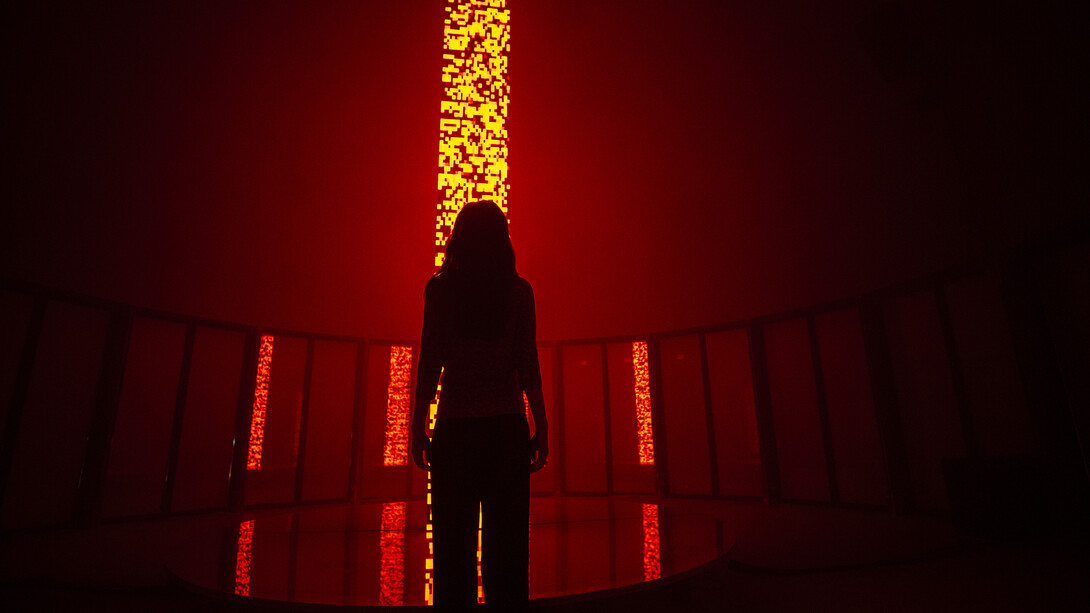
Blending past and present / Çubuklu Silos' Digital Art Museum


Çubuklu Silos l Digital Art Museum, photo: İBB Library

Blending past and present: Çubuklu Silos' Digital Art Museum

Preserving heritage through contemporary repurposing and creating relevance against neglect

13 FEBRUARY 2025, 

Contemporary interventions to historical sites offer a vibrant approach to preserving and enhancing cultural heritage. These initiatives blend modern design and technology with historic architecture to create spaces that are both practical and respectful of their historical roots. Incorporating elements like new materials, creative lighting, and interactive features revitalizes landmarks that might otherwise be overlooked, making them more engaging and relevant today. When executed with care, these updates connect the past with the present, providing new perspectives on historical sites and deepening our appreciation of cultural heritage.

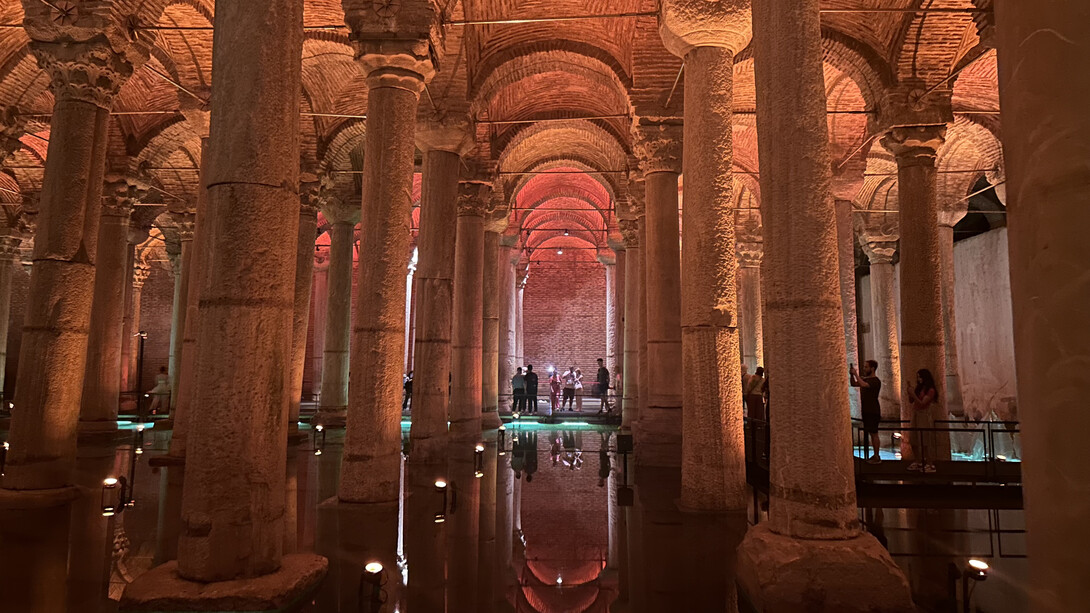
Basilica Cistern Museum / Reviving Istanbul's ancient marvel


Interior, Basilica Cistern, Istanbul, Turkey

Basilica Cistern Museum: reviving Istanbul's ancient marvel

Advanced lighting design and renovation transforms the Basilica Cistern’s ambiance and highlights its architectural heritage

13 DECEMBER 2024, 

The Basilica Cistern Museum is a significant cultural landmark in Istanbul, built by Emperor Justinian I in the 6th century. It is the largest enclosed cistern in the city, covering 10,000 square meters and capable of holding 80,000 tons of water. Historically, the cistern supplied water to the Great Palace and nearby structures. It features 336 columns, most of which are marble, and was originally waterproofed with thick Khorasan mortar. After the Ottoman conquest in 1453, it served various purposes, including supplying water to the Topkapı Palace and later becoming a part of the local community. Rediscovered in the mid-16th century by French naturalist Petrus Gyllius, the cistern has been the subject of significant restorations, including the uncovering of Medusa head columns during a major renovation in the 1980s. These columns are notable examples of Roman sculpture and are linked to Greek mythology.

Friday, May 15, 2026

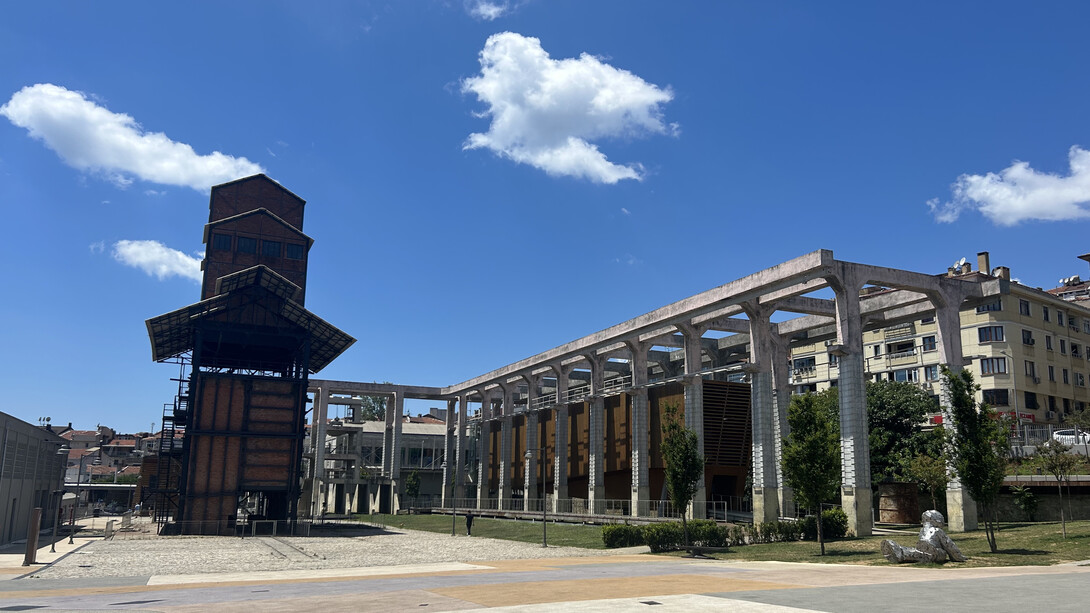
Müze Gazhane / Hasanpaşa Gashouse transformation


Gazhane Meydan, Müze Gazhane, Istanbul, Turkey


Müze Gazhane: Hasanpaşa Gashouse transformation

Transforming Istanbul’s Ottoman industrial heritage into a contemporary cultural hub for all ages

13 NOVEMBER 2024, 

In the 1850s, gas consumption started to become a part of Istanbul’s daily life. Kadıköy Hasanpaşa Gashouse was the second plant built on the Anatolian side in 1891 and the last in Istanbul. The gas obtained from this plant was used for street and indoor lighting for the Anatolian part of Istanbul. It started operation in 1892 and operated regularly until World War 1. In the 1920s, with the arrival of electricity, coal gas began to lose importance. Between 1938 and 1944, Kadıköy Hasanpaşa Gashouse operated autonomously and later handed to IETT (Istanbul Electric Tramway and Tunnel Establishments) in 1945. 

Saturday, April 8, 2023

Ceyda Torun / ‘I made a love letter to the city and the cats’


‘I made a love letter to the city and the cats’


Street cats have roamed Istanbul for centuries. As a film starring some of them opens, director Ceyda Torun explains why the likes of ‘Psycho’ and ‘Hustler’ are so at home there

Kathryn Bromwich
Sunday 18 June 2017 07.30 BST

F
ilm-maker Ceyda Torun grew up in Istanbul until the age of 11 and is now based in Los Angeles. Her feature-length documentary debut Kedi (Turkish for “cat”) is about seven of the street cats that roam Istanbul. They are cared for collectively by the community in exchange for mouse catching, affection and “good energy”. Each cat has a distinct personality: Sari, “the Hustler”, is a tabby who inventively seeks out food for her kittens; Psikopat, “the Psycho”, is a fierce black and white cat with a strong sense of territory; Gamsiz, “the Player”, is a resourceful short-haired who has charmed the neighbourhood baker with his moxie.

Friday, October 16, 2015

Orhan Pamuk / A love for Istanbul


BABELIA – INTERVIEW 

Orhan Pamuk: A love for Istanbul


The Nobel-winning Turkish author’s new novel imbues everyday stories with an epic touch


One of the author’s illustrations that accompanies his latest novel. © Orhan Pamuk
Orhan Pamuk (Istanbul, 1952) has written another monumental novel, A Strangeness in My Mind, which comes after The Museum of Innocence, published in 2009. With intelligent and moving meticulousness, the Turkish Nobel Prize-winner tells of 40 years in the life of a humble Istanbul street vendor. It’s a book about happiness (or the lack of it), and about time. While reading it, it’s impossible not to feel that its protagonist, Mevlut, embodies the very Istanbul he describes, and, in fact, when one travels to Istanbul and listens to its racket and rejoicing, it seems obvious that Pamuk has made any and all of these characters stand up in his fiction on these old streets. We talk in the house Pamuk lives in, in Bujukada, the beautiful island his parents would take him to from the day he was born. He still spends his summers there, writing in a peace that’s only disturbed by “the soft passing of time,” marked by the shadows the sun throws over his bare balcony. Before we talked he offered us watermelon and apricots. He looks happy, as if he’s fallen in love, and not only with literature.
Question. You say in this book that we have to believe in the novel when we are reading it. Why is it so important to believe in what you are reading?
Answer. Because literature, whether it is fantastic or realistic, works with what Samuel Taylor Coleridge called suspension of disbelief. If you’re a cynical person, if you are not a sincere believer in the strength of literature, then you should avoid reading books. In the end there is a very old-fashioned side to reading novels in our age – blogs, internet, so much information and so much humanity. Why read novels? Because we believe in the power of literature. We’re not cynical or sarcastic or suspicious about it. Literature works with intentionally well-meaning readers. You say I’m going to give 10 hours to this Istanbul street vendor’s life. Then you’re not sarcastic any more. You’re with the characters and you take the writer’s work for granted. You should not take it for granted and not question it, at least at the beginning.