Showing posts with label Iris writers. Show all posts

Monday, April 6, 2026

Beyond the Sea by Paul Lynch review / Poetic novel from an Irish prize winner


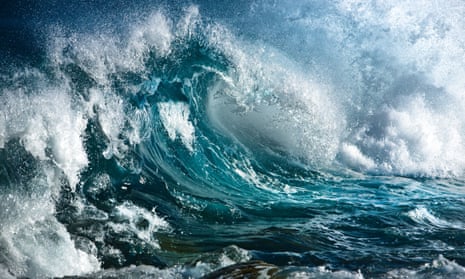
Caught at sea: two men are at the mercy of the ocean. Photograph: Irina Belousa/


Beyond the Sea by Paul Lynch review – poetic novel from an Irish prize winner


A frightening but beautiful tale of two South American fishermen, a storm and hallucinatory violence


M John Harrison

Thursday 5 September 2019

B olivar, sometimes known as Porky, an experienced fisherman whose hands are large and whose plastic sandals are held together with tape, has done something stupid. To make enough money to fix it before his pursuers cut off his ears, he needs to catch fish. His temporary assistant, Hector, an adolescent who turns up in a sweater with a pirate logo and who has only ever fished the local lagoon, is failing to earn his respect. The South American beach where Bolivar keeps his boat is strewn with symbols of their coming voyage, among them an old man whose “songs are sung to the bones of the dead”. A storm is in the offing; Bolivar and Hector should be returning to port, not leaving it.

Sunday, February 15, 2026

Maggie O'Farrell / How I write


Maggie O’Farrell


How to write a book in 30 days

Maggie O'Farrell: How I write

This article is more than 13 years old
The author of the Costa award-winning The Hand That First Held Mine on writing while caring for a young child.

Don't miss your free, 32-page writing supplement, free with the paper on Saturday 20 October

Maggie O’Farrell
Thursday 18 October 2012

Friday, January 31, 2025

Niall Williams / ‘When I first read Chekhov, I thought: “He’s not so great”’


Niall Williams


The 

Books

 0f my 

life


Niall Williams: ‘When I first read Chekhov, I thought: “He’s not so great”’


Niall Williams
Friday 31 January 2025


N
This article is more than 5 months old

The Irish author on Enid Blyton at bedtimes, discovering Dickens, and the brilliance of Edna O’Brien


This article is more than 5 monthsThis article is more than 5 months old
The Irish author on Enid Blyton at bedtimes, discovering Dickens, and the brilliance of Edna O’Brien


My earliest reading memory
I am sitting at the kitchen table at home in Dublin. I am home from school. I am in short pants; my legs dangle. The book in front of me is called Step By Step. It has no author. On the amber paper cover, in my mother’s handwriting, is my name. It is my first spelling book. I still have it. It begins with easy ones, No, Go, So, and works through 20 pages to Deck, Dock, Duck. Everything that follows begins here. When you know your spellings, it is a triumphant moment. You have been given a key.

My favourite book growing up
My hunger for books allowed no time for a favourite. I was on to the next one. All of Enid Blyton might be one multi-volumed book in my memory. The Famous Five and The Secret Seven and the Mystery series all passing through my hands in bedtime reading, to be replaced later by westerns, especially those of Louis L’Amour, whose great virtue was the supply would never run out, because he wrote so many.

The book that changed me as a teenager
Great Expectations by Charles Dickens. Mr Mason had us read it aloud in class, each of 30 teenage boys following the sentences with our finger. The world of that novel was more real to me than the one outside. When Pip fell in love with Estella, I did too.


The book that made me want to be a writer
I could say Dickens again here, for it seems to me that I began to write to rediscover the pleasure I had as a reader. But when I was 21, Christine Breen told me to read Gabriel García Márquez’s One Hundred Years of Solitude and when I emerged from the humid jungle of those pages, head spinning and imagination fevered, I knew that, for better or worse, making fiction was to be my life, and I hoped it would be with her.

The book or author I came back to
Chekhov. When I first read him as a teenager, I thought: “He’s not so great.” At that age I wanted style, brilliance, dazzlement. It took me 40 years to see his people, their profound humanness, and the genius of his story-making.


The book I reread

The Country Girls by Edna O’Brien. I read it first in university when I wanted to know what every famous Irish writer had done. I reread it when I was working on Time of the Child and realised that one of my characters, Ronnie, the doctor’s eldest daughter, who secretly wants to be a writer, was reading it. It is always startling when you find something is so much better than you remembered. I sent my salute to Edna at her extraordinary funeral.

The book I discovered later in life
I could make this plural and say everything by Edith Wharton. But in particular The House of Mirth. It was chosen by the book club that has met at our house for 16 years. During one year we read only “classics”, to see what that amounted to. And there was Edith, waiting.

The book I am currently reading
A Cold Eye: Notes from a Shared Island 1989-2024 by Carlo Gebler, with photographs by David Barker. Drawing on his meticulously kept journals from over 35 years, Carlo gives us one day for each year. In the company of these sharp, affectionate and wise entries you find yourself saying “Yes” often, and “God, I remember that.”


 Time of the Child by Niall Williams is published by Bloomsbury.


THE BOOKS OF MY LIFE

2021
The books of my life / Amanda Gorman / ‘I wanted my words to re-sanctify the steps of the Capitol’Mary Beard / ‘Virgil was a radical rap artist of the first century BC’
Stephen King: ‘I loved Lord of the Flies the way kids love Harry Potter’
Gabriel Byrne: ‘I’ve never played Hamlet, but in many ways I am him’
Curtis Sittenfeld / ‘Sweet Valley High is not respected – but I found the books riveting’
Elif Shafak / ‘Reading Orlando was like plunging into a cold but beautifully blue sea’
Jason Reynolds / “Reading rap lyrics made me realise that poetry could be for me”
Michael Rosen / ‘My comfort read? Great Expectations’
Siri Hustvedt / ‘I responded viscerally to De Beauvoir’s The Second Sex’
Alan Garner / ‘The Chronicles of Narnia are atrociously written’
Rose Tremain / ‘My comfort reads are MasterChef cookbooks’
Oliver Jeffers / ‘Catch-22 was the first time I had a physical reaction to a book’
Penelope Lively / ‘Beatrix Potter seemed so exotic, unlike my world of palm trees’


2022
David Baddiel / The book that changed me? John Berger’s Ways of Seeing
Edmund White / ‘My earliest reading memory is a lady toad with a nasty temper’
David Mitchell / ‘If I need cheering up, Jamie Oliver’s recipes usually help’
Isabel Allende / ‘I have been displaced most of my life’
Barbara Kingsolver / ‘Middlemarch is about everything, for every person, at every age’


2023
Richard Ford / ‘I don’t read for comfort. Comfort I source elsewhere’
Bret Easton Ellis: ‘I connected with Quentin Tarantino’
Lauren Groff / ‘Virginia Woolf’s Flush is delightfully bananas’
Natalie Haynes / ‘I couldn’t stop reading Stephen King - even at the top of the Eiffel Tower’
Richard Armitage / ‘I used to stand on the Lord of the Rings to reach the top shelf in my wardrobe’

2024
Mieko Kawakami / “Franz Kafka es mi lectura reconfortante”

2025
Niall Williams / ‘When I first read Chekhov, I thought: “He’s not so great”’
Graham Norton / ‘The Bell Jar changed how I felt about books’


Saturday, August 3, 2024

The Love Object by Edna O’Brien


Photograph by Christopher Anderson

The Love Object

by Edna O’Brien

BIOGRAPHY


Edna O’Brien / El objeto del amor


He simply said my name. He said “Martha,” and once again I could feel it happening. My legs trembled under the big white tablecloth and my head became fuzzy, though I was not drunk. It’s how I fall in love. He sat opposite—the love object. Elderly. Gray eyes. Dull blond hair. The hair was graying on the outside and he had spread the outer gray ribs across the width of his head as if to disguise the blond, the way some men disguise a patch of baldness. He had what I call a religious smile—an inner smile that came on and off, governed, as it were, by his private joy in what he heard or saw: a remark I made, the waiter removing the cold dinner plates that served as ornament and bringing warmed ones of a different design, the nylon curtain blowing inward and brushing my bare, summer-ripened arm. It was the end of a warm London summer.

Saturday, January 13, 2024

John Boyne / The Heart's Invisible Furies / Review


Cyril Avery is not a real Avery or at least that’s what his adoptive parents tell him. And he never will be. 
But if he isn’t a real Avery, then who is he? 

Mairéad Hearne


[ About the Book ]

Born out of wedlock to a teenage girl cast out from her rural Irish community and adopted by a well-to-do if eccentric Dublin couple via the intervention of a hunchbacked Redemptorist nun, Cyril is adrift in the world, anchored only tenuously by his heartfelt friendship with the infinitely more glamourous and dangerous Julian Woodbead.

Friday, January 12, 2024

A new Irish literary boom / The post-crash stars of fiction

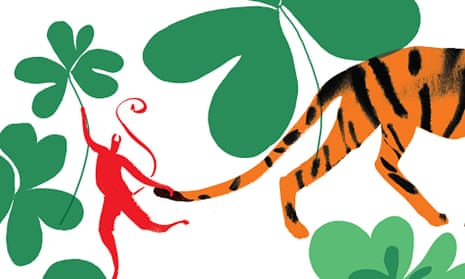
Illustration: Lara Harwood/Heartagency.com


A new Irish literary boom: the post-crash stars of fiction


Dynamic, radical, often female … Irish fiction is flourishing. Gone is the conservative writing – all nostalgia and sexual repression – of the Celtic Tiger years. The writers of the new wave are original and bold

Justine Jordan
Saturday 17 October 2015

Money kills the imagination,” says the narrator of Claire Kilroy’s 2012 novel The Devil I Know, a fiendishly good satire of the moment the Irish boom went bust. “It makes us want the same thing.” The book is set in 2016 and takes the form of one man’s testimony to a tribunal intended to uncover the sleaze and short-termism that enabled a giant property bubble to inflate in the years leading up to the global financial crash of 2008. In the autumn of 2015, we have not yet caught up with Kilroy’s future setting, but as the real-world aftershocks of the Celtic Tiger’s downfall continue, one Irish sector is booming: with the rise of a new wave of writers, from Paul MurrayKevin Barry and Donal Ryan to first-time authors such as Eimear McBride, Sara BaumeLisa McInerney and Colin Barrett, there is a palpable energy to Irish fiction.