Showing posts with label Nobel Prize in Literature. Show all posts

Saturday, October 28, 2023

Nobel prize winner Jon Fosse / ‘It took years before I dared to write again’


Jon Fosse


Interview

Nobel prize winner Jon Fosse: ‘It took years before I dared to write again’


In 2012, the Norwegian novelist and playwright collapsed. He gave up drinking, retreating from the public eye – then, earlier this month, he got a call from the Swedish academy. He discusses how it feels to win a Nobel prize

Chris Power
Saturday 28 October 2023

On the day this year’s Nobel prize in literature was announced, Jon Fosse went for a drive in the countryside outside Bergen to relax. “I was nervous before the announcement,” says the Norwegian playwright and author, with a laugh. He has been a fixture on bookies’ lists of Nobel favourites since 2013, so he felt, “you know, ‘It could be me.’ But I didn’t think it would be me.”

Saturday, October 8, 2022

A Woman's Story by Annie Ernaux / Review


A Woman's Story

by Annie Ernaux

WINNER OF THE NOBEL PRIZE IN LITERATURE 2022
Translated by Tanya Leslie

A Woman's Story is Annie Ernaux's "deeply affecting account of mothers and daughters, youth and age, and dreams and reality” (Kirkus Reviews). Upon her mother's death from Alzheimers, Ernaux embarks on a daunting journey back through time, as she seeks to "capture the real woman, the one who existed independently from me, born on the outskirts of a small Normandy town, and who died in the geriatric ward of a hospital in the suburbs of Paris.” She explores the bond between mother and daughter, tenuous and unshakable at once, the alienating worlds that separate them, and the inescapable truth that we must lose the ones we love. In this quietly powerful tribute, Ernaux attempts to do her mother the greatest justice she can: to portray her as the individual she was. She writes, "I believe I am writing about my mother because it is my turn to bring her into the world."

Thursday, May 21, 2020

Irish Writers who have won the Nobel Prize


Samuel Beckett

Irish Writers who have won the Nobel Prize


05/11/2019

The Nobel Prize in Literature is one of the most esteemed awards a writer can receive. Ireland is home to several notable winners of this cherished and coveted prize. 
1923 –William Butler Yeats 
1925 – George Bernard Shaw 
1969 –Samuel Beckett 
1995 –Seamus Heaney


Thursday, May 14, 2020

Vargas Llosa / An unclassifiable Nobel winner

Mario Vargas Llosa

Mario Vargas Llosa: an unclassifiable Nobel winner

Novelist William Boyd pays tribute to 'a great chroncicler of the highs and lows of our carnal and passionate adventures as human beings'. 


William Boyd
Friday 8 October 2010 11.50 BST


I first met Mario Vargas Llosa in London in 1989, at a dinner party organised by a mutual friend, Nicholas Shakespeare. I had been hired by a Hollywood studio to write a script based on Vargas Llosa's wonderful semi-autobiographical novel Aunt Julia and the Scriptwriter and was both very keen and somewhat wary about the prospective encounter. I was very keen because I was an unashamed fan of Vargas Llosa, the writer – it took me a second to accept the Aunt Julia job – but wary because I quickly came to realise that the book was a fantastically difficult challenge to turn into a movie and my Hollywood brief was uncompromising: there was no way the film was going to be placed in its vividly rendered setting in Lima, Peru – Aunt Julia had to be Americanised.
In fact, the meeting couldn't have been more reassuring and agreeable. Vargas Llosa was as enthused as I was about the possible film and unperturbed about its required US location (we ended up with New Orleans, as close to Lima as the US could provide, I calculated). He gave the enterprise his blessing: "Make it a bold adaptation," he said, urging me to take risks. And so, taking him at his word, I did. And I am relieved to report that he liked the eventual film (starring a young Keanu Reeves in the Vargas Llosa role).
And now he has won the Nobel prize for literature. Does it strain interpretation to see in that first meeting some of the factors that might have gained him the prize? Cosmopolitanism, pluralism, conviviality, worldliness, multi- lingualism, audacity, comedy, experimentalism, are all epithets that can be attached to his name and his work. Aunt Julia is probably my favourite novel of his – for obvious reasons – but the body of work that Vargas Llosa has produced since his first novel, The Time of the Hero in 1963, is both prodigious and admirable. The range is remarkable – from the surreal fantasies of the radio soap operas in Aunt Julia to the baroque comedy of Captain Pantoja and the Special Service; from weighty historical epics such as The War at the End of the World and The Feast of the Goatto the whodunit thriller-style of Who Killed Palomero Molero? Vargas Llosa is very hard to classify and pin down as a writer: he has written short novels and very long novels, comic novels and deeply serious novels, straightforward realistic novels and recognisably South American "magic-realist" novels. Perhaps this unclassifiability has been seen as a disadvantage. Indeed, when one compares Vargas Llosa to his great South American literary rival Gabriel García Márquez one is reminded of Archilochus's old fox and hedgehog adage: "The fox knows many things, the hedgehog knows one big thing." Márquez, a hedgehog novelist if there ever was one, received his Nobel in 1982 at the age of 55. Vargas Llosa received his at the age of 74. Almost 30 years later the day of the fox has arrived – it inevitably comes around, even if it takes a little longer.
There is another consideration when it comes to Vargas Llosa. His reputation as a writer is trammelled by the controversial public events in his own life, namely the political voyage he has made from the left of South American politics to the libertarian right. Both reasons perhaps explain why this prize – for which he is routinely considered a contender each year – has been comparatively late in coming. He is a great South American novelist but one who combines that continent's vibrant and malign profusion, its energy and crazy humour, with what might be termed a European intellectual rigour. His scholarly and imaginative interpretation of Flaubert and Madame BovaryThe Perpetual Orgy, perhaps illustrates that capacity of his mind most effectively.
Few novelists today have combined the public man and the private artist so prominently as Vargas Llosa – how many novelists have run for president, as Vargas Llosa did in the 1990 elections in Peru? Perhaps it's fair to say that his political adventures have tended to obscure the very real achievements of his novels and their manifest literary ambition. One of the blessings of winning the Nobel (among its few curses) is that it does focus attention once more on the work, and Vargas Llosa's oeuvre deserves to be reconsidered in its own right. And while it's true that the historical novels, with their forthright and fascinating reinterpretations of South American political upheavals and machinations, seem the most obviously hefty and momentous, my own private celebration will concentrate on other works in the Vargas Llosa canon.
It's most present in Aunt Julia but it could be argued it is the leitmotif of all his works of fiction: Vargas Llosa has continually celebrated the sexual and amatory electricity between men and women – that ticking clock that animates almost all of us, whether to delightful or disastrous effect, or both. Sometimes it is explicit (in all senses of the word) in a novel such as In Praise of the Stepmother or The Bad Girl, but such a concern runs as a life-enhancing note through almost everything he has written. Intriguingly, in an attempt to derail his presidential bid in 1990, his opponents used to read out the more shocking and sexually candid sections of his novels over the radio in an attempt to encourage voters to shift allegiance. Maybe it worked: certainly Vargas Llosa didn't win. His readers, I suspect, were secretly very grateful – it meant he could continue writing.
Vargas Llosa, in all his multifacetedness, in spite of and as well as his many rare gifts and talents as a novelist, remains fundamentally a great chronicler of the highs and lows of our carnal and passionate adventures as human beings – our many mishaps and shameful duplicities, our rare nobility and rarer moments of pure happiness. His work reveals what the novel does best – in that it "gets" the human condition better than any other art form. Vargas Llosa's novels understand and reproduce the absurd and melancholy tragicomedy of our lives and their occasionally inspiring moments of pure happiness. The Nobel is hugely merited and I suspect Vargas Llosa will be very pleased. But then he'll say to himself: it's only a prize, it's the books that matter.

Friday, October 25, 2019

Olga Tokarczuk / Winner of the Nobel Prize for Literature for the year 2018

Olga Tokarczuk

Olga Tokarczuk


Writer and essayist, born in Sulechów in 1962. Winner of the Nobel Prize for  Literature for the year 2018, and winner of the Man Booker International Prize in 2018.


Tokarczuk is one of the most critically acclaimed and most translated Polish writers, with House of Day, House of Night and Primeval and Other Tales being her greatest commercial and critical successes. She studied psychology at the University of Warsaw and lives in Wałbrzych. An outstanding writer, essayist and a devotee of Jung, she is an authority on philosophy and arcane knowledge. Undeniably a great discovery in Polish literature in the nineties, she is admired by both critics and readers. She is a phenomenon of popularity respected for her good taste, knowledge, literary talent, philosophical depth and the knack for storytelling. Tokarczuk, about herself, 'To me writing novels is telling fairy tales to oneself, moved to maturity'.

Bear's Moment by Olga Tokarczuk

Olga Tokarczuk


BEAR'S MOMENT
by Olga Tokarczuk
The 2012 novel is more of a collection of observations and narratives, while also serving as the author's political manifesto.

Critic Joanna Bator wrote of the dialogue that the author takes up with J.M. Coetzee and Elizabeth Costello, "undermining the boundary between nature and culture, between woman and man, as well as the truth of life and the truth of a story". Some of the articles in Bear's Moment read like a guidebook, such as the chapter entitled A Biased Little Guide to Poland for Germans on the Occasion of the Former’s Ingress into the European Union or How to Think Heterotopia?, a lecture on the aforementioned political philosophy. It's not a revolutionary work, but rather a statement on the ways in which those who don't conform to societal norms are ignored or oppressed - this relates in equal measure to homosexuals as to vegetarians or vegans with regard to giving people leave to indulge in their own ideologies. It also poses the question of whether empathy can be stronger than domination.
Critic Kazimiera Szczuka calls Tokarczuk's novel "deathly serious with a dash of humor, fictiveness, play. A radical opponent of nation-based ideology, she is nonetheless able to express wonderfully her own Polishness". The Bear’s Moment of the title is likened to a parable on finding different paths to understanding the truth in order to attain a richer quality of life. Literature is the tool that Tokarczuk uses to locate that “strange and powerful place in between numerous individual truths". As Tokarczuk writes in the book:
Over the past few years I've been haunted by the idea of writing a book in which the world would function differently. Certain obvious mechanisms would not work here. I believe that taking something for granted isn't quite linked with the issue of fact, but rather a social contract and the habits of our mind, which pertain rather to psychology than to physics.
Olga Tokarczuk (born in 1962) is one of the most critically acclaimed and most translated Polish writers, with House of Day, House of Night and Primeval and Other Tales being her greatest commercial and critical successes. She has been nominated for the Nike Literary Award several times, receiving the readers' choice of the Nike prize four times. 
On 10th October 2019, Polish author Olga Tokarczuk was awarded the Nobel Prize for Literature 2018 by the Swedish Academy in Stockholm. This is the second year in a row that Tokarczuk has won a major literary award – in 2018, she and her translator Jennifer Croft won the Man Booker International Prize for Flights.
Bear's Moment by Olga Tokarczuk
Publisher: Krytyka Polityczna, Warsaw March 2012
125 x 195, pp. 192, hardcover
ISBN: 978-83-62467-36-5
The book has not yet been translated into English or other foreign language. 
Editor: Agnieszka Le Nart
Source: Polish Book Institute


Friday, October 11, 2019

'A troubling choice': authors criticise Peter Handke's controversial Nobel win


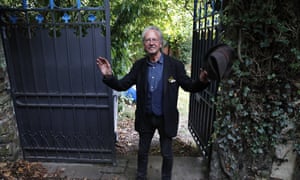
Austrian author Peter Handke greets the press outside his house in Chaville near Paris, on Thursday after his win. Photograph: François Mori/AP

'A troubling choice': authors criticise Peter Handke's controversial Nobel win

Writers including Salman Rushdie, Hari Kunzru and Slavoj Žižek say the 2019 Nobel laureate ‘combines great insight with shocking ethical blindness’


SIAN CAIN

Friday 11 October 2019


Twenty years before Peter Handke would become a Nobel laureate, he won another title. In 1999, Salman Rushdie named him the runner-up for “International moron of the year” in the Guardian, for his “series of impassioned apologias for the genocidal regime of Slobodan Milošević”. (The winner was actor Charlton Heston, for being a gun lobbyist.)

The Austrian playwright, whose Slovenian heritage had inspired in him a fervent nationalism during the Balkans war, had publicly suggested that Sarajevo’s Muslims had massacred themselves and blamed the Serbs, and denied the Srebrenica genocide. Seven years after Rushdie’s scorching condemnation, in 2006, he would also attend war criminal Milošević’s funeral.

Monday, April 23, 2018

Christopher Tayler / The gift of Gabo

Gabriel García Márquez


The gift of Gabo


Christopher Tayler enjoys the adventures of Latin America's most popular and colourful novelist


Saturday 22 November 2008


T
his fairly long book - a scaled-down version of an even longer one, Gerald Martin reveals - begins with an appropriately large claim about its subject. Martin thinks that Gabriel García Márquez might be the only novelist from the second half of the last century who's as respected all over the world as the giants of the first half. This initially seems like routine biographer's hype. By the time Martin has finished detailing the awe-inspiring extent of García Márquez's renown, it seems more like English understatement.

In 1996, for example, a group calling itself the Movement for the Dignity of Colombia kidnapped a senior politician's brother, demanding that García Márquez take over the country's presidency. (Their victim was eventually released unharmed.) When the novelist's memoir of his early life was published in 2001, Hugo Chávez produced a copy during his weekly television broadcast, urging all Venezuelans to read it. Chávez, unlike Bill Clinton, François Mitterrand, Felipe González, Fidel Castro and most Latin American presidents since the 1970s, wasn't even a personal friend: Vicente Fox of Mexico, by contrast, had got his copy from the author's hands. Clinton showed up at what was effectively García Márquez's 80th birthday party, as did five Colombian presidents and the king of Spain. Castro marked his comrade's winning of the Nobel prize in 1982 by buying him a supply of caviar in Moscow on the way back from Brezhnev's funeral.

Gabo, as he's universally known in the many countries where he's a household name, also has a broad fan base among the less temporally powerful. Even his fiercest critics generally agree that One Hundred Years of Solitude (1967) is the central Latin American novel of the 20th century. "Magical realism" - which Martin defines as writing "through the worldview of the characters themselves without any indication from the author that this worldview is quaint, folkloric or superstitious" - has become a standard part of the repertoire for writers struggling to fit experience of the developing world into the inherited forms of the European novel. And García Márquez is a genuinely popular novelist, with a large non-intellectual following and, in Latin America, the added status of a local hero. In 1982, a Colombian journalist asked a street prostitute if she'd heard about Gabo's Nobel. Yes, she replied, a client had just told her about it in bed.

García Márquez was 40 when celebrity on this unrepeatable scale descended on him soon after the publication of his best-known novel. Before One Hundred Years of Solitude came out, he was a relatively minor player in the 60s boom of Latin American fiction. Alejo Carpentier, Carlos Fuentes and Mario Vargas Llosa were the names to watch, and although his four previous books had been admired by the handful of people who'd read them, García Márquez was having a hard time with his writing. He was working part-time at an advertising agency in Mexico City when, in 1965, on a drive to the coast, the opening lines of his masterpiece floated into his brain. The following year was spent sequestered in his study in a haze of cigarette smoke, and when he emerged with the completed manuscript, he had a pretty good idea of where his career was headed.
As García Márquez has always made clear, and as Martin shows in exhaustive detail, his earlier struggles at his desk weren't caused by a lack of material. His principal breakthrough in Mexico City lay in finding a way to address the stories he'd been carrying around for all of his working life. Born in 1927 to an army veteran's daughter and a handsome yet feckless telegraphist, the future writer spent the first eight years of his life being brought up by his grandparents in Aracataca, a small town near Colombia's Caribbean coast. His grandfather, Colonel Nicolás Márquez, was filled with stories of his service in the civil conflict known as the War of a Thousand Days; he had also killed a man in dubiously romantic circumstances. The colonel's wife, Tranquilina, saw ghosts and portents everywhere. "Shit," Gabito thought when he read Kafka's "Metamorphosis" a few years later, "that's just the way my grandmother talked."
Colombia's blood-soaked politics was on vivid display from early on. Aracataca had enjoyed a wild west-style boom when an American banana company came to the region, but the town went into decline after 1928, when troops massacred striking plantation workers. Outrage over these events led to a brief spell of power for a less reactionary government, which founded a model school in Zipaquirá to which García Márquez eventually won a scholarship. From there he moved into journalism and short-story writing under the cover of legal studies, soaking up the work of William Faulkner and Virginia Woolf under the guidance of a literary circle in Barranquilla. Meanwhile, "La Violencia" - a low-level civil war played out in rural areas - tightened its grip. Disheartened by the censorship regime, and perhaps fearing that the lives of leftwing journalists weren't worth all that much to the Bogotá elite, García Márquez left for Europe in 1955.

Martin tracks his adventures on both sides of the iron curtain, his hand-to-mouth existence in Paris, his stint working for the Cuban cause in New York and his years in Mexico with heroic determination. The same quality is much in evidence in Martin's efforts to untangle his family history and the intricate ongoing narrative of Colombian politics. There's a strong emphasis on García Márquez's identity as a man of the coast rather than the Andean uplands inhabited by Colombia's dominant classes. From early on, he took his cultural bearings from the Caribbean and Faulkner's North America; his wider Latin American consciousness was nurtured by the cultural ferment he found in Mexico, where he belatedly discovered the work of such older contemporaries as Juan Rulfo, whose novel Pedro Páramo (1955) he claimed to have learned by heart in the years leading up to One Hundred Years of Solitude.

Post-fame, the writer's life inevitably becomes more opaque. Martin has no definitive explanation of why Vargas Llosa, a former friend, punched García Márquez in the face in 1976. He also admits defeat when it comes to fathoming his subject's marriage to Mercedes Barcha, his wife since 1958, commenting ruefully that they are "very ironic and very private people". García Márquez's high-profile activism since the 70s means that politics increasingly dominates the story, and Martin can't help sounding a bit dismayed by some of it. The novelist is clearly drawn to men of power, but there's little evidence that he ever exercised much influence over them, and while his closeness to Castro has made him a hate figure for much of the Latin American right, he seems to have made his peace with the region's elites. The people of Venezuela, for instance, weren't impressed when he defended a disgraced outgoing president by praising his "magnificent sense of friendship".
Most of the time, though, Martin's tone is unfailingly, almost comically admiring - an impressive testimony to Gabo's charm given that the biographer has spent 17 years researching this book. He seems to have interviewed the entire extended family as well as García Márquez, Mercedes, Castro and every politician in Colombia. In the process he has been mythologised himself. "I have found it quite impossible," he writes, "to kill off the myth which García Márquez himself has disseminated, to the effect that I . . . once spent a rain-drenched night on a bench in the square at Aracataca in order to 'soak up the atmosphere' of the town." His asides on his subject's love of "ghastly multicoloured shirts" only add to the book's eccentric appeal, as do his translations of remembered dialogue, in which everyone sounds like a 1930s mobster. ("If after that the other guy turns out to be a louse," Castro growls at one point, "that's another problem.")
Martin is also extremely knowledgeable about Latin American literature in general, providing context and enthusiastic critical analysis of the kind that usually gets lost in a scoop of this size. "Don't worry," García Márquez told him while refusing to discuss a former girlfriend, "I will be whatever you say I am." In this respect, the novelist chose his life-writer wisely. "Oh well," he apparently said when Martin's name came up, "I suppose every self-respecting writer should have an English biographer."


Friday, April 13, 2018

Head of Nobel literature prize panel quits over sex abuse scandal


Sara Danius on Thursday said: ‘It is the academy’s wish that I leave my post as permanent secretary.’ Photograph: Jonas Ekstromer/EPA


Head of Nobel literature prize panel quits over sex abuse scandal

The head of the Swedish Academy quit amid handling of sexual harassment allegations made against a man with close links to the institution


Staff and agencies in Stockholm
Thu 12 Apr 2018 23.23 BST


The head of the Swedish Academy that selects the winner of the Nobel prize for literature has resigned amid a growing crisis over the body’s handling of sexual harassment allegations made against a man with close links to the institution.
Sara Danius announced her decision on Thursday after a three-hour emergency meeting of academy members in central Stockholm. 
Danius said she had lost the confidence of the academy, but would not comment on whether a vote was held to remove her.

“It is the academy’s wish that I leave my post as permanent secretary,” said Danius, a 56-year-old Swedish literature historian, and the first woman to hold the position. “I would have liked to have continued, but there are other things to do in life.”
Three members of the academy withdrew last week over the issue, but arcane rules that make appointments for life mean that members cannot technically resign, though they stop participating in activities. 
The public row and defections from the academy have raised concerns that the image of the Nobel prizes and Sweden’s reputation abroad could suffer. “It has already affected the Nobel prize quite severely and that is quite a big problem,” Danius said. 
On Wednesday, the Nobel Foundation board sharply criticized the Swedish Academy, saying the group was threatening to tarnish the reputation of the Nobel prize.
The resignations come after the daily Dagens Nyheter in November published statements from 18 women who said they had been subject to harassment and physical abuse by the accused man.
The academy has since severed all ties with him and cut grants made to him. It has also launched an internal investigation and enlisted the services of a law firm.
The academy, which in under the direct patronage of the Norwegian king, is traditionally very discreet and has been deeply shaken by the scandal.
Of the 18 elders of the academy, seven are no longer active members, and two women have gone on leave for several years.

Sunday, December 10, 2017

Why serious literary fiction like Ishiguro’s is vital in times like these


Kazuo Ishiguro_Drawing by David Levine

Why serious literary fiction like Ishiguro’s is vital in times like these


I
t’s always entertaining to observe the interaction between the news media and a writer who has just won the Nobel prize. The all-time best was obviously Doris Lessing, who when doorstepped simply rolled her eyes and snorted “Oh Christ”, before turning around to pay for her taxi. Bob Dylanstudiously ignored the whole thing, while Kazuo Ishiguro had clearly emerged from solitary confinement in his study on Thursday (he is in the middle of writing a novel), to face a barrage of questions and photographs. Blinking and bewildered, he described the themes he has spent his life thinking about and painstakingly unpicking: “The way countries and nations and communities remember their past, and how often they bury the uncomfortable memories from their past.”

Such matters don’t lend themselves easily to a soundbite; asking a literary giant to respond to the demands of a 24-hour news cycle is a little like asking a dinosaur to ride a bike. Writing and reading novels are activities that take place in opposition to the frantic, thoughtless rush of modern life. They demand a different quality of commitment and concentration, and a longer time scale. Serious novelists do our deep thinking for us, and find ways to communicate big questions (“the way countries and nations remember their past”) within stories so compelling that readers absorb them without having to try. We read Ishiguro’s The Remains of the Day because we want to know whether housekeeper Miss Kenton ends up with butler Mr Stevens, and in the meantime absorb the atmosphere and politics of pre-second-world-war Britain. We are bewitched by the prehistoric, magical landscapes of his 2015 novel The Buried Giant, and incidentally find ourselves thinking about the importance of history to a bewildered, conflicted nation.
This is a time of year when novelists are all over the headlines, not only because of the Nobel, but also with the impending announcement of the winner of the Booker prize. Meanwhile the publishing industry is gearing up with the Frankfurt book fair, the avalanche of books just released on “Super Thursday”, and the rush for pre-Christmas sales.
Amid the autumnal air of bookish celebration, the picture presented by the books industry is far from gloomy: thanks to the popularity of cookery, lifestyle, colouring and children’s books, sales figures for physical books remain surprisingly resilient, despite the onslaught of Amazon and e-readers. On the literary side, the Booker longlist this year was notably strong and diverse, a true reflection of the weird, wonderful and varied writing that is emerging from these weird (and not so wonderful) times.
But all those reasons to be cheerful are set against a backdrop of real anxiety about the future of the literary novel. Writers from Will Self to Howard Jacobson, from Robert Harris to Claire Messud, have raised the alarm about declining attention spans, and the time that people previously spent reading now losing out to competition from digital media.
Eminent publishers predict a long-term decline for the entire industry, as younger people turn to other forms of entertainment. From a personal perspective, such worries feel well-founded: I organise the books events for the Brighton festival, and it’s been interesting to observe the pattern in ticket sales. With a few big-name exceptions, events with literary fiction authors are hard to sell unless they are talking about how to write, or taking part in a discussion panel related to a broader theme. It also feels as though my friends read less than they used to. Parents of young children seem to push their offspring towards books and limit their screen time (hence the robust sales of children’s books), while they themselves spend every moment of leisure time plugged in. Those with older children report that an early interest in reading gives way to the easier, faster-moving temptations of Netflix, Facebook and Instagram.
Working out whether these observations are supported by sales figures is no simple task. The Publishers Association reports a 7% decline in fiction sales in 2016, a decline of 23% since 2012; other sources such as Nielsen BookScan present a less dramatic drop of around 1%, with strong growth in graphic novels and comics. According to Philip Jones, editor of the Bookseller, “sales of commercial fiction are in rude health, but there is a general awareness that sales of literary fiction are suffering”.
Why does it matter? After all, there are plenty of issues that currently seem more pressing than the fate of the novel. Fiction can feel like a luxury in a world of nuclear and environmental threat, crumbling political and economic systems, and general chaos. But that is also precisely why proper, challenging reading is so important: to read a good novel is to spend a serious amount of time immersed in the consciousness of another person; to reach out across the barriers that separate us from one another. It is to take the time to cultivate the focus necessary to step back from the distractions of day-to-day life and think bigger. Surely we all need that now, more than ever.

  Alice O’Keeffe is a freelance literary critic and journalist based in Brighton,


Saturday, December 9, 2017

My friend Kazuo Ishiguro / ‘An artist without ego, with deeply held beliefs’


 ‘Ish’ and Robert McCrum at the Faber office in London in 1989.
Photograph: Caroline Forbes


My friend Kazuo Ishiguro: ‘an artist without ego, with deeply held beliefs’


Last week, the British novelist was awarded the Nobel prize for literature. His first editor at Faber recalls the rise to greatness

Robert McCrum
Sunday 8 October 2017 08.30 BST

O
ne minute, the old friend I know as “Ish” was sitting at his kitchen table, doing emails, having not yet showered or washed his hair. Half an hour later, the world’s media was snaking up the path to his house in Golders Green, north London. “How on earth did they know where I lived?” he puzzled, reviewing a day of “bizarre” events. It was, he says, not until the news was confirmed by the BBC that he began to compose himself to address the great honour bestowed upon him by the Swedes.

Last Thursday, Kazuo Ishiguro – a writer I’ve known for close on 40 years – was awarded the 2017 Nobel prize for literature. Precisely at noon, among its gilt-and-white mirrors, the Swedish Academy’s spokeswoman stepped in front of the international press with a short statement about its prize for “the English writer… Kazuo Ishiguro, whose novels of great emotional force have uncovered the abyss beneath our illusory sense of connection with the world”, followed by allusions to Austen, Kafka and Proust. Then, the usual mayhem: how, what, when, and why?
In this Brexit year, a result described by Radio 4’s Front Row as “a big win for British writers” has a special piquancy, a reminder that our literature expresses a uniquely global vision. Moreover, this citation places my friend in a canon that includes Samuel Beckett, Doris Lessing, William Golding, Seamus Heaney, VS Naipaul and Harold Pinter, the literary superegos of modern poetry and prose in English. Ish’s first reaction, he told me much later that day, as the hullaballoo began to fade, was frank disbelief. Was it a hoax? Was it fake news?
Inevitably, in private, he found the whole affair both “surreal” and richly comic, the “last thing I expected”. Never mind the abyss of the academy’s citation, there’s a persistent note of quiet enjoyment at the ironies of the human comedy present throughout Ishiguro’s work, a theme expressive of a uniquely English and Japanese sensibility.
Britain’s newest literary Nobel laureate was born in Nagasaki in 1954. His mother, who is still alive and taking immense pride in her son’s achievement, survived the atomic bomb. His father, an oceanographer, moved his family to England in 1959, settling near Guildford, Surrey. Ish has always said that his parents didn’t have the mentality of immigrants because they always thought they would go home. He was 15 and still the only non-white kid in school before a final decision was made to stay.

When I first met him in the lobby of Faber & Faber in 1979, I was a young editor looking for new talent. Hot from the new UEA creative writing course – where his tutors included Angela Carter and Malcolm Bradbury – Ish carried a guitar and a portable Olympia typewriter in a neat blue case. With ragged jeans and long hair, in thrall to Bob Dylan, he was writing songs, and it was his ambition to become a performer. (He still plays the guitar most days.) But he’d already acquired the amateur spirit of the English literary tradition. Until he became a rock star, he would write fiction, to which end he had studied at UEA. It was three of his recent short stories (A Strange and Sometimes Sadness; Waiting for J; and Getting Poisoned) that he was offering to me at Faber.
I have not looked at these in years, but I cannot forget their haunting strangeness, the unique quality of his writing to this day, a weird mix of classic English and minatory Japanese prose. Although there was inevitably some influence from Ian McEwan, they were unmistakably the work of a young writer with a new voice. I quickly signed him up, and was soon after delighted to receive, from his agent Deborah Rogers, 100 pages of his first novel, for which, without hesitation, we paid the extravagant sum of £1,000.
When A Pale View of Hills, a short, disturbing account of a Japanese family’s emigration to England, was published to much acclaim in 1982, the critics began to place Ishiguro in a then-unfamiliar genre: the English fiction of writers, such as Salman Rushdie and Timothy Mo, whose lives had exotic, non-English beginnings.
Ish, however, was always hard to pigeonhole, being neither one thing nor another. He was unfailingly attentive, watchful and reserved, a man of deep politesse, highly attuned to the nuances of any situation. He made no fuss about things, either in life or in writing. He generally seemed like that rare being, an artist without ego, though I knew that he was inwardly dedicated to deeply held beliefs and attitudes. One constant in his character and career has been his humanity, good humour and natural expression of civilised values.
In his first years as a writer, Ish’s day job was working for the Cyrenians charity in Notting Hill, where he met Lorna MacDougall, a social worker. When they married in 1986, the itinerant Irish writer Des Hogan was a witness at the wedding, improvising a bouquet by tearing a sprig of cherry blossom from a tree on the way to the register office. Many of Ish’s values were formed at this time. Identifying “more closely than perhaps I should with those social workers”, he remains part of that 70s generation whose idealism had nowhere to go.
Ish might identify with the marginal. In 1983, however, his true status was clarified when he was chosen for Granta’s Best of Young British Novelists, the youngest of a group that included Martin Amis, Julian Barnes, William Boyd, Ian McEwan and Salman Rushdie. He wasn’t a British citizen, so he took a practical decision to become one. “I couldn’t speak Japanese very well,” he has said. “But I felt British and my future was in Britain. It would also make me eligible for literary awards.” He’s still seen as Japanese in Japan, and celebrated as one of their own.


Ish’s next book, An Artist of the Floating World (1986), my favourite among his novels, is one of the titles that secured his reputation. Set in postwar Japan, it describes the agonising life of a painter confronting the secret shames of his past.
It won the Whitbread prize, and Ish became integral to the book scene. One former Faber colleague remembers his tip for surviving in literary London: “When you get together with other writers it’s fine to bash agents and publishers, etc, and never to talk about the work itself, but always to refer to one specific page, just to let them know you had in fact read it!”
Such discretion comes naturally. Ish has many theories about the creative process, though he rarely discusses his own work in depth. I have spent hundreds of hours in his company, sitting over his typescripts, but have never, so far as I recall, come close to an in-depth conversation about what he’s up to. Yes, as a songwriter, he revels in the first-person narrative; and yes, there is a quasi-gothic side to his imagination; but that’s about as far as he’ll go. I think he cherishes the mystery of his art, though that will never prevent him from deeply researching his next subject.
I knew something was up when, some time in 1987, he told me he’d been reading PG Wodehouse and began enthusing about Right Ho, Jeeves. Two years later he delivered The Remains of the Daya novel about a butler, partly set in appeasement Britain, that only he could have written, a book described by the Nobel committee as braiding the themes of “memory, time and self-delusion”. The Remains of the Day won the Booker prize in 1989, and was followed by The Unconsoled (1995), possibly his masterpiece, a hypnotic novel about the trials of a travelling concert pianist, partly inspired by Ish’s life on the literary promotion circuit.
We have remained friends ever since, and although I no longer edit his work, Ish and I always meet to catch up, usually over a Chinese meal, a tradition in our long relationship. My friend is witty, loving and discreet, with deep reserves of wisdom and sympathy. In a frantic, fretful and unstable world, he is a voice of sanity, decorum, humanity and grace. The Swedish Academy should be proud of themselves.
THE GUARDIAN


RETRATOS AJENOS

FICCIONES