Showing posts with label Susanna Clarke. Show all posts

Saturday, January 1, 2022

Books that made me / Susanna Clarke / ‘Neil Gaiman’s The Sandman taught me to be courageous in writing’

Susanna Clarke


Books

that 

made me


Susanna Clarke: ‘Neil Gaiman’s The Sandman taught me to be courageous in writing’

The Jonathan Strange & Mr Norrell author on an underrated work by CS Lewis and the dangers of giving Richard Osman’s novels as a gift

Friday 3 September 2021


The book I am currently reading

Mark Vernon’s Dante’s Divine Comedy: A Guide for the Spiritual Journey. It’s partly an introduction to the epic and fantastic journey Dante undertakes, but more importantly it’s about reading The Divine Comedy as a way to change your own consciousness. There are insights on every page.

The book that changed my life
All sorts of books throughout my life have nudged me this way and that – like winds in a sail, I suppose. I hope they continue to do so. From Charles Palliser’s The Quincunx I learned that you didn’t have to write a 21st-century novel if you didn’t want to; you could write a 19th-century one. From Neil Gaiman’s The Sandman I learned to be courageous in writing. This question also works the other way round: my life keeps changing books. Jane Austen’s Emma is quite different today from when I read it first as a teenager.

The book I wish I’d written
The Man Who Was Thursday by GK Chesterton. It’s an extraordinary novel, funny and clever. It is subtitled A Nightmare. But it’s an odd sort of nightmare – one where terror keeps dissolving into cheerfulness (which is the opposite way round from most nightmares, and from a lot of contemporary fiction). Chesterton describes scenes and objects and colours with an almost heraldic vividness – or, looked at another way, as if they were pages in a modern graphic novel. He makes London feel like a fairytale, which to him I think it was. I have read The Man Who Was Thursday many, many times, but I still don’t understand it. I’ll keep going.

A word of warning: it is a book of its times. There are no women characters. Well, there might be one, but she says three things and vanishes immediately.

A still from the 2005 film adaptation of The Chronicles of Narnia: The Lion, the Witch and the Wardrobe.
A still from the 2005 film adaptation of The Chronicles of Narnia: The Lion, the Witch and the Wardrobe. Photograph: Phil Bray/Ronald Grant

The book that had the greatest influence on my writing
Probably CS Lewis’s Narnia series. Or possibly Ursula K Le Guin’s Earthsea (the original trilogy). In the end it is impossible to get this down to a single book: apart from anything else, I suspect that the strongest influences are probably not conscious. After I had finished writing Piranesi I reread Jorge Luis Borges’s short story “The House of Asterion”, which I hadn’t read since my 20s and which contains a labyrinth. I thought that there would be a connection between them, but I was stunned to find all these details in the Borges story which I’d no memory of but which had echoes in Piranesi.

The book I think is most underrated
Till We Have Faces by Lewis. It is a retelling of the Psyche and Cupid myth, set in a barbaric country contemporary with Classical Greece. One of the things it is about is the friction between those who have faith and those who don’t. The book has an unusual generosity in that it takes both sides seriously. The kindest, noblest character is a Greek philosopher and atheist. It’s as if Lewis made a portrait of his fiercest critics and said: “This is a good and admirable man.”

The book I couldn’t finish
The White Hotel by DM Thomas. It is an extraordinary book and caused a great sensation when it was published in the 1980s. I remember reading it on a train. I was getting towards the end and in the midst of a description of a massacre of Jews in Ukraine during the second world war the train pulled into Nottingham station and I had to get off. Afterwards I lacked the courage to go back to the horror of Babi Yar and so I never actually finished the book. Not a fault in the book, a fault in me.

The last book that made me cry
The Book of Margery Kempe. The part where Margery (the first woman to write her autobiography in English) goes to meet Julian of Norwich (the first woman to write any sort of book in English). Margery was a rather anguished person, constantly wondering which of her many and varied impulses came from the devil. Julian’s response to her is full of encouragement and Margery’s admiration of Julian shines through. A meeting between two extraordinary women in the 15th century and we have an account of it.

The last book that made me laugh
Probably Neil Gaiman’s The Graveyard Book. Sad and funny all at once.

The book I’m ashamed not to have read
I’m not fond of the idea that there is a list somewhere of books that you “ought” to read. There are too many “oughts” already. Read the books that help you flourish, that enlarge your world. Your books are bound to be different from other people’s. For myself I would like to be enlarged by reading more poetry and finding a way into Dostoevsky.

The book I give as a gift
I try to give books that I think the person will like. I gave Richard Osman’s The Thursday Murder Club as a Christmas present to my husband because he loves detective stories and he loves Richard Osman. But, as my husband knows, the same is also true of me. So on Christmas Day we solemnly exchanged copies of The Thursday Murder Club.

My earliest reading memory
I remember being taken to a library and being allowed to choose a book. I chose one of Alison Uttley’s Little Grey Rabbit books. Then we went home and I took my coat off and read the book. When I finished I imagined we would immediately go back to the library to get another one. But apparently that’s not how it works. I had to wait a whole week. A whole week.

My comfort read
When I was in hospital five years ago, I pretty much reread all of Diana Wynne Jones’s books. I love her take on how magic works, I love her characters, I love her stories. I love pretty much everything about her.

 Susanna Clarke’s Piranesi (Bloomsbury, £14.99) is shortlisted for the Women’s prize.

THE GUARDIAN


Monday, February 22, 2021

Piranesi by Susanna Clarke review / An elegant study in solitude


Books of the year

BOOK OF THE DAY 

Piranesi by Susanna Clarke review – an elegant study in solitude


The Jonathan Strange author returns with a mysterious tale that examines the nature of fantasy itself


Paraic O'Donnell
Thu 17 September 2020


“T

he beauty of the House is immeasurable; its Kindness infinite”: this is the reverent pronouncement of Piranesi, who believes he has occupied the house in question “since the world began”. Indeed, the house and the world, for Piranesi, are one and the same. Birds congregate in its cloud-wreathed upper halls and fearsome tides surge through its lower levels, but although Piranesi has journeyed widely – as far as “the Nine-Hundred-and-Sixtieth Hall to the West” – he has glimpsed nothing beyond it. And but for the bones of the dead, and an enigmatic visitor known only as “the Other”, he wanders this world entirely alone.


Susanna Clarke is a writer who has never quite been given her due. She is hardly obscure, of course; her first novel, Jonathan Strange & Mr Norrell, became a worldwide bestseller and was given a plush TV adaptation by the BBC. But its lingering influence – perhaps all the more notable for her long quiescence – has not been fully appreciated. Infusing “great tradition” verisimilitude with the imaginative radicalism of Ursula Le Guin, it gave rise to what might be called magical archaism, a fictional strain that has since become widespread. Like Hilary Mantel, Clarke made the very notion of genre seem quaint.

Piranesi by Susanna Clarke review / Byzantine and beguiling


Books of the year


Piranesi by Susanna Clarke review – byzantine and beguiling


The gloriously strange follow-up to Jonathan Strange & Mr Norrell is more than worth the lengthy wait


Alex Preston
Sunday 4 October 2020


P

iranesi lives in the House. He knows the House intimately, every one of its 7,678 Halls. He knows also the number of those who have ever existed: 15. Of these, Piranesi believes only himself and “the Other” are still alive. Piranesi is around 30, the Other almost twice his age. Piranesi knows the patterns of the tides that move through the House, sweeping everything before them, pouring over the statues and ornaments, rushing up staircases and across the House’s marble Halls and Vestibules. Piranesi is a book of imagined worlds and unpredictable capitalisations, of mystery and murder and university life.

Susanna Clarke’s Piranesi is a fantasy of exceptional beauty


Books of the yearSusanna Clarke’s Piranesi is a fantasy of exceptional beauty

The author of Jonathan Strange & Mr Norrell returns with this remarkable novel.


Rowan Williams
30 September 2020

One of the myriad memorable elements in Susanna Clarke’s astonishing and bestselling first novel was her evocation of a parallel reality, a “fairyland”, that was both a place of almost unimaginable possibilities and a climate in which human beings can’t safely live. Her second novel is as different as could be in its style and setting to Jonathan Strange & Mr Norrell – published 16 years ago – but it continues, brilliantly, to explore the same territory where exhilaration and mortal danger flow into each other.

Sunday, January 17, 2021

2020 / Best books of the year / Best fiction of 2020


Best books of 2020

BOOKS OF THE YEAR

Best fiction of 2020


Hilary Mantel, Ali Smith and Tsitsi Dangarembga completed landmark series, Martin Amis turned to autofiction and Elena Ferrante returned to Naples – plus a host of brilliant debuts

Justine Jordan
Sat 28 Nov 2020 09.00 GMT

As the first lockdown descended in March, sales of Defoe’s A Journal of the Plague Year and Camus’s La Peste soared, but there were uncanny echoes of Covid-19 to be found in this year’s novels too.

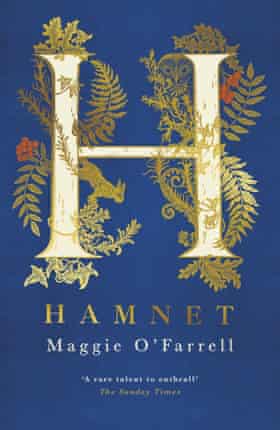
Hamnet by Maggie O’Farrell

Maggie O’Farrell’s tender, heartbreaking Hamnet (Tinder), which went on to win the Women’s prize, illuminates life and love in the shadow of death four centuries ago. Focused on Anne Hathaway rather than her playwright husband , it channels the family’s grief for son Hamnet, lost to the plague, with a timeless power. From public information slogans to individual fears, Emma Donoghue’s The Pull of the Stars (Picador), set in a Dublin maternity hospital during the 1918 flu pandemic, shows how little our responses have changed. Don DeLillo completed The Silence (Picador) just before the coronavirus hit; but this slim, austere vision of what it’s like to be in a room as screens go dark and disaster unfolds outside chimes with current fears.


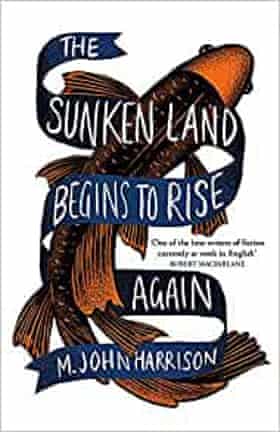
The Sunken Land Begins to Rise Again

Unfolding disaster was the theme of novels that spoke explicitly to the present moment, too: Jenny Offill’s Weather (Granta) assembles shards of anecdote and aphorism into a glittering mosaic that faces up to Trump’s America and climate collapse with wit, heart and moments of sheer terror. Naomi Booth’s Exit Management (Dead Ink) expertly dramatises the crisis in housing, jobs and community. Sarah Moss’s menacing Summerwater (Picador) is set over one rainy day in a Scottish holiday park: catastrophe lurks in the near future as we dip into the minds of various daydreaming, dissatisfied holidaymakers, in a sharp investigation into the meaning of community and otherness. Also deeply attuned to the anxieties of both Brexit and our long, slow post-industrial collapse is M John Harrison’s masterly The Sunken Land Begins to Rise Again (Gollancz). An unsettling and multilayered narrative foregrounding two lost souls in a haunted, unheimlich England who don’t know how lost they are, it took the Goldsmiths prize for innovative fiction.


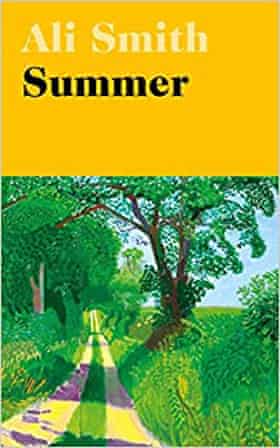
Summer (Hamish Hamilton) Ali Smith

Summer (Hamish Hamilton) completed Ali Smith’s rapid-response Seasonal quartet: four novels written over four years that have encompassed Brexit, climate change, corporate takeover and the refugee crisis along with the bracing consolations of art and nature. Reuniting characters from previous volumes and juxtaposing second world war internment with today’s migrant detention centres, Summer brought a much needed note of hope and resilience to the finale of a landmark series that explores how we live in and out of time.

This year saw the final volume, too, of Hilary Mantel’s Thomas Cromwell trilogy, which has conjured a vanished age to such extraordinarily vivid life and cast profound insights about power, ambition and fate on to the present one. The Mirror & the Light (4th Estate) had to end on the executioner’s scaffold, but the reader is suspended in the unfolding present moment until the axe falls.


Another trilogy was completed in Tsitsi Dangarembga’s This Mournable Body (Faber); written three decades on from her classic Nervous Conditions, it is a brutal, intimate reckoning with the psychological trauma of colonialism. Also shortlisted for the Booker, Maaza Mengiste’s The Shadow King (Canongate) is a beautifully crafted account of the female soldiers resisting Mussolini’s invasion of Ethiopia in 1935 and their own oppression in Ethiopian society. Lyrical, furious and meticulously researched, it is a necessary act of historical reclamation.


Marilynne Robinson turned her Gilead trilogy into a quartet with Jack (Virago), a romance across the race divide in segregated mid-century America which explores the redeeming, transcendent power of love and faith. Brit Bennett also anatomised racism in The Vanishing Half (Dialogue), a stunning family saga about passing for white and the hollowness of the American dream that won her comparisons to Toni Morrison.

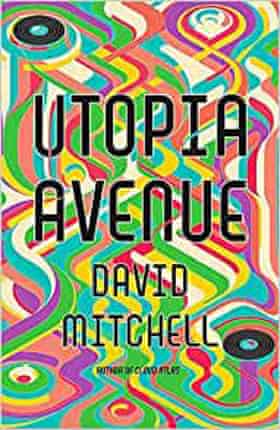
Utopia Avenue by David Mitchell

There were historical escapes from David Mitchell, in 1960s muso epic Utopia Avenue (Sceptre), and Jonathan Coe, with a bittersweet visit to one of Billy Wilder’s last film sets in Mr Wilder and Me (Viking). Curtis Sittenfeld’s Rodham (Doubleday) spun wistful alternative history, imagining what the world might have looked like if Hillary hadn’t married Bill, while Martin Amis drew on his own history for Inside Story (Cape), a baggy but fascinating autofiction combining cameos from Saul Bellow and Christopher Hitchens with tips on prose writing.

Andrew O’Hagan’s poignant Mayflies (Faber) explores the way all our lives recede too quickly into history, with a joyous nostalgiafest of young Scots chasing music and girls on a wild weekend in the 80s segueing into sober mid-life realisations and difficult decisions decades later. A brilliant portrayal of male friendship, it’s also the perfect gift for middle-aged alternative music fans.

The year began with an impressively assured debut from US author Kiley Reid; Such a Fun Age (Bloomsbury) is a razor-sharp take on white fragility and millennial uncertainty, beginning when a black nanny is accused of kidnapping her white charge. Also witty and fresh, Naoise Dolan’s deliciously dry Exciting Times (W&N) sees cynical Irish twentysomething Ava unsettled by genuine emotion while teaching in Hong Kong.

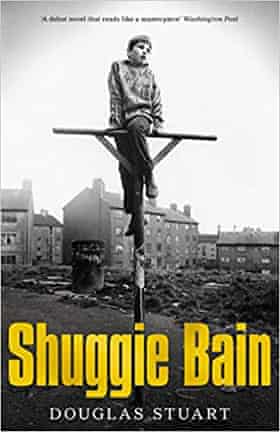
Shuggie Bain by Douglas Stuart

Two semi-autobiographical Scottish debuts from Picador showcased essential new voices: Douglas Stuart took the Booker prize for his moving, devastating Shuggie Bain, the tale of a boy’s desperate love for his alcoholic mother in the deprived, post-industrial 80s; while Graeme Armstrong’s The Young Team, set among teenage gangs in Lanarkshire, updated Trainspotting for a new generation.

Other notable first novels included Rainbow Milk by Paul Mendez (Dialogue), a fearless coming-of-age story about racial and sexual identity and masculinity focused on a young, black gay man who flees his Jehovah’s Witness community to become a sex worker. Burnt Sugar by Avni Doshi (Hamish Hamilton) coolly explores a toxic mother-daughter relationship in middle-class India, while Brandon Taylor’s Real Life (Daunt) weighs contradictory urges towards solitude and intimacy. The Liar’s Dictionary by Eley Williams (William Heinemann), which continues the lexicographical playfulness of her short stories, is a singularly charming jeu d’esprit about two people a century apart doing the difficult, essential work of defining words and defining themselves.


In translated fiction, Elena Ferrante returned to her emotional heartland, the psyche of the teenage girl, in  (Europa, translated by Ann Goldstein). As Giovanna tackles parental hypocrisy, self-disgust and the disconnect between upper- and lower-class Naples, the novel builds into what feels like a portrait of the artist as a young woman. Originally conceived as a true crime story, Hurricane Season by Fernanda Melchor (Fitzcarraldo, translated by Sophie Hughes) is a savage, unstoppable chronicle of misogyny and murder in a small Mexican village. Another rawly compelling novel won the International Booker: young Dutch writer Marieke Lucas Rijneveld’s The Discomfort of Evening (Faber, translated by Michele Hutchison) focuses on a girl in a deeply religious family that is falling apart in the wake of her brother’s death.

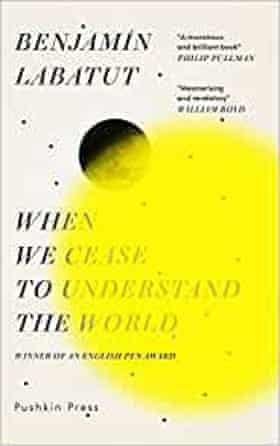
When We Cease to Understand the World by Benjamin Labatut

Daniel Kehlmann’s darkly funny Tyll (Riverrun, translated by Ross Benjamin), a picaresque journey through early 17th-century Europe, follows the progress of a folkloric jester figure from village to court against the bloody backdrop of the thirty years’ war. In Samanta Schweblin’s fiendishly readable Little Eyes (Oneworld, translated by Megan McDowell), the new must-have tech gadget allows users to leapfrog into the lives of strangers – a sharp idea that became even more pertinent with the isolation and atomisation of lockdown. When We Cease to Understand the World by Benjamín Labatut (Pushkin, translated by Adrian Nathan West), a “nonfiction novel” focused on the exceptional minds looking into the dark heart of maths and science in the 20th century, traces revelatory connections between discovery and destruction.

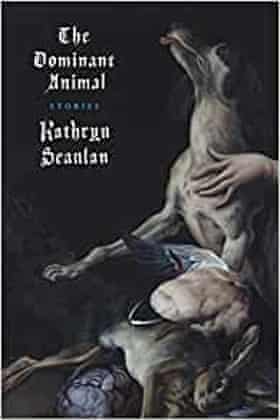
The Dominant Animal by Kathryn Scanlan

Some of the most exciting short stories of the year were to be found in Kathryn Scanlan’s The Dominant Animal (Daunt), with its fiercely sculpted sentences and unnervingly off-kilter scenarios. Cathy Sweeney’s Modern Times (W&N) has a comically surreal energy and verve, while in Reality and Other Stories (Faber) John Lanchester structures a collection of ghost stories around the most dangerous, intrusive, unknowable force in our lives – technology.

Two striking books unfolded in the fertile space between story collection and novel. In poet Frances Leviston’s The Voice in My Ear (Cape), 10 different protagonists, all called Claire, contend with the demands of the world and their difficult mothers; the stories glance off each other to build into a cubist portrait of contemporary womanhood. Maria Reva’s Good Citizens Need Not Fear (Virago), meanwhile, uses interlinked tales centred around a crumbling apartment block in Ukraine to convey the absurdity of post-Soviet life.

Finally, two novels that were a long time coming. From the 18th century to the 21st, Evie Wyld’s The Bass Rock (Cape) explores violence against women in three subtly linked time periods: a blazingly angry, darkly witty tour de force, Wyld’s third novel is bleak but bracing, and as ever, beautifully written.

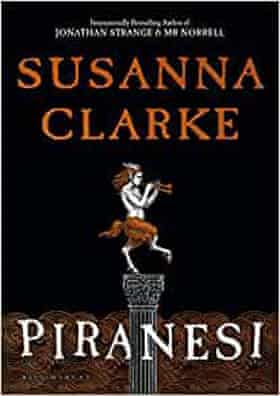
Piranesi by Susanna Clarke

Sixteen years after her bestselling debut Jonathan Strange and Mr Norrell, Susanna Clarke returned with Piranesi (Bloomsbury), the story of a man trapped in a many-halled House with an Ocean surging within it, his only companion a mysterious Other. Written out of long illness, but published into a world in which every reader was struggling with confinement and thrown on their inner resources, Clarke’s fantastical parable of solitude, imagination, ambition and contentment is a spectacular piece of fiction, and the perfect reading accompaniment to a year like no other.