Showing posts with label Man Booker Internacional Prize. Show all posts

Monday, June 20, 2022

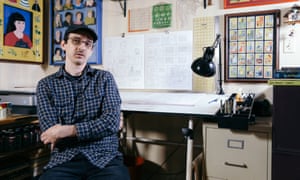
Found / JG Farrell a worthy winner for the Lost Booker


Troubles is the first in JG Farrell’s (above) trilogy on the British empire, which also includes The Siege of Krishnapur and The Singapore Grip. Photograph: Jane Bown

Found: JG Farrell a worthy winner for the Lost Booker

Troubles, the first book in Liverpool-born author's Empire trilogy, triumphs in readers' vote

Alison Flood
Wed 19 May 2010

Winning the Booker prize almost 40 years ago for The Siege of Krishnapur, JG Farrell used his acceptance speech to denounce capitalism, specifically in the form of the prize's sugar-trade sponsors. The late author would no doubt have been delighted to be given a similar platform today after his novel Troubles was chosen by the reading public as winner of the Lost Booker award.

Thursday, December 3, 2020

Man Booker Prize 2017 / Lincoln in the Bardo by George Saunders


MAN BOOKER PRIZE 2017
BOOKER CLUB
BOOK OF THE DAY

Lincoln in the Bardo by George Saunders review – agile tale of loss and resistance

A grieving, restless Abraham Lincoln is drawn to the space between life and death in this superb debut novel from the writer better known for his short stories

Alex Clark
Sanday 5 March 2017


W
hen George Saunders won the inaugural Folio prize in 2014 for his story collection Tenth of December, I had the good fortune to interview him in the immediate aftermath. Charmingly open and expansive, he humorously recounted the false starts to his writing life without a hint of faux self-deprecation. Once, he told me, while still gainfully employed as a technical writer, he had written a Joyce-influenced novel about a Mexican wedding where he’d been a guest that had somehow grown to unmanageable proportions. He gave it to his wife, Paula, to read. After some hours, he saw her with her head in her hands. The novel was history.

Sunday, October 6, 2019

Bernardine Evaristo on Woolwich / 'We weren’t allowed to play outside'


MADE IN

Bernardine Evaristo on Woolwich: 'We weren’t allowed to play outside'

The Booker-shortlisted novelist on the garrison town on the edge of London where she was first introduced to the writing of James Baldwin and Buchi Emecheta

Bernardine Evaristo
Saturday 7 September 2019

The Woolwich of my childhood was a predominantly white, working-class garrison town on the outskirts of London, the Thames obscured by the fortress-like wall of the Woolwich Arsenal armaments factory. Today it’s an incredibly multicultural district on the verge of gentrification, boasting luxury high rises with spectacular riverside views.


Cannon at Royal Arsenal Riverside, south-east London. Photograph: Loop Images Ltd/Alamy Stock Photo
My family – English mother, Nigerian father and seven siblings – lived on Eglinton Road, which wended its way to the vast expanse of Woolwich Common at one end and a parade of shops at the other. My first primary school, Notre Dame Convent, was next door to our house. My second primary school, Plumcroft, was a 10-minute walk up Eglinton Hill. My next school, Eltham Hill Girls’ Grammar, took 20 minutes on the bus. My local youth theatre was a short walk, and the only relative we visited was my maternal grandmother, a 15-minute bus journey away in Abbey Wood. The library, where I stocked up on books every week, and St Peters church, where I went for Catholic indoctrination on Sundays, were both less than a 15-minute walk away. Holidays were unaffordable and I don’t think I travelled to the centre of London, other than for a couple of school trips, until my teens. My world was small, contained and familiar.
Woolwich library saved me from the boredom of uneventful weekends and long summer holidays, especially as we weren’t allowed to play outside our house because of my father’s fears for us in a racially hostile environment. Noel Streatfeild’s Ballet Shoes was an early favourite but I can’t remember other childhood books. In my teens I bought cheap second-hand books in a local shop, such as Thor Heyerdahl’s The Kon-Tiki ExpeditionAku-aku and Fatu Hiva, which transported me a million miles beyond my suburban parameters and inspired what would become a life-long love of travelling.

I loved Tennyson, and performed in plays by Dylan Thomas and Shakespeare. I read their words aloud in bed at night, enjoying the drama and rhythm of their language. The soaring choral music and incandescent poetry of daily mass at the Convent from age four to nine, and weekly church services until I was 15, were also subliminal linguistic influences. When I came across secondhand copies of James Baldwin’s Go Tell It on the Mountain and Buchi Emecheta’s Second Class Citizen, I was first introduced to writers who wrote from black perspectives, which marked the beginning of my racial awakening, having lived through an overwhelmingly white childhood.

This year Greenwich and Docklands international festival commissioned me to be the Woolwich laureate for this year and to write about it. Walking the streets of my former home town is like visiting a memory map of my childhood.
I left at 18 and have never lived anywhere else for longer. Streets, parks, public spaces and old buildings stir up memories. I feel deeply nostalgic for the ways in which this town shaped my childhood and gave me the safe foundation to go forth and explore the rest of the world.
 Bernardine Evaristo’s Girl, Woman, Other has been shortlisted for the Booker prize.

Thursday, May 16, 2019

Nina Bawden / The Birds on the Trees / Review


Nina Bawden
The Birds on the Trees

APRIL 14, 2010
I took this photograph of Nina Bawden’s copy of the first edition of her novel “The Birds on the Trees”, sitting on the green velvet armchair in her quiet study at the back of the old terrace where she lives next to the canal in Islington. Several weeks ago, I wrote a pen portrait of Nina Bawden to celebrate her nomination for The Lost Booker Prize of 1970 and now I am delighted to report that she has been shortlisted for the award, which will be decided by an online public vote closing at the end of this month.

Friday, September 28, 2018

Books that made me / Robin Robertson: ‘The poetry world is polarised. I’m in the middle, vaguely appalled’

 ‘There are great books that fail to be recognised at the time but are re-discovered’ … Robin Robertson. Photograph: Chris Close


Books

that 

made me


Robin Robertson: ‘The poetry world is polarised. I’m in the middle, vaguely appalled’

The Man Booker shortlisted writer on his love for Jane Bowles and biographies, and why he never gives books as presents

Robin Robertson
Friday 28 September 2018


The book I’m currently reading

As always, I have submissions to read (I work in publishing). When I’m allowed to read for pleasure, it’s usually non-fiction – or something ancient and Greek.


The book that changed my life

I was brought up within earshot of north-east Scottish dialect, folklore and music, in what remained of a fishing community with its oral tradition, superstitions and legends. Tending to the solitary, I fell naturally towards books and read indiscriminately. The stories I remember were Scottish folk tales, the Greek myths (in some hopelessly expurgated edition, upgraded slowly through the years) and Grimm. As a teenager I found Mervyn Peake’s Titus books intoxicating, and those novels, probably, started my passion for fiction, while Yeats and Hughes and Heaney were making poetry crucial to me. I’m not sure a book has changed my life, but all great art jolts your perspective and enlarges your gaze.

The book I wish I’d written

I suppose I’m always trying to write that book (which is the only way to pay attention, the only way to improve). To have produced books of the stature of James Joyce’s Ulysses, or Under the Volcano by Malcolm Lowry, or David Jones’s In Parenthesis, without the attendant physical or psychological damage – that would be an achievement.

The book that influenced my writing

The work of David Jones – not just the poetry and essays, but the engravings, drawings, watercolours and, particularly, the painted inscriptions. I hope my admiration for his writing doesn’t stray into mimicry.


The book that is most underrated

There are great books that fail to be recognised at the time but are rediscovered, like John Williams’s Stoner, or novels like Ulverton or Death and Nightingales that offer a constant admonitory warning to judges of literary prizes. I wish more people read Jane Bowles: Two Serious Ladies and Plain Pleasures are wonderful.

The last book that made me laugh

The books that make me laugh, cry, then smash furniture tend to be written by people driven by self-promotion and shallow narcissism; they don’t have time to bother with all that pesky learning-the-craft business: they want “Likes” on social media and they’re having strong and important feelings somewhere near you, right now. The world of poetry is small and currently polarised: it’s often either simplistic or incomprehensible. I find myself in the middle, vaguely appalled. I’m allergic to “light verse”, because it seems a betrayal of the purpose of poetry. Equally, poetry that sets out to be deliberately opaque is betraying the purpose of language.

The book I couldn’t finish

I spend my life not finishing books – though they’re mostly manuscripts rather than books.

The book I’m ashamed not to have read

Being Scottish, I carry enough shame already without needing the help of books.

My earliest reading memory

I remember sitting in the congregation of King’s College chapel in Aberdeen, transfixed by my father’s sermon. I was never a believer, but the power and beauty of his delivery was thrilling. It was the cadences rather than the creed that moved me, and I understood then how language could be made to sing.

The book I give as a gift

I almost never give books as presents: it feels rather presumptuous, or something ...

My comfort read

I feel I’m drifting towards a fondness for biographies, where one can find comfort in seeing people make a mess of their lives and the lives of others and still produce art that is beautiful and lasting.


THE BOOKS THAT MADE ME
2017
13 October 2017
Eimear McBride / ‘I can never finish Dickens – it’s sacrilege’
20 October 2017
Shami Chakrabarti / ‘Harry Potter offers a great metaphor for the war on terror’


Thursday, September 27, 2018

Man Booker Prize 2007 / The Gathering by Anne Enright


MAN BOOKER PRIZE 2007

Booker club: The Gathering by Anne Enright


This novel ticked most of the Irish cliches on my list ... yet it is nuanced, hilarious, and not to be underestimated.

Sam Jordison
Tue 4 Sep 2007

Ireland, it is widely and rightly acknowledged, punches far above its weightwhen it comes to literary output. No lover of books can look on the island with anything other than affection and gratitude for the way its native sons and daughters have enriched and transformed the written word. All the same, there is one sub-genre of uniquely Irish literature that I could happily do without: the Catholic childhood misery memoir.
Sure I found Angela's Ashes touching, but as soon as Frank McCourt's brother got in on the act, not to mention all the subsequent McAuthors eager to sell their history to the kind of Americans who like to think they have Celtic blood, I found I'd had more than enough of big families, bad parents, worse nuns and dipsomaniac uncles with the gift of the gab ...
... All of which is a long way of explaining why I approached Anne Enright's story of a big Dublin family and its murky past with considerable cynicism. No matter that The Gathering is a work of fiction and that Enright has a reputation as one of the most talented writers in Ireland today. I still expected to have heard it all before.
So great was my prejudice, and so bad my mood after three hours of housework drudgery when I came to the book late on Friday night, that as a spiteful little experiment I gathered up my big bag of Irish-childhood cliches and wrote down the first ones that popped out. As I read through I marked down where they initially occur in the book.

Anne Enright_Illustration by Alan Vest

Here's the list:

Drunken father, who veers between maudlin sentimentality and maudlin violence. (Doesn't appear) Humorous uncle - also drunk, but good for the craic and a great source of slightly ribald jokes. (Doesn't appear, but there is a brother Liam who neatly fits this description) Harried mother, living harried life in an old-fashioned kitchen. (Page 3) Too many children. (Page 7) One of these children is sexually abused. (Page 143) One of these children dies too young. (Page 8 ... More turn out to have died on page 10) A grandparent, close to death. (Page 17) A frightening, violent priest. (Page 50) A schoolteacher given over to corporal punishment. (Doesn't appear) A schoolteacher who instils a love of books in the author. (Doesn't appear) Rain. (Page 26) Brown tea. (Page 4) More rain. (Page 60) More tea. (Page 7)

So, by page 50 nearly two-thirds of my predictions had been proved correct. At that stage, however, I wasn't feeling vindicated, so much as ridiculous. Yes, plenty of the book exists on the wrong side of cliche, but my list was unfair. First, because you can't seriously write a book about Ireland and not mention tea. Second, because Enright is perfectly aware that stories of big Irish families always follow the same pattern and is not afraid to make a virtue of this fact: "There is always a drunk. There is always someone who has been interfered with, as a child," her narrator tells us with simple clarity. Third, I'd underestimated Enright - and then some. The Gathering is far more than a story of childhood dolours and the glamourised poverty of olde Ireland.


The majority of the book - or the majority of the thinking in the book - actually takes place in the present, as Veronica Hegarty struggles to come to terms with the fact that her brother Liam has filled his pockets with stones and walked out to his death in the sea. The event shocks her into reminiscence about the past - and even into inventing colourful scenarios about her relatives when she does not know what actually happened to them. It also leads her to a frank assessment of her current life. Instead of maudlin sentimentality, there is a nuanced explanation of the way the past affects the present. Similarly, the exploration of childhood is accompanied by smart insight into what it means to be a wife and mother - and how such a woman is to fit into a new, economically dynamic Ireland, very different from the Guinness-stained sepia of the misery memoir.
The words come packed into short, robust sentences full of allusion and imagery. Sometimes, they don't work quite as Enright might wish. At one point we are told, for instance, that sunlight is "sexual". Unless I'm really missing something, that's a pretty daft thing to say. More often, however, the writing is effective. Veronica says of her parents' capacity to rut and produce offspring: "They were helpless to it, and bred as naturally as they might shit." Or, how's this for an aphorism: "A drinker does not exist. Whatever they say, it is just the drink talking"?
But the thing that most won me over was that even though The Gathering is a serious book (as AL Kennedy eloquently put it, "a genuine attempt to stare down both love and death") it can be absolutely hilarious. And not "look-at-my-drunken-uncle-funny", either. Enright's wit is dry, sardonic, sometimes even cruel - and all the better as a result.
"Are they good children?" Veronica asks of her own offspring. "In the main. Though Emily is a bit of a cat and cats, I always think, only jump into your lap to check if you are cold enough, yet, to eat." Who couldn't like a book with such observations?
Eventually, I found the conclusion disappointing. I was unconvinced by the insistence that childhood events inescapably determine our adult present, and wondered if Veronica's intentions for the future weren't something of a cop out.
But the book is still a credit to this year's longlist.


Sunday, August 26, 2018

John Mullan on The Blind Assassin by Margaret Atwood


John Mullan on The Blind Assassin by Margaret Atwood 

Among the tricks and puzzles, the overwhelming sense of design encourages the reader that there will be answers
John Mullan
Friday 16 August 2013

T
he very construction of Margaret Atwood's The Blind Assassin is puzzle-like. It is made up of four narratives, interleaved with each other. But how do they connect? The encompassing narrative, which begins and ends the novel, is told by Iris Griffen, now in her 80s, who looks back to her early life, and in particular to her teens and young adulthood in the 1930s and 1940s. The daughter of a well-intentioned Canadian businessman, her fate has been sealed by her marriage to her father's business rival, Richard Griffen, an arrangement calculated to rescue the family's failing fortunes. Alternating with sections of her narrative are chapters from a story entitled The Blind Assassin, told in the present tense. Two unnamed lovers pursue a surreptitious affair. The man – some kind of political subversive – is on the run, while the woman has reason to want the relationship to remain secret.

Saturday, July 28, 2018

Man Booker prize 2018 longlist includes graphic novel for the first time


Man Booker prize 2018 longlist includes graphic novel for the first time

Nick Drnaso’s Sabrina, which explores the disappearance of a young woman, ‘does just what good fiction should do’ – and will compete with Michael Ondaatje’s WarlighT

Alison Flood
Tue 24 Jul 2018 00.01 BSTLast modified on Tue 24 Jul 201816.38 BST
 
Nick Drnaso – the first graphic novelist ever to be nominated for the Man Booker prize. Photograph: Olivia Obineme for the Observer

A graphic novel about a vanished young woman and a thriller about a vanished mother have elbowed their way on to a giant-slaying Man Booker prize longlist that “capture[s] something about a world on the brink”.
Nick Drnaso’s Sabrina, the first graphic novel ever to reach the Booker longlist, explores the chilling effect of 24-hour news after a girl has disappeared. Judges picked it as a contender for the £50,000 prize ahead of titles from former winners including Pat Barker, Julian Barnes, Peter Carey and Alan Hollinghurst, describing it as “oblique, subtle [and] minimal” and saying the “changing shape of fiction” meant it was only a matter of time before a graphic novel made the cut.


Esi Edugyan plunges into the 19th century, opening with watchful, 11-year-old George Washington Black cutting sugar cane and doing his best to survive on a Barbados plantation owned by sadistic Englishman Erasmus Wilde. One day ‘Wash’ is plucked from the fields to help Wilde’s scientist brother with his experimental airship The Cloud-cutter. Due to be published in August, this evocative, page-turning adventure sees ‘Wash’ travel from the Caribbean to the Arctic in search of freedom.
Photograph: Profile Books, Serpent’s Tail

“We all read it and were blown away by it,” said the judge and bestselling crime novelist Val McDermid. “The graphic novel has increasingly become front and centre in terms of storytelling [and] we felt [Sabrina] does just what good fiction should do.”
Also in the running for the UK’s most prestigious literary award is a thriller from the crime writer Belinda Bauer. Snap opens with a mother abandoning her three children in a broken-down car and plays out as they struggle to deal with her disappearance. The judges called it an “acute, stylish, intelligent novel about how we survive trauma”, which “undermines the tropes of its own genre and leaves us with something that lingers”.


Sophie Mackintosh takes the reader to a house on an island, where three girls live with their mother and King. But their world is upended when King vanishes and three men are washed up on the beach. Writing in the Guardian, Cal Revely-Calder said the novel is written ‘in the way that Sofia Coppola would shoot the end of the world: everything is luminous, precise, slow to the point of dread’.
Photograph: Penguin Random House, Hamish Hamilton
“I’d read it even before I knew I would be a Booker judge and it seemed to me to be an outstanding novel,” said McDermid. “My fellow judges read it and one said, ‘This transcends genre’, and someone else said, ‘This shows what genre can do at its best’ ... It is an extremely clever piece of storytelling with characters you care about, and that’s what we were looking for – something well written that engages with mind and heart.”
A longlist that stands out for its “willingness to take risks with form”, according to chair of judges Kwame Anthony Appiah, also features debuts from Sophie Mackintosh and Guy Gunaratne. Mackintosh’s The Water Cure “unpicks patriarchy at its core”, according to the panel, while Gunaratne’s In Our Mad and Furious City is “an inner city novel for our times”. The poet Robin Robertson mixes verse and prose in his first novel, The Long Take, while Daisy Johnson’s first novel, Everything Under, is enough to put the 27-year-old alongside Sally Rooney, picked for Normal People, as the youngest authors on this year’s list. Johnson and Rooney are “looking at the world from the perspective of their age and their books have a very different flavour”, McDermid explained, “but they’re there because they impressed us”.
 Michael Ondaatje’s Warlight has made this year’s Booker longlist. 
Only one former winner made this year’s Booker longlist: Michael Ondaatje, for Warlight, which opens in 1945 with London still reeling from the blitz. The other major name in the running for the Booker is the Pulitzer-winning novelist Richard Powers, selected for his novel The Overstory. With US writers having won the last two Man Booker prizes after the award was opened up to authors from outside the UK and Commonwealth – a decision that Julian Barnes described as “daft” earlier this month – naysayers will be celebrating the fact that just three US writers were longlisted this year: Powers, Drnaso and Rachel Kushner, chosen for The Mars Room. Called “terrifyingly authentic” by judges, The Mars Room follows the story of a woman beginning two consecutive life sentences, plus six years, at Stanville Women’s Correctional Facility.
The Guardian first book award-winner Donal Ryan makes this list with his story of a Syrian refugee, a care worker and a crooked accountant, From a Low and Quiet SeaEsi Edugyan’s Washington Black, the story of a slave who becomes the personal servant to an eccentric scientist, and Anna Burns’Milkman, a look at Ireland during the Troubles through the perspective of a young girl, complete a 13-strong longlist assembled from 171 submissions – the highest number of books ever entered for the prize.


Anna Burns pitches the reader into the heart of the Troubles in this story of a young woman pursued by a senior paramilitary figure. Writing in the Guardian, Claire Kilroy saluted the novel’s ‘digressive, batty narrative voice’ and its Beckettian ability to ‘trace the logical within the absurd’.
Photograph: Faber & Faber

“We tried to read blind as much as we could,” said McDermid. “We didn’t care where the writers came from or whether it was their first book or their 40th. I read most on my iPad so I really was reading blind, with no author bio or publisher information.”
Appiah said that he and his fellow judges had been struck by the way the novels on the longlist “disrupted the way we thought about things we knew about, and made us think about things we didn’t know about”.


Belinda Bauer won the CWA gold dagger in 2010 with Blacklands and the Theakston prize in 2014 with Rubbernecker. Her latest thriller returns to 1998 and is set in motion when Catherine disappears on the M5, leaving 11-year-old Jack in charge of his younger sisters.Writing in the Guardian, Laura Wilson called it ‘an intelligent mystery, written with razor-sharp observation and wry humour’.
Photograph: Penguin Random House, Bantam Press

“Perhaps unsurprisingly, given the times,” he said, “there were many dystopian fictions on our bookshelf – and many novels we found inspirational as well as disturbing. Some of those we have chosen for this longlist feel urgent and topical; others might have been admired and enjoyed in any year. All of these books – which take in slavery, ecology, missing persons, inner-city violence, young love, prisons, trauma, race – capture something about a world on the brink.”
Appiah is joined on the panel by McDermid, the critic Leo Robson, the feminist academic Jacqueline Rose and the artist and graphic novelist Leanne Shapton.
The shortlist for the Booker will be announced on 20 September, and the winner on 16 October.