Saturday, January 5, 2013

Javier Marías / Stranger Than Fiction


Javier Marías
Stranger Than Fiction

Two novels by an enigmatic Spanish author explore past and present.


  • By WENDY LESSER
    May 6, 2001


    A HEART SO WHITE By Javier Marías.
    Translated by Margaret Jull Costa.


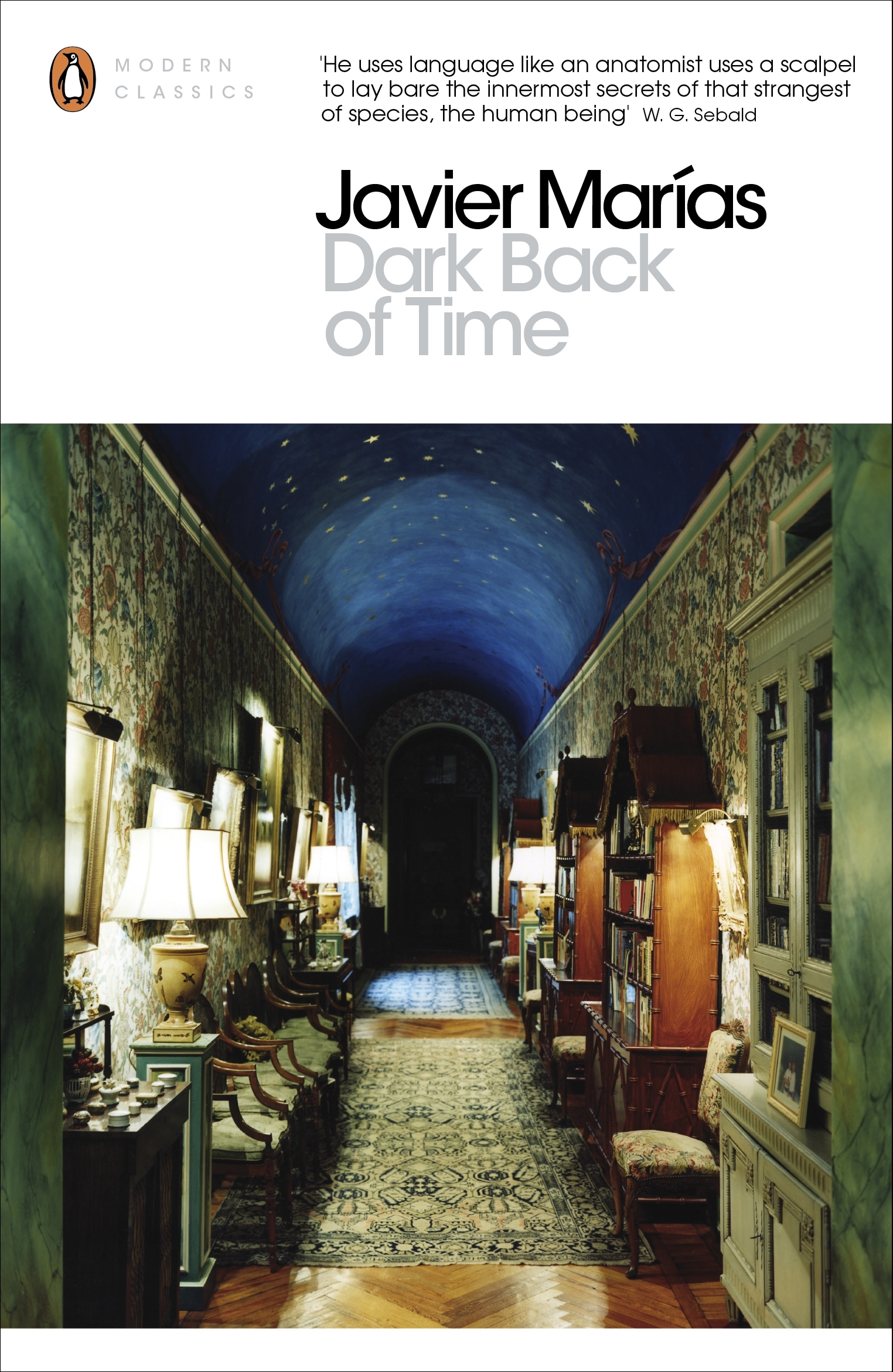
    DARK BACK OF TIMEBy Javier Marías.
    Translated by Esther Allen.
    M
    ere plot summary would give you a mistaken impression. A nameless Spaniard spends two years teaching at Oxford, has an affair with a married woman and buys a lot of rather obscure old English books. A man in Madrid is about to have an affair with a married woman when she drops dead in his arms; he flees the scene and spends the next few months surreptitiously getting to know the surviving members of her family. A simultaneous translator, recently married to another simultaneous translator, uses the growing friendship between his wife and his father to unravel the mystery behind a suicide that took place before he was born. An author reflects on the strange events -- many of them involving eccentric Englishmen, others having to do with his own private and public life -- that are connected to the publication of one of his earlier novels.
    These are the story lines (though that may be precisely the wrong word, for they come to us in circular, disconnected form) of ''All Souls,'' ''Tomorrow in the Battle Think on Me,'' ''A Heart So White'' and ''Dark Back of Time,'' the four novels by the Spanish writer Javier Marías that are now available in English. If you judged by the summaries alone, you might guess that Marías's fiction is ludicrously melodramatic or cruelly comic or tediously postmodern. It is none of these. On the contrary, all four novels possess an odd combination of true sadness and deeply satisfying wit that I have yet to find in any of Marías's English or American contemporaries.
    Although this review will concentrate on the two novels that are most recently available, it is difficult, with Marías, to segregate any single work from the others. The experience of reading him is cumulative. When you take up a Marías novel or even a Marías short story, you are at once enclosed in a strange world that becomes increasingly and addictively familiar. Names and characters recur: the wives are often called Luisa, a slightly suspect friend will be either Custardoy or Ruibérriz de Torres, and there are frequent references to an Englishman named John Gawsworth and his position as king of Redonda. Public figures, too, put in an appearance, though Franco is not always called Franco, and Margaret Thatcher may simply be identified as a female British leader. The events take place mainly in Madrid, but London, Oxford, Havana, Venice and New York are also knowledgeably invoked. Time is an active presence, a nearly tangible entity. Ghosts flit through; sometimes (as in the title story in the collection ''When I Was Mortal'') they even act as narrators.


    BOOK EXCERPT
    "I did not want to know but I have since come to know that one of the girls, when she wasn't a girl anymore and hadn't long been back from her honeymoon, went into the bathroom, stood in front of the mirror, unbuttoned her blouse, took off her bra and aimed her own father's gun at her heart, her father at the time was in the dining room with other members of the family and three guests. When they heard the shot, some five minutes after the gift had left the table, her father didn't get up at once, but stayed there for a few seconds, paralysed, his mouth still full of food, not daring to chew or swallow, far less to spit the food out on to his plate; and when he finally did get up and run to the bathroom, those who followed him noticed that when he discovered the blood-spattered body of his daughter and clutched his head in his hands, he kept passing the mouthful of meat from one cheek to the other, still not knowing what to do with it."-- from the first chapter of 'A Heart So White'
    For the most part, in fact, the narrator of a Marías novel is the story. In ''A Heart So White,'' he is an intelligently curious but somewhat timid figure, overshadowed -- in his own mind and, he fears, everyone else's -- by his powerful, seductive father, a man named Ranz who deals in valuable artworks and has a forger for a best friend. Our narrator learns that Ranz, before being married to his mother, was briefly married to her older sister, a young woman who killed herself soon after the wedding. It is this death, in other words, that gave rise to the narrator's own life. (This is exactly the kind of thought a Marías narrator is always having; you can see how easily the ghosts slip in.) To solve the mystery behind this suicide, he must use his wife as bait -- or, rather, he must depend on his wife's increasing closeness to her father-in-law to elicit the desired yet finally unwelcome information.The narrator of ''A Heart So White'' is capable of strong passion -- particularly in regard to his wife -- but we hear from him mainly about the passions of others. He is the kind of man who watches life through a window, either from a room looking down onto the street (as he does on his honeymoon in Havana) or from street level, generally at night, looking up at a lighted window (as he does during a trip to New York, when he is waiting to go back to the apartment of his friend Berta, who is having a tryst with a man she met through a video introduction service). And in this he is typical of all Javier Marías narrators: they inevitably adopt this peering pose at some point or another. It is a pose that is also a philosophical position -- a reflection on how much or how little people can really know about one another; a commentary on suspicion and guesswork and, finally, helplessness in the face of events.
    But again, I have created the wrong impression if I have made the Marías narrator sound like a voyeur. He is intimately involved in the events he describes, and he is also intimately involved with us, his readers. Like Henry James's or Marcel Proust's, his sinuous, flattering, seemingly endless sentences presume -- even insist -- that we are as subtle and intelligent as the author. And their subject matter is Proustian or Jamesian as well -- Marías is interested not so much in the violent death or the adulterous love affair itself as in how we think and feel about such events when we contemplate them beforehand or consider them afterward. (That this Jamesian quality has been preserved in English is a great tribute to Marías's translators, Esther Allen and especially Margaret Jull Costa. But it may also be attributable to the fact that Marías's fiction in some way comes from English: he has done Spanish translations of Sterne, Hardy, Stevenson and Faulkner, among others.)


    The Associated Press
    Javier Marías

    Marías's challenging and seductive technique reaches its pinnacle in ''A Heart So White,'' but it is at its most accessible in ''All Souls,'' so that's probably the best place to start in on his work. That novel is also good background reading for ''Dark Back of Time,'' whose narrator is called Javier Marías and whose subject matter is, among other things, the publication of ''All Souls.'' It helps, when reading ''Dark Back of Time,'' to have some curiosity about the man behind the novels, and in the course of reading Marías's other work you will have accumulated numerous questions that this book purports to answer. Does Marías actually have a wife named Luisa? How did he acquire his joint obsessions with the not-yet-born and the too-early-dead? What accounts for both his sense of dread and his sense of humor? What is his father's real occupation, and what is the family history in relation to the Spanish Civil War? Which characters in his novels are real or based on real people?You will come away from ''Dark Back of Time'' with some answers (there is no wife named Luisa, indeed no wife at all; Marías had a 3-year-old brother who died before he himself was born; his father, also a writer, was once imprisoned and nearly executed by Franco; John Gawsworth is real, but the Oxford booksellers called the Alabasters derive more from Dickens than from their real-life counterparts, the Stones), but whether these answers are true is one of the questions that are left unanswered. To give but a single small example: ''Dark Back of Time'' mentions that Marías, like John Gawsworth before him, has become king of Redonda. If you go to the Web site of the Redonda Foundation, at www.redonda.org, you will see that there is actually a dispute involving Javier Marías's sovereignty over this tiny Caribbean island. The English-speaking disputant employs the word ''impostor,'' which happens to be a favorite Marías word. Has Marías himself set up the whole dispute -- perhaps the whole Redonda site -- as yet another literary game? Probably not: Marías claims in ''Dark Back of Time'' to be completely computerless, and for some reason I believe him. But the uncertainty is nonetheless tantalizing. It is impossible to know, with anything Marías has touched, who is whose fictional creation.
    Like the work of Jorge Luis Borges, of which it may superficially remind you, ''Dark Back of Time'' deals repeatedly and amusingly with the relationship between reality and the written word. But where Borges is cold, Marías is warm: his breath is in our ear, his urban reality is essentially our urban reality, and -- despite his interest in ghosts -- he is very much alive right now. He has seen the same movies we have, danced to the same music, read the same books, gone to the same kinds of restaurants and racetracks and academic meetings. He is even capable, at times, of anticipating our thoughts and memories, as if he were performing a version of a simultaneous translation on us, rendering our hidden suspicions into mutually acknowledged words.
    It is a rare gift, to be offered a writer who lives in our own time but speaks with the intensity of the past, who comes with the extra richness lent by a foreign history and nonetheless knows our own culture inside out. Yet, strangely, Javier Marías -- who is famous in Spain and garlanded with prizes from the rest of Europe -- remains almost unknown in America. What are we waiting for? All the gifts we are offered in life (as Marías himself is fond of pointing out) are fleeting ones, easily lost or ignored or undervalued and only regretted when they are no longer available to us. It's high time we accepted this one.


    NY TIMES

    Wendy Lesser is the editor of The Threepenny Review and the author of five books. She is currently a senior fellow at Columbia University's National Arts Journalism Program.


  • DRAGON


  • Friday, January 4, 2013

    Javier Marías / A Heart So White / Reviewed by Samantha Schnee and others


    A HEART SO WHITE
    by Javier Marías


    A Heart So White, probably Javier Marías, best-known novel, chronicles with unnerving insistence family secrets -and the relentless power of the past. Juan knows little of the interior life of his father Ranz; each has always seemed comfortable with their friendly but distant orbit. Only when Juan marries (and his new wife begins to find much to talk about with Ranz) does his son consider the past anew, and yet he doesn´t really want to know. Secrecy, its possible convenience and even civility, hovers throughout the novel -it is a sort of anti-detective story of human nature The sins of the father; the fraudulent and the genuine; marriage and strange repetitions of violence: Marías elegantly send shafts of inquisitor light into shadows. At the center of A Heart So White are the costs of ambivalence. ("My hands are of your colour; but I shame/To wear a heart so white" Shakespeare´s Macbeth )


    "There is nothing like this in contemporary literature. A book of genius" Das literarische Quartett


    "As quirkly as it is brilliant... An entertaining and intelligent novel" Washington Post


    "The writing shows enormous cunning and a fiendish degree of patience! Nouvel Observateur
    "Immense talent... a landmark (by) a genuine artist" Le Monde

    "The work of a supreme stylist... The two protagonists´ civilized but complex marriages recall the compelling intricacies of Henry James... It is brilliantly done." James Woodall, The Times (London)


    Family secrets are the prime elements of A Heart So White, perhaps the greatest novel by "the most talented Spanish author alive" (Il Messagero)


    "A Heart So White" is a breathtaking novel about family secrets, winner of the 1997 Dublin IMPAC Prize for the best novel published worldwide in English, and arguably Javier Marias's masterpiece. Javier Marias's "A Heart So White" chronicles with unnerving insistence the relentless power of the past. Juan knows little of the interior life of his father Ranz; but when Juan marries, he begins to consider the past anew, and begins to ponder what he doesn't really want to know. Secrecyits possible convenience, its price, and even its civilityhovers throughout the novel. "A Heart So White" becomes a sort of anti-detective story of human nature. Intrigue; the sins of the father; the fraudulent and the genuine; marriage and strange repetitions of violence: Marias elegantly sends shafts of inquisitory light into shadows and on to the costs of ambivalence. ("My hands are of your colour; but I shame/To wear a heart so white"Shakespeare's "Macbeth.")


    A HEART SO WHITE
    Reviewed by Samantha Schnee

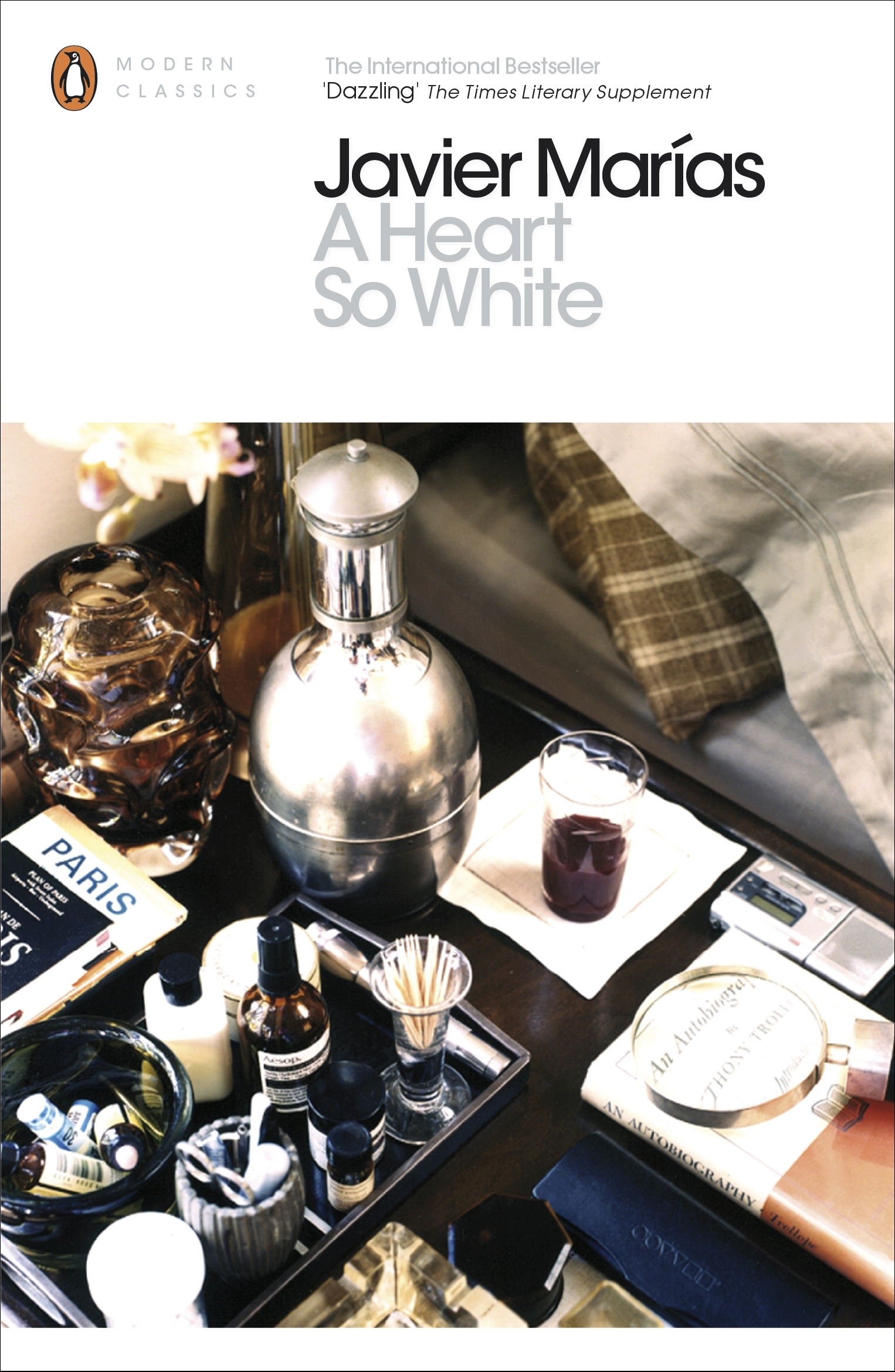
    Image of “A Heart So White” by Javier Marías
    In A Heart So White Javier Marías examines the commonplace yet peculiar institution of marriage and all its attendant secrets and betrayals. Juan is a newlywed translator who shuttles between the UN in New York and the Hague for six to eight weeks at a time, while his young bride Luisa, also a translator, remains behind in Madrid to establish their home together. In Juan's absence she develops a close relationship with her enigmatic father-in-law, a charismatic art dealer named Ranz who, though in his seventies, has not lost the charm that enabled him to marry three times despite the fact that his first wife died mysteriously and the second committed suicide upon returning from their honeymoon.
    Juan has never enjoyed a particularly close relationship with his father, and though he cannot put his finger on exactly why, he has great misgivings about the friendship developing between his father and his spouse. Juan's feelings of unease and his difficulty accustoming himself to the conventions of conjugal life are refracted through many lenses: a conversation between a Spaniard and his Cuban lover that Juan and Luisa overhear while they are on their honeymoon in Havana; a one-night-stand that Juan facilitates for his friend and former lover, Berta, while he is staying in her apartment on one of his stints at the UN in New York; and descriptions of Juan's own family history, specifically his father's marriages. Juan is dogged by feelings of dread which seem to become more acute rather than abate the longer he is married.
    Marías, the son of a prominent Spanish philosopher, ponders not only the curiosities of matrimony, he waxes philosophical on all matter of topics, and his digressions may lose the less patient reader. These asides, however, are always pertinent, building toward and culminating in an examination of passion so intense that it can drive a man to kill. As Lady Macbeth says to her husband shortly after Duncan's murder, "My hands are of your colour; but I shame/To wear a heart so white."
    Margaret Jull Costa is at the height of her powers here, rendering an excellent translation of what many of Marías's followers deem his best work--indeed, it received the 1997 Dublin IMPAC Prize for the best novel published worldwide that year in English. Marías, too is a translator, and not only of Conrad, Sterne, Hardy and others into Spanish; he is, to quote his own most recent novel to appear in English (Your Face Tomorrow: Volume I, Fever and Spear), "…a translator or interpreter of people: of their behavior and reactions…their inconstancies, their limits, their innocence, their lack of scruples and their resistance; their possible degrees of loyalty or baseness and their calculable prices and their poisons and their temptations." It is this unerring insight into the infinite variety of all things human and its faithful translation onto the page that makes A Heart so White, in fact all Marías's work, so great.

    Read more: http://wordswithoutborders.org/book-review/a-heart-so-white-by-javier-maras#ixzz2GufvQN9r


    http://wordswithoutborders.org/book-review/a-heart-so-white-by-javier-maras


    A Heart So White by Javier Marías

    Once I read some praise for this novel, and I also liked its title very much, so I’m sure I would have read it sooner or later. Then a couple of months ago I came across another blog post about this novel in which the blogger mentioned that A Heart So White is full of eight-line sentences and highly irritating parenthetical interjections. Well, you may or may not have noticed, but I am prone to write eight-line long sentences and parenthetical interjections myself, so I thought that these irritating features might in fact prove quite enjoyable to me. Therefore I asked my sister to borrow this book for me from the library, as I felt a great urge to find out about Marías’s long sentences as soon as possible.
    The protagonist and narrator of the novel is Juan, a recently married thirtyish translator, and A Heart So White is basically a long series of his musings, his reflections on the past and his attempts to explain the world to himself. The center of the virtually non-existent story is that after his own wedding, Juan becomes interested in the story of his father’s three marriages, and even though he is not sure he really wants to know what kind of secrets are concealed in his father’s past, his curiosity gets the better of him and he cannot hide from the unpleasant and perhaps even dangerous truth.
    As it usually happens in this kind of soul-searching, past-revealing novels, by the end of the story we learn the long-concealed secret of Juan’s father. But as it is, the secret itself is not that very important, and what mattered forty years ago doesn’t really matter now. The secret only serves as a convenient referential point which makes it possible for the narrator to muse (under the pretext that he is working hard to reveal the big secret) about as diverse topics as the changes that occur in the relationship of a couple after they get married; the need to understand everything and the impossibility of not understanding and not knowing; the way hearing and knowing something relates to guilt and innocence; the recurring events and the chance coincidences which abound in everyone’s life; the role language plays in our understanding and deception of the other person; or the way something becomes a secret.
    These topics are simply wonderful by themselves, and the way Marías covers them in the novel makes them even more so. I was both fascinated and entertained by the constant digressions of the narrator (everything reminds Juan of something else, so it can easily happen that one character asks a question, and we only get the answer after a two-page long interjection or a description of something that’s just come to the narrator’s mind upon hearing the question), and I admired his efforts to understand and explain everything perfectly (it’s easy to see that he writes so many complicated sentences and parenthetical interjections because every explanation can be refined further, and this constant refinement is exactly what the narrator is after).
    The narrator can talk interestingly about anything, but still, I enjoyed his ruminations about the nature of language, understanding and deception the most. This also happens to be one of the most important topics for the narrator, which may come as no surprise, given that he works as an interpreter, therefore it is his job to pay attention to language, voices, choices of words, shades of meaning – no matter whom he is talking or listening to. On the one hand, his job makes his life more difficult, as he is accustomed to listening to and interpreting everything so he cannot let go even in his free time, and if he hears anyone speaking in a language he understands he cannot help but listen and interpret. So Juan sometimes suffers from his need to understand everything, on the other hand, however, he is well aware of the power his ability to understand and translate words endows him with – and he doesn’t hesitate to use this power either.
    My favorite example for this is the story of Juan’s first meeting with his wife, Luisa. Luisa works as an interpreter as well, and once she is present as an observer at a meeting of a Spanish and an English politician where Juan interprets. Seized by a sudden impulse (and risking his job), Juan decides that he spices up the boring meeting, so he deliberately mistranslates some sentences in order to steer the conversation to a more personal and exciting direction. And even though it would be Luisa’s task to interrupt Juan at this point, she decides to overlook Juan’s deliberate mistakes. This way the two of them become accomplices in the deception and decide to use their linguistic abilities to influence and deceive others, and in a way change the world according to their whims.
    This was only a single example, and the novel abounds in such beautiful episodes. But as I already implied, A Heart So White is just as fascinating when nothing happens, thanks to the structure and language Marías uses: sentences and even whole paragraphs keep recurring in the novel, and all the repetitions (not only of words, but symbols, metaphors, and human interactions and relations) have quite a hypnotic and bewitching effect in the end.
    Of course you don’t necessarily have to agree with the narrator’s philosophy – but it’s for sure that you will find it hard to ignore the sheer beauty and pervasive force of his trains of thought.

    http://entropybook.wordpress.com/2011/10/17/a-heart-so-white-by-javier-marias/


    Javier Marías: A Heart So White

    BY Serafin G. Leon

    Wednesday, 14 September 2011


    My hands are of your colour, but I shame to wear a heart so white. Lady Macbeth says to her shaken husband, inmediately after he murdered the king, his hands full of blood from the regicide.

    Marias likes giving his novels titles taken from Shakespearian lines. And the title chosen usually refers to something esencial in the narration, playing with the possible meaning(s) of the original line, though re-interpreting it according to his own purposes.

    In the Macbeth line above, we deal with hands and hearts, that could be white or coloured.Coloured here means guilty, or having done the deed, as Macbeth himself states to his wife, or having been finally bold enough to carry out the villainy. Or, in Ladymacbethian terms, having gathered the resolution to go beyond traditional human moral. Even if that implies a bloodbath, as is the case.

    And hands may be coloured, as Macbeth´s after de (mis)deed, but the heart may remain white. That is the lady´s accusation. Her husband´s heart remains white, after the murder, which she finds shameful. He is shaken, he fears even the surrounding shadows, devastated by apparent guilt. His hands (and hers, as she helped him to disguise the slaughter) are coloured, but the heart is still a prisoner of a narrow, small morality.

    In Marias´s narration, a white heart could also mean a heart that doesn´t know or doesn´t wish to know. One that chooses not to know. Since knowledge is a path of no return. One that can colour your heart (darken it), and you will never be able to wash it away, the colour of knowledge. Darkening one´s heart, knowing, is a serious decision, because once we make it, we will have to co-exist with knowledge for the rest of our lives. As total oblivion is impossible. And our view of reality may change accordingly.

    I first read A Heart so white in its original Spanish, in Barcelona, many years ago. The novel has haunted me ever since. Written in a rich and hypnotic language, full of nuances, insights, philosophical especulation. And all within the frame of a smart noirplot.

    The novel is about secrets, old family misteries, misunderstandings, silences within the couple, esential material "lost in translation". The decision to know, to colour one´s heart, will never be pondered enough. Pity our ears have no lids like our eyes. The consequences. To know or not to know. A matter of the same entity of that hamletian to be or not to be. Though perhaps, carefully considered, they are both one and the same thing.

    A heart so white, 1992. Javier Marías


    Thursday, January 3, 2013

    Javiert Marías / A Heart So White / Quotes


    A HEART SO WHITE
    by Javier Marías

    1

    “It's always the chest of the other person we lean back against for support, we only really feel supported or backed up when, as the latter verb itself indicates, there's someone behind us, someone we perhaps cannot even see and who covers our back with their chest, so close it almost brushes our back and in the end always does, and at times, that someone places a hand on our shoulder, a hand to calm us and also to hold us. That's how most married people and most couples sleep or think they sleep, the two turn to the same side when they say goodnight, so that one has his or her back to the other throughout the whole night, when he or she wakes up startled from a nightmare, or is unable to get to sleep, or is suffering from a fever or feels alone and abandoned in the darkness, they have only to turn round and see before them the face of the person protecting them, the person who will let themselves be kissed on any part of the face that is kissable (nose, eyes and mouth; chin, forehead and cheeks, the whole face) or perhaps, half-asleep, will place a hand on their shoulder to calm them, or to hold them, or even to cling to them.”


    2

    “What happened between us both happened and didn't happen, it's the same with everything, why do or not do something, why say "yes" or "no," why worry yourself with a "perhaps" or a "maybe," why speak, why remain silent, why refuse, why know anything if nothing of what happens happens, because nothing happens without interruption, nothing lasts or endures or is ceaselessly remembered, what takes place is identical to what doesn't take place, what we dismiss or allow to slip by us is identical to what we accept and seize, what we experience identical to what we never try; we pour all our intelligence and out feelings and our enthusiasm into the task of discriminating between things that will all be made equal, if they haven't already been, and that's why we're so full of regrets and lost opportunities, of confirmations and reaffirmations and opportunities grasped, when the truth is that nothing is affirmed and everything is constantly in the process of being lost. Or perhaps there never was anything.”

    3

    “And we offer each other words of consolation or distraction or encouragement when we see that one or the other of us is in need of such words. We also miss each other (vaguely) when we're not together, she's one of those people (in everyone's life there are four or five such people whose loss one truly feels) to whom you're used to telling everything that happens to you, that is, one of those people you think about when something happens to you, be it funny or dramatic, and for whom you store up events and anecdotes. You accept misfortunes gladly because you know you can tell those five people about them afterwards.”

    4

    “The truth never shines forth, as the saying goes, because the only truth is that which is known to no one and which remains untransmitted, that which is not translated into words or images, that which remains concealed and unverified, which is perhaps why we do recount so much or even everything, to make sure that nothing has ever really happened, not once it's been told.”

    5

    “They had to pretend because our high-ranking politician knew not a word of English (well, when he said goodbye he did risk a “Good luck”) and the high-ranking British politician knew not a word of Spanish (although she did say “Buen dίa” to me as she gave me an iron handshake). So while the former was mumbling gibberish in Spanish, inaudible to cameras and photographers, all the time keeping a broad smile trained on his guest, as if he were regaling her with interesting banter (what he said was not, however, inaudible to me: I seem to remember that he kept repeating “One, two, three, four, five, what a lovely time we’re going to have”). The latter was muttering nonsense in her own language, and smiling even more broadly than him (“Cheese,” she kept saying, which is what all English people being photographed are told to say, and then various untranslatable onomatopoeic words such as “Tweedle tweedle, biddle diddle, twit and fiddle, tweedle twang”).”

    6

    “And we offer each other words of consolotation or distraction or encouragement when we see that one or the other of us is in need of such words. We also miss each other (vaguely) when we're not together, she's one of those people (in everyone's life there are four or five such people whose loss one truly feels) to whom you're used to telling everything that happens to you, that is, one of those people you think about when something happens to you, be it funny or dramatic, and for whom you store up events and anecdotes. You accept misfortunes gladly because you know you can tell those five people about them afterwards.”


    Wednesday, January 2, 2013

    Javier Marías / Fewer Scruples


    Fewer Scruples

    by Javier Marías

    Original title: Menos escrúpulos

    Translated by Margaret Jull Costa


    I WAS SO strapped for cash that, two days earlier, I'd gone for a screen test for a porn movie and was amazed to see how many other women aspired to one of those roles with absolutely no dialogue, or, rather, only exclamations. I'd gone there feeling shy and embarrassed, telling myself that my daughter had to eat, that it was no big deal and that it was unlikely that the film would be seen by anyone I knew, although I know that everyone always ends up finding out about everything that happens. I doubt, though, that I'll ever be important enough in future to merit being blackmailed about my past. Besides, there's quite enough material for that already.

          When I saw the queues inside the house, up the stairs and in the waiting room (the screen tests, like the filming, were being held in a three-storey house, somewhere around Torpedero Tucuman, not an area I know), I began to feel afraid that they wouldn't choose me, when, up until then, my real fear had been that they would, and my real hope that they wouldn't; that they wouldn't think I was pretty enough, or well enough endowed. There was no chance of that, I've always turned heads, all my life, I'm not exaggerating, it's true, not that it's done me much good.

          "I probably won't get this job either," I thought when I saw all the other female hopefuls. "Unless the film includes a massive orgy scene and they need loads of extras." There were a lot of girls my age and younger, and older women too, ladies who looked rather too homely, mothers like me probably, but mothers with kids, with irrecoverable waistlines, all wearing rather short skirts and high heels and tight sweaters, like me, badly made up, it was absurd really, if we appeared at all, it would be naked. Some had brought their children, who were running up and down the stairs, the other women clowned around with them when they passed. There were a lot of students there too, in jeans and T-shirts they would have parents, what would their parents think if their daughters were chosen and they happened to see the film one day; even if it was only going to be sold on video, they do what they like with them after that, they end up being shown on television in the small hours of the morning, and an insomniac father is capable of anything, a mother less so. People are really hard-up and there's a lot of unemployment: they plonk themselves down in front of the television and watch anything that's on just to kill time or kill the emptiness, nothing shocks them, when you have nothing, everything seems acceptable, atrocities seem normal and any moral scruples go by the board, and, after all, this kind of filth doesn't actually do any harm, it can even be quite interesting sometimes. You can learn things.

           Two men came out of the upstairs room in which they were doing the screen tests, beyond the waiting room, and when they saw the queue, they clutched their hands to their heads and decided to go through it slowly – stair by stair –thinning it out. "You can go," they said to one lady. "You're not right, you're not suitable, there's no point waiting," they said to the other matrons, as well as to the young women who looked too timid or too thick, they addressed all of them as "tu". They even asked one girl for her identity card right there and then. "I haven't got it on me," she said. "Then you can get out, we don't want any problems with under-age girls," said the taller man, who the other man called Mir. The shorter one had a moustache and seemed politer and more considerate. They reduced the queue by three-quarters, so there were only eight or nine of us left and we all went in, one by one. A girl ahead of me came out a few minutes later crying, I don't know if it was because they had rejected her or because they'd made her do something humiliating. Perhaps they'd made fun of her body. But if you go in for these things, you must know what to expect. They didn't do anything to me, just the usual, they told me to take my clothes of bit by bit at first. Sitting at a table were Mir and the short man and another guy with a ponytail, like a triumvirate, then a couple of technicians, and, standing up, a guy in red trousers, with a face like a monkey, standing there with his arms folded, I don't know what he was doing there, perhaps he was a friend who had dropped in for the session, a peeping Tom, a sex maniac, he looked like a sex maniac. They shot some video film, had a good look at me, this way and that, in the flesh and on screen, turn around, raise your arms, the usual, obviously I was a bit embarrassed, but I almost felt like laughing when I saw them jotting down notes on index cards, all very serious, as if they were teachers at an oral exam, good grief.

          "You can get dressed," they said then. "Be here the day after tomorrow at ten o'clock. But make sure you get a good night's sleep, don't come back with those great dark rings under your eyes, they really show up on screen." It was Mir who said that, and it was true, I did have rings under my eyes, I'd hardly slept a wink all night, thinking about the screen test. I was just leaving when the guy with the ponytail, who the others called Custardoy, called me back. "Hey," he said, "just so there aren't any surprises or problems and so that you don't let us down at the last minute: you'll have to do a bit of French, a bit of Cuban and a fuck, all right?" He turned to the tall man to confirm this: "She won't have to do any Greek, will she?" "No, not with her, not seeing she's a novice," said Mir. The primate uncrossed his arms and crossed them again the other way round, annoyed, God, he looked a sight in his red trousers. I tried to remember quickly; I'd heard those terms, or seen them in sex ads in the paper, perhaps I'd even known what they meant, more or less. No Greek, they'd said, so that didn't really matter, at least for now. French was obviously a blow job, but Cuban?

          "What does Cuban mean?" I asked.

          The short man looked at me disapprovingly.

          "You know," he said, and he raised his hands to his nonexistent breasts. I wasn't sure I quite understood, but I only dared ask one other question:
          "Have you chosen my partner yet?" I felt like saying "my fellow actor", but I thought they might think I was taking the piss.
          "Yes, you'll meet him the day after tomorrow. Don't worry, he's very experienced and he'll take the lead." That was the expression the short man used, as if he were describing a ballroom dance, when it still made sense to say: "I'll lead."
          Now I was back again in the waiting room, waiting for filming to begin, waiting with my partner, to whom I'd just been introduced, he shook my hand. We'd sat down on the rather narrow sofa, so small that he, at once, moved to a matching armchair in order to be more comfortable. The tall guy and the short guy and the one with the ponytail and the technicians were filming with another couple (I hoped the sex maniac wouldn't be there, he frightened me with his bulbous eyes, his flattened nose and his hideous trousers). In films, so I've heard, everything takes for ever and everything's always running late, and so they told us to wait and get to know each other That was absurd. "I don't know this man from Adam and yet, in a few minutes from now, I'll be sucking him off," I thought and I couldn't help thinking it in those precise words. "What's the point of our getting to know each other a bit and having a chat." I hardly dared look at him, I did so out of the corner of my eye, a rather unfortunate attack of modesty. When they introduced me to him, they had said: "This is Loren, your partner." I would have preferred it if they'd called him my "co-star", but I suppose that would have been a bit pretentious. He was about thirty, he was wearing trousers and a hat and cowboy boots, actors are always so Americanized, even if they only appear in porn movies. That's how a lot of them start, he might make it big one day. He wasn't at all bad-looking, despite appearances, an athletic sort, the type that goes to the gym a lot, he had a slightly hooked nose and grey eyes, calm and cold; he had a nice mouth, but that wasn't perhaps what I would have to kiss, that nice mouth. He seemed completely unfazed, he was sitting with his legs crossed like a cowboy and was leafing through a newspaper, he didn't take much notice of me. He had smiled at me when we were introduced, he had gaps between his teeth which gave his face a rather child-like look. He'd taken off his hat then, but had immediately put it back on again, perhaps he would keep it on during the filming. He offered me some liquorice sweets, but I declined, he sucked two at a time, perhaps it would be best if we didn't kiss after all. On his wrist he wore a strap made out of leather or elephant skin, very tight. I wouldn't call it a bracelet exactly. I suppose he looked modern, I felt suddenly very old-fashioned in my tight skirt, my black tights and my heels, I don't know why the hell I put on the highest heels I've got, perhaps, if they noticed them, they'd want me to keep them on, a lot of men like to see women like that, naked and in high heels, it's all a bit infantile that imagery, him with his hat on and me in my high heels. I realized that I was pulling my skirt down a bit, because it had ridden up while I was sitting, and that struck me as ludicrous. Not even my co-star was taking any notice of my thighs, and he was right, in a little while, there would be no skirt, no nothing.
          "Excuse me," I said then, "you've done this kind of work before, haven't you?"
          He looked up from the newspaper, but didn't put it down, as if he wasn't sure he wanted to start a proper conversation, or, rather, as if he was sure that he didn't.
          "Yes," he said, "but not that much, two, no, three times, a little while ago. But don't worry, you forget about the camera straight away. They told me it was your first time." I was grateful to him for putting it like that, rather than calling me a novice as tall, bald Mir had done. "Don't get embarrassed, that's fatal, just follow me and try and enjoy it as much as you can, and take no notice of the others."
          "Easier said than done," I replied. "I hope they're patient if I get nervous. I am a bit nervous."
          The actor Lorenzo gave me his gap-toothed smile. He was reading the sports pages. He seemed very sure of himself because he said:
          "Look, you won't even notice that they're filming. I'll take care of that." He said it more ingenuously than proudly, that wasn't what was worrying me, but it did worry me that it didn't even occur to him that it wouldn't be the people watching who would be the main cause of my nervousness on the set.
          "Right," I said, not daring to doubt him, perhaps intimidated. "But there'll be breaks won't there? For the different takes and so on? And what happens then? what do you do in between?"
          "Nothing, you can put on a dressing gown if you like and have a Coca-Cola. Don't worry," he said again. "There are worse things. And there's bound to be a few lines of coke if you need it."
          "Oh, so there are worse things, are there?" I said a little irritated by his excessive lack of concern. "I obviously just haven't come across them yet; go on tell me one." He finally put the newspaper down and I added hastily: "I'm not saying that because of you. I didn't mean you, you do understand that, don't you? I'm just doing it for the money, but you're not going to tell me that it's still not a pretty awful thing to have to do. Well, I don't know about you, but it is for me."
          Loren ignored my attempts not to offend him and focused on what I had said before. He looked at me with his calm eyes, but he seemed slightly irritated now, as if he had been provoked and as if he were someone who had no capacity for feeling provoked, and didn't know what tone of voice to use. His grey eyes were slightly wide-set too, quite far from his hooked nose, that seemed to draw his lips upwards, the kind of nostrils that always look as if their owner has a cold.
          "There is something worse," he said. "And I'm going to tell you about it now. What I used to do before was much worse, not that I'm going to do this for ever, but it's all right to be going on with until something else turns up, and you have no idea how great it is compared with what I used to do before."
          "What did you used to do, then? Did someone throw knives at you in a circus?"
          I don't know why I said that. I suppose it must have sounded offensive as if the actor Lorenzo must, inevitably, have come from the lowest sphere of the entertainment world. After all, I was only doing what he was doing, and I'd merely lost my job two years ago and had an ex-husband who had disappeared, gone missing, and a daughter to look after. He probably had a daughter too. And besides, they don't have shows like that now, that's old hat, there aren't even many circuses any more.
          "Look, smartypants," he said, but without sounding in the least reproachful and without intending to wound me, I'm not sure if that was simply because he was very tolerant or because he didn't know how to. He said it the way children say it at school: "No, smartypants. I was a guardian."
          "A guardian? what do you mean a 'guardian'? A guardian of what?" That was the last word I'd expected to hear from his lips and I couldn't conceal my surprise, which may have seemed offensive. I looked him full in the face, a guardian, he looked more like someone out of a spaghetti western.
          He touched the brim of his hat uneasily, as if straightening it.
          "Well, I mean, I had someone under my guardianship, under my protection. Like being a bodyguard, only different."
          "Oh, a bodyguard," I said, pulling a face, as if placing him further down the hierarchy. "And what was so bad about that? Were you constantly having to come between your boss and the bullets or something?" I had no reason to get stroppy with him, but I just kept coming out with these impertinent replies, perhaps I was beginning to feel sickened by the idea of soon having to suck him off with no preliminaries, time was moving on. Involuntarily I looked at his crotch, and immediately looked away again. I thought it again using that verb, 'suck him off', this modern age is making us all foul-mouthed, or perhaps we don't much care if we are, or perhaps it's just poverty: the less money you have, the fewer scruples too. And the older we get, the less life there is, there's not that long left.
          "No, I wasn't that kind of bodyguard, I'm not a goon," he said, not at all put out by my sarcasm, but speaking seriously, frankly, transparently. "I had to keep watch over a person who was ill, to stop her harming herself, it's very difficult. You have to watch them twenty-four hours a day, be alert all the time and you can't always manage it."
          "Who was she? What happened to her?"
          Loren took off his hat and stroked the top of it with his right forearm, the way cowboys do in films. Perhaps it was a gesture of respect. His hair was thinning.
          "She was the daughter of a rich guy, a multimillionaire, unbelievable, one of those businessmen who doesn't even know how much money he's got. You'd know his name, but I'd best not tell you. The daughter was crazy, a hysteric with suicidal tendencies, every so often she'd try and kill herself. For weeks at a time, she would lead an apparently normal life and then, suddenly, with no prior warning, she'd slit her wrists in the bath. She was completely nuts. They didn't want to hospitalize her because that would be too cruel and because the whole world and his wife would end up finding out about it, whereas only a few people, the people who were close to her, knew about the suicide attempts. So they took me on in order to stop it happening, so, yes, I was a bodyguard but not to protect her from others, as a bodyguard would normally do, but to protect her from herself. Her friends took me for a normal bodyguard, but I wasn't. My job was different, it was more like being a custodian."
          I thought that he probably knew that word because he had taken the trouble to find one that would describe his role. He would have recognized it when he found it.
          "I see," I said. "And that was worse than this. How old was she? Why didn't they get a nurse to look after her?"
          Loren passed the back of his hand under his chin, against the grain, as if he had suddenly realized he wasn't properly shaven. He was going to have to kiss me everywhere. But he seemed well-shaven enough to me, I was tempted to touch his face myself but I didn't dare, he might have taken it for a caress.
          "For the same reason, because a nurse is more obvious, what's a young girl doing all day with a nurse hanging around? You could understand her having a bodyguard, with her super-rich Daddy. She could lead a normal life, you see, she was going to university, she was twenty years old, she went to parties and to other flash dos, to the psychiatrist as well, of course, but it wasn’t like she was depressed all day or anything, no. She'd be normal for a while, and friendly. Suddenly she'd get an attack and it was always a suicidal one, and you could never tell when it would happen. There were no sharp objects in her bedroom, no scissors, no penknives, nothing, no belts she could hang herself with, no tablets anywhere, not even aspirin; not even high-heeled shoes, her mother was always careful to make sure they weren't too sharp ever since the time her daughter slashed her own cheekbone with one, they had to give her plastic surgery, you couldn't tell, but she'd given herself a really nasty gash. She wouldn't have been allowed to wear the shoes you've got on, quite a weapon really. In that sense, they treated her like a prisoner, no dangerous objects allowed. Her father was almost on the point of taking away her sunglasses when he saw Godfather III in which someone kills another man with his glasses, with the sharp part of the arm, honestly, they'd given the guy a full body search and he goes and cuts the other guy's throat with that. Have you seen Godfather III?"
          "No I haven't. I saw the first one."
          "If you like, I can lend you the video," said Loren amiably. "It's by far the best of the three."
          "I haven't got a video. Go on," I said, fearing that at any moment the door would open to reveal the tall face of Mir or the bony face of Custardoy or the short man's moustache, in order for us to start filming our scenes. We wouldn't be able to talk during them, not in the same way, we'd have to concentrate, get on with it.
          "Anyway, I had to be around her all day and sleep with one eye open, I had the room next to hers, her room and mine were joined by a connecting door to which I had the key, you know, like you get in hotels sometimes, the house was enormous. But, of course, there are countless ways you can hurt yourself if someone really wants to kill themselves, they'll do it in the end, just like a murderer, if someone wants to kill someone, they'll end up doing it however well protected their victim is, even if it's the Prime Minister, even if it's the King, if someone is determined to kill and they don't care about the consequences, they'll kill whoever they like, there's nothing you can do about it, they've got nothing to lose if they don't care what happens afterwards. Look at Kennedy, look at India, there's hardly a politician left alive there. Well, it's the same thing with someone who wants to murder herself attempted suicides just make me laugh. The princess would throw herself headfirst down the escalator in a big department store and we'd pick her up with a great gash in her forehead and her legs all grazed, it was just lucky I was there. Or she'd hurl herself against a display cabinet, against a shop window in the middle of the street, you've no idea what that's like, covered in cuts and with hundreds of glass splinters stuck in her, absolute madness, and howling with pain, because if you don't manage to kill yourself it really hurts. They couldn't lock her up either, that wouldn't have cured her. I got used to seeing danger everywhere, that's the real horror, seeing the whole world as a threat, nothing is innocent and everything is against you, I saw enemies in the most inoffensive things, my imagination had to anticipate hers, I had to grab her arm every time we were going to cross the street, make sure she didn't go near any high windows, be very careful in swimming pools, move her out of the path of any workman walking past carrying a pole because she might try and impale herself on it, well, that's how I came to see things, she was capable of anything, you start to distrust everything, people, objects, walls." – "That's how I used to be when my daughter was small," I thought, "I'm still a bit like that even now, I'm never completely at ease. I know what that's like. Yes, it is horrible." – "Once, she tried to throw herself under the horses' hooves in the final straight at the races, luckily, I managed to grab her by the ankle when she was just about to step onto the track, she took advantage of the fact that I was placing the bets and she slipped away from me, God, the panic I went through until I found her, she was already running towards the horses." The actor Lorenzo made only a verbal pause, not a mental one, I could see that he was still thinking about what he was telling or going to tell. "I can assure you, that was much worse than this, terrible tension, constant anxiety, especially after I'd fucked her, I fucked her twice: well, connecting door, me having the key, the nights spent always half-awake and jumpy, it was sort of inevitable. Besides, whilst I was there with her there was no danger, nothing could happen to her while I was on top of her with my arms around her, with me on top of her she was safe, you see." – "Sex is the safest place," I thought, "you control the other person, you keep them immobilized and safe." It had been a long time since I'd been in that safe place. –"But of course, you screw a woman a couple of times and you get fond of her. Well, not that fond, I've got a girlfriend too, and not because you have to, but it's different, you've touched her, you've kissed her and you don't look at her the same any more, and she treats you affectionately too." I wondered if I would treat him affectionately after the session awaiting us. Or if he would get fond of me because of that. I didn't interrupt. "So apart from the tension involved in the work, there was also the worry, not to say panic, I didn't want anything to happen to her, that was the last thing in the world I wanted. In short, it was a real bummer; beside that, this is a breeze."
          "Bummer" and "breeze", you hear those words less and less, they sounded almost funny.
          "Yes," I said. "What happened, did you get fed up?" I asked, not expecting him to answer in the affirmative. In fact, he'd already told me what had happened, by the way he stopped to think before telling me the rest.
          Loren put his hat back on and breathed hard out of those damp nostrils, as if he were gathering strength before doing something that required an effort. The brim of his hat covered his cold, grey eyes, his face was now just nose and lips, the nice lips that I would not kiss, there are no kisses on the mouth in porn movies.
          "No, I lost my job. I failed. The princess slit her throat in the kitchen of her house three weeks ago, in the middle of the night, and I didn't even hear her leave the bedroom, what do you think of that? I was left with no one to look after A disaster, a complete disaster" For a moment, I was seized by the thought that perhaps the actor Lorenzo was just acting in order to distract me and ease my nerves. I thought for a moment about my little girl, I'd left her with a neighbour. He stood up, paced round the room, at the same time hitching up his jeans. He stopped by the closed door through which we would soon have to pass. I thought he was going to punch it, but he didn't. He just said irritably: "when are we going to bloody well get started, I haven't got all day."


    Javier Marías was born in Madrid in 1951 and published his first novel at the age of nineteen.  He is the author of several novels, the more recent ones of which have been translated into many languages.  English-language translations include All Souls (1996); A Heart So White (1995), winner of the 1997 International IMPAC Dublin Literary Award; Tomorrow in the Battle Think On Me (1998), and the short story collection When I Was Mortal (1999). He is also a highly praised translator into Spanish of English authors, including Conrad, Stevenson, Hardy, and Laurence Sterne.  He has held academic posts in Spain, the United States (where he was visiting professor at Wellesley College) and in Britain, as Lecturer in Spanish Literature at Oxford University. 


    DRAGON