Friday, September 29, 2023

“I’m Here” / Isolation and Presence in the Short Stories of Tobias Wolff


Tobias Wolff


“I’m Here”: Isolation and Presence in the Short Stories of Tobias Wolff


Tristan Ireson-Howells
15 April 2022


This article argues that Tobias Wolff critiques a doctrine of individualism, formed particularly in America during the Eighties, which has informed a central dynamic in his writing. Wolff depicts characters who must struggle to move away from solipsistic ideologies by seeing beyond habitual cycles of stagnated and destructive behavior. In many of his stories, characters are caught between a guarded sense of distance, versus an imperative to connect with those around them. I argue that the perceived vulnerability of forming relationships and the complex duties of moral decision-making create a tension that forms the basis of much of Wolff’s storytelling. I argue that Wolff shows how a focus on the present rather than on fleeting impulses or a fixation with the past can elucidate his protagonists’ lives. Three of Wolff’s stories close with the same two words: “I’m here.” I explore why this short sentence has such resonance in his work by drawing connections between these stories which span thirty years. In each case, the speaker is doing far more than consoling a person in distress. These precise words depict characters tentatively seeking to redefine themselves in climactic moments of self-growth.

Q&A / Jenni Fagan

Jenni Fagan


Author Q&A:
Jenni Fagan


The follow-up to Jenni Fagan’s critically acclaimed The Panopticon, The Sunlight Pilgrims (Faber & Faber, £12.99) is a novel set in a Scottish caravan park during a freak winter in 2020. Men have frozen to death in the Sahara Desert, the Thames is overflowing and a Norwegian iceberg is threatening to arrive off the coast of Scotland. Stella, a transgender child, strikes up an unlikely friendship with Dylan, a giant from panic-stricken London, and the book follows the pair as they attempt to survive a devastating winter that reaches -56 degrees.

Sarah Kackett
11 April, 2016

What inspired you to portray a transgender child as one of the central characters in The Sunlight Pilgrims?
I started writing this five years ago when the trans community was not getting this recent kind of coverage in the media. I didn’t sit down to write a trans character – she just happened to be one. I did research among trans writers I knew and by reading lots of great books by trans authors like Gender Outlaws, or e-mailing Kate Bornstein. I thought a lot about my own experience as the “other”: growing up in the local authority care system for 16 years and also being part of the LGBT community since I was a teenager. There is no one right way to be trans, to be alive, to be human. I wrote her as an individual rather than a demographic and that’s the foundation for all of my characters. Personally I have had to fight hard for my own identity for a multitude of reasons and that partly drew me to Stella, but I was mostly taken by her one-liners and goth-chic. Her transition is a part of the novel but it isn’t the main focus of it.

How important was it for you to create a balance between the resilience and sexual identity of women in the novel?
A woman can be asexual, monogamous, straight, gay, bi, trans, gender fluid, queer, promiscuous or saintly — or an amalgamation of all those things. None of them guarantee or define resilience. It’s how we deal with every single area of life that combines to create resilience. Relationships, work, politics, religion, social expectations, community, family, financial obligations, ideas of what is or is not accepted or beautiful, ideas that women even have to be beautiful or that being “nice” or “kind” is their most important virtue, love, bereavement — growing into oneself is a lifetime’s journey and every facet of life influences the development of resilience. I have always met resilient women and some were not in touch with their sexual identity at all. Constance happens to be a mother who is very much in touch with her own sexuality and as a survivalist she is exceptionally resilient but she does not represent all women, only herself. I do tend to shy away from wishy-washy depictions of females as they hold little interest for me and rarely accurately portray the multifaceted personalities of most women. Even the shyest and quietest are not one dimensional.

To what extent did your own Scottish upbringing contribute to the setting of the story?
I am drawn to vast landscapes, I spend a lot of time walking in nature and so that informed a lot of the writing. I also used various locations that I knew and merged them with wholly fictional ones as well. Clachan Fells region needed to be directly across from Norway geographically. I lived in a caravan park when I was a kid for about six years so I understood the oddness of being a small community on the fringes of another small community. I also watched the areas of coal mines being made into industrial parks and motorways snaking through countryside, a city dump put into an area of rural beauty – I grew up around all that for a while.

There is a recurring theme of absent fathers in the novel; how much does this absence influence the growth of the characters? Or does it hinder them?
I think the characters come to their own conclusions about what a family should be. The combinations that make up any family life grow more varied and hopefully more accepted all the time. I don’t think the characters grow into themselves as a direct result of absent fathers – they are going to do that regardless of what parental figures they have, although of course it is part of their life story. I was more aware of the trio of unconventional mothers, Gunn MacRae, Vivienne MacRae and Constance Fairbairn. Both Stella and Dylan bond fairly instantly and it is in part due to their shared experience of being brought up by women who are regarded as non-conventional in their lifestyle, career, sexual choices or personality.

Is The Sunlight Pilgrims a dystopia?
The Sunlight Pilgrims is not a dystopia at all. It’s a story about individuals living through extreme circumstances; that sums up life for most people in the world today. Also, climate change is not something that is going to occur in the future – it is happening right now.

What message does the book convey about the threat to the planet as a result of global warming?
The book touches upon the divide between individuals and the bodies that govern them. In some demonstrations there are protesters saying corporatocracy is a crime. The scientists that are consulted publicly during the acceleration into an ice age blame it on a planet rather than humans destroying the environment we have to live in. The public don’t buy that though. They see these government scientists as agents on the payroll of big businesses. Stella is young but she wants to draw up a human-life contract, where each individual is legally bound at birth to commit to being a caretaker of the planet for the short time we live here. It may seem a naive idea in some ways but the way we live on earth clearly has to change, both in how we interact socially and how we treat the planet. The book follows what happens when vast amounts of freshwater from melting polar caps are dumped into the ocean: salinity dilutes, the North Atlantic Drift is put completely out of balance. These things are all scientific and well explored. It mentions freelance environmental scientists being murdered and big business owning the state so it can remain unaccountable. In the novel all of these factors contribute toward the destruction of our environment socially and geographically. I met with meteorologists while researching and I really enjoy that part of novel writing. However my main fascination was with the fact that we live on a planet and people rarely seem to engage with what that means. We don’t own this planet in the slightest and our time here is incredibly brief. What gives us the right to destroy it while we are here? Why not be better caretakers for our short time here and lay the best foundations we can for future generations, regardless of any other social belief system, religion, cultural differences, etc? It should be a fundamental common goal. I think many ordinary people wish they could find more ways to help make that happen but they feel effectively disempowered by the vast systems that govern society and the challenges involved in just keeping afloat. Stella, Dylan and Constance are just trying to survive this. It has got to a point where it seems it might be too late to change things but they do not give up hope of doing so, neither do the swathes of ordinary people who go out onto the streets to say enough is enough.

You were recently selected as one of Granta’s best young British novelists of the last 10 years. What does the future hold for you?
I am writing novel three and four at the same time. Novel three is essentially the last chapter of novel four. I am working with Sixteen Films on the film adaptation of my debut novel The Panopticon. I’m very quietly concluding a PhD so I will be Dr Fagan at some point in the near future. Mostly I am just creating a body of work and if I am not at least a little terrified, or continually growing, or taking risks as a writer, then what would be the point?

Tell me about your former role as Lewisham Hospital’s writer in residence.
I worked as a writer in residence with the neonatal unit at Lewisham for a year. It was a really great challenge to find a way to create work that could practically contribute to such an important unit. I have done residencies and collaborations with blind associations, women in prison, universities, with teenagers from all kinds of backgrounds. I like to get out into the world and take part. It’s just as important as the time I spend working on my own in some ways. Mainly though, I just go back to the words. For me it begins and ends with typing away, hour after hour, day after day. It’s a way of life and I would not change it.

Sarah Hackett

BIG ISSUE NORT


Lauren Groff / ‘Virginia Woolf’s Flush is delightfully bananas’


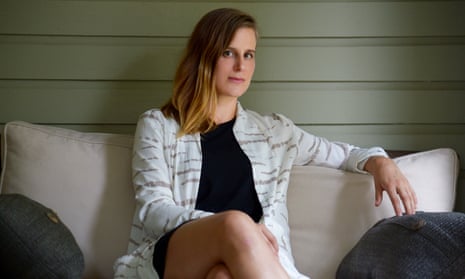
‘When I’m sad, I return to George Eliot’ … Lauren Groff. Photograph: Rick Wilson/


The

 Books

 0f my 

life


Lauren Groff: ‘Virginia Woolf’s Flush is delightfully bananas’

The US author on the book she should never have read as a child; the thrill of Emily Dickinson, and falling in love with Vasily Grossman


Lauren Groff

Friday 29 September 2023


My earliest reading memory
I was an early reader because I was excruciatingly shy, and books alleviated some of the discomfort of existing as a tender little person in the world. I remember lying in my bed at naptime, picking up a Little Bear book, and being able to read, “carrots, potatoes, peas, and tomatoes”, the words just clicking out of abstraction and into focus all of a sudden. Whether this is an invented memory or not is another story.

My favourite book growing up
I was publicly wild about children’s books such as My Side of the Mountain by Jean Craighead George and the Nancy Drew stories; in private, I’d picked up Jean M Auel’s epic The Clan of the Cave Bear from my parents’ bookshelf at far too young an age, and was permanently scarred by brutal Neanderthal sex that I didn’t understand (yet I still reread the book obsessively with a flashlight in my closet).

The book that changed me as a teenager
When I was 12, my friend Lisa gave me an Emily Dickinson anthology for my birthday; those poems, so deceptively simple, were like bolts of lightning to my brain. I became a poet in secret, writing toward the kind of thrill I felt with her poems.

The writer who changed my mind
I was far too serious as an adolescent and mostly read dead writers. I knew intellectually that there were living authors who were making books; I didn’t think it was possible that they were ordinary women like me until I got to university and read a short story by the great Grace Paley.

The book that made me want to be a writer
Every time it feels as if my writing is going through a fallow period, I discover a book that reminds me why I want to be a writer. This often happens: the last time was a week ago, when I reread Herman Melville’s Moby-Dick.

The book I came back to
I had swung three times at Vasily Grossman’s Life and Fate before finally connecting, then I fell profoundly in love with this astonishing constellation of a book.

The book I reread
Dante’s Inferno hits you differently when you’re a teenager in love with the imagery and sound and balletic leaps of poetry from when you are midway through the journey of life and feeling a little lost. And there’s no better book for when you’re feeling vindictive towards your enemies.

The book I could never read again
There are a lot of books I’ve read for entertainment and not art. That said, it feels churlish, after all that pleasure, to kiss and tell.

The book I discovered later in life
I thought I was a Virginia Woolf completist until I picked up Flush. What a delightfully bananas novel.

The book I am currently reading
I am about to start a book by Danielle Dutton called Prairie, Dresses, Art, Other; I loved Margaret the First, and will follow Dutton happily wherever she takes me.

My comfort read
When I’m sad, I return to George Eliot, to be held in Middlemarch’s warm wisdom.


Wednesday, September 27, 2023

Vivian Gornik / What I Got Wrong About Elizabeth Hardwick


Elizabeth Hardwick


What I Got Wrong About Elizabeth Hardwick

Forty years ago, on the barricades for radical feminism, I set out to “prove” she was overrated.


Vivian Gornick
November 17, 2021

It’s a jolt, facing up to the casual pitilessness that can, at times, characterize the work of a book reviewer in the grip of an ideological passion. These days, thanks to the publication of Cathy Curtis’s new biography, A Splendid Intelligence: The Life of Elizabeth Hardwick, I’m feeling that jolt.

Wolf Hall by Hilary Mantel / Review by Christopher Tayler

Hilary Mantel


Wolf Hall by Hilary Mantel – review


Christopher Tayler
Saturday 2 May 2009

Thomas Cromwell, the chief minister to Henry VIII who oversaw the break with Rome and the dissolution of the monasteries, was widely hated in his lifetime, and he makes a surprising fictional hero now. Geoffrey Elton used to argue that he founded modern government, but later historians have pared back his role, and one recent biographer, Robert Hutchinson, portrayed him as a corrupt proto-Stalinist. He's a sideshow to Wolsey in Shakespeare and Fletcher's Henry VIII, a villain who hounds Thomas More to his death in Robert Bolt's A Man for All Seasons. Law and financial administration - his main activities - don't always ignite writers' imaginations, and in the pop-Foucauldian worldview of much historical fiction since the 1980s, his bureaucratic innovations would be seen as inherently sinister. Then there's the portrait of him, after Holbein: a dewlapped man in dark robes with a shrewd, unfriendly face, holding a folded paper like an upturned dagger. He looks, as Hilary Mantel has him say in her new novel, "like a murderer".

Nora Ephron / Interview / The Believer


Nora Ephron

NORA EPHRON
[WRITER, DIRECTOR, PRODUCER]

Nora ephron
    Writer, director, producer
“IT TAKES THIS HUGE AMOUNT OF WILL AND ENERGY FOR ANYTHING TO HAPPEN TO YOU.”
Nora Ephron says that when she’s writing a movie, the middle is the hardest part to get right. But in real life, and socially, she’s great at the middle. She’ll even substitute it for the beginning, which has the captivating effect of fostering an immediate sense of social intimacy.

Monday, September 25, 2023

Martha by Sîan Davey

029de6e2 6b54 4d8c 8455 bb182793a3a4
The Blue Portrait by Sian Davey

Martha

“Why don’t you photograph me anymore?” A simple question sparks an ongoing project between a photographer and her stepdaughter that explores the tender, intimate moments of young womanhood.

Photographs and text by Sîan Davey

 
“Why don’t you photograph me anymore?” This is what Martha said in response to me focusing my camera so often on her sister Alice. It took me by surprise. I wasn’t aware that she would care, but clearly she did.

Wild about the garden: inside photographer Siân Davey’s sanctuary


An elderly couple in the garden


Wild about the garden: inside photographer Siân Davey’s sanctuary

The artist transformed a neglected patch beside her cottage, attracting a variety of visitors eager to shed their inhibitions, clothes and anxieties, and whose lives she has caught in striking images that form part of a new exhibition


Claire Armitstead
Sunday 30 July 2023


The photographer Siân Davey was “navigating a family deep in crisis” when her son Luke suggested that they transform a neglected garden outside her rented cottage into a wildflower sanctuary that would draw people in. “And, without any ambition, something in me said a resounding yes,” she says. Together, they set about clearing the plot, researching local flowers and sowing them according to the rituals of a Buddhist faith they both share.

The Garden by Siân Davey


The Garden

by Siân Davey

“There are no secrets in this house. Where there’s a secret, she says, there’s shame - and shame is something we can do without.” - Claire Keegan 

“Why don’t we fill our back garden with wildflowers and bees, and the people we meet over the garden wall – we’ll invite them in to be photographed by you.” This is what my son Luke announced in the kitchen, midwinter, our back garden abandoned for at least ten years. I was sitting at the kitchen table, navigating a family deep in crisis.

Sunday, September 24, 2023

An Exercise in Redemption / On Deirdre Bair’s “Parisian Lives”


Samuel Beckett


An Exercise in Redemption: On Deirdre Bair’s “Parisian Lives”

November 14, 2019   •   By Sophie Madeline Dess

AWARD-WINNING WRITER Deirdre Bair likes to call herself an “accidental biographer.” Apparently, she “had never read a biography before she decided that Samuel Beckett needed one and she was the person to write it.” One is inclined to call this a “happy” accident since the Beckett bio won the National Book Award in 1981 and started Bair on a prolific career. However, given the mortifying and fury-eliciting anecdotes laced throughout her new memoir, Parisian Lives: Samuel Beckett, Simone de Beauvoir, and Me, happy is not the word that comes most readily to mind.

‘A lot of biopics depend on likeness – this is braver’: Gabriel Byrne on playing Samuel Beckett

Samuel Beckett


‘A lot of biopics depend on likeness – this is braver’: Gabriel Byrne on playing Samuel Beckett


The actor talks about his new movie Dance First, in which he plays the Irish dramatist, the time he shared a drink with Richard Burton and why he had to leave Los Angeles


Claire Armitstead
Friday 22 September 2023


In 1969, Samuel Beckett and his wife learned that he had won the Nobel prize in literature in a telegram from his publisher. “Dear Sam and Suzanne,” it read. “In spite of everything, they have given you the Nobel prize. I advise you to go into hiding.” Both were notoriously celebrity averse. Suzanne described it as a “catastrophe”. Beckett declined to give a Nobel lecture, and refused to talk when a Swedish film crew tracked him down to a hotel room in Tunisia, leaving them with a surreal mute interview.