Monday, February 9, 2026

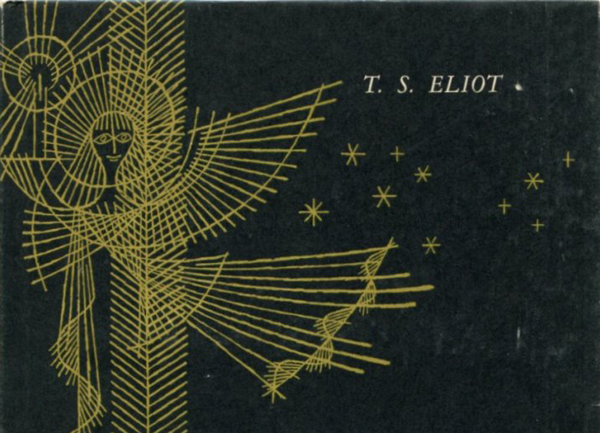
T. S. Eliot’s “The Cultivation of Christmas Trees”


T-S-Eliot-Cultivation-600

T. S. Eliot’s “The Cultivation of Christmas Trees”

By Casey N. Cep
 

In 1927, Richard de la Mare had an idea for some Christmas cards. Because he was a production director at London’s Faber & Gwyer, his cards were festive poetry pamphlets that could be sent to clients and sold to customers for one shilling a piece. Because two years earlier Geoffrey Faber had lured a banker from Lloyd’s Bank to work as an editor at his publishing house, Faber & Gwyer had T. S. Eliot to contribute to the series.

Sunday, February 8, 2026

Pills by Donald Ray Pollock


Pills

by Donald Ray Pollock


I was hiding out in Frankie Johnson’s car, a canary yellow '69 Super Bee that could shit and get. We were on a spree, stealing anything we could get our hands on—tape players and car batteries, gasoline and beer. It was a day or two after my sixteenth birthday, and I hadn't been home in a week. And even though my old man was telling everyone around Knockemstiff that he hoped I was dead, he kept driving up and down the township roads with his head out the window looking for me like I was one of his lost coonhounds. 

Donald Ray Pollock / A Good Man Is Impossible to Find


A Good Man Is Impossible to Find

From the opening sentences of Donald Ray Pollock’s violence-­soaked first novel, “The Devil All the Time,” it’s clear that blood will out. The West Virginia and southern Ohio landscapes of this book seem riven by one long, coal-smeared and hell-­harrowed gash in the earth, and the stories that vent from it file past in a crimson procession of evils so brutally creative, and so exactingly and lovingly detailed by Pollock, that over the course of the novel it becomes unclear whether they’ve been spawned for the purposes of plot or purely for atavistic pleasure.

Donald Ray Pollock / A Review of Knockenstiff


Donald Ray Pollock: A Review of Knockenstiff

thnlsypg92In my research of late into Country noir I came across the name Donald Ray Pollock. Born in 1954 and raised in Knockemstiff, Ohio, Pollock has lived his entire adult life in Chillicothe, Ohio, where he worked at the Mead Paper Mill as a laborer and truck driver until age 50, when he enrolled in the English program at Ohio State University. While there, Doubleday published his debut short story collection, Knockemstiff, and the New York Times regularly posted his election dispatches from southern Ohio throughout the 2008 campaign. The Devil All the Time, his first novel, was published in 2011. His work has appeared in various literary journals, including Epoch, Sou’wester, Granta, Third Coast, River Styx, The Journal, Boulevard, Tin House, and PEN America. His newest book, a novel called The Heavenly Table, was published by Doubleday on July 12th, 2016.1 Find him on his website: http://donaldraypollock.net/

Saturday, February 7, 2026

Donald Ray Pollock / Reading Knockemstiff


Donald Ray Pollock

Reading Knockemstiff

Donald Ray Pollock takes Chapter 16 on a tour of the Ohio mill town where he worked for decades before turning to fiction

August 19, 2011

It seemed unlikely that Donald Ray Pollock’s debut collection, Knockemstiff, published in 2008, would cause much fuss in the literary world. Its eighteen stories feature a cast of characters so unseemly and depraved, so lacking in common sense or decency, that the book was sure to sell a few copies to a few weirdoes and be forgotten. But Pollock’s voice is so assured and his vision so precise (and his humor so black) that critics couldn’t help but praise the book as a minor masterpiece.

Donald Ray Pollock / On Finding Fiction Late In Life


Donald Ray Pollock


Donald Ray Pollock 

On Finding Fiction Late In Life


Knockemstiff, Ohio, is a tiny hamlet in southern Ohio. In the 1950s, Knockemstiff had three stores, a bar and a population of about 450 people. Most of those people, says fiction writer Donald Ray Pollock, were "connected by blood through one godforsaken calamity or another."

Demian Naón interviews writer Donald Ray Pollock


Demian Naón interviews writer Donald Ray Pollock 


What was your childhood like in relation to writing? 


Of course, as most people know by now, I grew up in a very small community in southern Ohio called Knockemstiff.  Most of the people who lived there were poor, and my family was related to many of them.  However, my father, who had only an eighth grade education, was lucky enough to have a union job in a paper mill in nearby Chillicothe, and I suppose we were what would now be called lower middle-class.  There were no books in our house, but there were magazines, trashy stuff mostly dealing with crime and romance, and so that’s what I started out reading.   Many of the characters in my work feel stuck in the place they were born in, and want to escape to somewhere else, which was also one of my dominant desires when I was a kid.  But like them, I never did.

Sincerity, rawness, Ohio / Conversation with Donald Ray Pollock


Donald Ray Pollock


Sincerity, rawness,Ohio

Conversation with Donald Ray Pollock

Question: Knockemstiff was a lacerating piece of writing, harsh and gritty, sometimes even nasty and cruel. Its sudden appearance on the literary scene was like a punch in the face that knocked quite a few readers out. The stories leave us with a feeling of emptiness which grows and grows as we keep on reading, partly because we are aware that they are based on real events and real people. Was Knockemstiff an introspective effort to release yourself from the drowsy grip of the city itself, of your hometown?

An Interview with Donald Ray Pollock


AN INTERVIEW WITH DONALD RAY POLLOCK

by Elizabeth Ellen

It takes a lot to get me to read an entire book. I buy, borrow and steal books by the hundreds, but the actual number I read from beginning to end are very few. In the last seven years, I've probably read ten: [this is where I listed the actual ten, but the Hobart editor wisely deleted them saying, "Who really gives a shit what ten books you've read?"]. Most of the time I'd rather read a book I already know and love than take a chance on a new one. I'm the same way with movies. And music. And alcoholic beverages. But I digress.

Friday, February 6, 2026

David Lee


DAVID LEE

David Lee was born in 1990 and is a self-taught artist from Galway, Ireland.He realised his passion for art early on and left university to pursue a career as a full time artist. David moved to Berlin in 2016 and was influenced by a city renowned for its freedom of expression. This influenced his abstract style, allowing him to explore his craft without limitations or boundaries. David’s solo exhibition at AKA in Berlin in April 2018 showcased his exploration of darker abstract themes.

Bogdan Zwir / Women


Bogdan Zwir
WOMEN


Nussaibah Younis / ‘The Bell Jar helped me through my own mental illness’


Nussaibah Younis


Nussaibah Younis: ‘The Bell Jar helped me through my own mental illness’

The author on taking solace in Joan Didion, discovering Donna Tartt and being cheered up by David Sedaris


Nussaibah Younis

Friday 6 February 2026


My earliest reading memory
The first books I became obsessed with were Enid Blyton’s boarding school stories Malory Towers and St Clare’s. When I was eight, I’d hide them under my pillow and read by the hallway light when I was supposed to be asleep.

My favourite book growing up
Roald Dahl’s Matilda. I felt woefully misunderstood by the world and longed to be adopted by a very pretty teacher with only cardboard for furniture. I spent a lot of time trying to make a pen move by concentration alone. Sometimes I still try.

The book that changed me as a teenager
I read The Bell Jar by Sylvia Plath when I was 16 and it was a shocking and disorienting introduction to mental illness in young women. A couple of years later, when I experienced a serious bout of mental illness, The Bell Jar helped conceptualise what was happening.

The book that made me want to be a writer
Scoop by Evelyn Waugh is a brilliantly funny satire of war journalism that still rings disturbingly true. It inspired me to write a comedy about a bonkers UN programme in Iraq – which turned into my debut novel, Fundamentally.

The book or author I came back to
I had Donna Tartt’s The Secret History on my shelf for 10 years without ever reading it. Then I found myself alone and unwell one Christmas and I disappeared into its enchanting, atmospheric world. Sometimes a book is there for you at just the right time.

The book I reread
In moments of grief, I return to Joan Didion’s The Year of Magical Thinking. It is a word-perfect exploration of the insanity brought on by loss, and it helps me feel less alone in the darkest times. I always have a big, cathartic cry when I read it.

The book I could never read again
Portnoy’s Complaint by Philip Roth. I’m sick to death of reading about hypersexual misogynists obsessed with their own victimhood. I don’t find it clever or interesting.

The writer who changed my mind
I was 19 when I read The Feminine Mystique by Betty Friedan and it totally reframed how I thought about the role of marriage and children in my life. The book depicts the suffocating impact of expectations on women to prioritise caring roles over all else. It made me commit to achieving my own dreams, rather than expecting a child to do it for me.

The book I am currently reading
Slumberland by Paul Beatty. It’s a little tough going, but he has some genius one-liners and brutally cutting observations about the racism experienced by an African American musician living in Berlin.

My comfort read
Whenever I want to be cheered up, I read David Sedaris. At heart, I’m an older gay man with health anxiety, obsessed with picking up litter and controlled by my Fitbit.

 Fundamentally by Nussaibah Younis will be published by W&N in paperback on 12 February


THE GUARDIAN


Thursday, February 5, 2026

Anthony Hopkins / The Girl from Petrovka


 Anthony Hopkins couldn't find a book anywhere in London. Then he sat down on a subway bench.

It was 1973. Hopkins had just landed a role in a film called "The Girl from Petrovka," based on a novel by American journalist George Feifer.

Like any serious actor, he wanted to read the source material. He spent an entire day searching bookshops along London's famous Charing Cross Road.

Nothing. The book wasn't available anywhere in the UK.

Frustrated and defeated, Hopkins walked into the Leicester Square Underground station to catch a train home.

That's when he noticed something on a bench.

Someone had left a book behind.

He picked it up. Turned it over.

"The Girl from Petrovka."


The exact book he'd been searching for all day, abandoned on a subway bench in a city of eight million people.

Hopkins couldn't believe it. He took it home, read it, and noticed something strange. The margins were filled with handwritten notes in red ink. Annotations. Someone had marked up this copy extensively.

He didn't think much of it. He used the notes to help him understand his character, prepared for his role, and filed the coincidence away as one of life's unexplainable moments.

Months later, Hopkins traveled to Vienna where the film was being shot.


One day on set, he was introduced to a visitor.

George Feifer. The author of the book.

They talked about the film, the characters, the story. Then Feifer mentioned something that made Hopkins stop cold.

"I don't have a copy of my own book anymore," Feifer said. "I lent my personal copy to a friend a couple of years ago. It had all my notes in the margins. He lost it somewhere in London. I've never seen it since."

Hopkins felt the hairs on the back of his neck stand up.

"I found a copy," he said slowly. "On a bench in the Underground. It has handwritten notes throughout."

Feifer looked at him skeptically.

Hopkins retrieved the book from his things and handed it to the author.

Feifer went pale.

It was his copy. His handwriting. His annotations. The personal copy he'd lent to a friend years earlier, which had somehow ended up abandoned on a subway bench at the exact moment Anthony Hopkins, the actor who needed it most, happened to sit down beside it.

In a city of millions. Across thousands of streets. Among hundreds of tube stations.

The right book. The right bench. The right moment.

George Feifer got his lost book back. Anthony Hopkins got a story he would tell for the rest of his life.

Carl Jung called it synchronicity, the idea that meaningful coincidences aren't random but reflect some deeper pattern in the fabric of reality.

Hopkins has always been fascinated by the concept. He's spoken in interviews about learning to simply be amazed by life.

"I don't know if there's a master plan," he once said. "But sometimes things happen that are just too perfect to explain."

Maybe it was luck. Maybe it was fate. Maybe it was just the universe having a bit of fun.

Or maybe, just maybe, some books are meant to find their readers.

And some stories are meant to be told.