

ENDANGERED SPECIES
A sharp and unsettling near 50% drop in breeding females among populations of southern elephant seals across South Georgia has been linked to the arrival of highly pathogenic avian influenza by researchers at the British Antarctic Survey.
In a study published last week in Communications Biology, the research documents the first major impact of the influenza HPAI on the world’ largest southern elephant seal population – a colony that represents more than half all breeding-age individuals globally.
The virus, H5N1, reached the island in late 2023, spreading rapidly from infected brown skuas to elephant seals and Antarctic fur seals.
Using fixed-wing UAVs to conduct high-resolution aerial surveys, the team from the British Antarctic Survey (BAS) assessed the three largest breeding colonies on South Georgia – together home to 16% of the island’s female breeding population. Comparisons of pre- and post-outbreak counts revealed an average 47% reduction in breeding females, with losses exceeding 60% at some sites.
“The scale of this decline is truly shocking,” said Dr. Connor Bamford, BAS seal ecologist and lead author of the study. “In a typical year, we might expect 3-7% variation. To see nearly half the breeding population absent is unprecedented. That equates to roughly 53,000 missing females across South Georgia.”
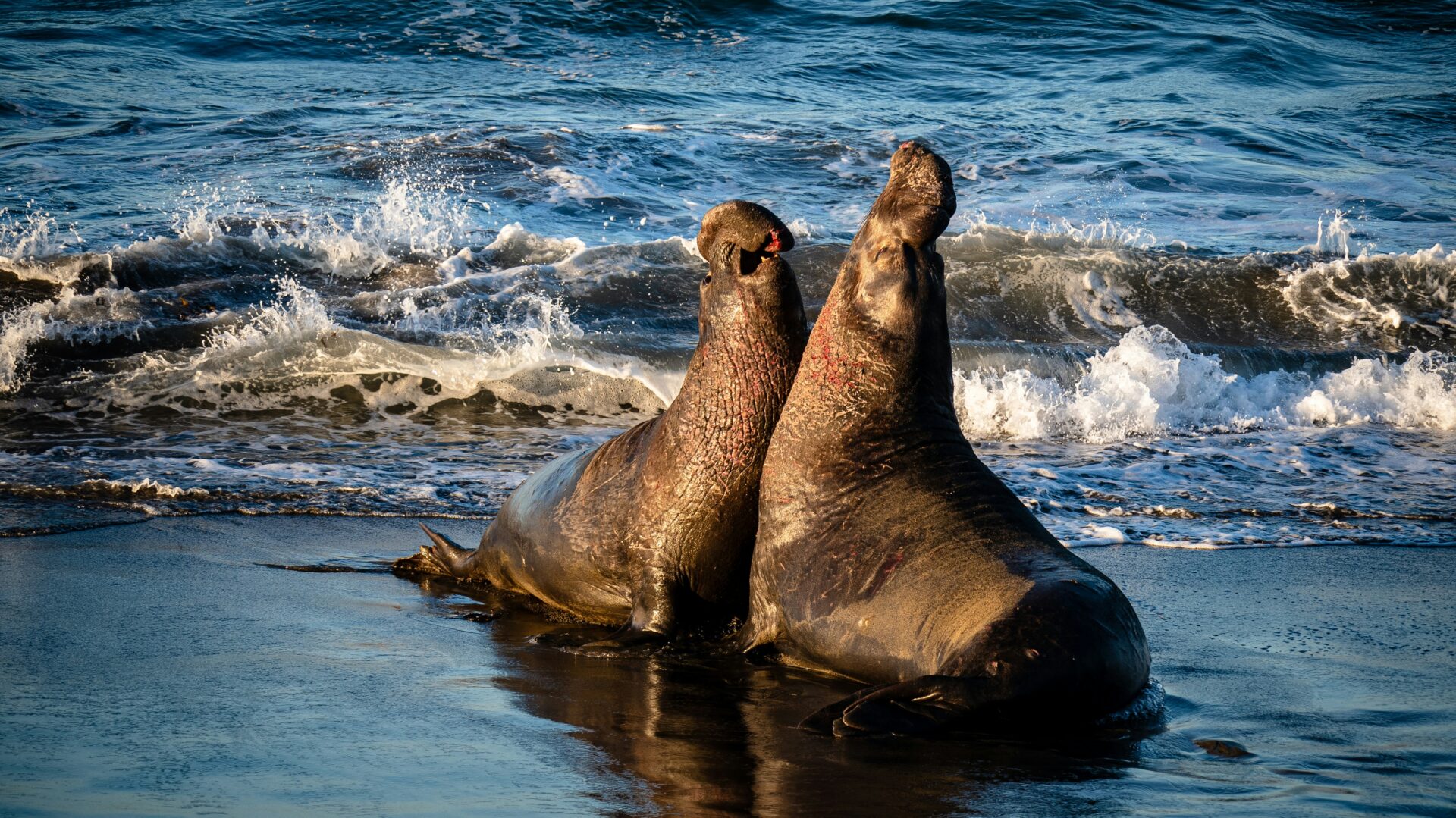
Southern elephant seals, famed for their deep-diving prowess and long-distance migrations across the Southern Ocean, have long maintained a stable presence on South Georgia. The abrupt population shock is especially concerning, researchers say, because the species’ slow reproductive rate makes it vulnerable to long-lasting demographic impacts.
“What makes this particularly concerning is that southern elephant seals are long-lived,” Bamford added. “Even short-term drops in breeding output can echo through the population for decades.”
The study’s use of UAV-based mapping marks a major advance in monitoring capacity on the remote island, enabling researchers to gather accurate counts in minutes – work that previously required laborious foot surveys. Harsh conditions, including snow, rain, and gale-force winds, added to the challenge.
“UAVs are allowing us to count large animal populations quickly and safely,” said BAS ecologist and co-author Jamie Coleman. “Despite challenging weather, we were able to collect critical data that helps us understand how these remarkable animals are being affected by their changing environment.”
The findings align closely with recent mass die-offs in South American elephant seal populations, where HPAI has caused mortality exceeding 70% in some regions. Until now, South Georgia’s remote location had been seen as a buffer against such outbreaks.
Sue Gregory, Senior Marine and Fisheries Manager at the Government of South Georgia and the South Sandwich Islands (GSGSSI), said the results – while sobering – are vital to ongoing management efforts.
“Having seen the impact of HPAI on elephant seals in South America, we were braced for similar consequences,” Gregory noted. “This study is a valuable contribution to monitoring how our top predators respond to rapidly changing environmental pressures.”
The research builds on a decade of continuous population monitoring led by BAS, integrating traditional ground counts with UAV surveys and satellite observations. These long-term datasets provide the baseline needed to distinguish temporary disruptions from deeper, sustained population change.
The work was supported by a Biodiversity Challenge Fund Darwin Plus grant (DPLUS214) and carried out under permits issued by the Government of South Georgia and the South Sandwich Islands.
The full study, ‘Highly Pathogenic Avian Influenza Viruses (HPAIV) associated with major southern elephant seal decline at South Georgia’, by Connor Bamford et al., is available in Communications Biology.


No comments:
Post a Comment